Why we need digital skills for a green future
Voices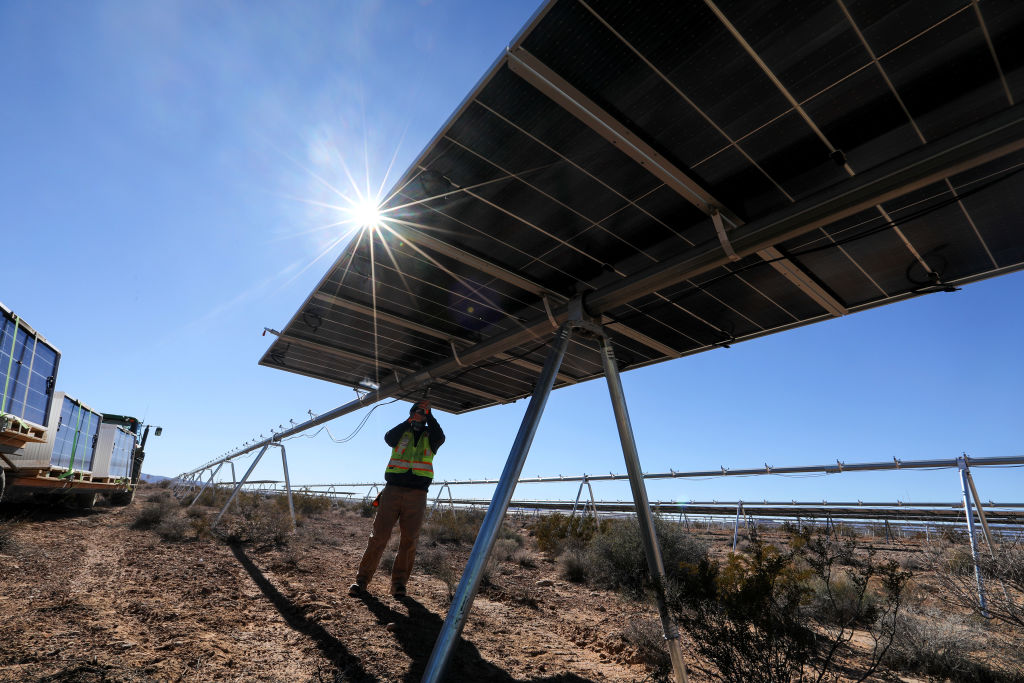
A worker secures mounting straps as construction continues with solar panel installation at the Gemini solar project in Southern Nevada Las Vegas, NV in January 2023. Photo by Brian van der Brug / Los Angeles Times via Getty Images.
Addressing environmental challenges requires advanced technology and, just as crucially, workers with the skills to wield it.
As green and digital technologies become increasingly integrated, the greatest roadblock to a green future is the availability of professionals with the digital and environmental know-how needed to manage everything from alternative fuels to carbon capture.
Let us explain. The green sector increasingly demands workers with digital skills and data expertise, as our organizations found in recent research.
To bridge this gap, we need a pipeline of workers equipped with both digital and green skills; this requires new educational pathways to prepare the workforce for these emerging positions. We must recognize how intricately connected the digital and green energy revolutions are to accelerate progress toward a sustainable future.
Hybrid roles
Technically skilled workers like solar installers now need fluency in artificial intelligence (AI) and coding. Other emerging cleantech roles, like “environmental data analyst” and cybersecurity positions safeguarding grid resilience, likewise require hybrid green-digital skills.
This melding of workforce needs reflects both the increasingly tech-centric nature of newer energy projects and the growing reliance on digital platforms to maximize the productivity of physical energy infrastructure. This digital support system includes the data pipelines, security layers and backbones and predictive models that will allow smart grids to be as efficient as possible.
The green-digital skill requirements go both ways. Our research finds that job postings for digital roles citing environmental skills jumped 93% from 2018 through 2023. The explosion of AI illustrates how green skills will only become more central to cutting-edge digital tech. Alongside experts in neural networks, AI pioneers are hiring operation specialists schooled in power conservation. As job postings increase, so does the demand for environmental experience.
Cutting-edge education
To meet the needs of both the traditional technology and emerging cleantech industries, and to make progress on climate commitments, the global workforce must evolve rapidly. But skills — whether digital, data or green — only become scarcer when sought in combination. Tackling this challenge at the education level is critical.
The good news is we don’t need a revolution on this front: the training infrastructure needed to upgrade skillsets is already largely in place. The challenge will be to develop the right combinations of capabilities using existing resources and then connecting workers with training paths that lead to green careers.
All types of educational institutions have roles to play.
Online courses and credentials are essential in preparing the workers — whether early or mid-career professionals — with accessible, self-paced learning focused on in-demand skills like AI. IBM SkillsBuild, a free education program aimed at increasing access to technology education, is a good example of how we can support workers transitioning to more digital-focused roles.
Universities and community colleges, meanwhile, can provide customized training that blends digital and green skill development demanded by the evolving job market, offer specialized degree programs, and partner with industry leaders to ensure curricula align with employer needs.
Students at community colleges and universities can also benefit from online courses, further enhancing their ability to meet the changing demands of the workforce.
Recognizing patterns
Today, most well-paying jobs require digital skills, including in fields far outside the technology sector, such as health care and hospitality. To some extent, the sustainability industry seems to be following a similar pattern.
But there’s also a key difference. What we’re seeing today isn’t just another chapter in the transformation of a largely analog industry adding coders and data architects to its ranks, with digital skills permeating non-tech roles only gradually.
Rather, the digital and green economies are already intersecting in many places in a way that is, essentially, creating a wholly new type of sector that is a genuine hybrid of both.
This convergence explains why both digital and cleantech skills are so essential for the success of both traditional sectors and the new, hybrid one — and, ultimately, for achieving a greener future.