Home court advantage: Whirling turbines, solarized schools and of course, food poisoning
Reporter's Notebook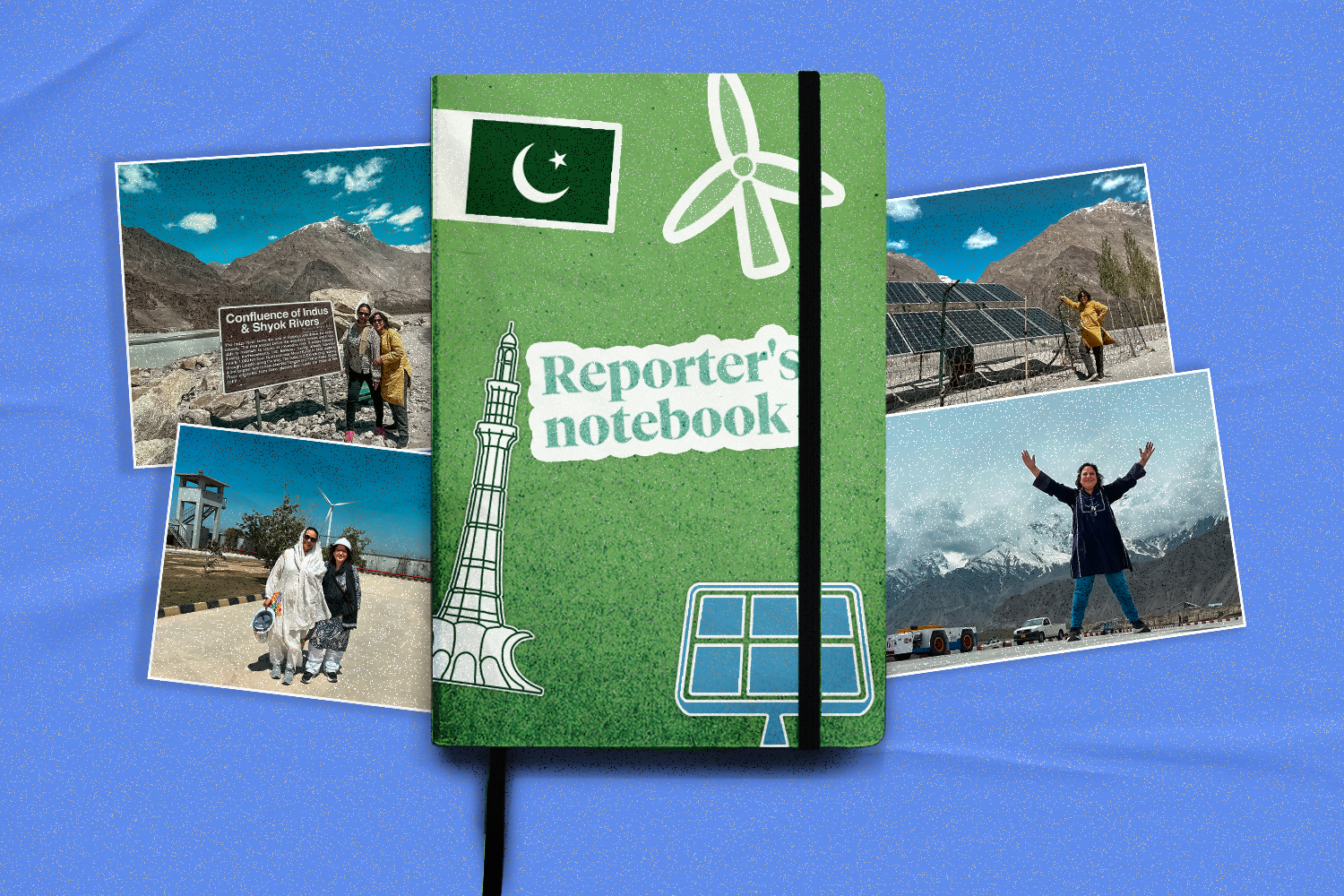
Returning to Pakistan for a reporting trip should have been a breeze since I had the home court advantage.
While I have lived in the United States for decades, I was born in Pakistan and spent the first 20 years of my life there.
I figured I wouldn’t have to jump through as many bureaucratic hoops as other foreign journalists. I had a network of friends and family members to help me arrange interviews and visits, especially once they knew I wasn’t writing about political turmoil and terrorism.
Still, the experience both challenged me as a journalist and gave me an opportunity to see my home country with fresh eyes.
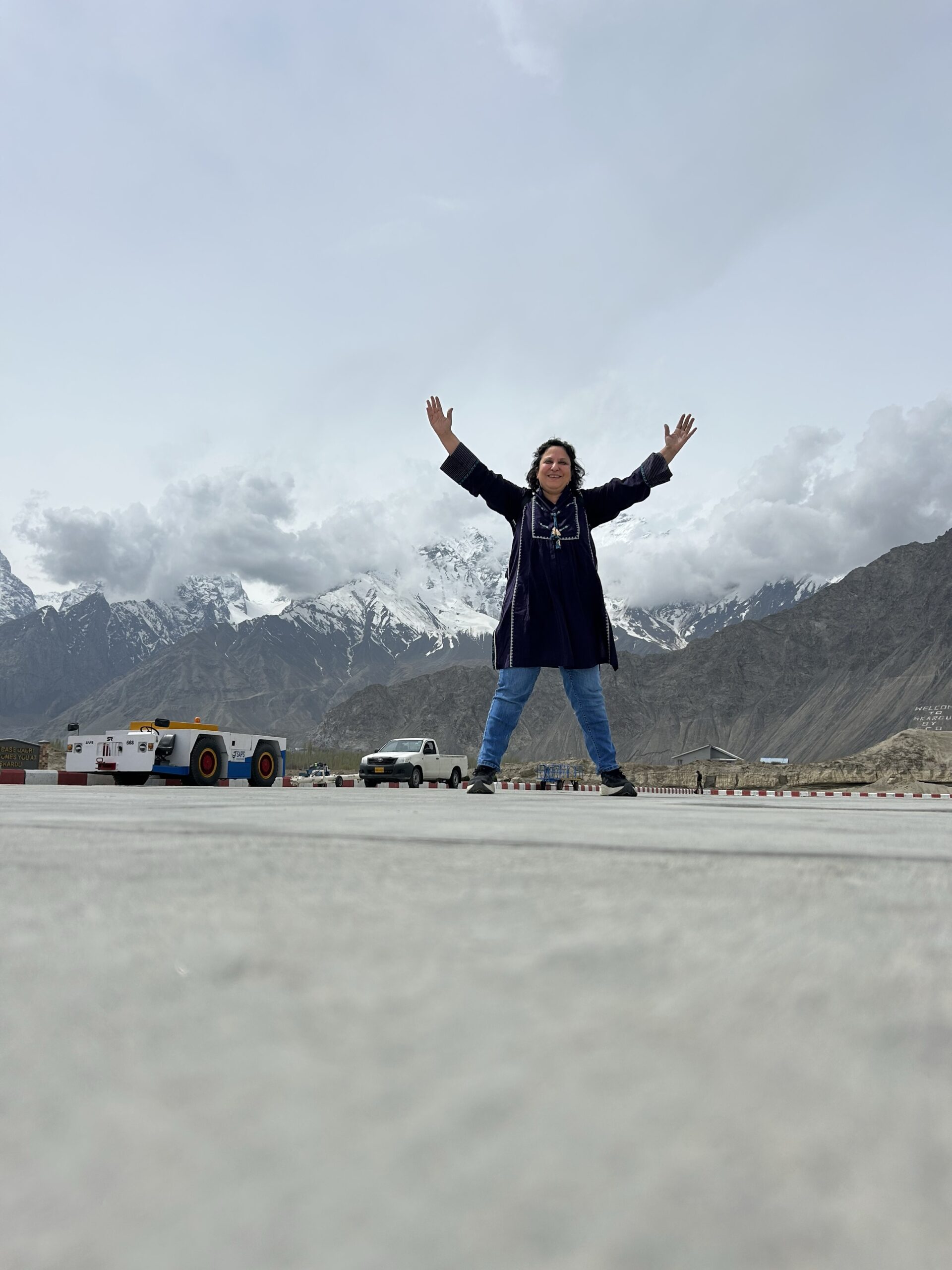
Amena Saiyid in Skardu in northern Pakistan after a thrilling flight through some of Asia’s highest mountain ranges. Photo courtesy of Amena H. Saiyid.
For example, the wind farm tour I arranged in January and planned my entire trip around fell through shortly before my arrival. But my niece, who at the time was a legal counsel for a multinational power firm and had arranged the initial tour, was able to connect me with Kumayl Khaleeli, CEO of Zephyr Power, who agreed to drive me two hours outside of Karachi to see his company’s 50-megawatt wind farm in Gharo district.
I found myself glad my first tour had fallen through. I almost forgot I was in Pakistan when I stepped out of Khaleeli’s four-wheeler and into the coastal calm on the sandy banks of the Indus River Delta, wind turbines whirling rhythmically around me.
Prior to reporting on climate and cleantech, I wrote about water pollution and wetlands restoration. So, I was delighted to see row upon row of mangroves planted to protect Zephyr’s turbines from tidal floods. Even more pleasing was the absence of plastic litter on Zephyr’s property, thanks to Khaleeli’s efforts.
Lining up other interviews was also a bit hairy. While Pakistan Senator Sherry Rehman, a former journalist, immediately responded to my interview request, I didn’t know until the day before when and where we would meet, which, for a reporter on location and on deadline, was quite unnerving. Then, to meet Pakistan’s Power Minister Awais Leghari, I had to resort to sending messages via LinkedIn, seek Rehman’s help and rely on common friends to garner a 20-minute interview.
There’s a truism in journalism: persistence pays off. Both these conversations helped inform my understanding of the current energy landscape in Pakistan.
I had heard solar power was proliferating across the country, but that still didn’t prepare me to see the sun-seeking technology everywhere I looked. Many people I spoke to, sick of paying high electricity bills and dealing with multiple power blackouts a day, saw solar as their best option.
While climate change is still not a common topic of conversation, more Pakistanis seemed aware of climate change in my conversations on this trip than they had the last time I visited three years ago. They are also regularly experiencing extreme heat and deadly monsoon downpours that cause widespread flooding and displacement.
Pakistan is listed as the world’s most vulnerable nation to climate risk, according to the latest analysis by Bonn-based Climate Risk Index, which ranks countries by the human and economic toll of extreme weather.
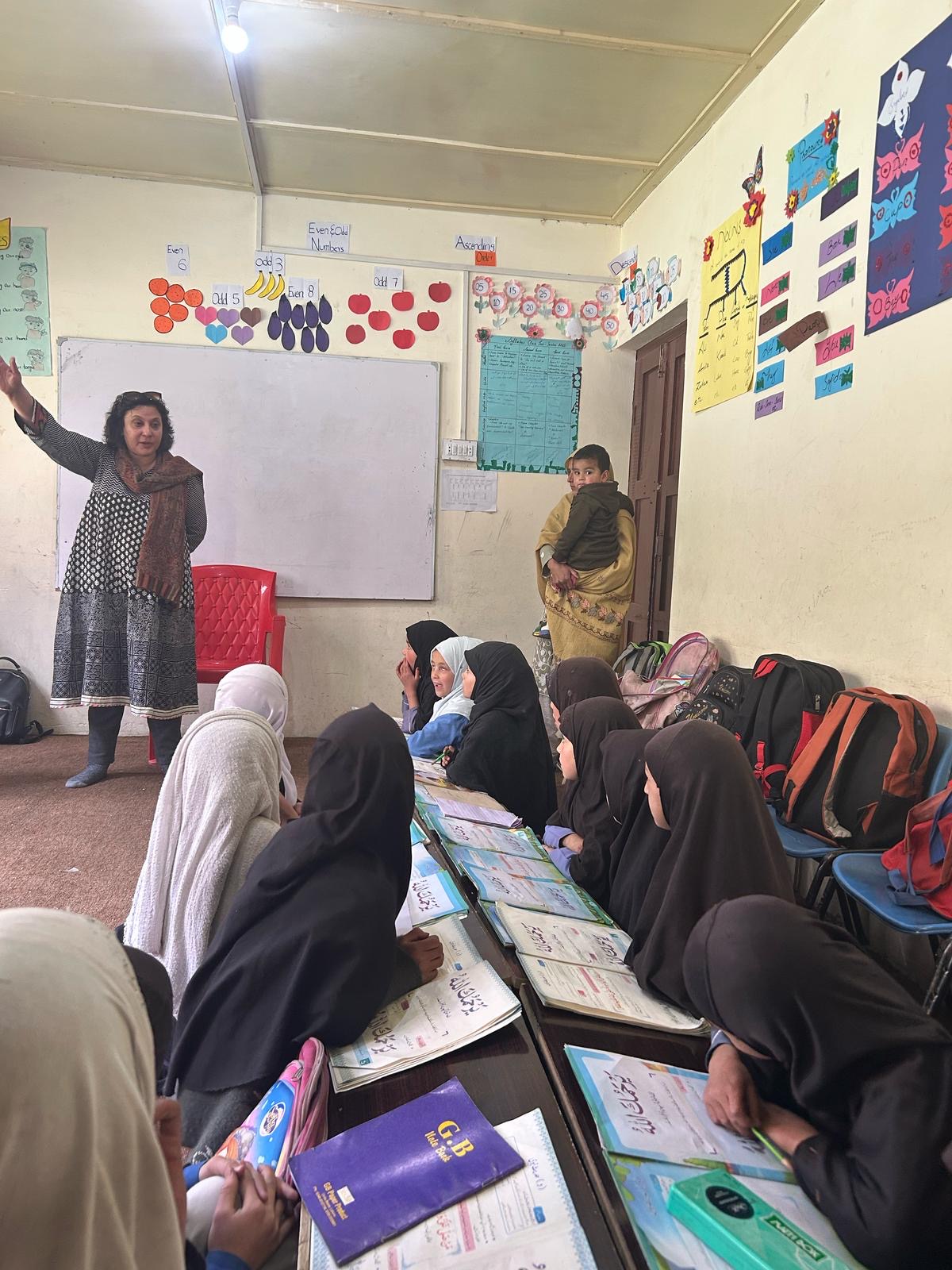
Amena Saiyid lectures about the importance of clean energy and environment at the Nar Community School for Girls. Photo courtesy of Amena H. Saiyid.
In northern Pakistan, I saw how projects like this one are helping protect communities like Khaplu from destructive glacial melt scouring mountainsides. I saw entrepreneurs taking risks on new solar companies, educators bringing renewable power to rural schools and developers like Khaleeli taking steps to make clean energy accessible to the public.
But the government has yet to address many critical environmental issues, including water pollution.
Water-borne diseases are so commonplace in Pakistan that it’s considered a badge of honor among expatriates to get sick at least once during a trip home. That’s no surprise, considering Lahore has just six wastewater treatment plants for a population of over 14 million people; compare that to the greater Washington D.C. region, where 37 operating plants serve just six million people.
In the end, my luck finally ran out. Toward the end of my stay, I contracted a truly awful case of food poisoning from lemonade at a newly opened café in the Walled City of Lahore. I was bedridden for three days, but at least I won my badge!