What it takes to build green energy in fossil fuel-dependent Wisconsin
Latest News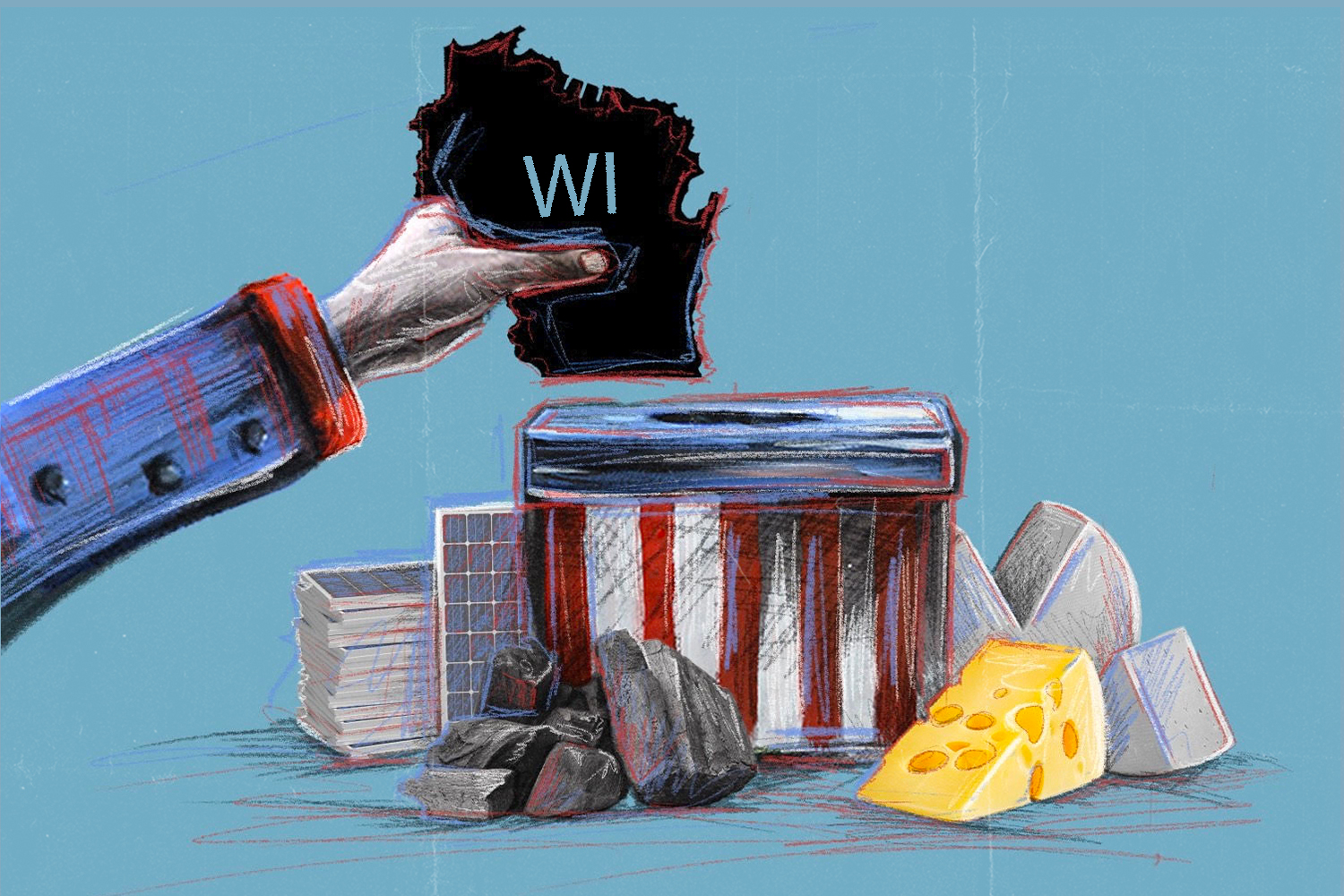
WISCONSIN RAPIDS, Wisconsin — Driving through Wood County on the outskirts of Wisconsin Rapids, a town in central Wisconsin hit hard by paper mill closings, miles of farmland roll by where potatoes, corn, green beans and carrots grow. Dairy farms and pine forests, planted to support the now dwindling paper industry add to the county’s mostly agricultural landscape.
Just a few miles from town, nearly 400,000 solar panels line both sides of a small back road, spread over 1,200 acres. Endless rows of solar panels, behind a locked fence, rotate gradually from east to west, following the sun across the sky.
This 150-megawatt solar field installed by utility giant Alliant Energy, headquartered in Madison, Wisconsin, produces enough electricity to power 40,000 homes, a rare sight in the state. Only 9% of the electricity generated in 2023 in Wisconsin came from renewable sources, according to the United States Energy Information Administration (EIA). That’s less than half the 21% of electricity generated by renewables in the U.S. overall. Natural gas and coal power three-quarters of Wisconsin’s electricity, per the EIA.
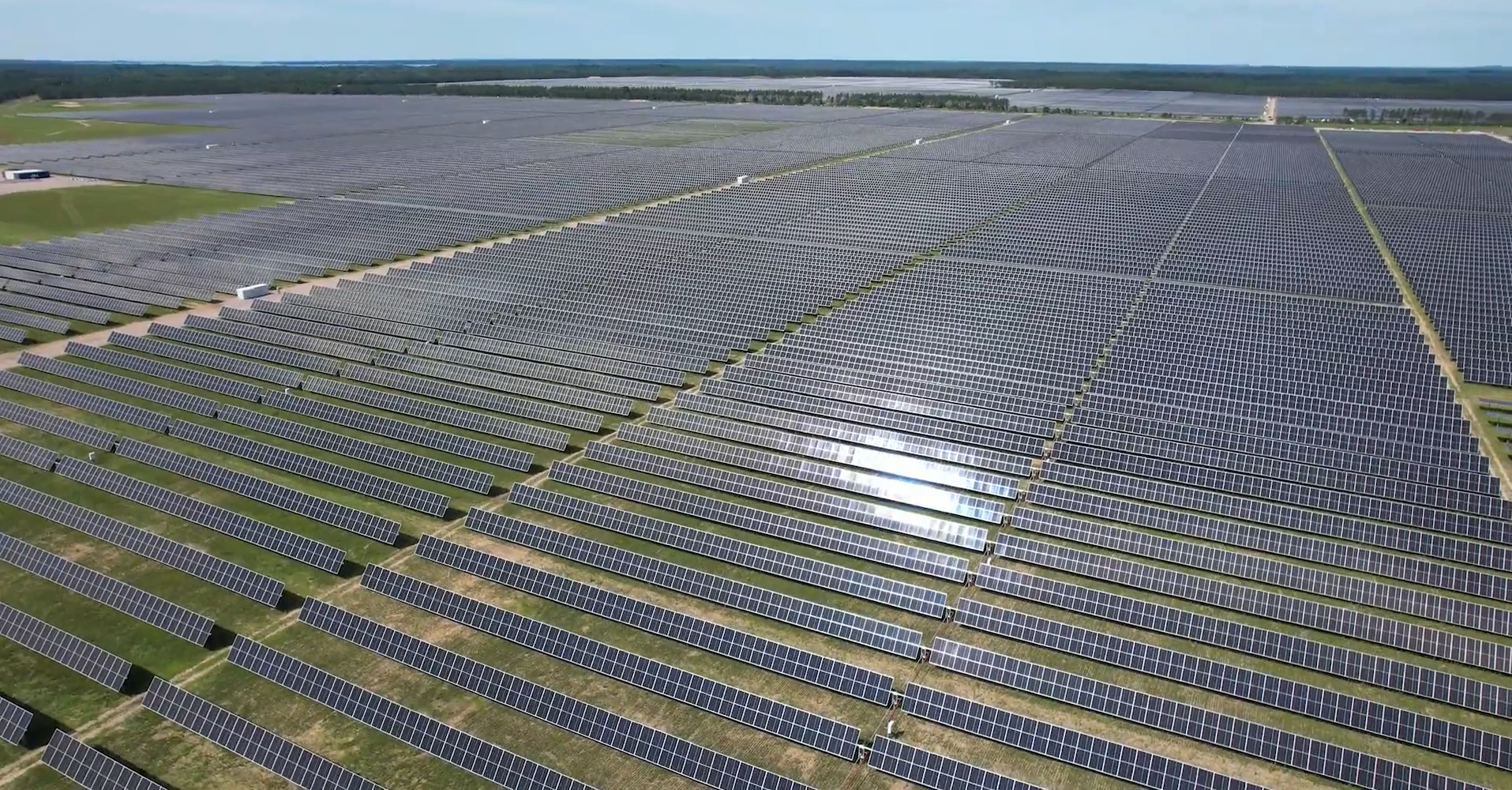
There are 388,350 solar panels installed in the 150-megawatt Wood County Solar field, which covers 1,200 acres and powers approximately 40,000 homes per year. Photo provided by Alliant Energy.
For Wisconsin to lower its reliance on these fossil fuels, which it pays billions of dollars a year to import, it will need a lot more clean energy, including solar farms. But in politically-purple Wisconsin, where the presidential election remains too close to call and a Democratic governor leads a Republican state legislature, government pressure has been middling.
“We saw several clean energy bills last session. Not a lot of them made progress, sadly, but the fact that they’re being introduced shows that the transition is happening,” said Sam Dunaiski, executive director of RENEW Wisconsin, a clean energy advocacy organization in the state.
The delicate act of power planning
Alliant Energy is constantly balancing electricity demand against its portfolio of energy generation, Chance Moore, resource planning team lead, told Cipher. That planning happens years in advance.
It takes between five and seven years for Alliant to get a new source of power online, explained Rick Zimmerman, the company’s renewable development manager. Forecasting how to best meet future needs is more challenging than it used to be, though. Now utilities must consider new technology to make and store energy, like solar panels and batteries, along with changing costs, potential tariffs and federal tax credits.
“It’s hard to read the crystal ball sometimes,” he said.
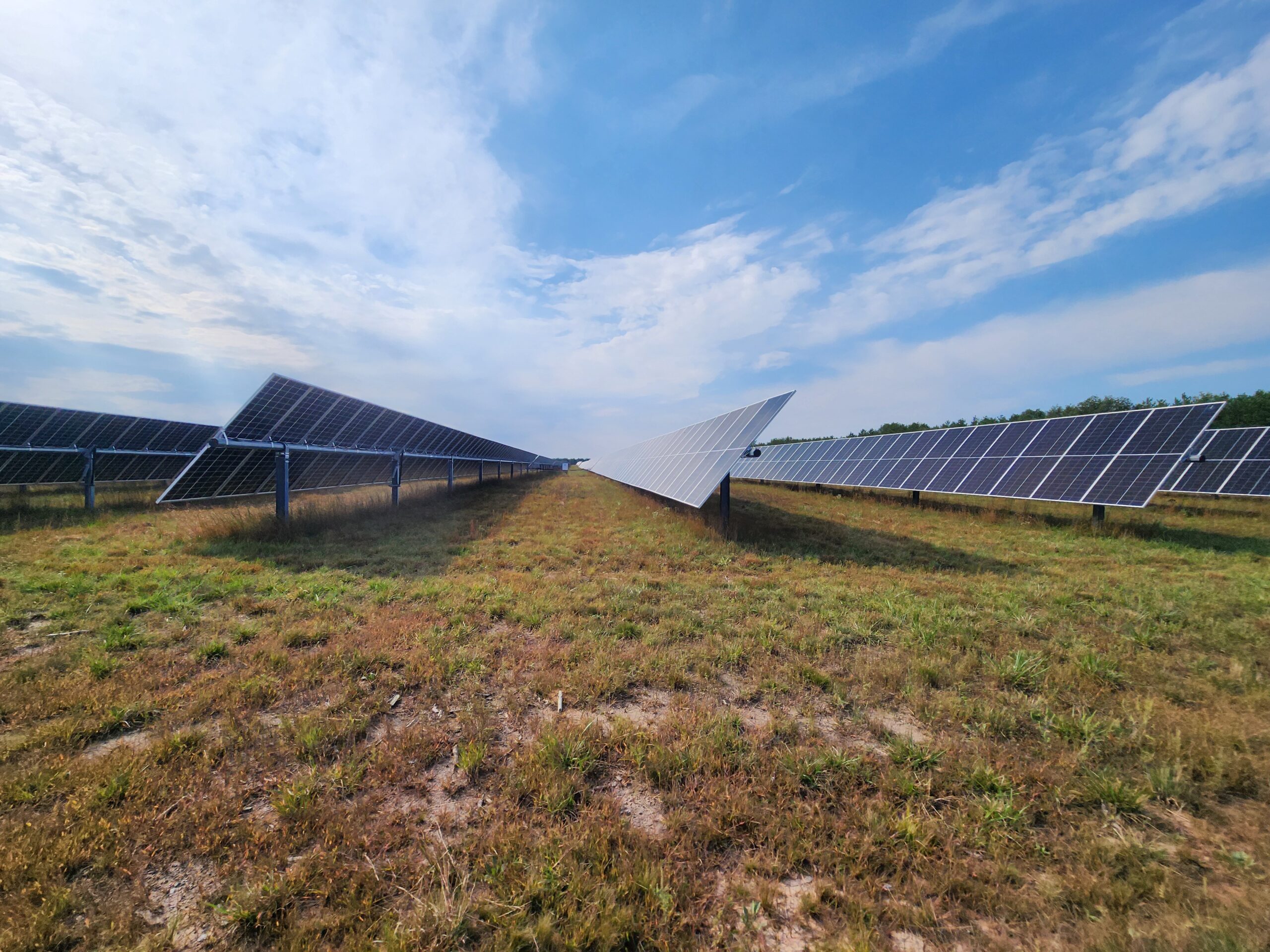
Construction on the Wood Country Solar field began in June 2021 and it went into operation in December 2022. Photo by Cat Clifford, Cipher News, taken in September 2024.
In Wisconsin, Alliant has been moving away from coal and toward solar; it is retiring one of its last two coal-fired plants by mid-2026 and will convert the other to natural gas in 2028.
Alliant’s move away from coal mirrors the same transition in the state writ large, which is being driven by economics, said Greg Nemet, professor of public affairs at the University of Wisconsin-Madison.
“It’s too expensive to run a coal power plant. That’s the bottom line. And there’s cheaper alternatives,” he told Cipher.
Tucked behind its massive Wood County solar field, Alliant is currently installing 4.6 acres of batteries that can store 75-megawatts of power generated by the nearby solar panels. At its maximum, the battery system will be able to power 80,000 homes for four hours when the sun isn’t shining.
Meanwhile, thanks to the Inflation Reduction Act, President Biden’s signature climate law, Wisconsin customers are expected to save $138 million over the life of 12 solar projects throughout the state, or just over 9% of the estimated total projected costs.
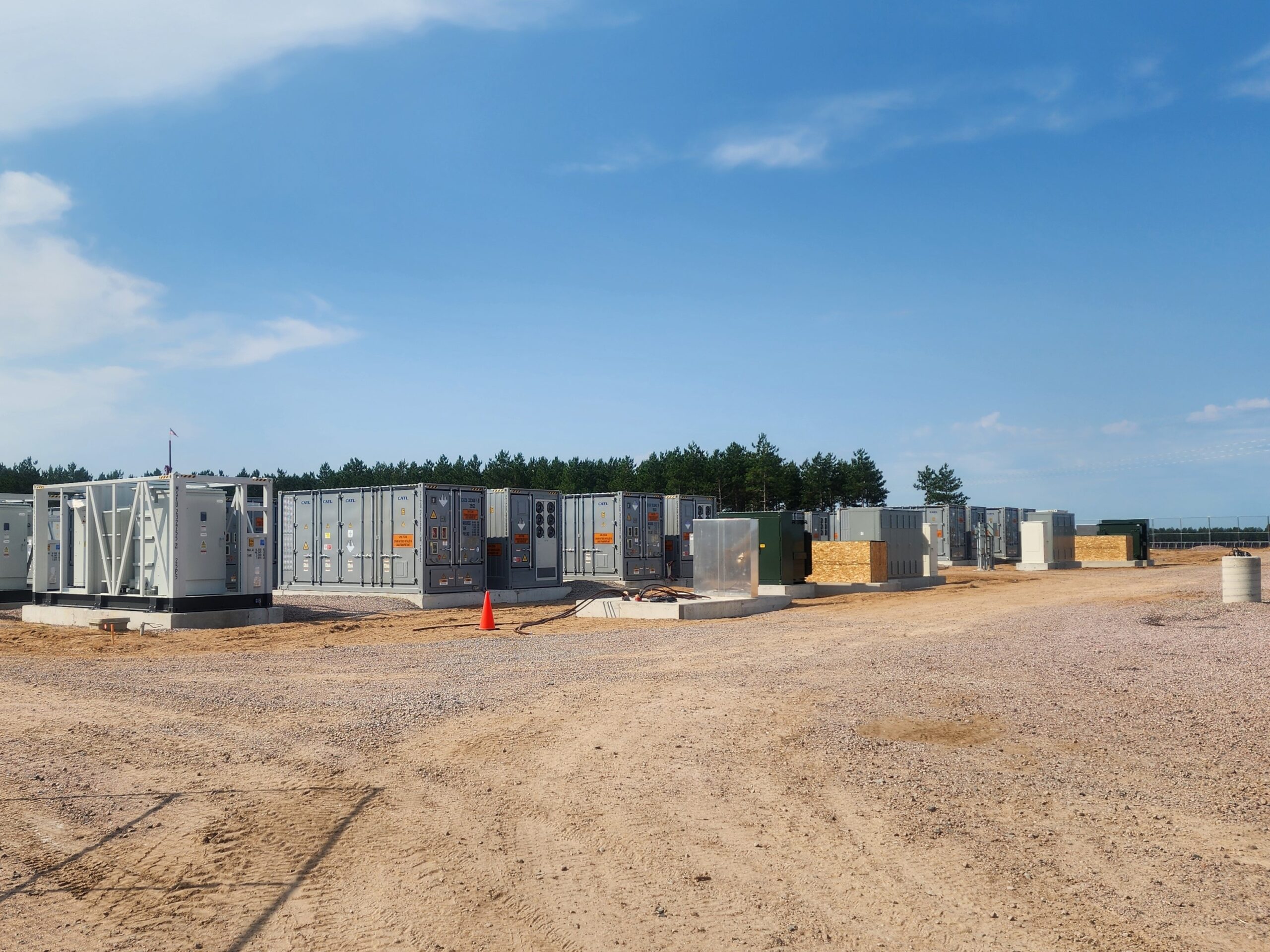
The Wood County Battery Project is located on 4.6 acres behind the Wood County Solar field. At 75 megawatts, it can provide power to over 80,000 homes for four hours on one charge. Photo by Cat Clifford, Cipher News, taken in September 2024.
New neighbors with solar
Convincing residents to be neighbors with solar fields takes patient communication and in Wisconsin, often, an emphasis on the economic benefits.
Talking about cost-savings was the key to convincing Wisconsin Rapids to go solar, said Doug Machon, a former Wisconsin Rapids town chairman who was involved in the early development of the Wood County Solar project.
“You can’t speak about climate change. That’s a political issue. So, you have to drive everything through a financial aspect,” Machon told Cipher. “It’s cheaper to produce electricity with sunlight, and so why wouldn’t you be taking advantage of it?”
Saratoga, the township where the Wood County Solar field is located, gets an annual payment of $340,000 for having the solar field located on its land, Lorelei Fuehrer, chairwoman and zoning administrator of Saratoga, told Cipher. That payout comes from a long-standing shared revenue program operated by the state of Wisconsin.
Utilities like Alliant pay into the fund and Wisconsin distributes the money to municipalities. “That helps tremendously to keep our roads up,” Fuehrer told Cipher.
Despite the clear benefit to town coffers, residents were extremely cautious about the proposed development, she said.

Rhonda Carrell, a resident of Saratoga and a former member of the Saratoga town board, stands in her hair salon. Photo by Cat Clifford, Cipher News, taken in September 2024.
Residents ultimately accepted the solar farm in part because it was a clear winner over a competing business plan for the land: a large-scale animal feeding trough, or concentrated animal feeding operation, said Rhonda Carrell, a hair salon owner who sat on the Saratoga town board while plans were negotiated. She lives three miles east of the site.
Community members were concerned the animal manure would permeate the region’s sandy soil and contaminate local water supplies. A solar field “can be a good neighbor.” Carrell said. At the same time, Carrell doesn’t like to see all of the trees get cut down. “It really bothers me that we’re losing this forested recreational land,” she said.
Carrell’s neighbor, Tony Belanger, also is glad the land did not become a feeding farm, and he isn’t terribly bothered by the solar field nearby. “I don’t see the solar array on a daily basis. I think it’s well hidden,” Belanger said.
But he also is not convinced the United States ought to be building more solar fields at a quickening clip.
“I am not a believer that global warming is going to destroy our world. Change is always happening,” he told Cipher. “My fear is that we’re just going too far trying to create a world of batteries and solar and wind power that just it doesn’t all add up.”
Ultimately, energy is not the primary factor determining how Belanger will vote in November — the economy is. After losing his job when the local paper mill closed four years ago, he now has to commute an hour each way to work in the paper industry.
Belanger said he will vote Republican up and down the ticket in November.
Editor’s note: An earlier version of the illustration for this story included the shape of the state of Pennsylvania instead of the shape of Wisconsin.
Editor’s note: An earlier version of this story misstated Alliant’s plans for its final coal plants in Wisconsin. One will be retired by mid-2026 and the other will be converted to a natural gas plant, not retired, as previously stated.