U.S. oil exports have boomed — but could be leveling off
Data Dive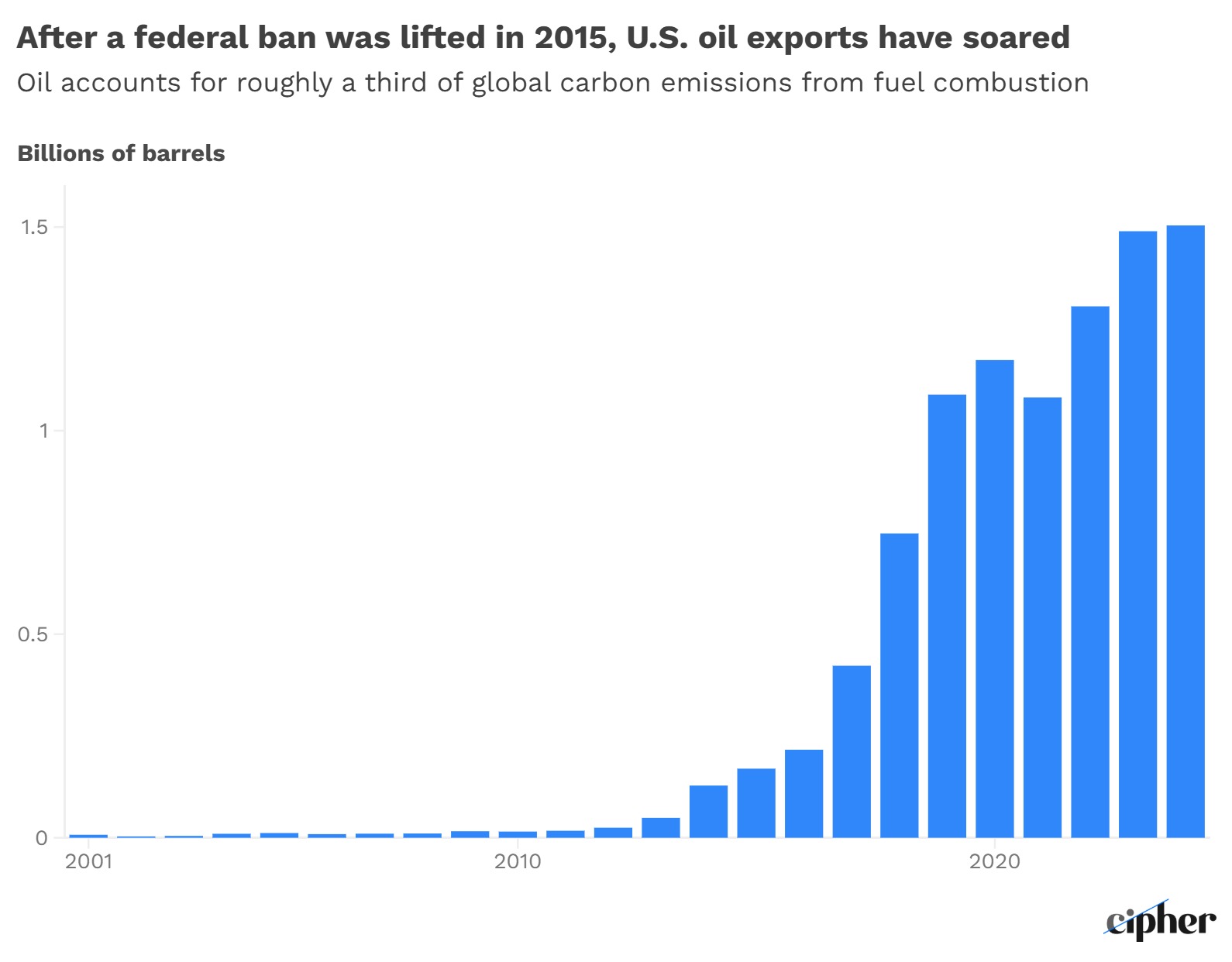
There are two things to note about the chart above. One is easy to spot; the other is less so.
What leaps out is the sharp rise in U.S. oil exports after 2015. That’s when the United States Congress lifted prohibitions on exporting oil that had been in place since 1975.
Equally important to note, though, is that exports grew only slightly in 2024. They hit a new record, barely, rising just 1%.
That raises the question of where exports go from here.
Forcefully upward, if Donald Trump has his way. His administration’s “drill baby drill” policy aims to dramatically boost U.S. oil production, which would likely make for even more exports.
But a close look at what has driven the great U.S. export boom over the past decade casts doubt on whether this can be accomplished.
The U.S. boom was driven by two factors: strong global demand and an oil and gas boom fueled by new drilling techniques in the continental U.S.
The U.S., once a huge net importer of oil, is now the world’s largest producer of oil and the third largest exporter behind Saudi Arabia and Russia. The country became a net energy exporter in 2019, an astonishing feat for the world’s largest economy.
But the Trump administration’s tariff blitz threatening global trade and the growing use of electric vehicles, especially in China, means less oil will be needed for driving. So, oil demand may now fall.
Concern about demand has contributed to the price of oil falling below $70 per barrel, a rough threshold between make or break for the U.S. frackers. Below that level, U.S. producers will almost certainly cut back, unable to make a profit.
Meanwhile, Saudi Arabia and other members of the Organization of the Petroleum Exporting Countries (OPEC) are increasing production, adding to global supply — another factor pushing prices lower. Even China is producing more oil.
That means the chart above will likely flatten out going forward, not continue rising. Some experts thought that would happen during Covid, a dip visible in the chart in 2021. But demand recovered.
Still, many analysts expect global oil demand will peak in the coming decade, if not sooner, as electric vehicles become more popular and renewable energy grows. Whether oil prices stay at levels that allow U.S. producers to compete in global markets remains to be seen.