The world’s fastest supercomputer is accelerating efforts to bring star power to Earth
Latest News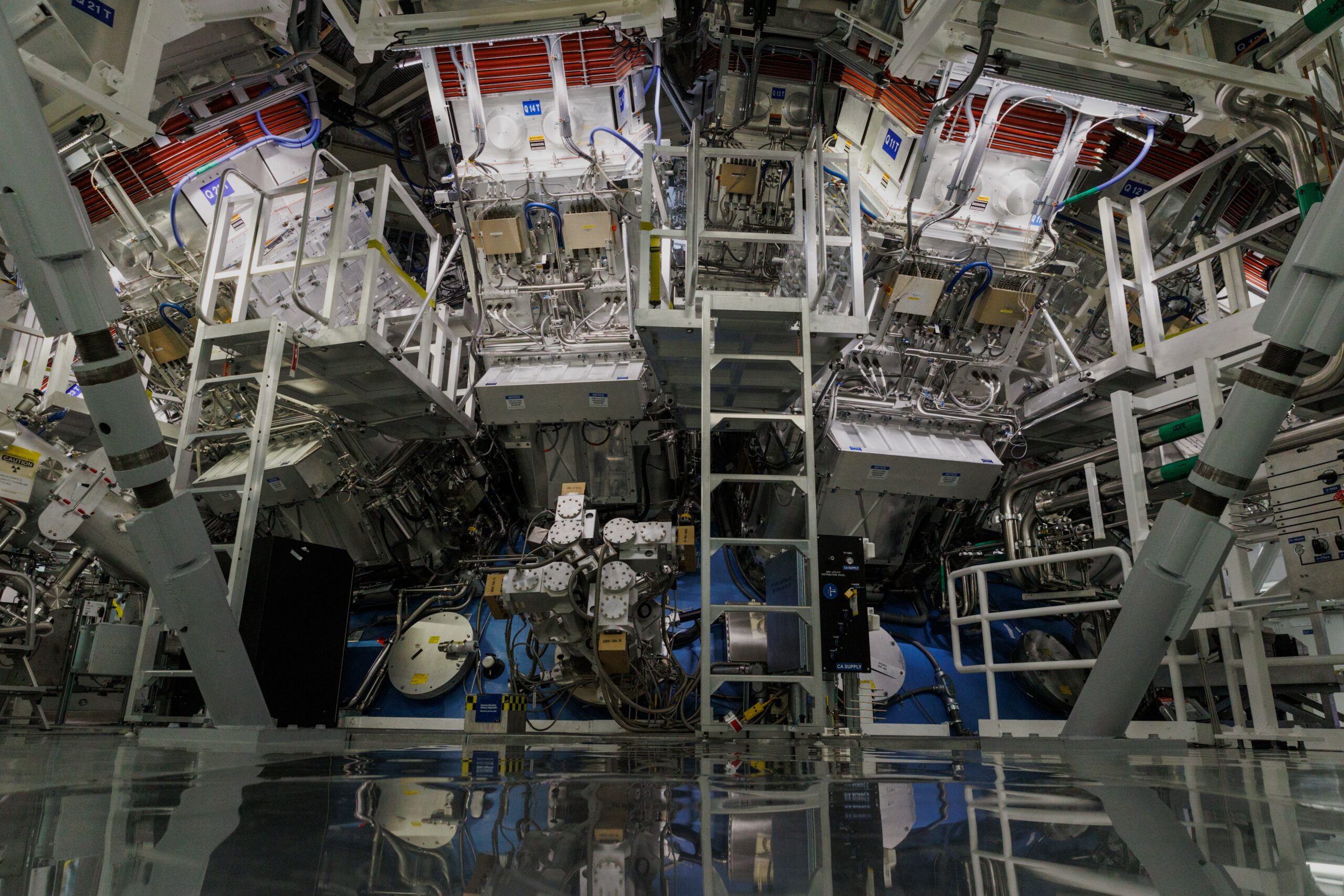
LIVERMORE, California — It makes sense that a technical achievement straight out of science fiction took place in a facility so futuristic that it was once used as a backdrop in a Star Trek movie.
But in this Hollywood-worthy chamber at Lawrence Livermore National Laboratory outside San Francisco, researchers not only turned a one-time technological fantasy into reality, they also helped accelerate a full-on race to scale and monetize what some have dubbed the “holy grail” of clean energy: fusion.
On December 5, 2022, scientists at Lawrence Livermore’s National Ignition Facility (NIF) reached a groundbreaking milestone in fusion research when they aimed 192 laser beams at a pellet of hydrogen fuel about the size of a peppercorn. The beams travelled nearly a mile throughout the facility before hitting the target and causing the hydrogen atoms in the fuel pellet to fuse and release energy.
The result of the historic shot was the first-ever achievement of “ignition,” a critical point when more energy was produced by the reaction than went into the lasers that drove it. If this reaction could be scaled up to the point where fusion power plants are a reality, it could transform our power systems by producing massive amounts of continuous clean energy.
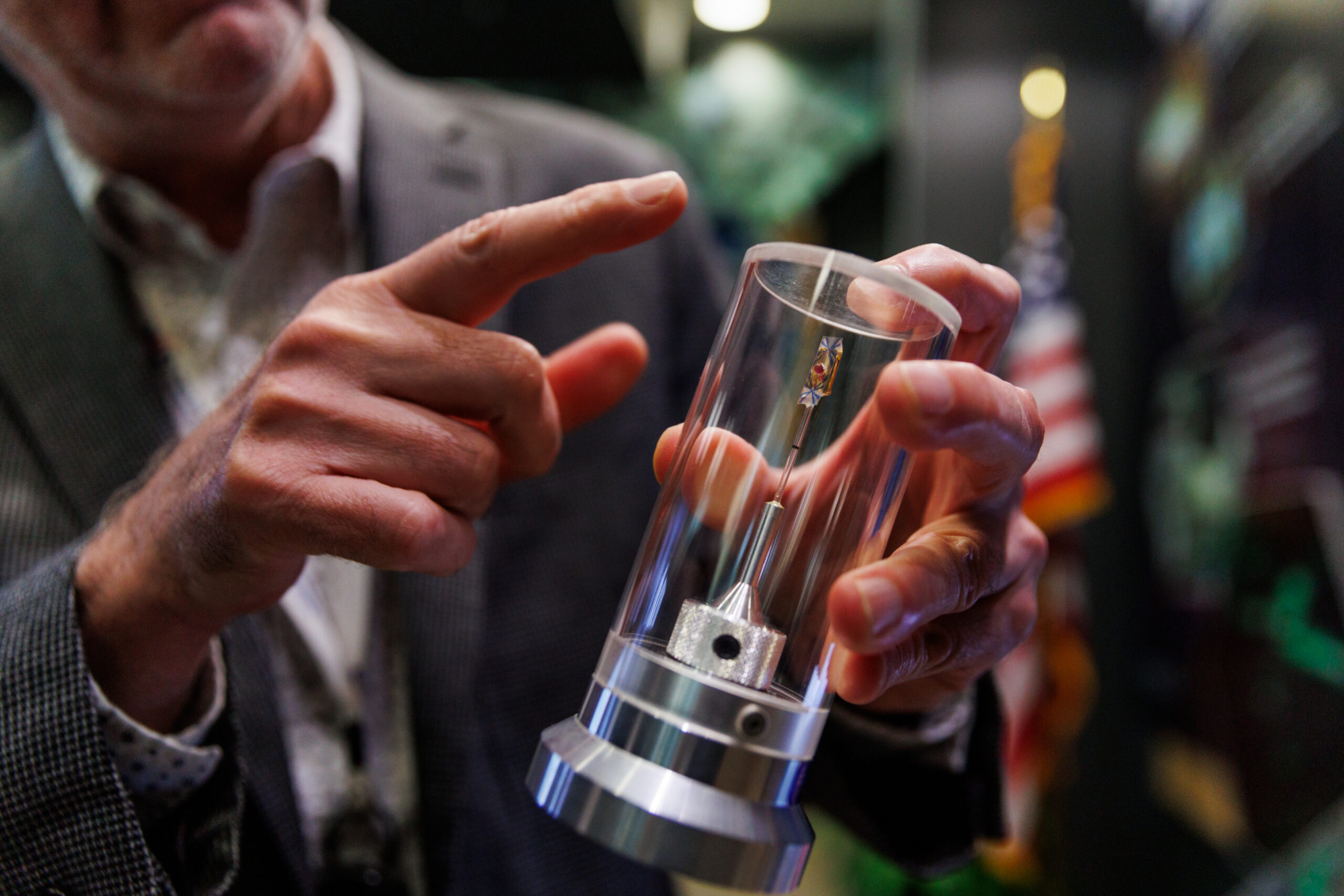
Richard Town, who leads a large team at Lawrence Livermore National Lab working on inertial confinement fusion, shows a fuel pellet (colored red for visibility). Photo credit: Juliana Yamada.
As huge as the lab’s accomplishment was, however, it was just the beginning of a new set of challenges. The researchers turned their focus to replicating the achievement and getting ever more energy out of the fusion reaction. To help with those efforts, they now have the benefit of another technological marvel: the world’s fastest supercomputer just a stone’s throw away.
Named “El Capitan” after the towering Yosemite rock formation, the world’s fastest supercomputer is surprisingly underwhelming at first glance, with hardware tidily tucked away behind black metal cabinets. Opening those doors, however, reveals 32 miles (!) of interconnecting wires running between the 44,544 computer processors and associated hardware. All in, the racks, computing hardware and supporting infrastructure weighs 1.3 million pounds.
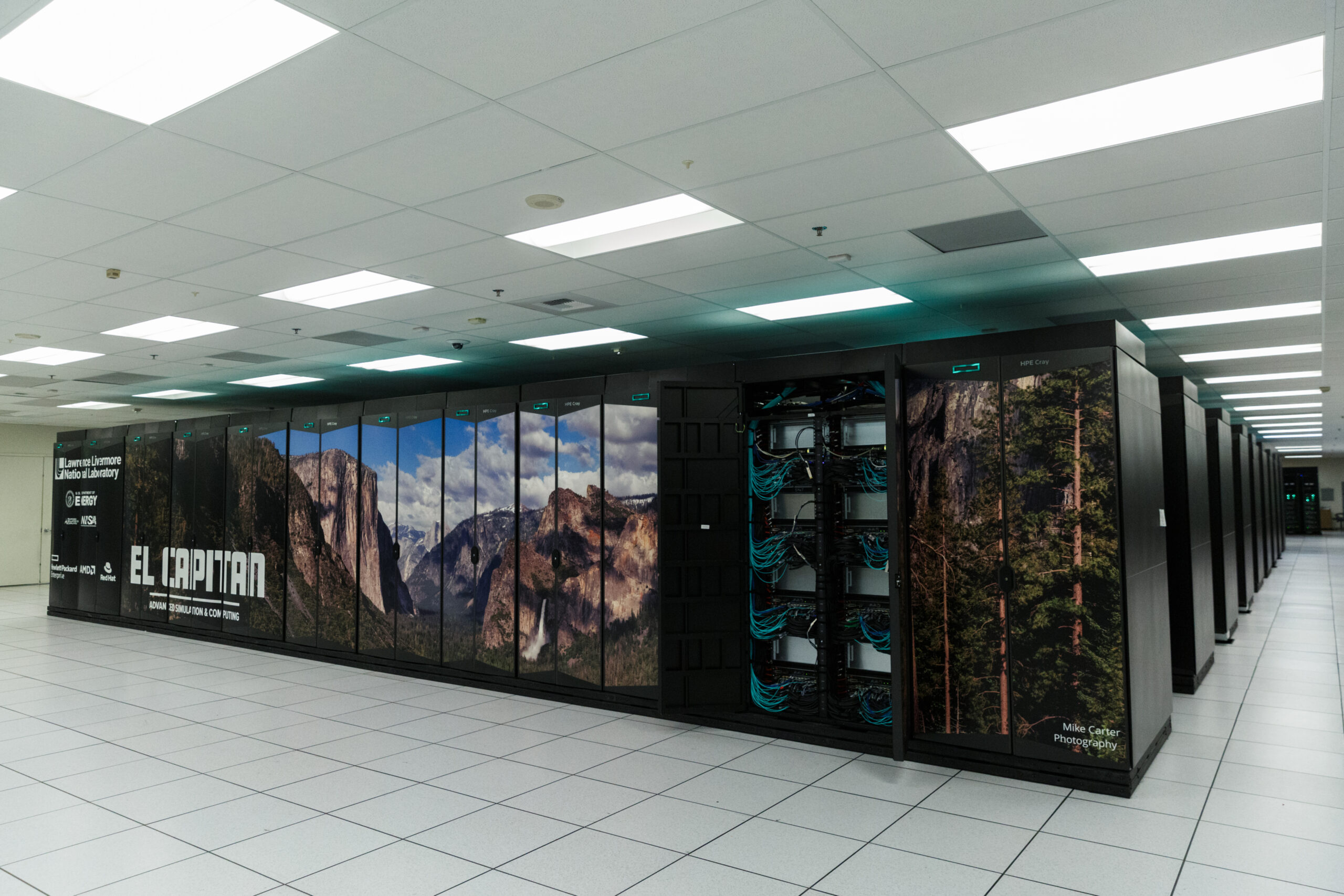
El Capitan supercomputer at Lawrence Livermore National Laboratory. Photo credit: Juliana Yamada.
Officially unveiled in November, El Capitan brings an unprecedented amount of computational muscle to the already industry-leading fusion research at Livermore.
Across the fusion industry, advances in artificial intelligence are helping unlock new frontiers. “We are able to do things now that before, when I started to do research on fusion, was unbelievable,” Sehila González de Vicente, global director of fusion at Clean Air Task Force, a non-profit advocating for climate policies, told Cipher.
AI is also, perhaps ironically, driving up demand for the kind of electricity fusion could provide. Vicente describes this dynamic as a “symbiotic relationship.” The two are driving each other forward.
Fusion needs AI
Livermore, one of 17 national labs primarily funded by the U.S. Energy Department, has been on the cutting edge of supercomputers for 70 years. The importance of these computers increased when the United States switched from testing nuclear weapons underground to using computer-generated and laser-based experiments in the lab to ensure the safety of the country’s nuclear weapons stockpile about 30 years ago.
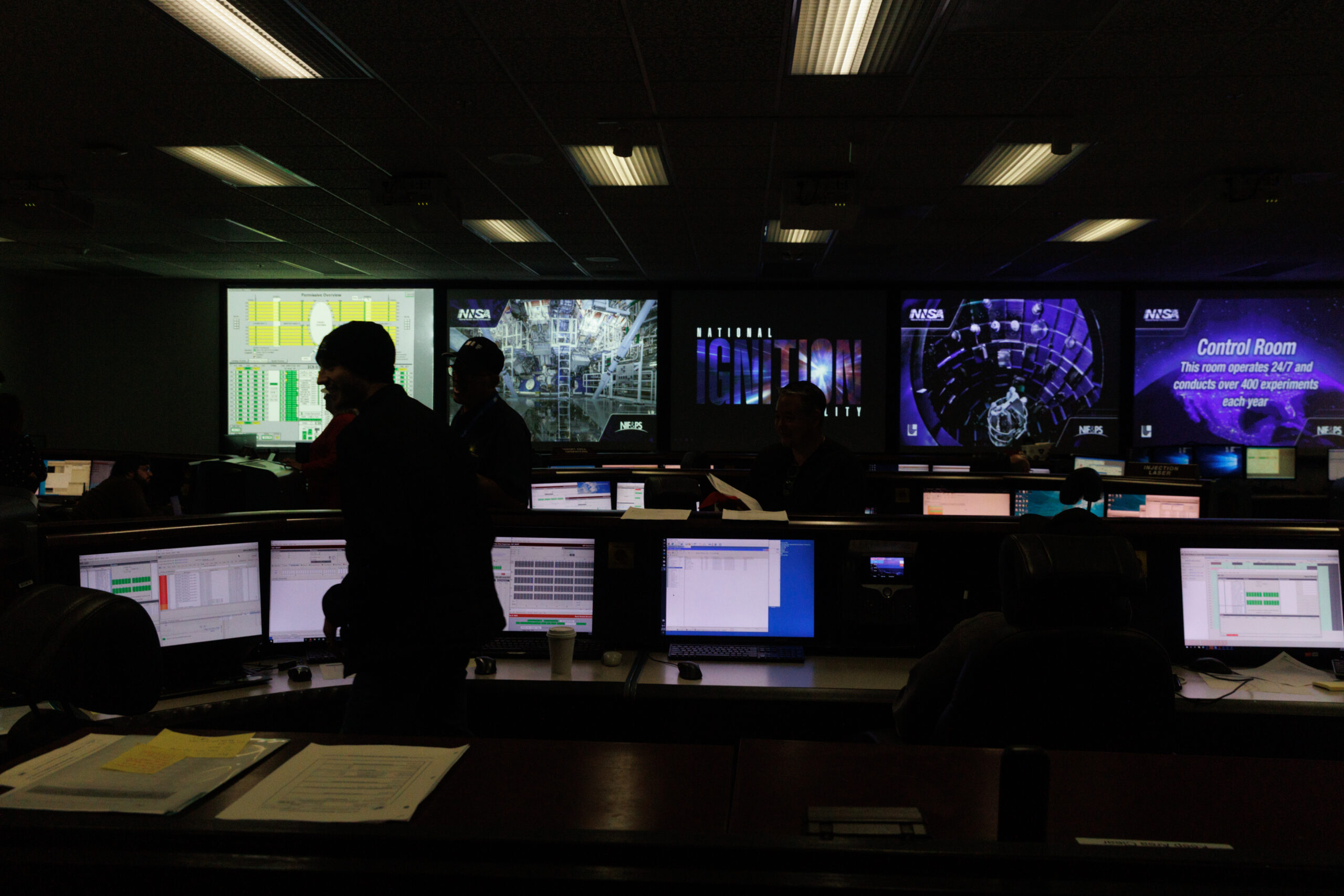
A look into the control room at the National Ignition Facility at Lawrence Livermore National Laboratory. Photo credit: Juliana Yamada.
Because the nuclear work at Livermore is directly related to the maintenance of the country’s nuclear weapons stockpile (and clean energy science), the lab is guarded by armed security officials and Cipher was escorted by a minder at all times. Cipher News was one of the first news outlets to be granted access to see El Capitan.
Despite its nuclear weapons provenance, pursuing fusion energy has always been part of the National Ignition Facility’s plan since construction began in May 1997. (“Ignition” is in the name, after all.)
“Everything about that facility, actually, was derived from what our simulation said was required to get to fusion ignition,” said Mark Herrmann, associate director for weapon physics and design at Livermore.
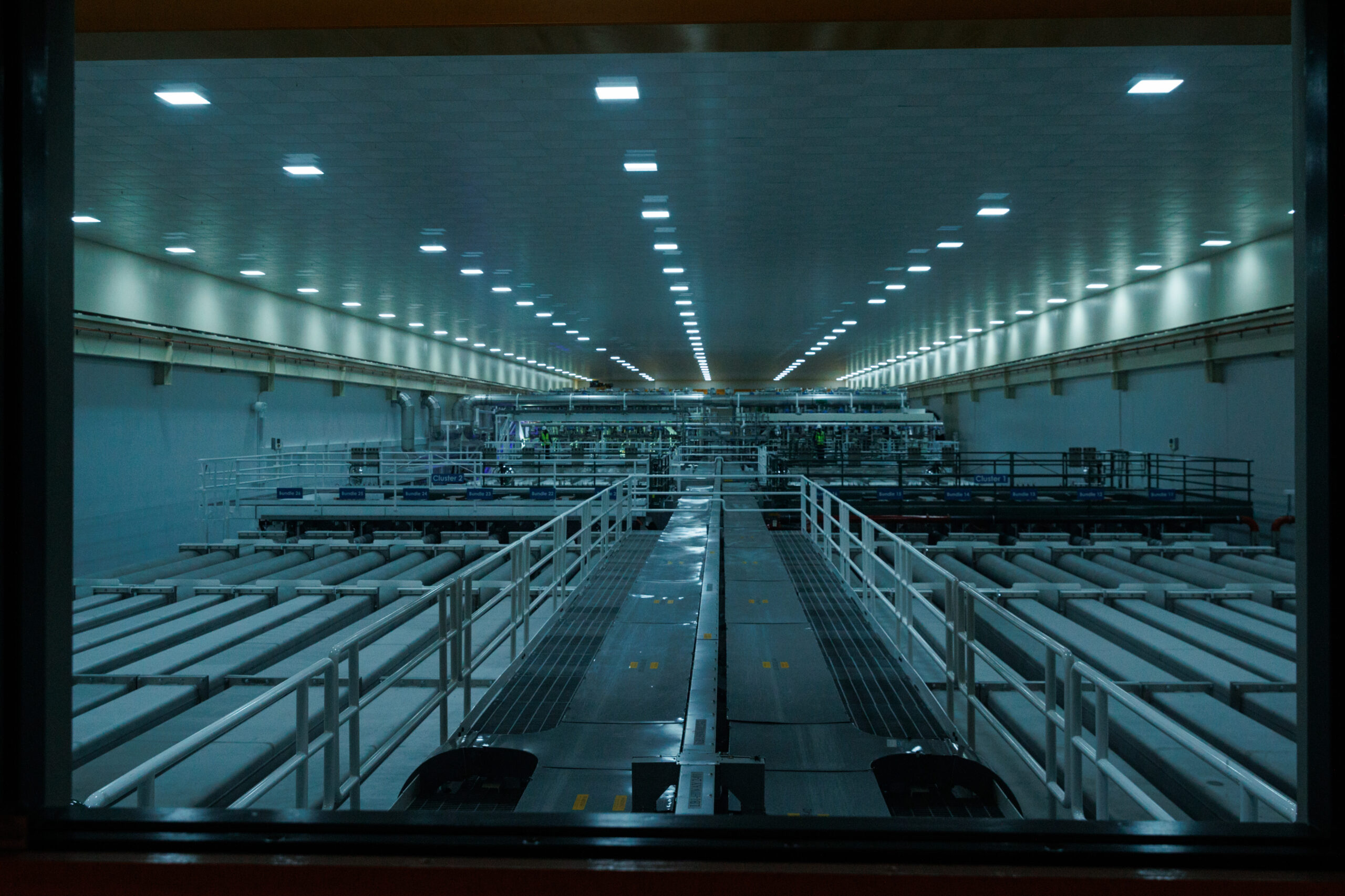
One of the laser bays at the National Ignition Facility. Laser beams travel through the tubes before reaching the target chamber. Photo credit: Juliana Yamada.
Researchers design experiments using computer simulation and AI, execute the experiments in the ignition chamber, collect data and do it all again, said Teresa Bailey, associate program director for weapon simulation and computing/computational physics at Livermore.
AI is also used to maintain the facility itself, detecting damage in key components so they can be replaced, said Richard Town, a scientist at Livermore who leads a team focused on fusion and high-energy density physics. (Check out Cipher’s profile of Richard Town and how his experience is a window into how big science problems get solved.)
While supercomputing has been a part of fusion research at the national lab for decades, El Capitan will allow scientists to do even more. The computer is verified to perform 1.742 quintillion calculations per second, a mind-boggling figure. El Capitan can accomplish in one second what would require roughly one million of the fastest smartphones working simultaneously to do, according to Livermore.
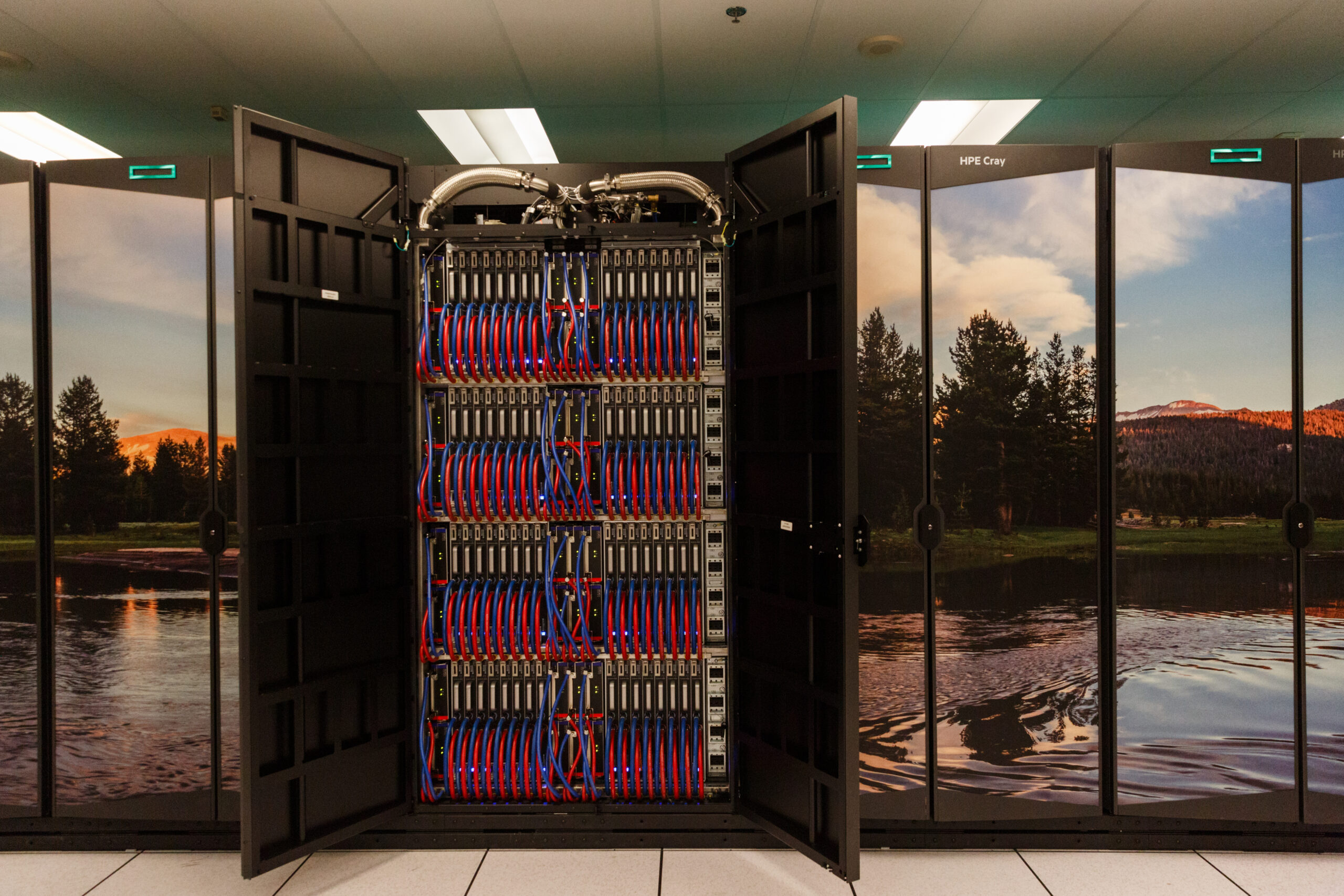
A look at the complicated guts of El Capitan, the world’s fastest supercomputer, at Lawrence Livermore National Laboratory. Photo credit: Juliana Yamada.
Having access to more computing power will turbocharge the pace of progress on all types of research at the lab, including fusion, said Brian Spears, the director of Livermore’s AI Innovation Incubator.
“We’re going to go faster, because we’re going to do a better experiment, get an answer to the better question and then that will let us pose a still better question,” said Spears. “So, there’s a sort of virtuous feedback.”
Scientists at the lab are doing preliminary testing and plan to start running full fusion calculations on El Capitan in April, Town told Cipher.
AI needs fusion
The dream of using fusion as a source of clean, low-carbon electricity has already driven more than $6 billion in private capital into developing private fusion companies, according to the Fusion Industry Association, a trade group.
Some of those groups are, like the team at Livermore, using lasers to try to achieve fusion; others are using powerful magnetic fields in a donut shaped device called a tokamak.
At the same time, the race to develop AI is supercharging the hunger for electricity to operate the voracious data centers AI needs. Forecasted electricity demand growth in the U.S. has jumped fivefold in two years, from 23 to 128 gigawatts, due in part to AI’s explosion, according to energy consulting firm Grid Strategies.
The quest for electricity to power AI-dedicated data centers is, in turn, boosting interest in fusion, Spears said.
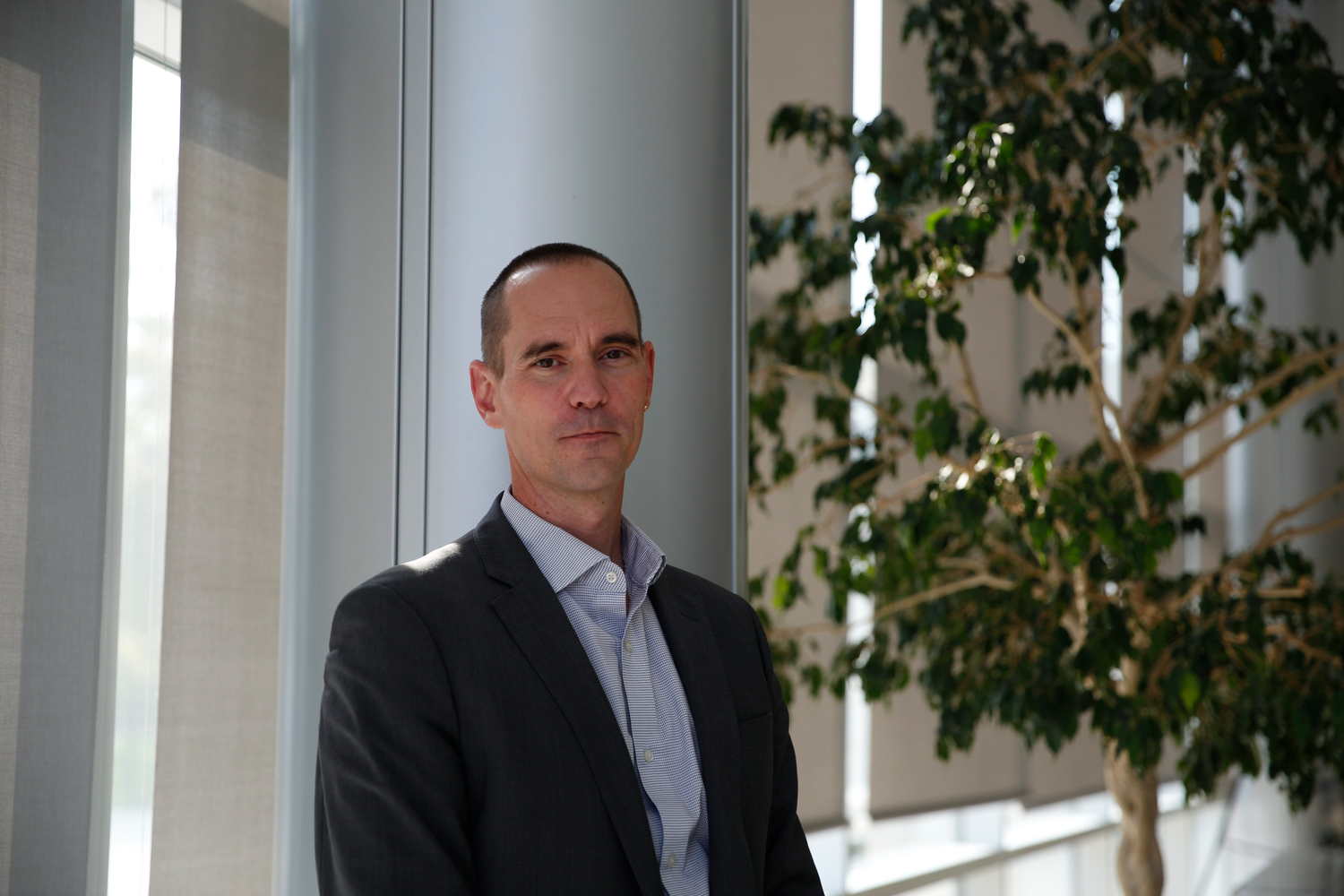
Brian Spears, the director of Livermore’s AI Innovation Incubator. Photo credit: Juliana Yamada.
“AI is actually another source of demand for this fusion reality to come to bear. So, lots of the private AI companies who are very heavily capitalized at this point are making investments in the fusion space,” he said.
For example, Sam Altman, CEO of Open AI, the company behind ChatGPT, is a major funder of Helion, a fusion startup in Everett, Washington.
“That’s a pressure, in a positive sense, on the fusion industry that was not there absent AI,” Spears said.
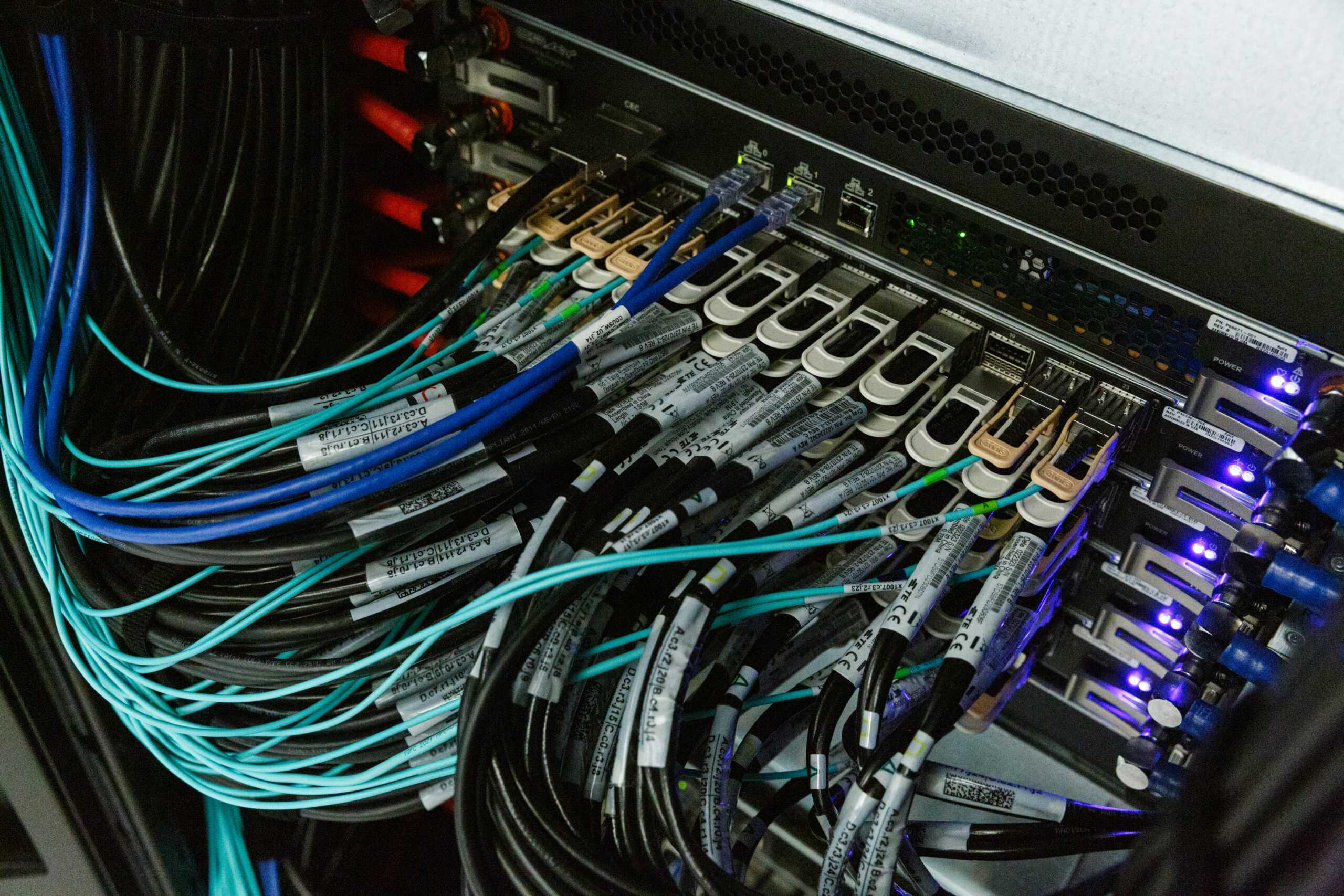
A look inside El Capitan, the world’s fastest supercomputer, at Lawrence Livermore National Laboratory. Photo credit: Juliana Yamada.
It’s still unknown how long it will take for fusion to become a viable electricity source. Critics have said — so far correctly — that fusion as an actual energy source has always been on the horizon. Scientists at Livermore expected to achieve ignition in three years — it took 12, said Town. Private fusion executives want to accelerate progress and build fusion power plants in the early 2030s.
Scientists at labs like Livermore or ITER, an international fusion collaboration, know firsthand that progress takes time, said Vicente of Clean Air Task Force. On the other hand, some key technologies, like the latest generation of AI and high temperature superconductors, simply weren’t available until recently, she told Cipher.
Meanwhile, private investors are not endlessly patient, Vicente said: “The push that we have now is not any longer an academic, scientific research. It’s a business.”