Solar power is everywhere in Pakistan—here’s what that looks like
Latest News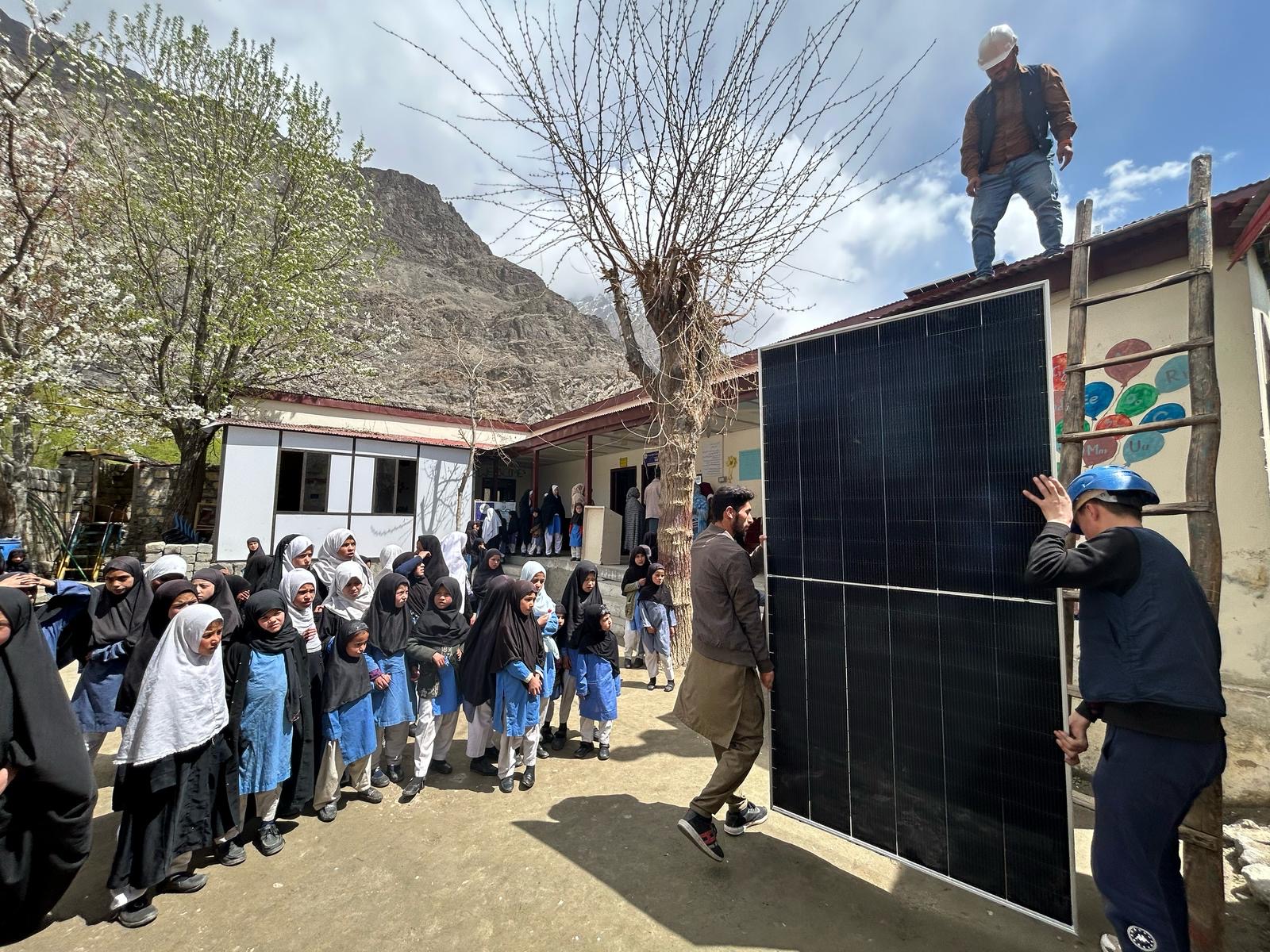
To say solar power is booming in Pakistan is an understatement.
On a recent trip to my native country, I was overwhelmed by the omnipresence of solar energy in nearly every corner.
Generous government policies are enabling cheap Chinese imports to flood the bazaars, turning solar energy into a commodity as accessible as mobile phones in Pakistan.
To be sure, fossil fuels — primarily natural gas — still power most of Pakistan’s electricity and oil-fueled internal combustion engine cars still make up most vehicles on the roads. But a solar revolution is also underway.
Here are some of the ways I saw and heard about solar panels being used:
Filling in for the grid in remote regions
Baltistan, together with Gilgit, is a region of Pakistan’s rugged north surrounded by the Karakoram, the world’s second largest mountain range. From here, the Indus River, fed by glacial melt, snakes through the plains of Punjab, across the deserts of Sindh and, 1,000 miles away, drains into the Arabian Sea.
Unlike other parts of Pakistan, this region is not connected to the national grid and depends mostly on small, scattered hydropower projects for electricity.
But Baltistan — sometimes called “Little Tibet” — is known for its strong and plentiful sunlight, especially in the spring and summer months. That sunlight is now being tapped to power every streetlight and government building in the historic cities of Skardu, Shigar and Khaplu.
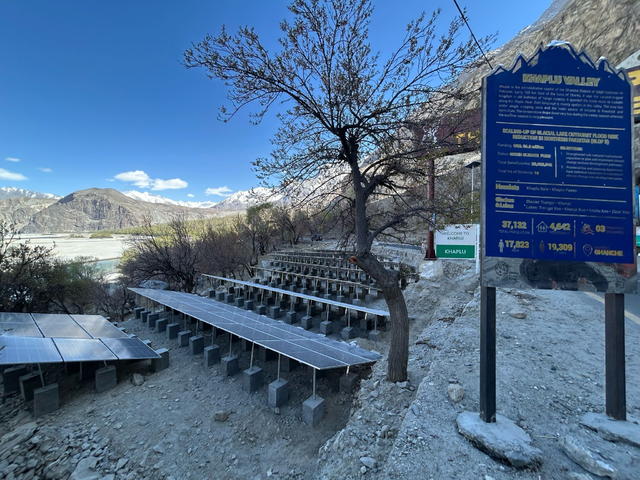
Visitors entering the Khaplu Valley are greeted by a sign providing a history of the ancient town of Khaplu. Behind the sign you can see an array of solar panels pumping water from the nearby Shyok River for the town’s residents. Photo by Amena H. Saiyid.
“I see a huge potential for small-scale solar and wind projects because they are the easiest and cheapest to install,” Shabab Wahid, Gilgit-Baltistan’s chief engineer for water and power, told Cipher.
At the entrance to Khaplu, I saw descending rows of solar panels powering the pumps that take water from the Shyok River to supply some 30,000 city residents.
Driving between these three cities, I passed solar panels mounted on makeshift wooden frames pumping water for construction projects along the clear blue Shyok and Shigar rivers that feed into the mighty Indus. This cheap energy source also was being used to water native poplar trees and blooming apricot orchards along the mountain roads.
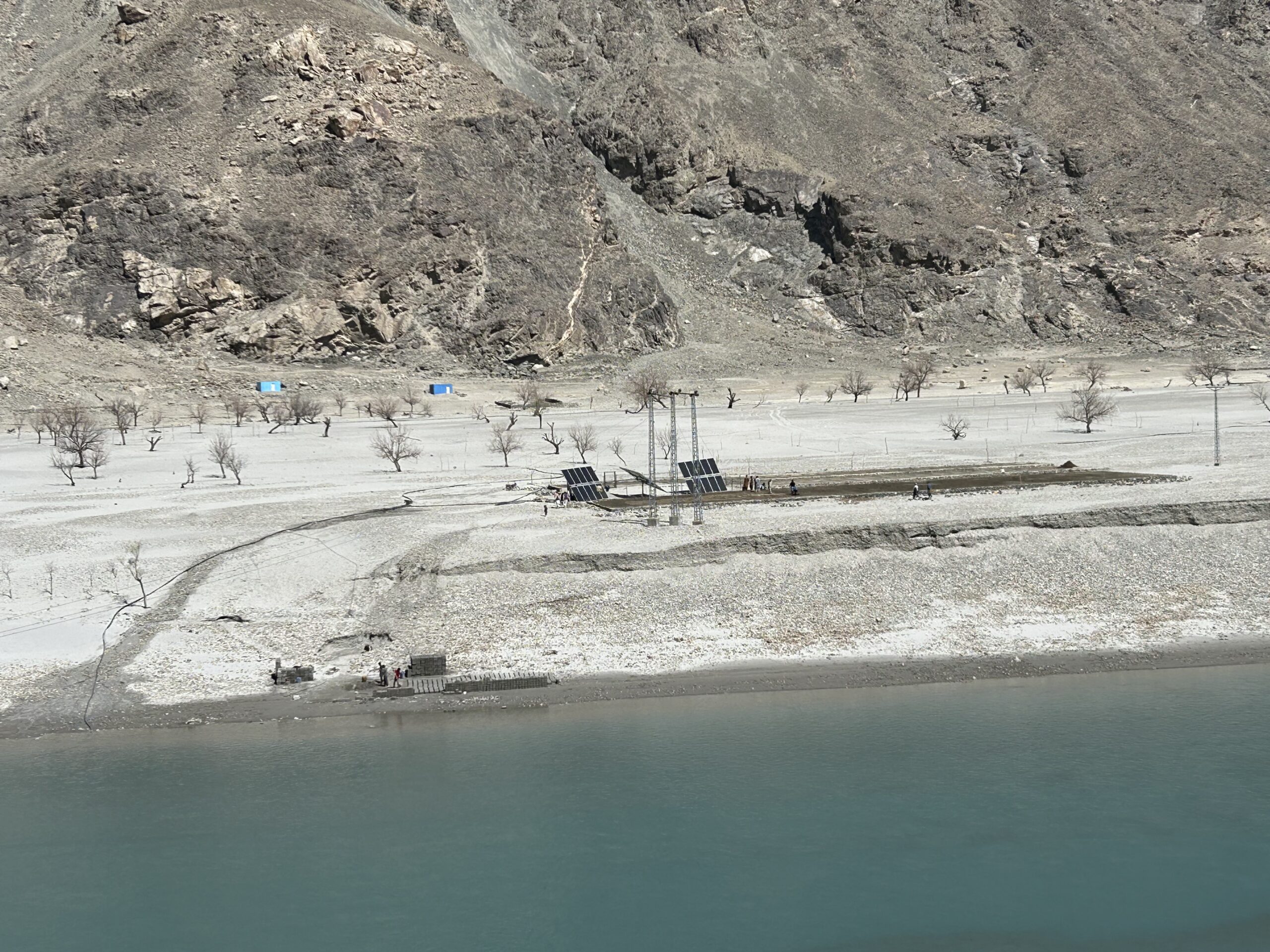
Against the arid granite backdrop, solar panels help irrigate cultivated tracts of farmland, pulling water from the clear, greenish blue Shyok River in Baltistan in northern Pakistan. Photo by Amena H. Saiyid.
Powering big cities
In the major cities of Karachi, Islamabad and Lahore, solar panels topped nearly every home, factory and commercial building. Streetlights everywhere were powered by solar. Electronic signs bearing the name of Chinese solar manufacturer Longi hung along major roads in Lahore. I was surprised to see gas stations and oil servicing centers powered by solar panels as well.
Even Islamabad’s red zone, which houses the nation’s parliament buildings and other ministries, has gone “green” with solar power, said Pakistan Senator Sherry Rehman, who heads the Senate task force on climate and the environment.
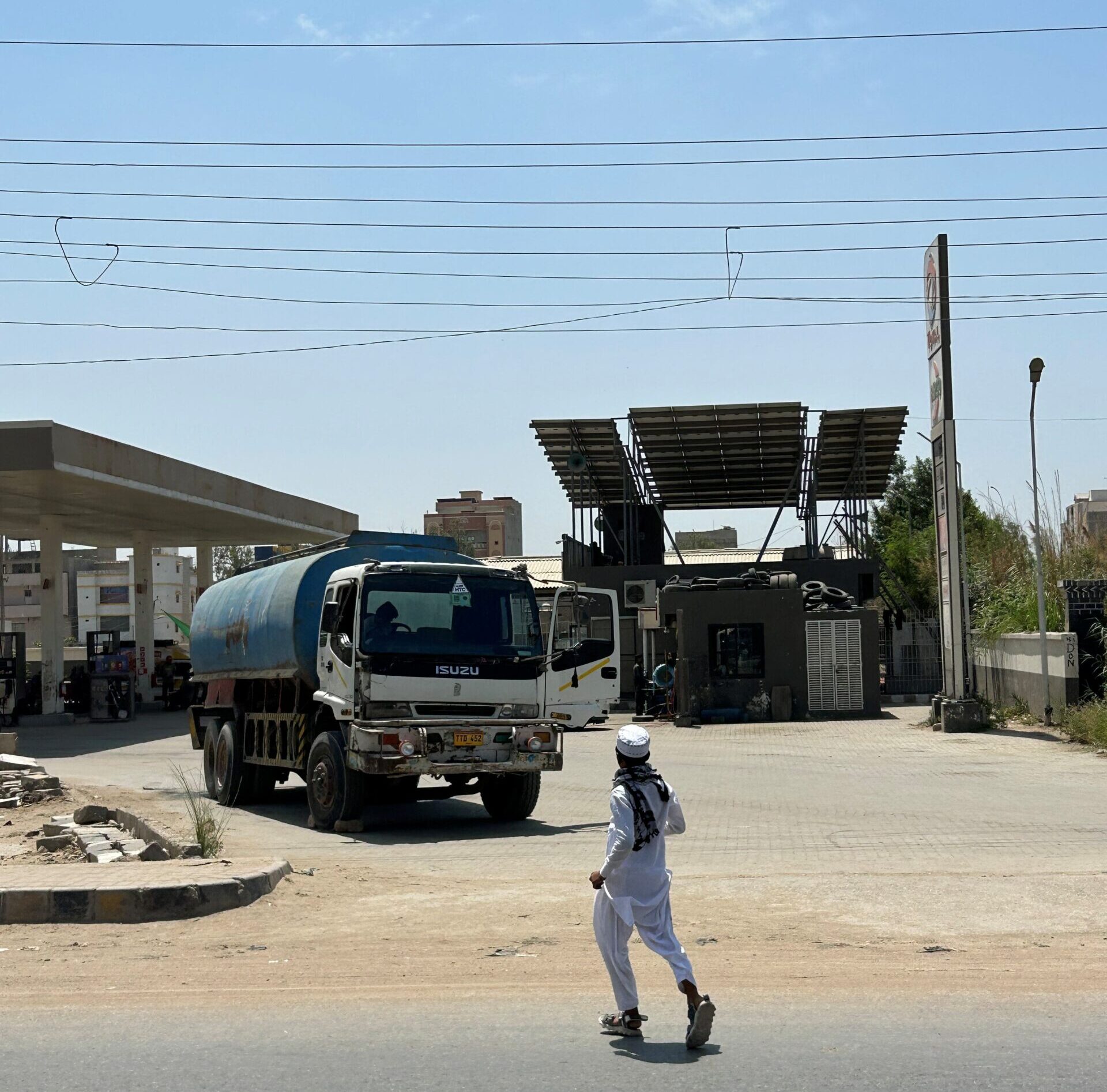
A man jaywalks across a busy highway towards a gas station that is covered with solar panels in Karachi near Port Qasim. Photo by Amena H. Saiyid.
However, Pakistanis have learned the hard way what can happen if this technology isn’t installed properly.
An unexpected hailstorm struck Islamabad in mid-April and damaged hundreds of rooftop solar panels collectively worth thousands of rupees (the average panel costs about $50; one USD equals roughly 280 Pakistani rupees). And in May, destructive windstorms tore through parts of the Punjab province, including Lahore, pulling improperly installed panels off rooftops, resulting in at least two deaths. This event prompted the provincial government to issue rules for proper installation.
“The damage was caused mainly on poorly installed solar structures, usually done that way to avoid cost,” said Waqas Moosa, chief executive officer of Lahore-based Hadron Solar, which has installed upward of 1,100 panels in Pakistan, totaling more than 24 megawatts nationwide. “We were fortunate that all our installations survived intact.”
Keeping the lights on in schools
Facing teacher shortages and incessant power outages, low-income schools are turning to solar to power online learning programs.
Near Karachi’s bustling Port Qasim along the Arabian Sea, for example, a solar and lithium battery combo is powering laptops, fans and lights at a struggling, two-room school run by Maryland-based Teach the World Foundation. The students, age seven and up, attend hour-long classes in four shifts, where they are taught how to read and write Urdu using computer programs on their laptops (Urdu is Pakistan’s official language).
The system was recently developed by Minhaj Ali Khan, chairman of Karachi-based Midi Link Group, who wants to assist households and schools that can’t afford even the cheapest solar panels.
Meanwhile, hundreds of miles away, the Nar Community School for Girls in remote Baltistan, recently installed a pair of panels, a battery and related equipment provided by the nonprofit Braldu Valley Foundation.
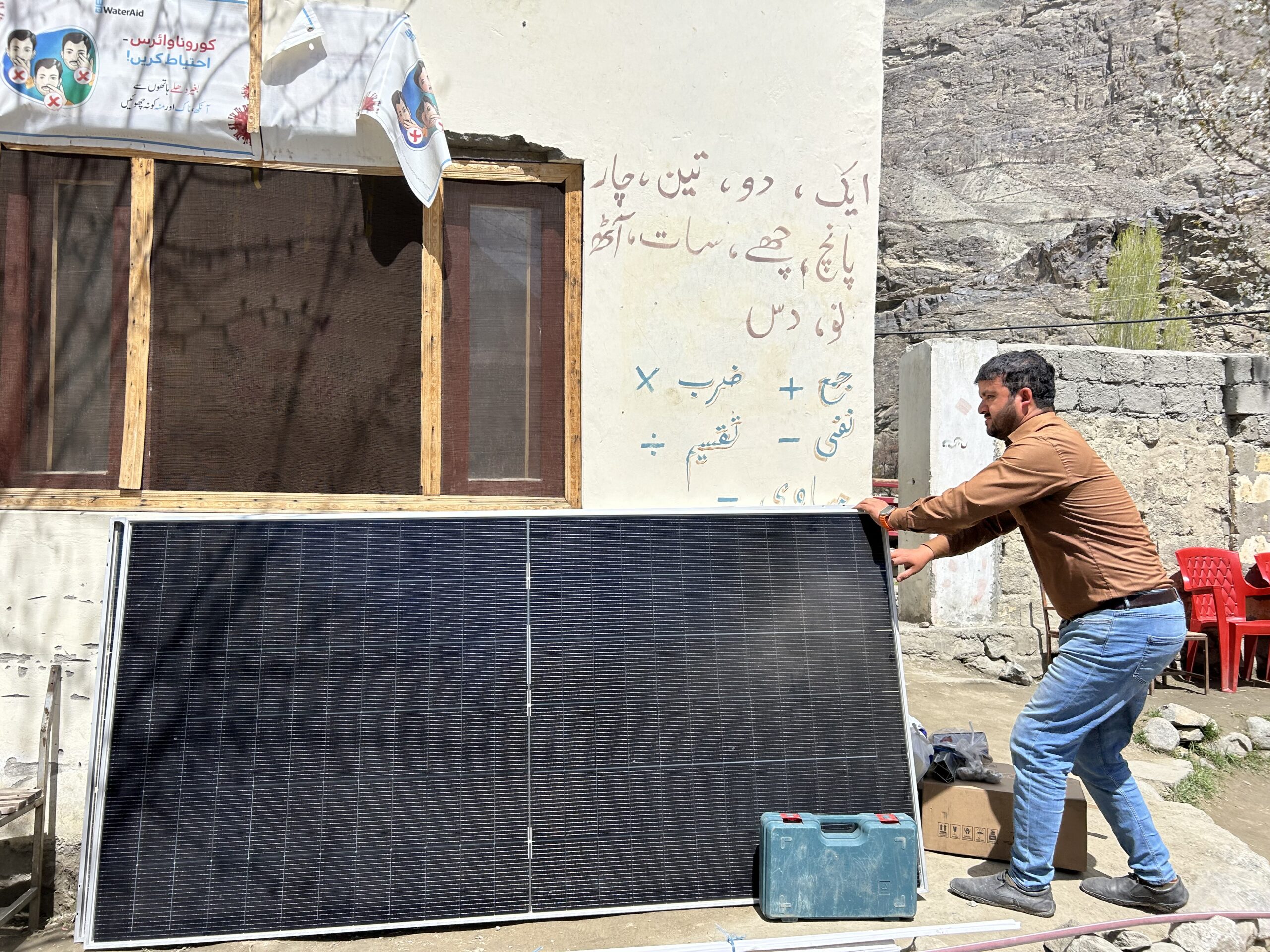
Kumail A. Raza with EverShine Solar Energy moves solar panels so they can be hoisted onto the roof of the Nar Community School in Skardu Valley in northern Pakistan. Photo by Amena H. Saiyid.
“Solar was the most cost-effective solution to keep the lights on in the school’s computer lab,” Mehreen Husain, the foundation’s cofounder, told Cipher.
I joined Husain in April for the installation at the school, which was a 40-minute drive from the nearest city, Skardu, over bumpy, unpaved roads and a rickety one-lane wooden bridge crossing the Indus River.
Under bright blue skies, the young girls assembled in the tiny school’s courtyard, jostling each other in a friendly manner as they watched the solar panels being hoisted onto the school’s rooftop. The installation followed a short assembly filled with prayers and speeches praising the donation.
Boosting agricultural activity
On a bus ride between Islamabad and Lahore, through the fertile plains of Punjab, I noticed pairs of black solar panels standing out amongst the grazing cattle and freshly harvested fields of wheat. Three years ago, I didn’t notice any panels when I traveled the same route.
Agriculture represents the lion’s share of off-grid solar connections in Pakistan, said Haneea Isaad, Islamabad-based energy finance specialist with the nonprofit Institute of Energy Economics and Financial Analysis.
“These are conservative estimates based on our calculations of Chinese imports, since there’s no official way to track these off-grid installations,” she said.
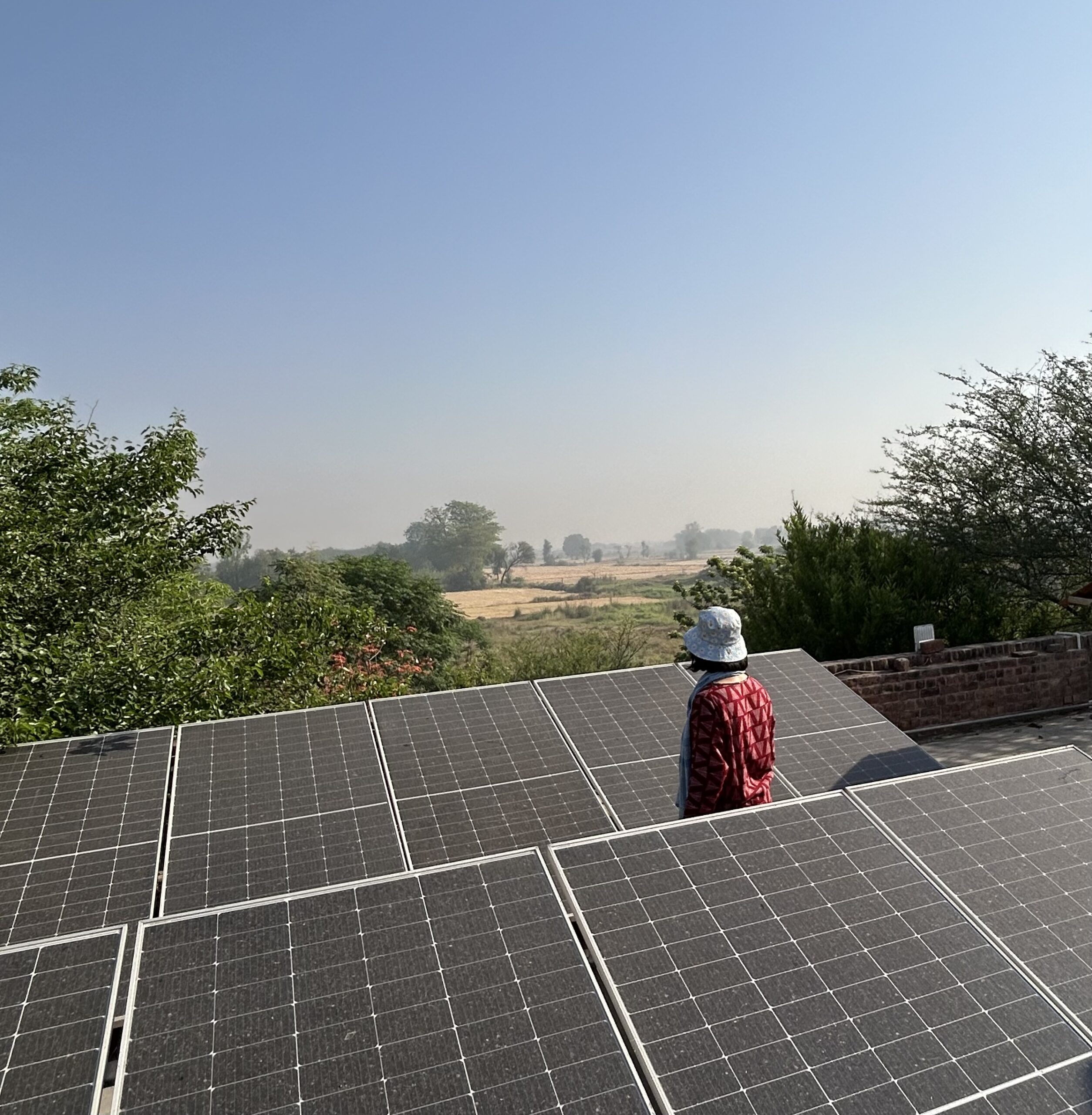
Standing amidst the solar panels on her farmhouse, actor and organic farmer Samiya Mumtaz gazes at her land, pondering the next planting season. Photo by Amena H. Saiyid.
The Punjab government hopes to boost solar connections here even further. Last year, the government initiated a grant program aimed at converting most of Punjab’s 1.2 million tubewells feeding the farmlands from expensive diesel-powered generators to solar.
Standing amidst the panels atop the farmhouse overlooking her 12-acre organic farm in the rural outskirts of Lahore, Pakistani film actress and organic farmer Samiya Mumtaz said she is using solar energy because the grid-supplied electricity is so erratic.
“Solar is the only viable option at the moment,” she said. But Mumtaz worries about the environmental impacts of using solar panels regardless of where they are made. “I am seriously concerned about how and where solar panels are being made and disposed once they reach the end of their useful life.”