Solar and batteries drive cleantech construction
Data DiveMore than half the cleantech projects announced across the United States in 2024 had begun construction or were operating at year’s end, according to a Cipher analysis.
The projects moving into construction or operation represent nearly 28% of last year’s total announced investments into cleantech, which was valued at $240.26 billion. They were dominated by solar and battery storage projects.
The findings are based on an analysis of data in the Clean Investment Monitor, a project led by the Rhodium Group and the Massachusetts Institute of Technology’s Center for Energy and Environmental Policy Research, including the data that makes up Cipher’s Cleantech Tracker.
That over a quarter of all project investments announced in 2024 had broken ground or begun operating by year’s end, “highlight[s] impressive progress toward bringing these projects online,” Hannah Hess, associate director with the Rhodium Group’s energy and climate practice, told Cipher in an email.
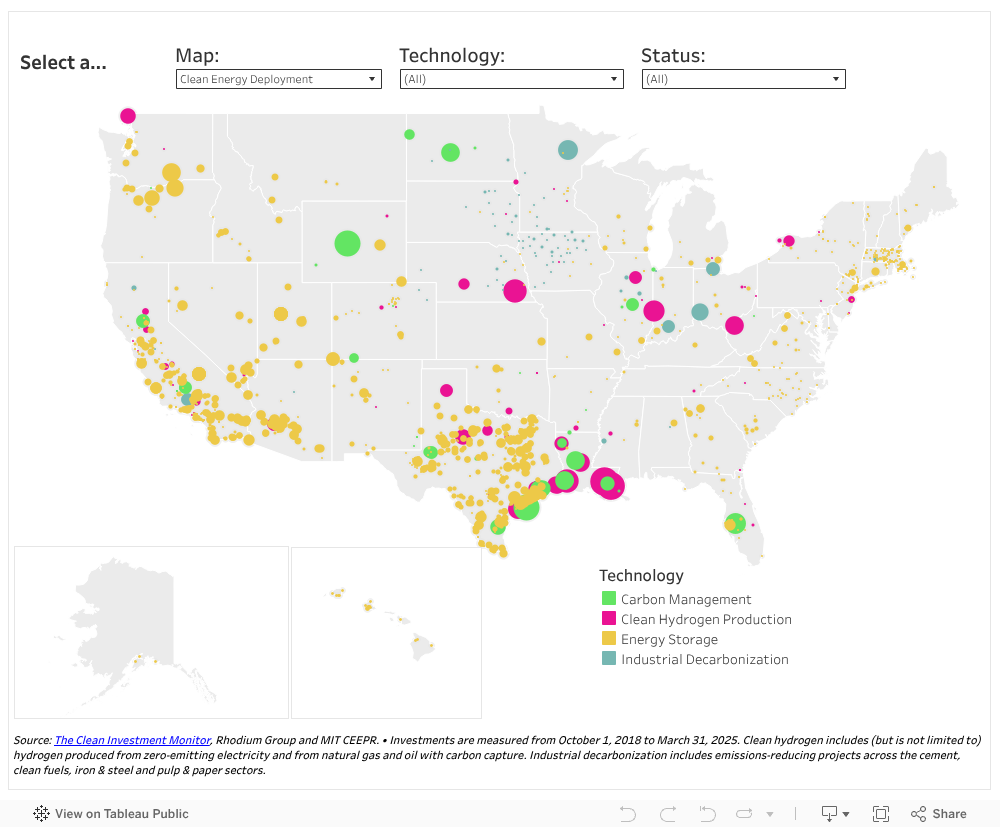
The way data on clean technologies is reported makes it challenging to tell which types of technologies progressed the furthest last year. Electric utilities must report data on new solar, wind, battery storage and other clean electricity generating projects to the U.S. Energy Information Administration (EIA) before the technologies begin operating.
Conversely, developers of other types of projects — including clean hydrogen production, critical mineral processing and cleantech manufacturing sites — can announce their projects at any stage of planning or construction. This quirk means there’s a chance the number of actual projects in the data is an underestimate.
A similar issue affects canceled projects (see the smallest bar in the chart above). The data show more canceled battery projects than any other, but that could be because, again, utilities have to be diligent about reporting their status to the EIA. For other cleantech projects, the Clean Investment Monitor relies on company announcements, which may or may not happen right away, if at all. The monitor’s data is updated quarterly.
Whether the progress seen in 2024 continues through 2025 depends at least in part on whether the Republican-controlled Congress rolls back federal subsidies for clean energy and whether President Trump’s tariffs on steel and aluminum dampen construction. Analysts generally remain bullish about solar and storage projects — which dominated the clean energy sector last year — as prices continue to plummet.