Pennsylvania schools turn to solar for a cleaner — cheaper — future
Latest News
STEELTON, Pennsylvania — White smoke billows from Cleveland-Cliffs, the nation’s oldest operating steel mill and a constant presence over Steelton, a hardscrabble town in south-central Pennsylvania burdened by poverty and unemployment.
Less than a mile uphill from this gritty plant is the cash-strapped Steelton-Highspire School District, which has turned to solar energy to plug its budget hole.
While Pennsylvania is one of the top fossil fuel-producing states in the nation, 43 state school districts have started using more affordable solar power, according to a recent progress report by Generation180, a nonprofit tracking solar adoption in public schools.
Steelton-Highspire is the smallest district to run its buildings on 100% solar power, using both innovative financing and federal grants, and the first to transport its children with a fleet of all electric buses.
“It is refreshing to be able to show our students and communities ways to reduce our carbon footprint,” Steelton-Highspire School superintendent Mick Iskric told Cipher.
As a key battleground state in the upcoming United States presidential election, Pennsylvania has seen Vice President Kamala Harris clash with former President Donald Trump over fracking, a controversial oil and gas drilling technique widely used in the state, and over federal clean-technology tax breaks that Trump has said benefit China. But in this politically divided state, as in many other communities like Steelton, the focus is more on the potential cost savings than on the politics.
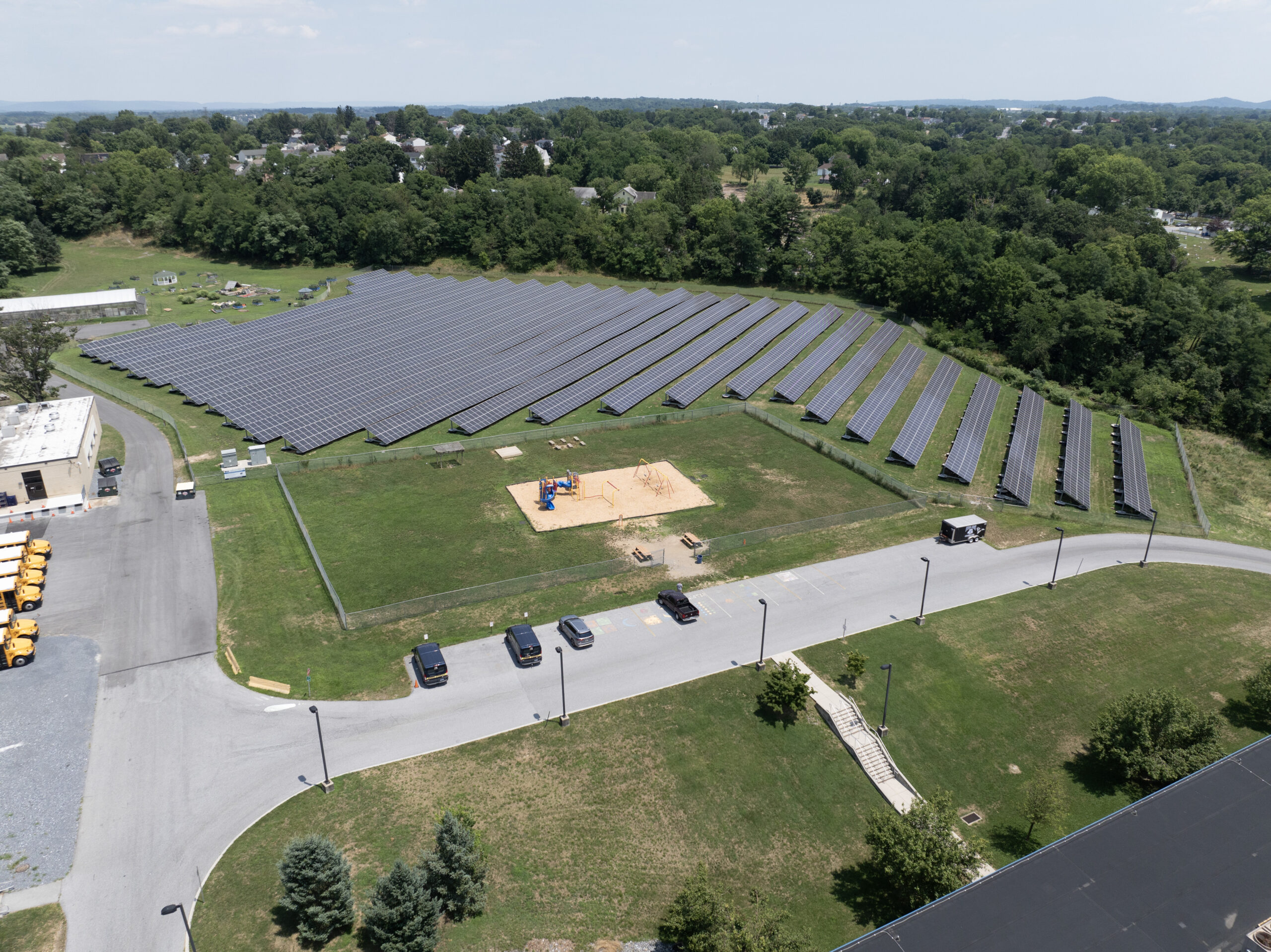
Bird’s-eye view of the solar panels mounted atop a closed landfill behind the Steelton-Highspire School District campus in Steelton, Pennsylvania. Photo taken by Steelton High School.
“Look, when a better technology starts to emerge, people don’t ask what were the politics of the inventor, or which political candidate is supporting that technology,” Jeremy Weber, a University of Pittsburgh environmental economics professor, told Cipher. “The public will care if someone says they cannot use the technology, or they must use the technology even if they don’t want to. And that’s where the political divide starts to emerge.”
Electric steel and schools
With over a quarter of its residents living in poverty and 95% of its students economically disadvantaged, Steelton’s fortunes are closely tied to the Ohio-based Cleveland-Cliffs steel company. The firm owns the plant in Steelton and is keen to shift toward cleaner technology, provided it can find enough buyers for such products, something CEO Lourenco Goncalves has recently expressed reservations about.
Cleveland-Cliffs has secured a $19 million grant from the U.S. Energy Department to electrify a natural gas-fired furnace at another steel mill in Pennsylvania. The Steelton plant also partnered with local and state labor leaders to launch the Union Energy coalition, promoting clean steel jobs through training and apprenticeships.
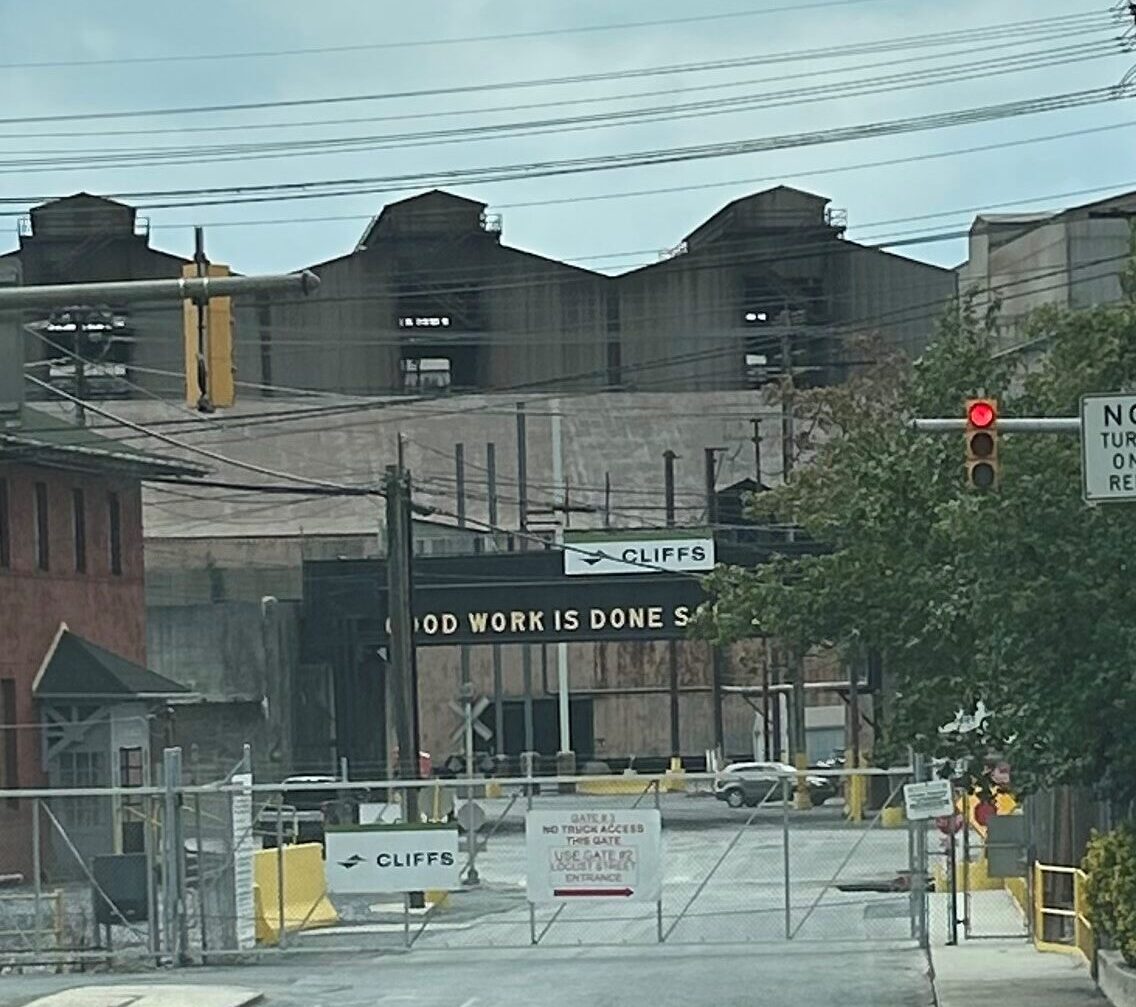
Cleveland-Cliffs steel plant in Steelton, Pennsylvania, is the nation’s first continuously operating steel plant still running today. Photo by Amena H. Saiyid in August 2024.
“When it works, we all do well, but when it doesn’t, we all suffer,” Mark “J.J.” Carnes, Steelton-Highspire’s business manager, said of the steel mill. Carnes said the school district is discussing a possible partnership with Cleveland-Cliffs to provide apprenticeships and training opportunities for its students.
Facing an $11.7 million-a-year budget hole, the school district reached an agreement in 2021 with Harrisburg, PA-based McClure Company to install and run 3,900 solar panels with no upfront costs.
Today, this 1.7 megawatt solar array sits atop a closed storm-debris landfill spanning nearly nine acres. It powers school buildings, a greenhouse and charges the district’s six electric buses, bought earlier this year with a $2.37 million federal grant. The district expects to save $3.6 million in the next 20 years in energy costs, plus $20,000 annually from using electric buses.
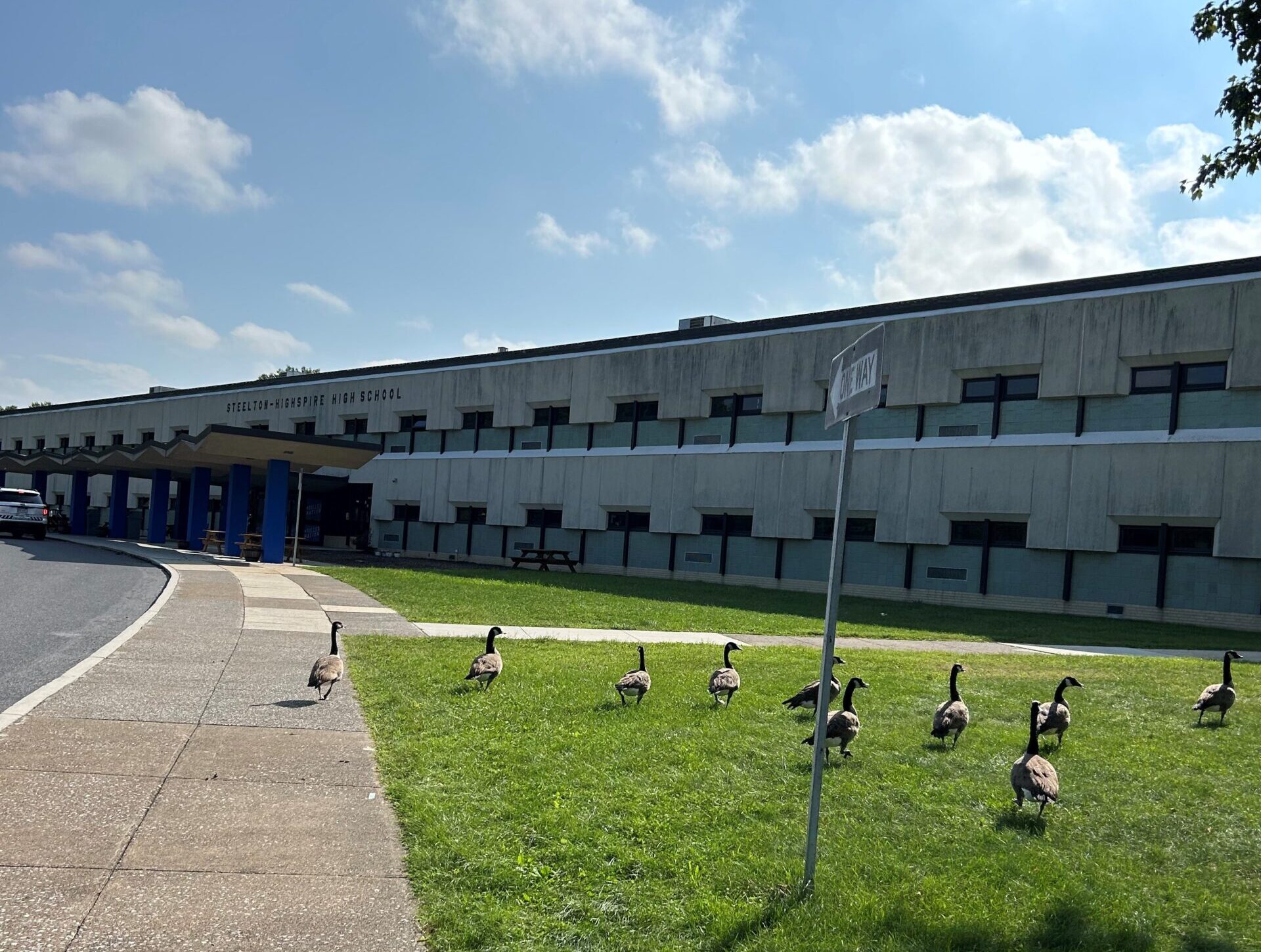
Geese waddling to Steelton-Highspire High School. Photo by Amena H. Saiyid in August 2024.
“Steelton-Highspire is an amazing example of what’s possible,” Pennsylvania state representative Elizabeth Fiedler (D), author of the state’s recently enacted Solar for Schools legislation, told Cipher.
On-site solar has become more popular with schools facing high utility rates, especially in the Northeast, because state and federal subsidies are helping offset these costs, according to research firm BloombergNEF.
Pennsylvania’s Solar for Schools Act will cover anywhere from 30% to 50% of the costs to install solar energy, Fiedler said. It will also help schools switch to solar energy using both state grants and federal tax breaks from the 2022 Inflation Reduction Act (IRA), Biden’s signature climate law.
When more schools adopt solar, it becomes mainstream and no longer viewed as “something revolutionary or confrontational,” as the climate crisis sometimes is, said Peter Buck, co-director of Penn State’s Local Climate Action Program.
Indeed, the Steelton community has mostly welcomed the electric buses, especially after learning the savings would benefit students.
Diner talk
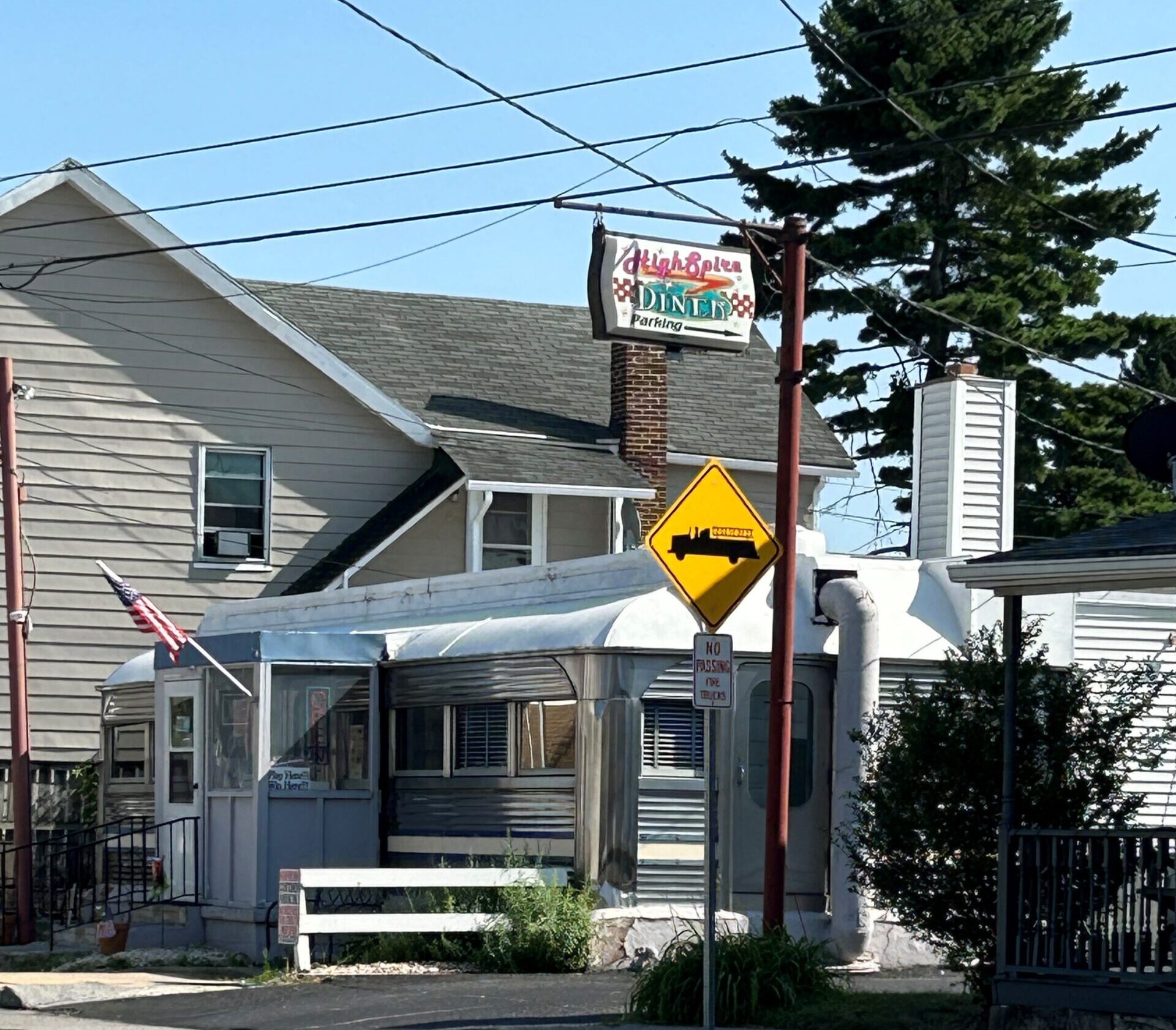
Just off Second Street, less than three miles from the Steelton-Highspire School District campus sits the Highspire Diner in Pennsylvania, operating since the early 1950s. Photo by Amena H. Saiyid in August 2024.
Some community members oppose the growth in clean energy, arguing as Trump and his running mate J.D. Vance have, that the federal tax breaks are benefiting China and undercutting U.S.-made products with cheap goods.
Among them is Middletown resident Dale Burk, a retired engineer firmly against renewables, saying they are cheap because they are being made in China.
“Without the [federal] subsidies, it ain’t worth it,” said Burk, donning a red ‘Make America Great Again’ cap after lunch at the Highspire Diner in the neighboring town.

Retired engineer Dale Burk proudly shows off his MAGA hat inside the Highspire Diner in Pennsylvania. Photo by Amena H. Saiyid in August 2024.
Diner owner Dave Obenstein, 63, echoed similar concerns, adding the IRA’s tax credits are “borrowed money” that is putting the country further in debt.
“If we go solar then everything is electric, but the stuff to build the batteries is all coming from China,” he said.
China’s mass production of solar panel parts has in fact made this renewable resource affordable across the globe, including in the U.S., where tariffs on Chinese solar products have been in place for over a decade, Pol Lezcano, senior associate with BloombergNEF, told Cipher.
But U.S. solar manufacturing has ballooned recently, owing to the IRA’s generous tax credits.
And Ray Balliet, the diner’s 35-year-old waitress, who stopped to chat between bussing tables, is certain about one thing:
“Even with my rose-tinted glasses on, I think it would be awesome to know that my kid would grow up in a world with clean energy and that we are not destroying the Earth for her,” said Balliet, who plans to vote for Harris.
Meanwhile, a loud bell marks the end of Steelton-Highspire’s school day. Children swarm out of their classrooms, some making their way across the playing fields, others heading toward the fully charged electric buses waiting to take them home.