On Chile’s coast, a rare earths mining operation seeks to uplift locals and counter China
Latest News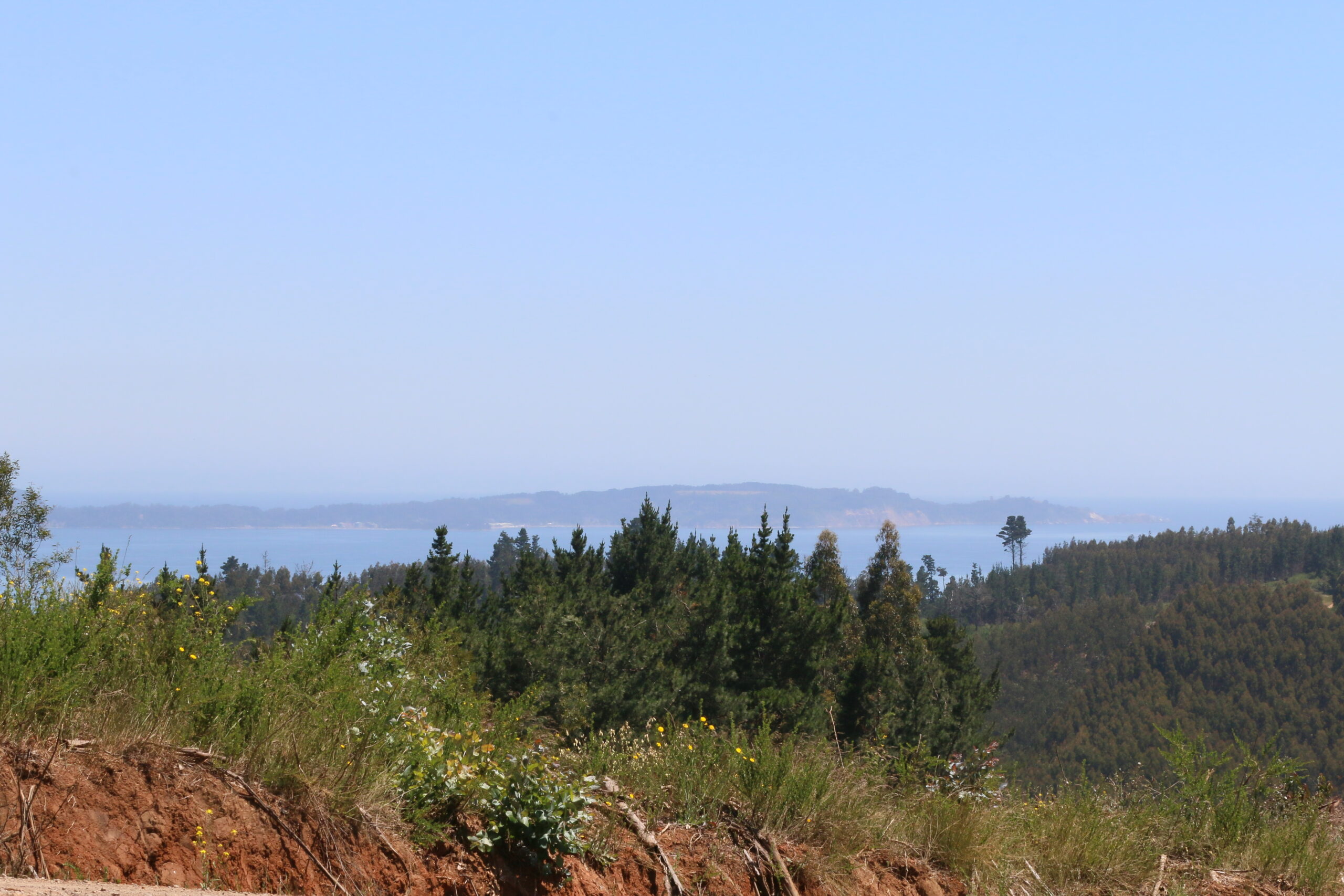
CONCEPCIÓN, Chile — While the hilltop overlook here boasts a splendid view of the Pacific coast, the land all around us is far less impressive.
Municipal garbage trucks rumble along gravel roads to an adjacent landfill. Stumps and branches of dead eucalyptus trees form huge piles, refuse left behind by a former commercial forestry operation.
Aclara Resources, the Toronto-listed company that brought us here, has a new plan for the site: sustainably mining “rare earth” elements, essential ingredients in the energy transition. Once these elements are removed, the company plans to revegetate the area with native trees, a state it has not existed in for many decades, part of a process it calls “circular mineral harvesting.”
The plan would generate jobs and underpin a whole new local industry at a time when other aging industries have closed down, according to Aclara.
“This could turn us into a pillar of the regional economy,” said Nelson Donoso, who heads Aclara’s operations in Chile.
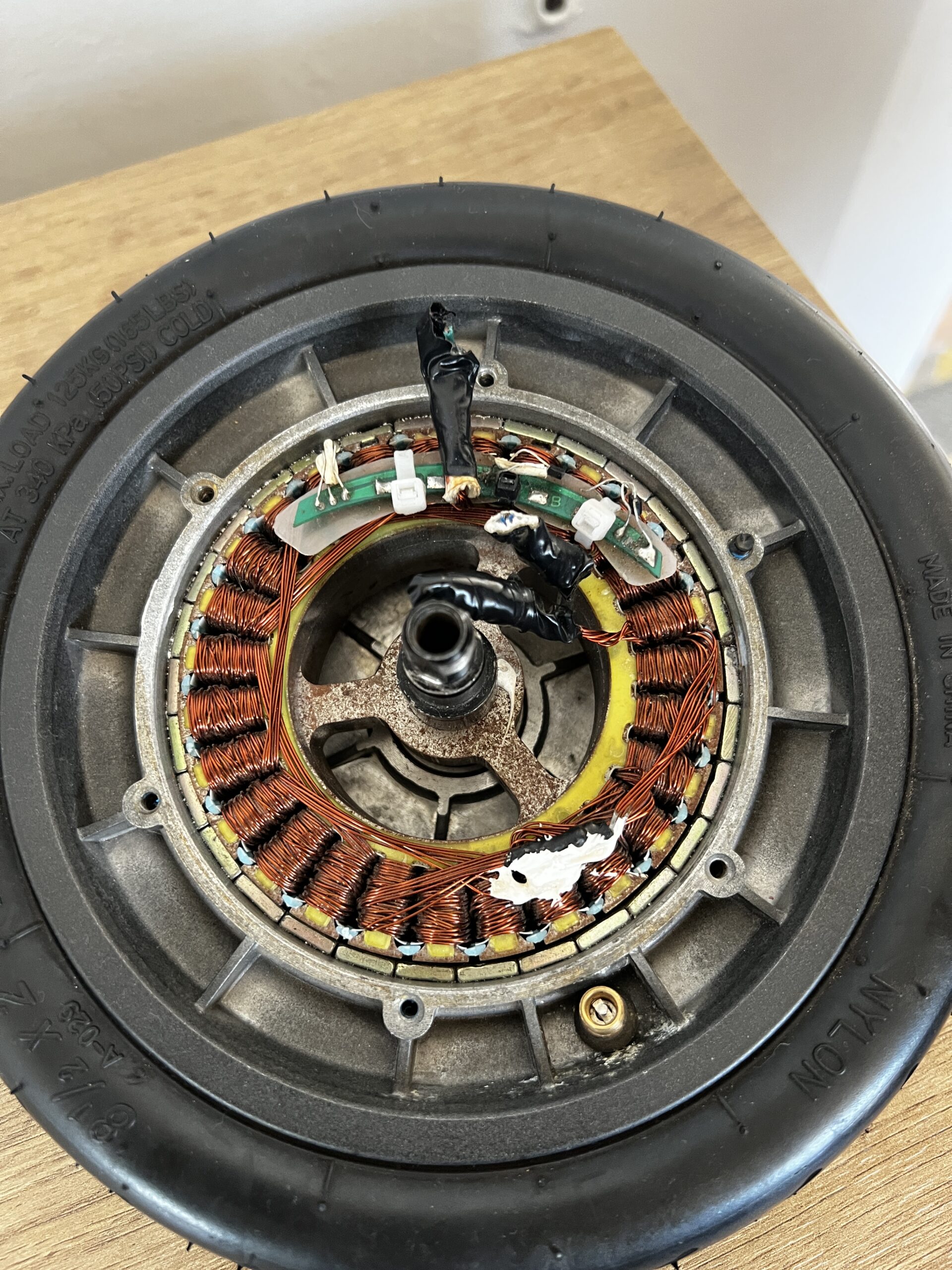
Rare earth elements are critical to the powerful magnets for electric motors like this one that powers a scooter. Photo by Bill Spindle.
What’s more, Aclara says its project in Chile and a twin project in Brazil have the potential to produce an amount equivalent to 16% of China’s official heavy rare earths production. That’s significant given China’s dominance of the industry and growing demand for these materials.
The company’s high hopes for the project — that it will leave the landscape better than they found it, stimulate the local economy and help wrest some control of the critical minerals industry away from China — reflect broader attempts to acquire materials for the global energy transition without mining’s often traditionally destructive impact. First, however, Aclara needs to secure its permits from wary government officials.
Local impacts
Aclara plans to mine for four important rare earth elements: Neodymium (Nd on the periodic table you learned about in high school chemistry class) and Praseodymium (Pr) are critical for making the high-powered magnets used in wind turbines and the electric engines in e-scooters and bikes and electric vehicles. Dysprosium (Dy) and Terbium (Tb), far less prevalent “heavy” rare earths that the ionic clays here also contain in high concentrations, soup up the performance of these magnets to work well even at very high temperatures.
Nine out of ten electric vehicles use these types of magnets. Aclara hopes to be among the global providers of these key ingredients. Every wind turbine needs some of them. So do advanced robots. They are increasingly important to national security tech like F-35 fighter jets and drones, as well.
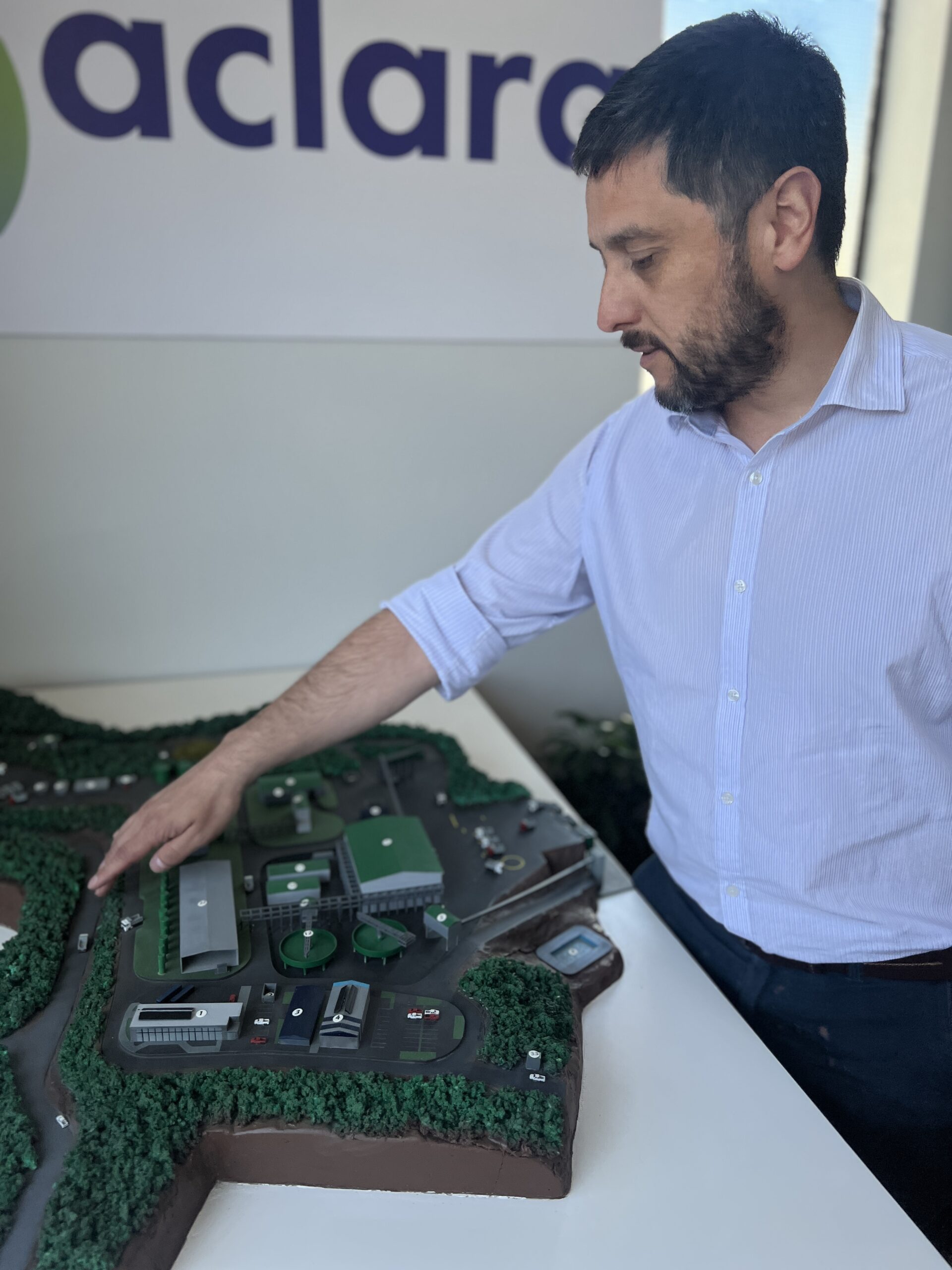
Denis de la Fuente, an Aclara engineer, with a model of the company’s rare earth mining site near Concepción, Chile. Photo by Bill Spindle.
Realizing Aclara’s dream requires extensive environmental evaluations and community consultations under Chilean law, even though the land has been used intensively as a municipal dump and for commercial forestry for many years.
Aclara, which is hoping to receive an environmental permit this year, says it will do things better than a previous mine proposal would have done.
Nearly all of the water used by the project will be recycled, for example, and structural works will mitigate any risk of land erosion or contamination of a local waterway. At the company’s community outreach center in downtown Penco, a town just outside the industrial city of Concepción, Aclara is cultivating vegetables in the soil left over from its mining tests to show residents they are thriving and safe to eat.
Some locals, as well as government officials, are still wary of any industrial project deemed “extractivist,” a derogatory term used to describe projects that exploit resources without care for the environment or surrounding communities. This sentiment helped scuttle a separate previous proposal to mine rare earth elements here.
But so far, there seems to be little local opposition to Aclara’s new proposal.
Countering China
Between 2015 and 2023, demand for rare earths nearly doubled to 93,000 tons and could surge by more than 80% to 169,000 tons in 2040, according to the International Energy Agency.
As the industry stands today, Chinese companies almost entirely dominate rare earths, from mines to magnets. That has given it a big edge in manufacturing clean energy technologies — and provided a geopolitical stick to wield against other countries. China cut rare earth exports to Japan during a maritime dispute in 2010, sending shock waves through the global market. And in December, China stopped exports of some rare earth elements to the United States after the U.S. restricted sales of advanced computer chips to China.
Not surprisingly, the U.S. is stepping up its own rare earths mining and magnet manufacturing. Aclara aims to be a key part of the trend with a planned U.S. processing facility and a new alliance with European rare earths magnet manufacturer Vacuumschmelze.
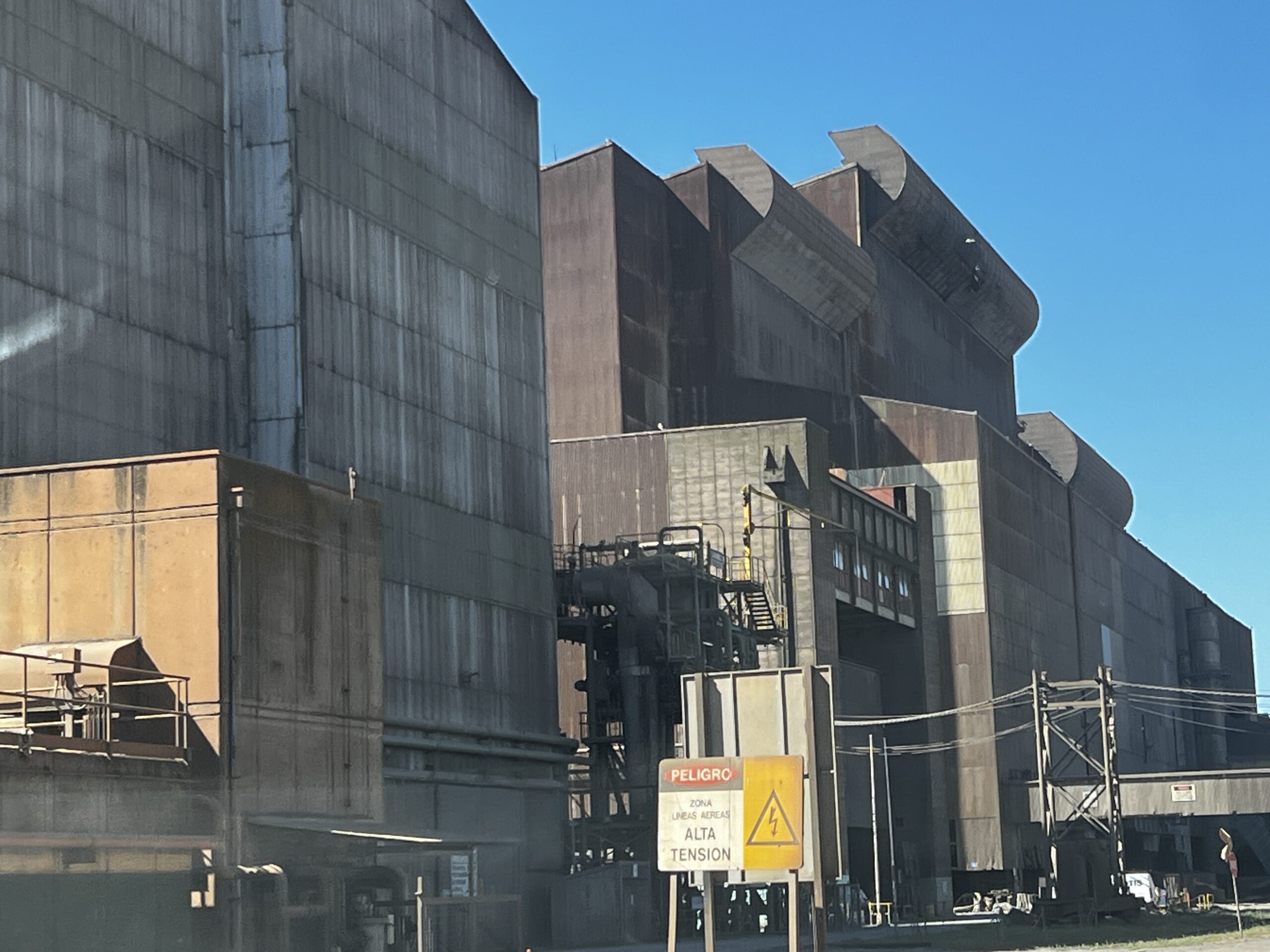
The Huachipato Steel Works near Concepción, Chile, which opened in 1948 and closed in June 2024. Photo by Bill Spindle.
One of Aclara’s investors and partners is a Chilean company called CAP, the Compañia de Acero del Pacífico. Until July, it operated the largest steel plant in Chile not far from Aclara’s proposed mining site. CAP closed the mill after years of struggling to compete against ultra-cheap Chinese steel. The closure left thousands of workers without jobs and CAP looking for new investments and business lines.
Today, Aclara is working with metallurgical experts from CAP’s steel operations to try to find ways to go beyond simply mining rare earths to transform them, once separated, into more valuable metals and alloys and hopefully employing former steel workers in the process.
“We have cried enough,” Jean Paul Sauré, head of the defunct plant, said from a conference room overlooking the once-roaring steelworks. “Now we have to move forward.”
The economic challenge is similar to steel. Despite their name, most rare earth elements exist in many parts of the world. But Chinese producers keep the price so low by producing at high volumes with government support that miners elsewhere struggle to compete, especially in the sustainable social and environmental framework expected in the West, experts say. Lax environmental and safety standards, both at home and across the Chinese border in Myanmar, reduce costs as well, critics say.
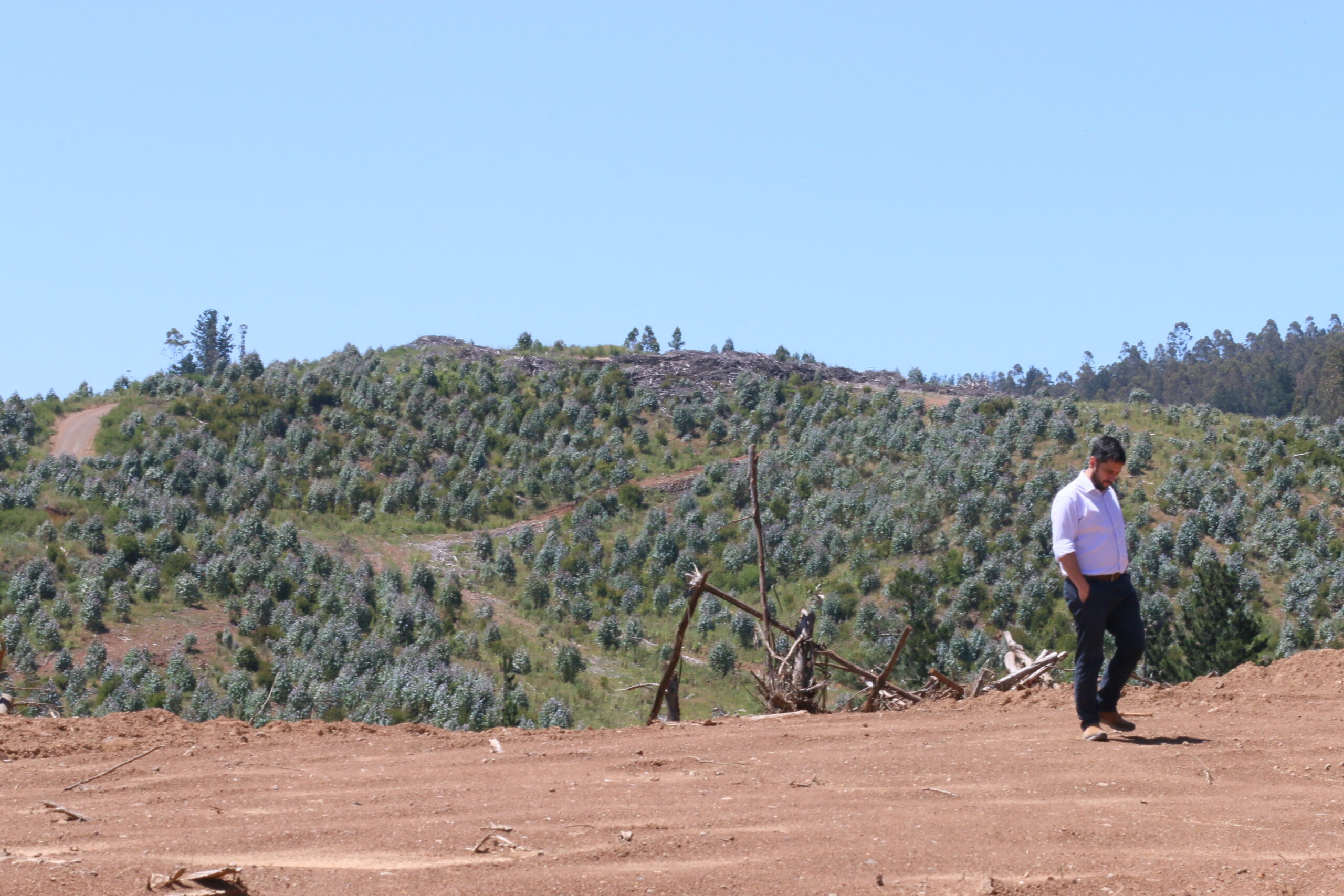
Denis de la Fuente, an Aclara engineer, on the site of the rare earth element mining project near Concepción, Chile. Photo by Bill Spindle.
Aclara hopes magnet manufacturers and automakers in Europe, the U.S. and Japan will be willing to pay a premium to diversify supplies and secure access to critical materials. It’s unclear how a new wave of U.S. tariffs might impact the company’s plans.
Back on the hilltop, gulls squawk over the nearby landfill as Aclara engineer Denis de la Fuente grabs a twig to trace the plan for excavation into the gravel at our feet.
The project will scoop up a layer of the earth already degraded by commercial forestry, he says.
“Once we’re gone, this site will be better than before,” he asserts. “There won’t be more harvesting.”