Natural gas presents an energy transition puzzle
Explainers
NEUQUÉN, Argentina — From his office deep in Argentina’s Pampas region, Gustavo Medele, the minister for mining and resources for Neuquén Province, puzzles over the future of natural gas. He’s far from the only one.
Medele’s province sits atop what’s known as the Vaca Muerta, a geological formation that contains some of the world’s richest oil and gas reserves. While some of the oil is now flowing to global markets, the geological formation also contains gas deposits potentially worth trillions of dollars that aren’t even being extracted.
“The question is, what do we do with it?” Medele said during a wide-ranging interview on my recent visit to the region, several hundred miles southwest of Buenos Aires.
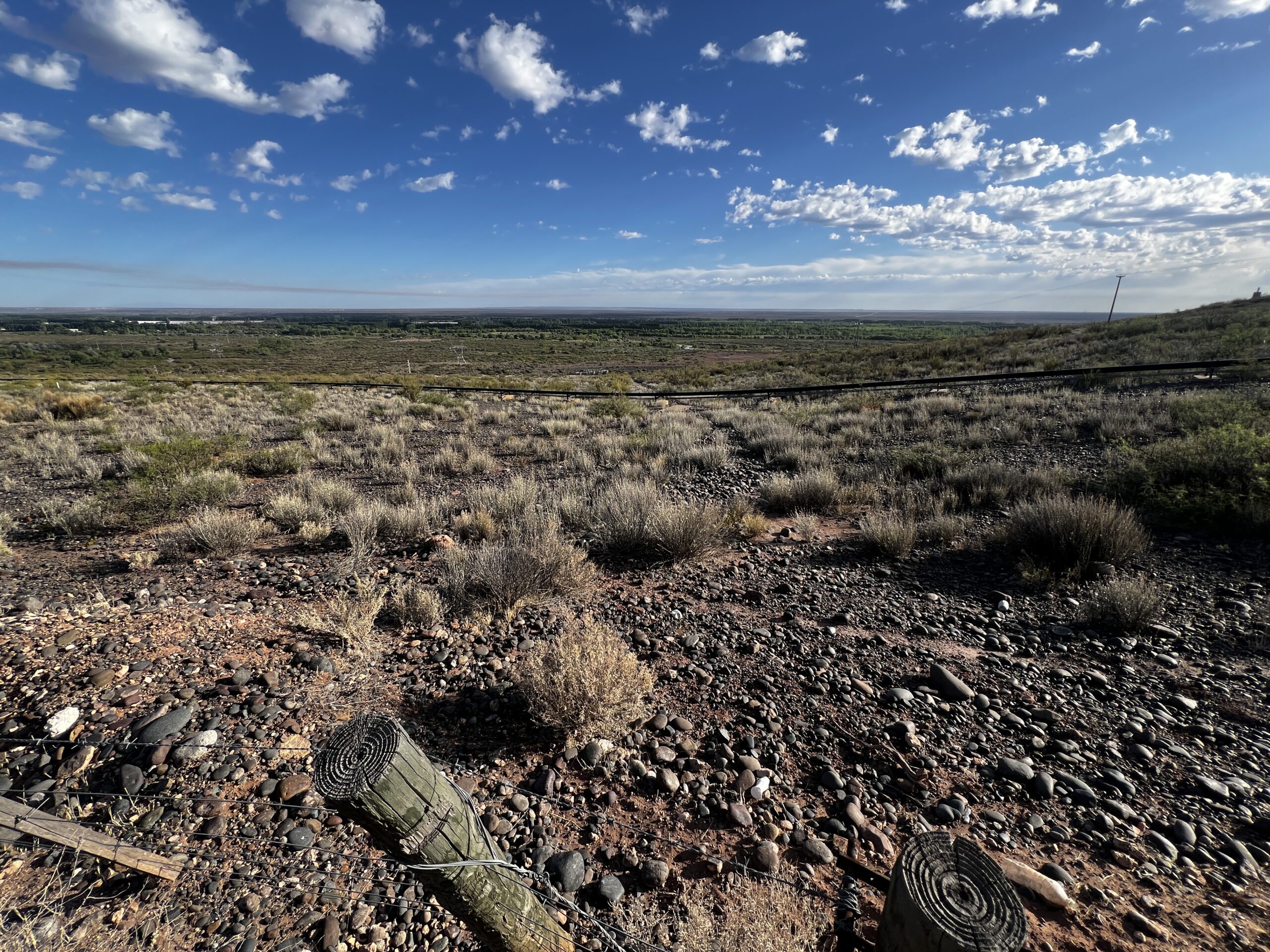
Argentina’s Pampas, the largely unpopulated central part of the country that has some of the best resources in the world, from sun and wind to oil and gas. Photo by Bill Spindle, November 2024.
It’s a question many countries are asking themselves about natural gas.
On the one hand, gas is a fossil fuel that causes global warming. Using more of it could delay the uptake of much cleaner renewable technologies. Its price can be volatile, and supplies can be vulnerable, as the world discovered when Russia invaded Ukraine in 2022.
On the other hand, gas can be an inexpensive form of energy that’s flexible and available around the clock. During the Obama and Biden administrations, the United States became a gas-exporting powerhouse, despite worries about the potential long-term impacts on the climate and domestic gas prices that led Biden to pause some of the projects for study.
The Trump administration has fully embraced the gas industry and quickly approved the projects Biden paused.
“This is a way to balance trade,” U.S. Interior Secretary Doug Burgum recently told Bloomberg Television in an interview alongside Energy Secretary Chris Wright, as a tanker behind them was filled with liquified natural gas (LNG) destined for Germany. “The gas that’s going onto this ship is creating jobs all over America.”
On the windswept plains of Argentina, global politics may seem a distant concern. But what happens to the gas reserves here and elsewhere in the world has implications for the entire planet.
Gas versus renewables
With electricity use rising globally, gas could play an important role in meeting new energy demand. But it also will have to compete with increasingly cost-effective renewables.
Natural gas only releases about half as much carbon dioxide as coal when burned, so it could help phase out the world’s dirtiest fossil fuel (it also releases fewer traditional pollutants). But it’s made up mostly of methane, a potent greenhouse gas, and natural gas infrastructure is prone to leaks.
Currently, gas constitutes about a quarter of global electricity consumption and produces about a fifth of the world’s greenhouse gas emissions from energy consumption.
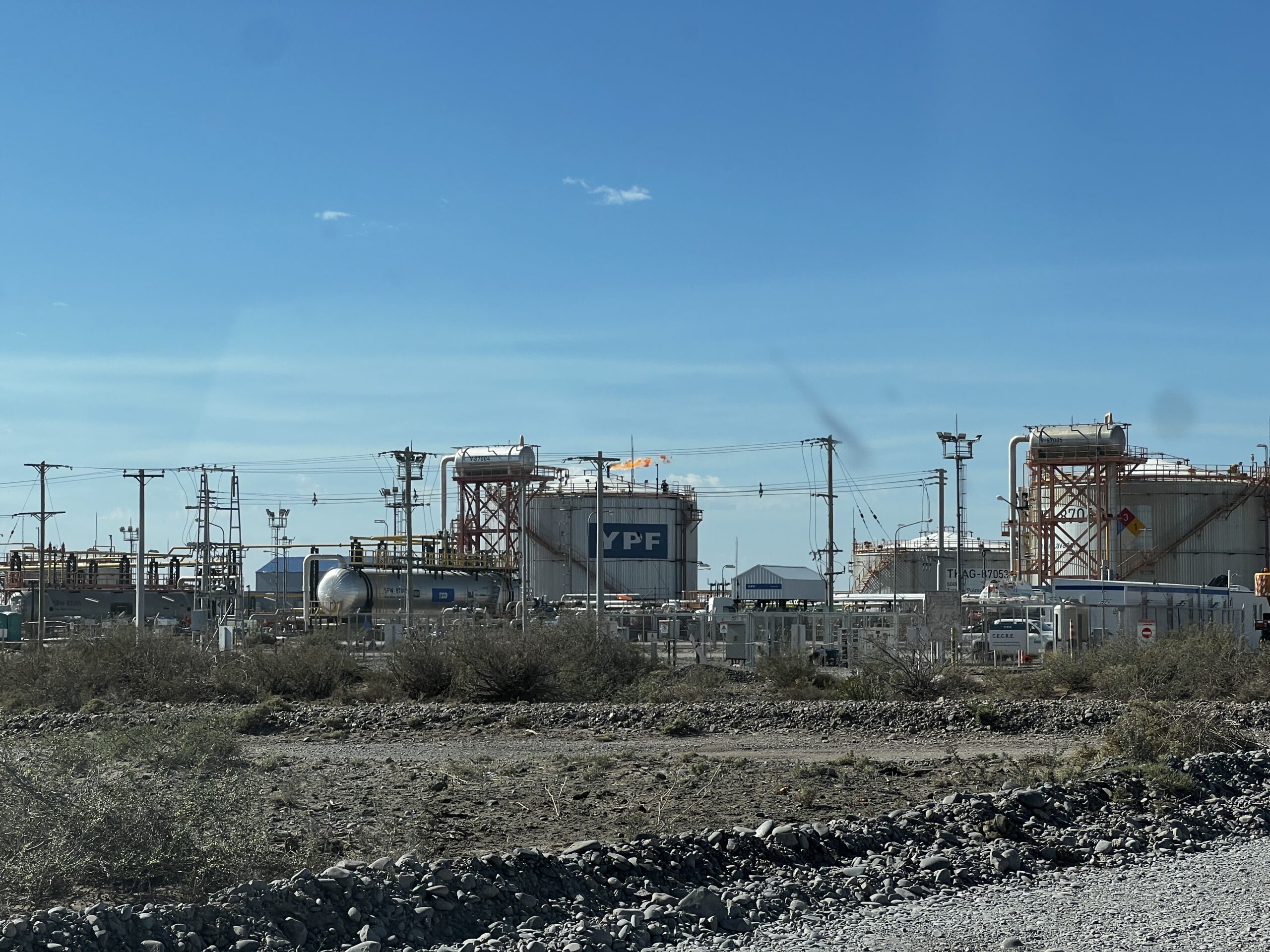
A YPF S.A. storage facility in the Vaca Muerta. You can see the gas being flared. YPF is an Argentine energy company. Photo by Bill Spindle, November 2024.
Many countries, such as the U.S., Japan and Argentina, are embracing gas as a mainstay of the energy system. Others remain cautious, especially countries that import most of their supplies, including China, India and many European nations.
How gas is used is an urgent issue for climate change, since installations built today will be used for decades or wind up mothballed at huge expense.
Renewables are now almost always the cheapest option when the wind is blowing and the sun is shining. That’s even often the case when the use of their energy is extended with batteries. Wind and solar met 80% of new electricity demand in 2024 globally, according to the International Energy Agency. And renewables grew faster than any other energy source last year, the agency said.
Yet the ability to fire up gas turbines to provide electricity on demand, especially on days when electricity use is unusually high, makes reliance on gas unavoidable in many places. It also has important industrial uses beyond generating electricity, like as a main ingredient in fertilizer, that renewable energy can’t replicate.
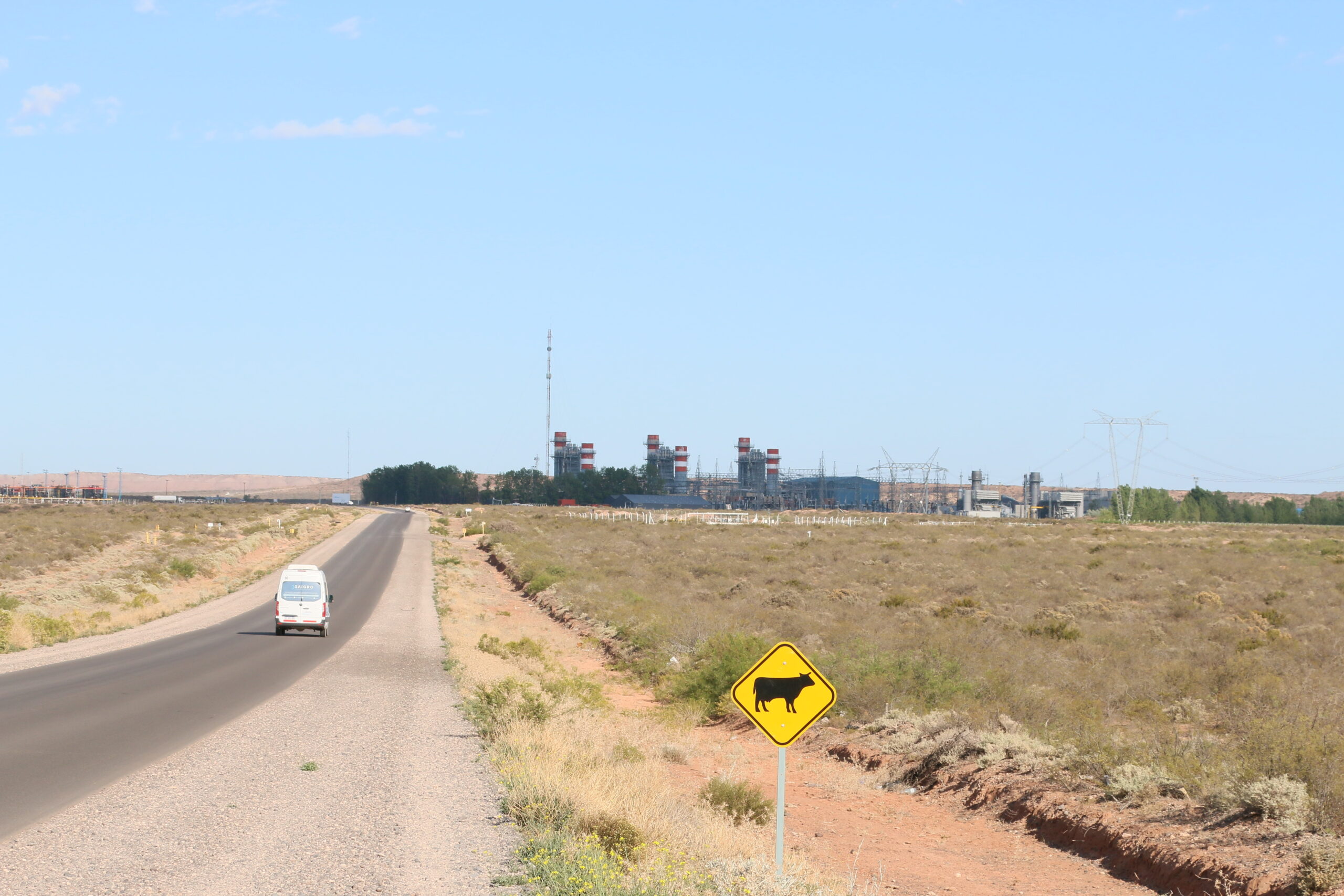
An industrial facility in the otherwise rural sprawl of Neuquén Province. Photo by Bill Spindle, November 2024.
The gas versus renewables debate has reached a fever pitch in recent years.
“Fossil gas is not part of the long-term climate solution,” Christopher Taylor, the mayor of Ann Arbor, Michigan told me last fall when I visited to report on the city’s ambitious renewable energy plans. The city, like several other politically progressive enclaves in the U.S., has studied ways to curtail future gas use in favor of renewables.
Interestingly, as clean technologies such as electric cars and heat pumps pile on new demand for electricity, gas and renewables are becoming “frenemies.” They compete in some circumstances. In others, they’re deployed side-by-side and coordinated to keep emissions low.
“Gas is critical to the energy transition, and it is also critical to electrification,” Tania Ortiz Mena, president of Sempra Infrastructure, which develops electricity and power resources, told a recent gathering of energy industry executives and financiers in Houston.
A costly build-out
Gas-rich Argentina has less money and fewer options for deploying its gas than other gas-rich countries, like the U.S. But in Neuquén, where prefectural officials control much of the gas resource under Argentine law, leaders like Medele are equally determined to capitalize on the resource.
“If you bring more energy, you get economic development,” he told me. “Then more people come and settle in, and you need water treatment and all those things that require even more energy.”
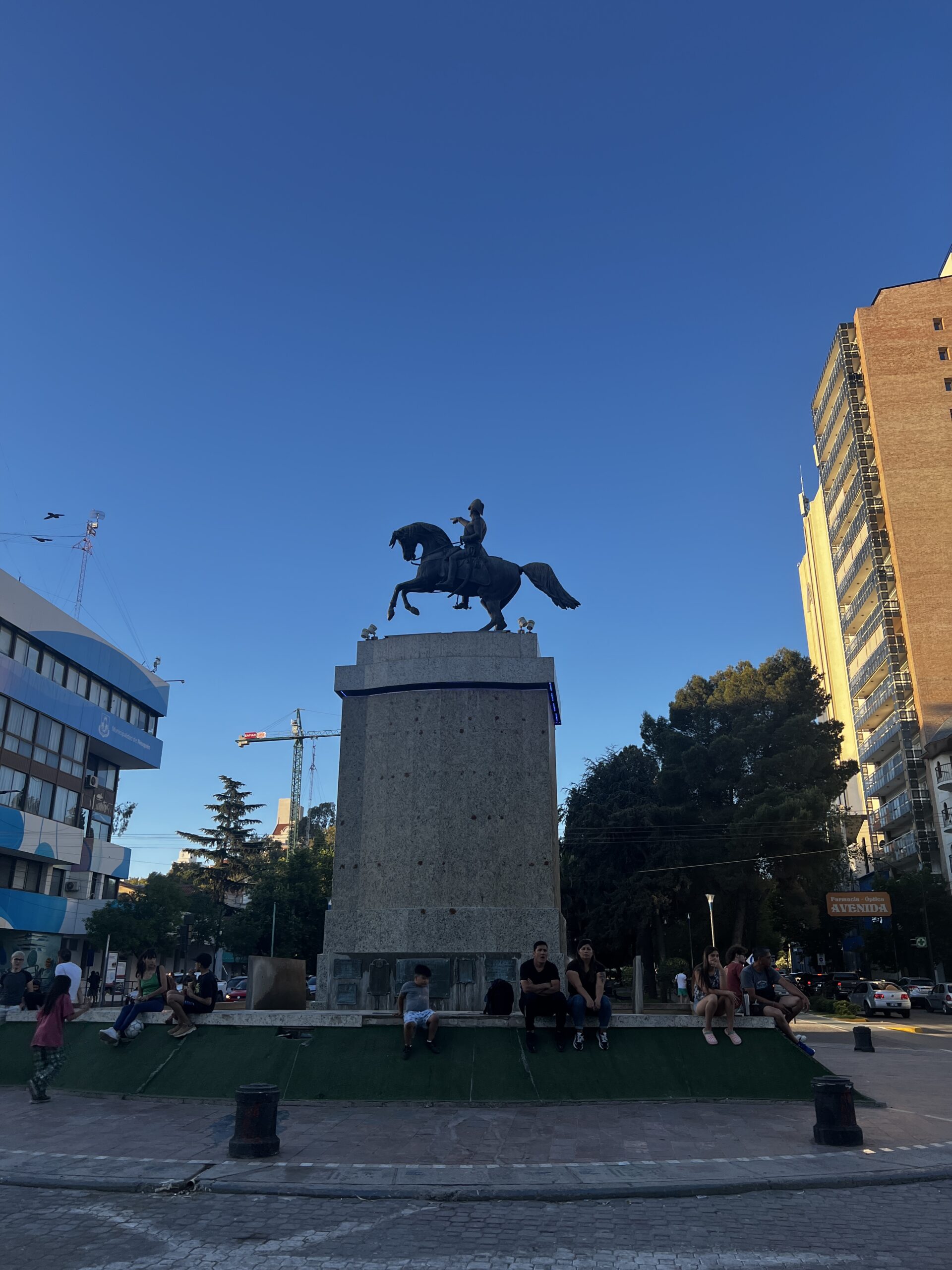
Downtown Neuquén, the oil and gas boomtown at the center of the Vaca Muerta. Photo by Bill Spindle, November 2024.
The current flow of gas that accompanies oil drilling in the Vaca Muerta isn’t easily utilized.
The province has plans to pipe or distribute gas in cylinders to communities with no electricity in the nearby Andes mountains, where villagers heat their homes and cook with wood they gather. Delivering power from the wind farms popping up in the province, despite putting out some of the least expensive electricity in the world, would still be too expensive, since long transmission lines would have to be built to reach the areas, Medele said.
Beyond that, there are plans to link up to pipelines running to neighboring Brazil and perhaps Chile.
And finally, the province is studying the global market for liquified gas. That would require not only a separate gas pipeline hundreds of miles to the Atlantic coast and a new deep-water port, but also a multibillion-dollar plant to super cool the gas into a liquid that can be transported by specialized ships. That kind of expenditure would be worth it only if enough countries depend heavily on gas for decades to come.
“The question, then, is who could buy this, or who will buy this?” Medele said.
With the LNG trade continuing to expand, and the U.S. betting heavily on the future of gas, Argentina faces some difficult decisions trying to predict whether demand will be strong enough to make a large investment in LNG production profitable for them.
The global market for LNG that has sprouted up over the past two decades is the topic of our second story.