National pride at a wilderness park and a research lab
Reporter's Notebook
I went camping last fall in the Boundary Waters Canoe Area Wilderness, a 150-mile-long collection of lakes and streams along Minnesota’s border with Canada. At the campsite where my partner and I stayed, one of 2,000 designated campsites in this rugged, pristine landscape, a sturdy, metal grill was installed over the firepit, with “U.S. Forest Service” engraved on the side.
I was surprised to feel a swell of pride as I looked at the grate put there by our government to facilitate safe enjoyment of the land for visitors like me. The grates take work to maintain — each one needs to be replaced every 15 to 20 years, Cathy Quinn, who works for the United States Forest Service in Minnesota, told me. In summer months, rangers replace old grates with new ones.
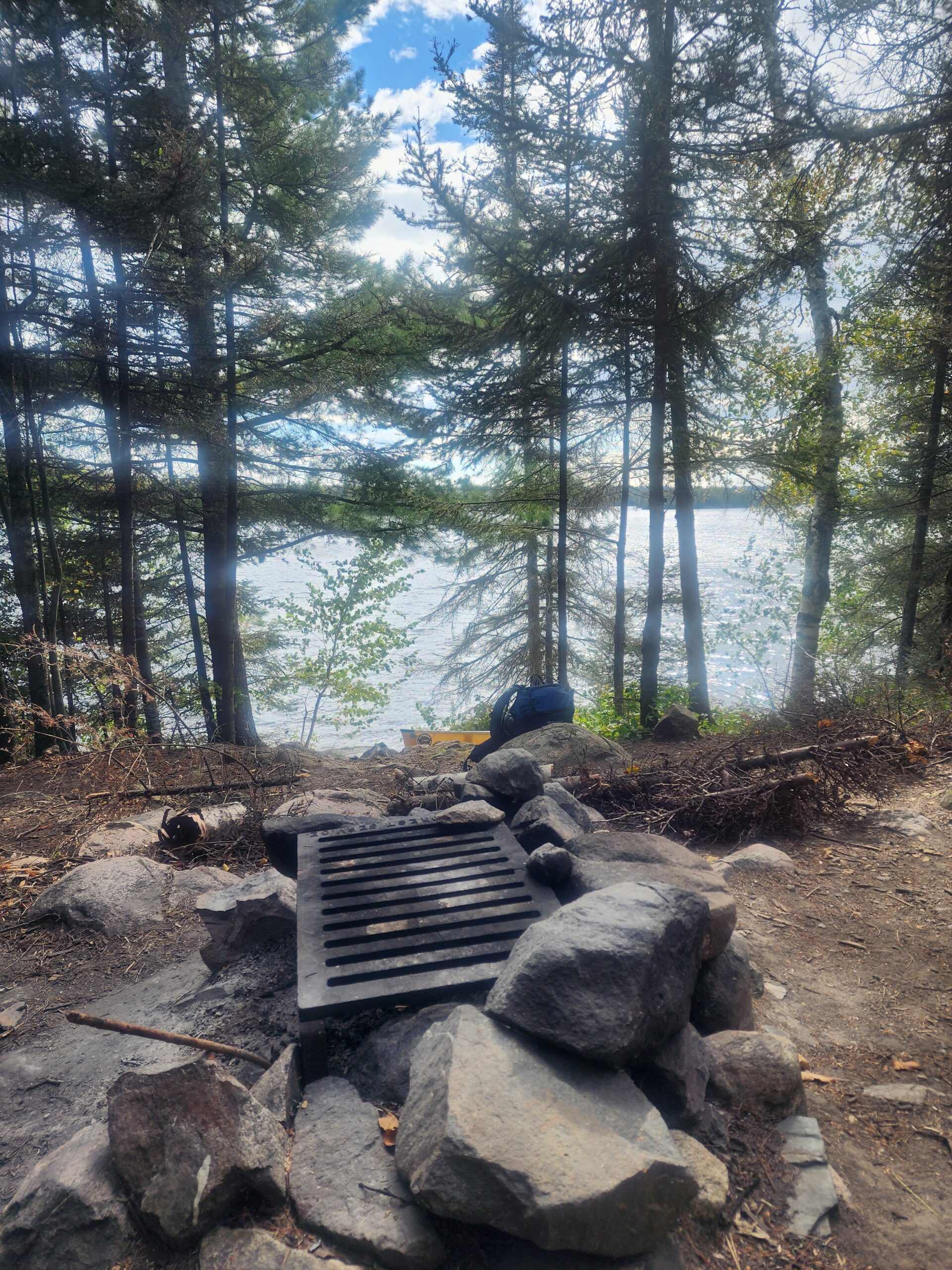
The campsite where I stayed in the Boundary Waters Canoe Area Wilderness in September 2024. Photo credit: Cat Clifford, Cipher News.
A month later, when I was reporting from the Lawrence Livermore National Laboratory east of San Francisco, I was surprised to experience another swell of patriotic pride.
My reporting trip took me to the National Ignition Facility at Livermore, where a historic fusion breakthrough was achieved in 2022. It is a mind-boggling facility: the chamber is 33 feet across and weighs 287,000 pounds and has 192 ultra-powerful laser beams all directed at the same target. It took 66 trucks just to transport the crane used to construct the chamber from Nevada!
Livermore was launched in 1952 during the Cold War to develop and advance nuclear science research. Today, it employs more than 9,000 people, with scientists working across disciplines on everything from developing new materials to engineering microbes to protecting against biological threats.
The facility is also at the heart of efforts to make fusion — the process by which the sun and stars generate energy — a reality on Earth. In December 2022, the facility achieved “ignition” for the first time, when the energy generated by a fusion reaction exceeded the energy that went into the lasers that catalyzed the reaction.
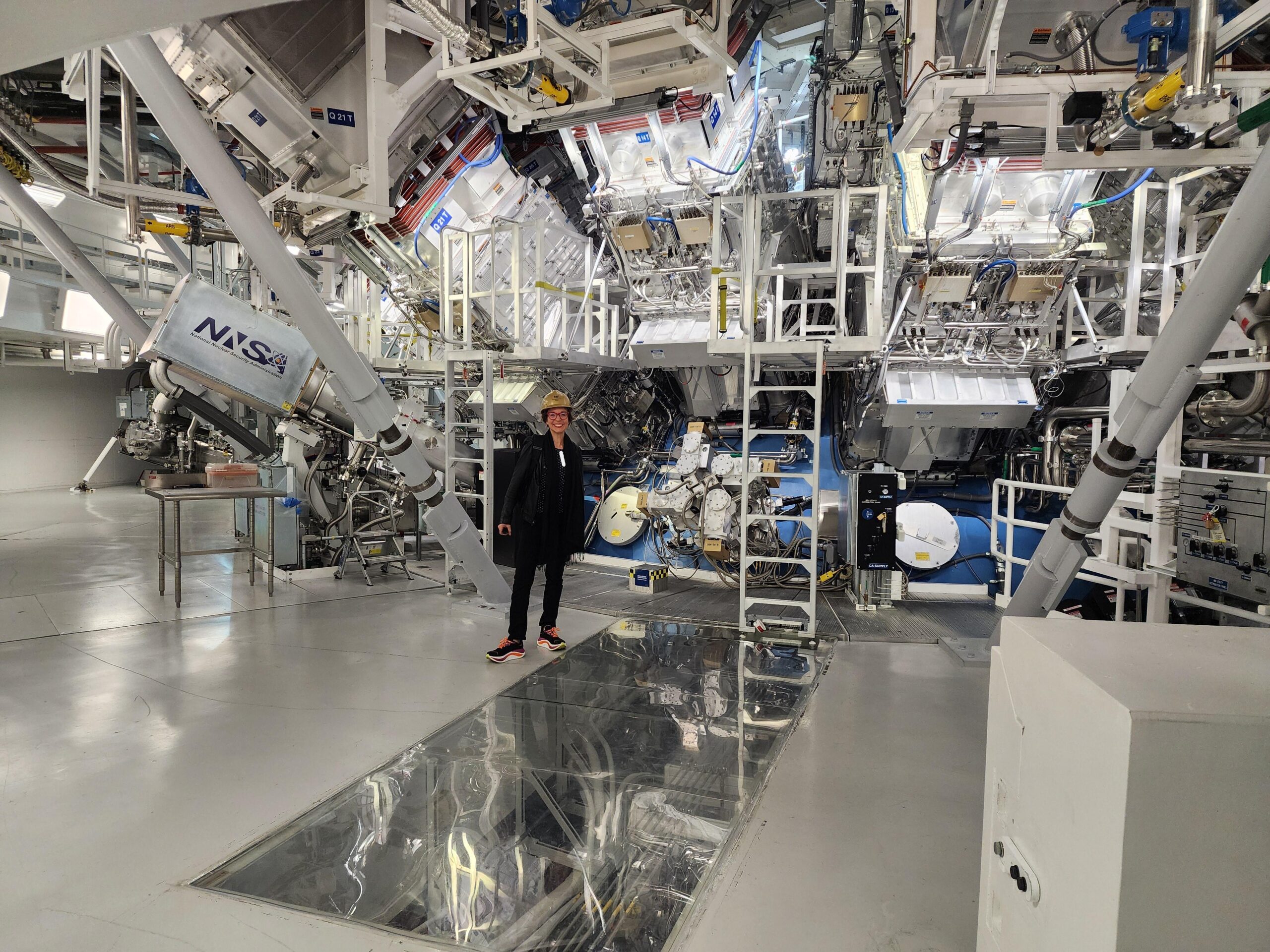
Here I am inside the National Ignition Facility at Lawrence Livermore National Laboratory in October 2024. Photo courtesy Cat Clifford.
The only thing more awe-inspiring than the facility itself were the scientists I met, including Richard Town and Omar Hurricane, who helped bring star power down to Earth while under a mountain of pressure to succeed.
“We were being eviscerated kind of with criticism,” Hurricane told me. “Yet, I knew we were on the right track.”
Jennifer Granholm, secretary of the U.S. Energy Department under President Joe Biden, celebrated the accomplishment at the time by calling it a “landmark achievement” for the lab.
There’s a lot of consternation and anger in the U.S. political system today. Only 41% of American adults report being “extremely proud” to be American, according to a poll published by Gallup in July.
I understand that government can sometimes be frustrating; I am not immune to feelings of despair over the political and social division in the U.S.
But finding a Forest Service-supplied grill in the middle of the Boundary Waters and hearing scientists at Livermore talk about their steadfast determination to deliver scientific progress, I felt enormously proud of what this country can be when we are at our best.
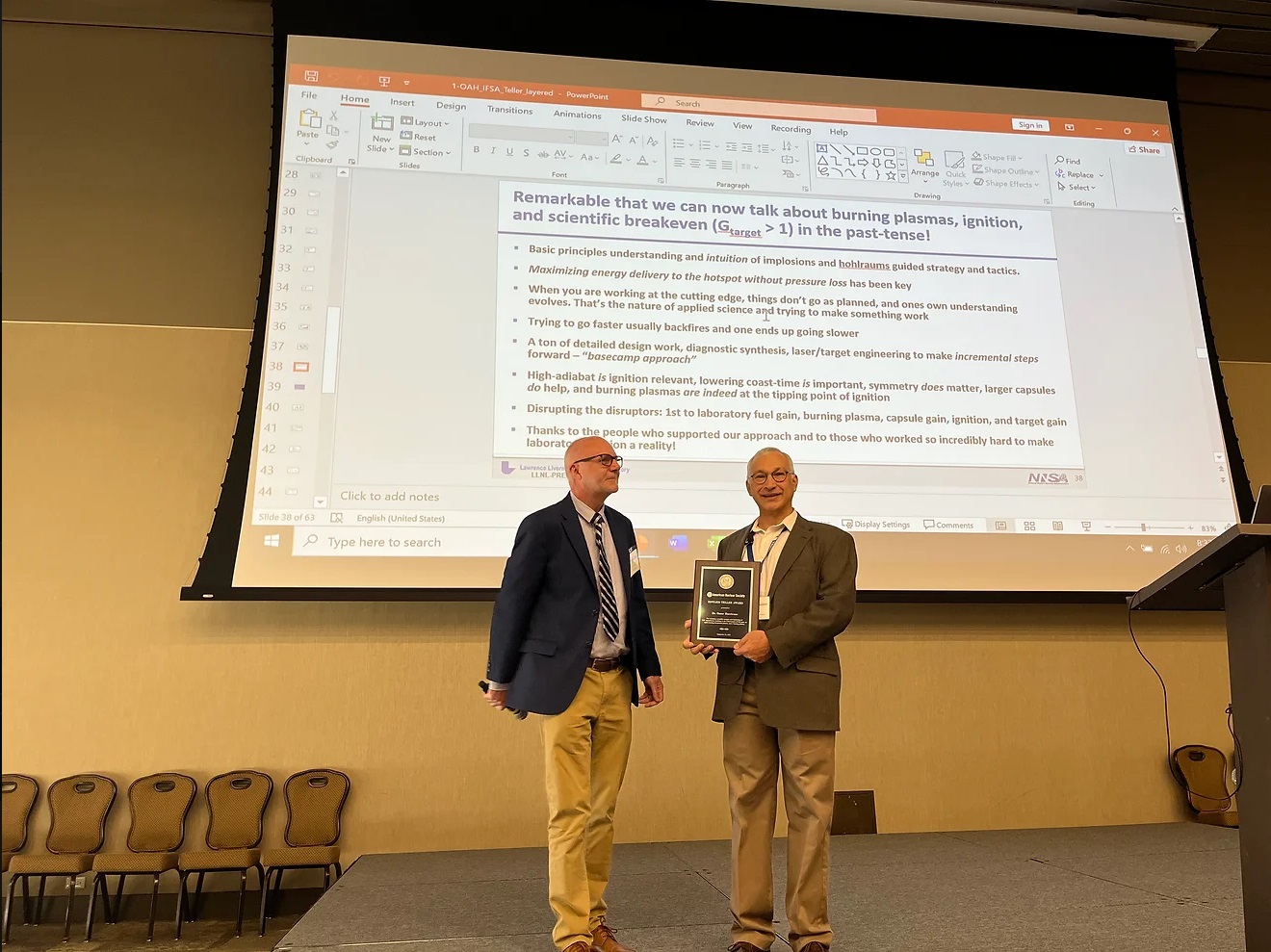
Richard Town (L) hands Omar Hurricane the Edward Teller Award from the American Nuclear Society, which Hurricane won in 2021 for his work in fusion physics, at the International Fusion Sciences and Applications (IFSA) conference in Denver in 2023. Photo credit: Dan Sinars.