Miles high in the Andes, a lot depends on this lithium partnership
Latest NewsA developer and an Indigenous leader aim for a better way to mine
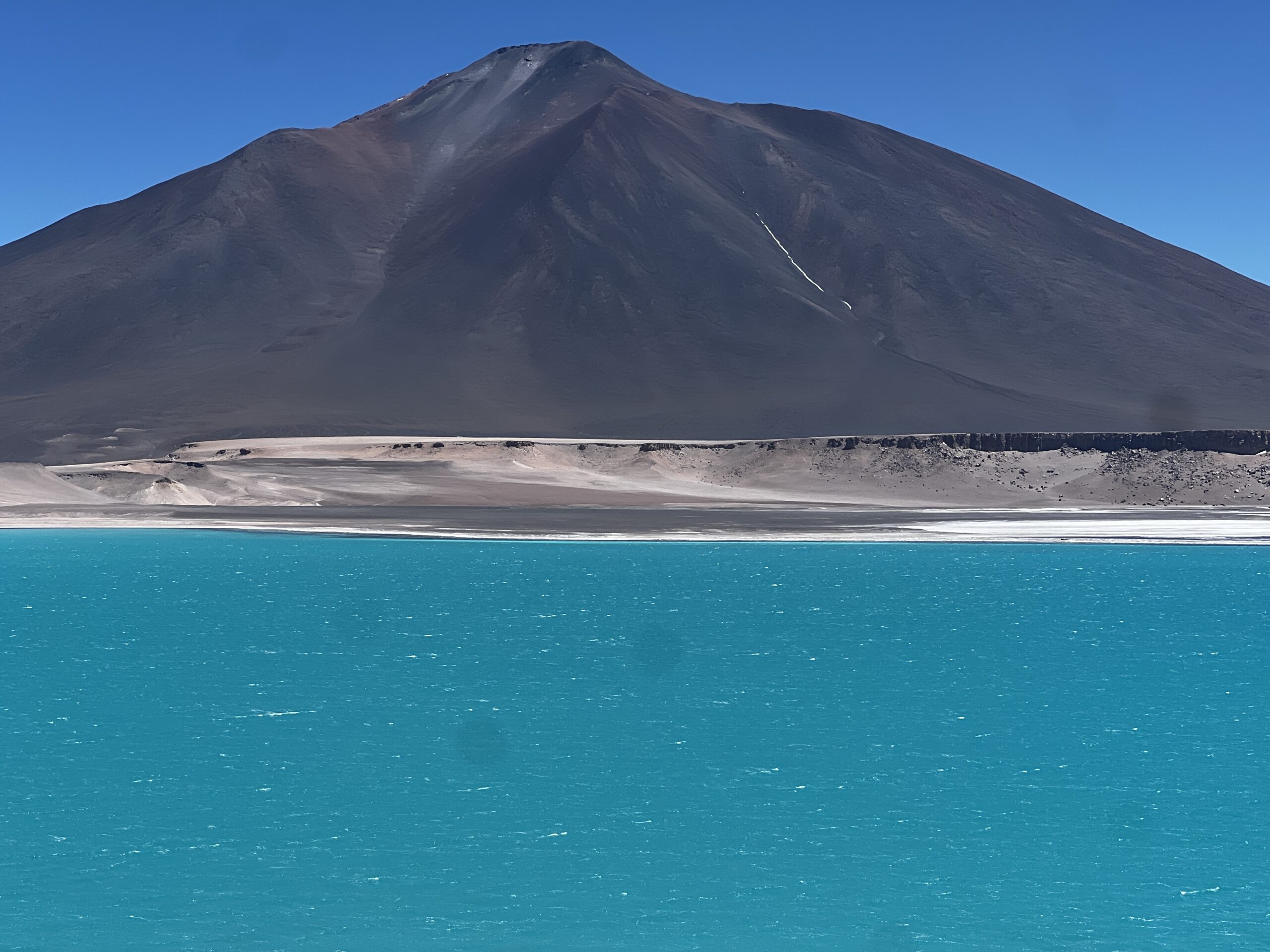
The Laguna Verde salt lake, more than 14,000 feet above sea level in northern Chile’s Atacama Desert. Photo by Bill Spindle.
LAGUNA VERDE, Chile — On a bright spring afternoon, the waters here display an emerald-green tinge true to the lake’s Spanish name, Laguna Verde. Blistering winds kick up white caps. It’s taken four hours to drive here, and we’ve gained 14,000 feet in dizzying altitude along the way.
We’re surrounded by barren rocky peaks flecked with patches of lingering winter snow.
This is a salt lake. Summer heat and high winds may evaporate Laguna Verde over coming millenniums into a shallow salt flat, or salar. But for now, the winter snows sustain it, their meltwater transporting sediment down the slopes, concentrating minerals in the lake body. White crystallin-laced shores betray the saltiness of the water.
These natural forces are at work on dozens of pockets of water sprinkled across the otherwise bone-dry Atacama Desert in northern Chile.
As well as salt, some 78,000 tons of lithium have washed down into Laguna Verde over the ages. Lithium is a critical ingredient in batteries. The lake’s reserves are enough to make almost 10 million of the kind that go into electric vehicles.
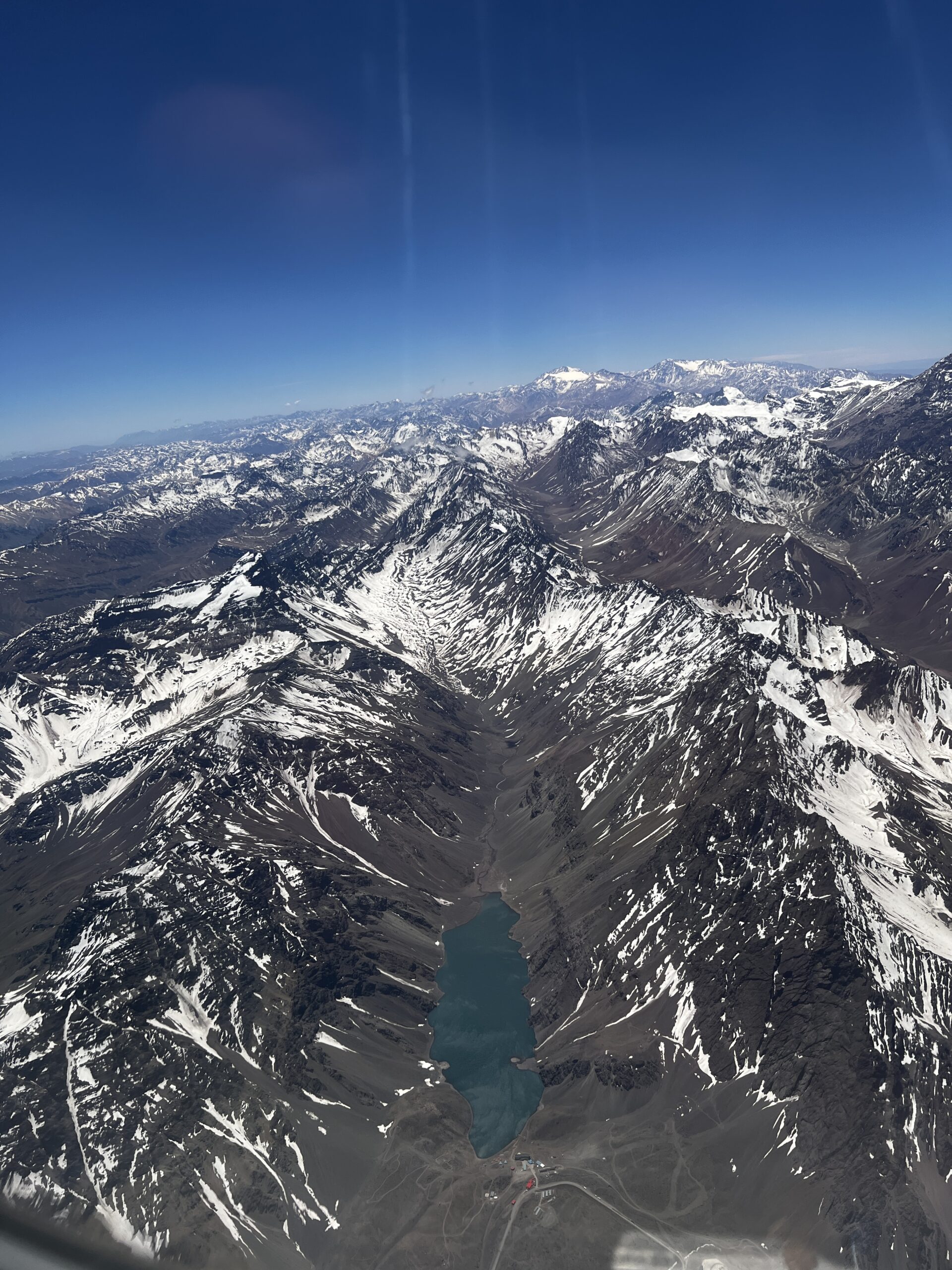
An aerial view of a lake in the high altitudes of the Andes Mountains between Argentina and Chile. Photo by Bill Spindle.
This confluence of geology, chemistry and opportunity has made Chile an important player in the global energy transition — and spawned some unlikely partnerships, the likes of which will probably be necessary around the world to move to cleaner energy and sufficiently tackle climate change.
Aldo Boitano, 57, our guide to Laguna Verde, is a thin, wiry mountaineer and advisor for CleanTech Lithium, a London-listed mining company he founded. Ercilia Araya, 58, is a sturdy spiritual leader to a group of Indigenous families, the Colla Pai-Ote, part of a larger people whose ancestors have lived here for many generations.
Boitano and Araya share a goal critical to the energy transition: extracting lithium in a way that produces profits and supports local communities without unduly disrupting the pristine landscape and its natural ecosystems. They are trying to push beyond the requirements of Chile’s formal mining laws to bring local communities into the mining process from the earliest stages and even share some of the proceeds.
Different worlds
Straight shooters and blunt talkers both, Boitano and Araya are each from Chile but come from different worlds.
The son of a nuclear engineer, Boitano was raised in the Chile’s mountains but went to high school in Ohio and spent years living and working in the United States. He’s been a globetrotting CEO — traveling during a trip to launch CleanTech to Xian in China, London, San Francisco and New York City.
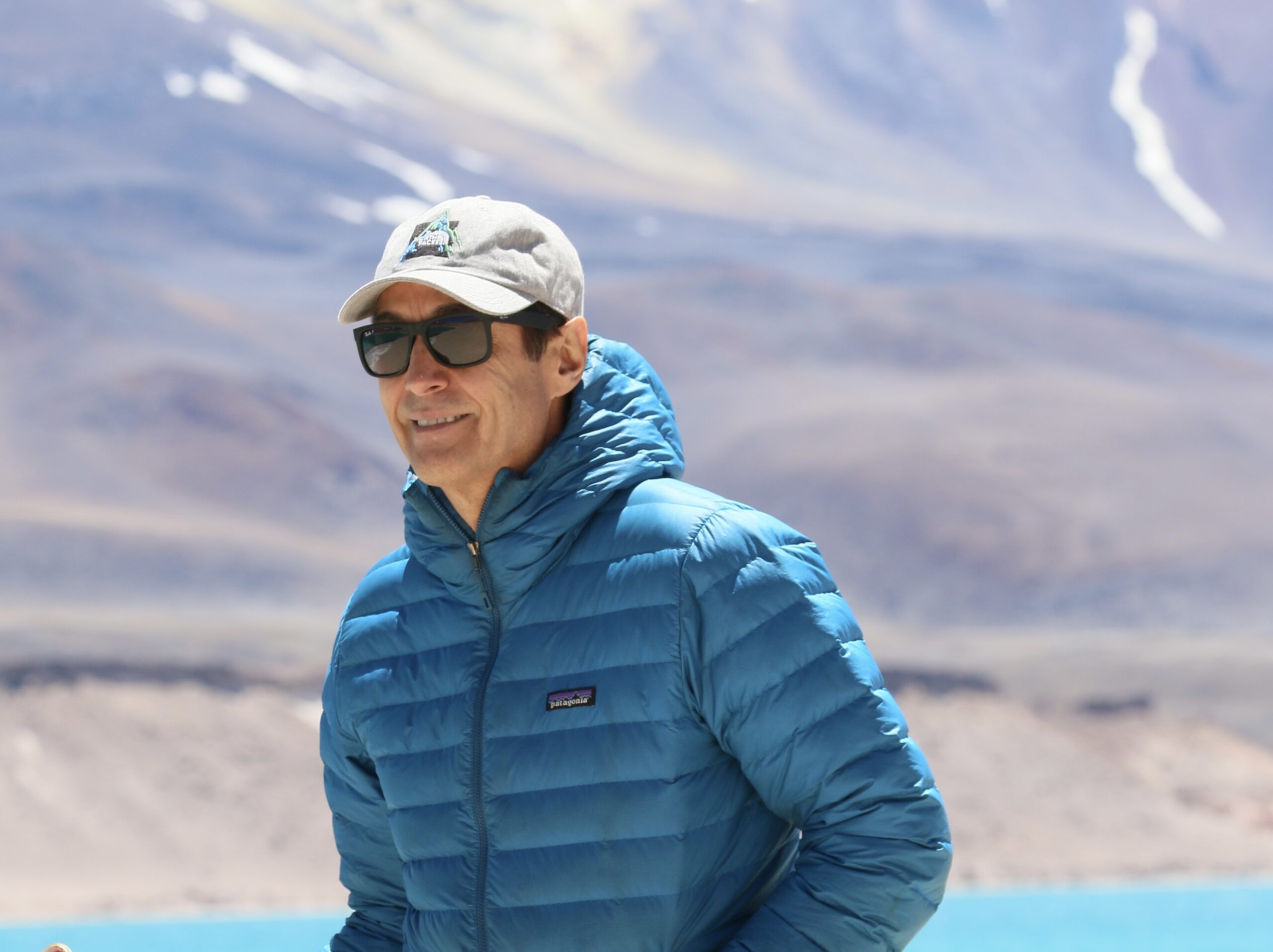
Aldo Boitano, co-founder and representative of CleanTech Lithium, which hopes to extract lithium from the Laguna Verde salt lake high in the mountains of northern Chile. Photo by Bill Spindle.
An adventurous mountaineer, he’s done some of the toughest climbs in the Andes and scaled the world’s second-highest peak, K2 in Pakistan. Even as he accompanies us to Laguna Verde, he is recovering from a 60-foot tumble down a cliffside last year that broke his femur, hip and elbow, damaged his optic nerve and caused thrombosis in his leg and lungs. He is finally walking fairly well again, despite doctors warning him this could take years of physical therapy.
“It’s a kind of resilience, or maybe stubbornness,” he says.
Araya is an equally resilient, sometimes stubborn, child of the Andes. She was designated before birth to lead the Colla Pai-Ote, a group of two dozen or so families who live in a mountain enclave an hour’s drive — or for their ancestors several days’ trek — from Laguna Verde and another, bigger salt flat nearby.
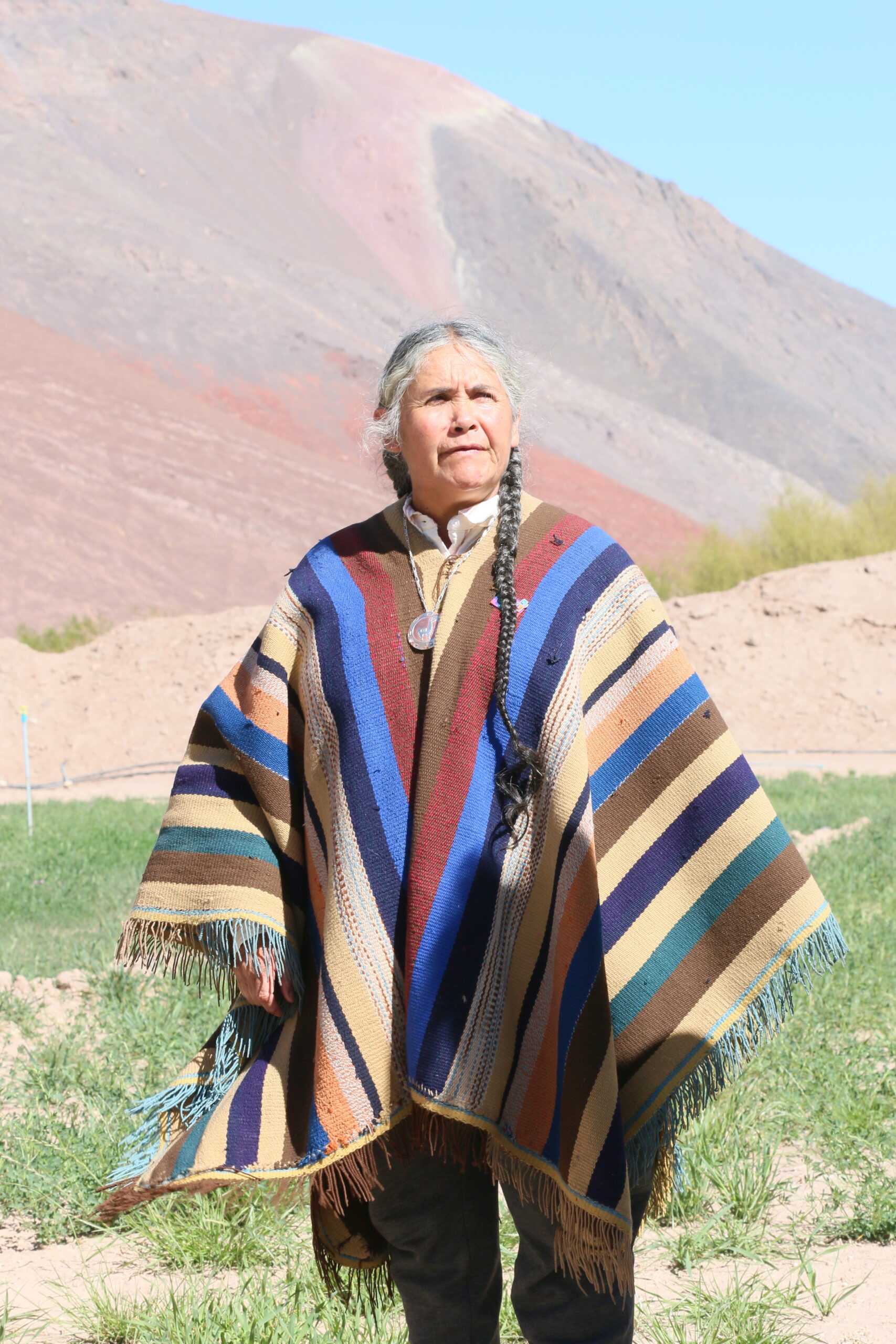
Ercilia Araya of the Colla Pai-Ote Indigenous community in northern Chile, wearing a special poncho that denotes her status as a spiritual leader. Photo by Bill Spindle.
There they raise chickens, goats, sheep and horses. Araya, her husband and their three grown children make goat cheese to sell and scrape out an alfalfa crop between harsh winters. In summer, the Colla have long guided their animals to graze near the salars. Araya recalls how they traditionally toted sacks of salt atop mules back down the mountain, using it to flavor meals and preserve meat throughout the winter.
Important tribal ceremonies take place at the foot of the world’s highest volcano overlooking Maricunga, a salar near Laguna Verde. Maricunga, also rich in lithium, is marked for development by state-owned mining giant Codelco with a yet-unnamed multinational partner. Flamingos, a major focus of environmental groups opposing expanded lithium mining, feed in Maricunga’s nutrient-rich shallows.
A promising technique
At Laguna Verde, CleanTech is attempting to prove the effectiveness and viability of a promising new technique called Direct Lithium Extraction, pegged by the Chilean government as a breakthrough method that could be less environmentally destructive than conventional approaches. The government would like this technology to be applied to other Atacama salars in northern Chile as well. It is also starting to be applied in other countries such as Argentina.
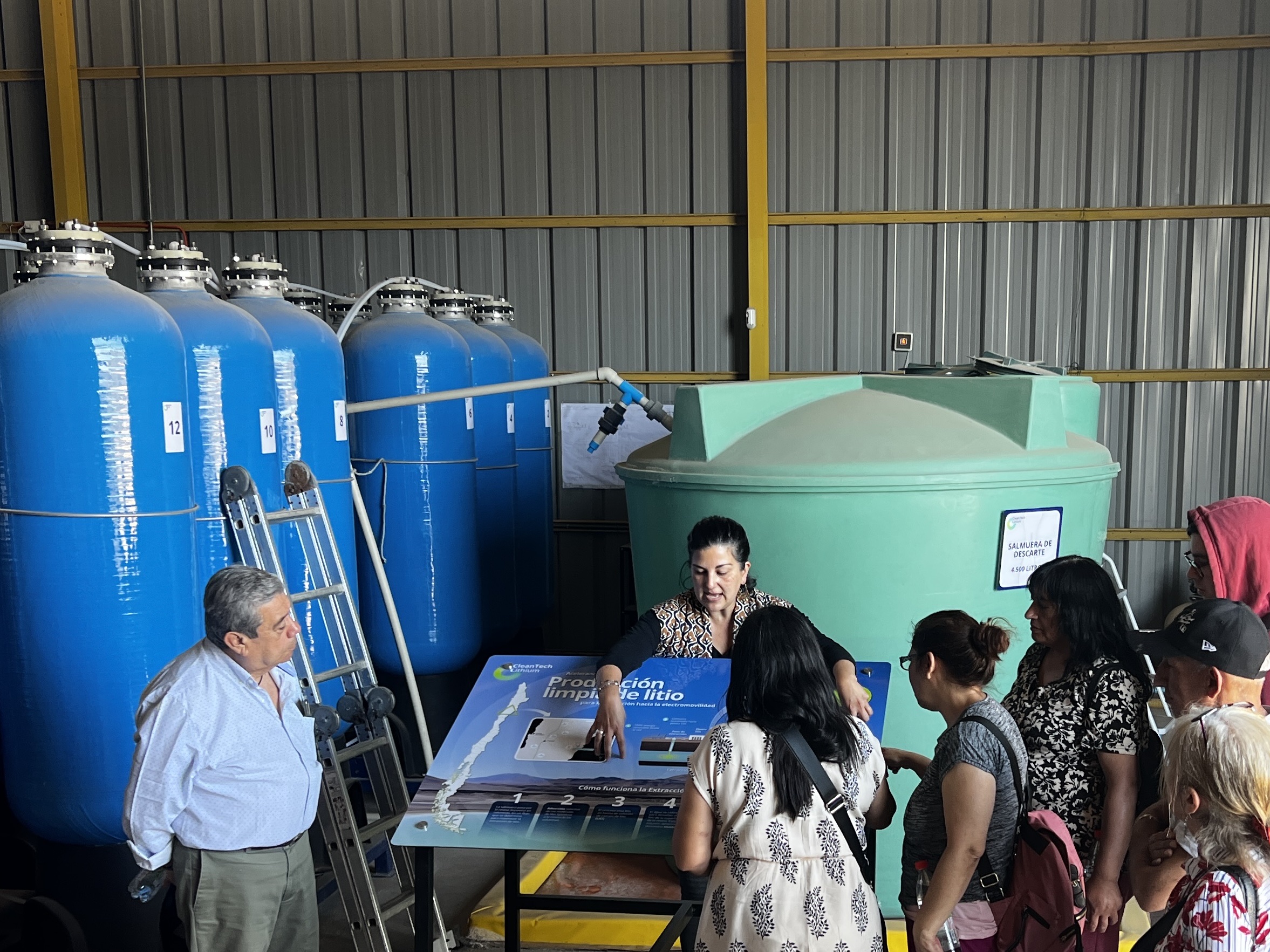
Marcela Sepúlveda, community relations manager for London-listed CleanTech Lithium, explains the company’s plans to extract lithium from a salt lake to members of the local community. Photo by Bill Spindle.
Obtaining lithium from the Atacama salars conventionally has involved spreading tens of millions of gallons of their waters across the desert in giant, shallow pools. Over the course of a year, the water evaporates. The remaining lithium-rich silt is shoveled up and put on a ship, usually headed to China for purification and processing into a form useful for batteries, nearly all of which are also made in China.
With direct extraction, water would be sucked from below the floor of the salar and the lithium immediately filtered out through a proprietary process at a facility near the shore. The lithium-free water would then be injected back into the salar. This would be a quicker process and could have less of an environmental impact, according to CleanTech.
The company has started testing aspects of this technique, taking water from the lake body and running it through their lithium extraction process in a facility down the mountain. They will need more environmental permits to re-inject the water and take next steps to scale up to commercial production at the site.
Community support
Araya’s Colla Pai-Ote is one of several local communities CleanTech has agreed to work with and pay substantial sums of money under Chile’s mining laws. The group uses some of the payments from CleanTech and other companies to operate a weekend and summer program for Colla who live in the nearby city, Copiapó. Araya wants to build a local health clinic and schools here so families can stay more easily.
During an interview, she makes tea and grills the family’s goat cheese for us in a kitchen with a dirt-floor and wood burning stove.
Araya’s rural home, surrounded by animal pens and agricultural equipment, is a regular stop for company executives and community relations. She spends many hours each week in discussions with them and decries the historical record of Chile’s state-run mining companies as disrespectful and predatory, especially to Indigenous peoples.
“We only get poorer and poorer, and more humiliated,” she says.
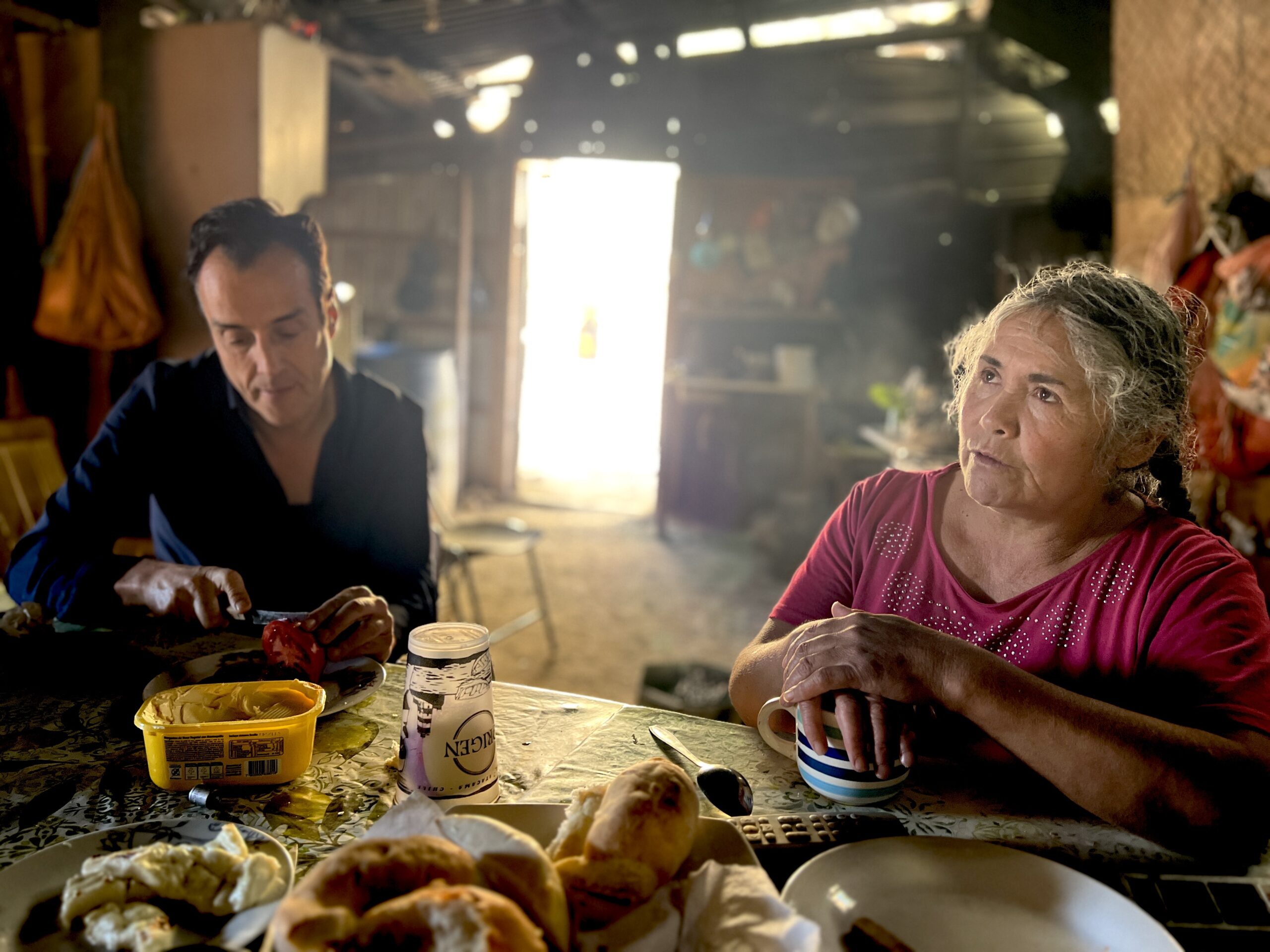
Aldo Boitano, a cofounder and representative of CleanTech Lithium, and Ercilia Araya of the Colla Pai-Ote Indigenous community, meeting in Araya’s home. Photo by Bill Spindle.
But Araya praises Boitano, who clears and washes the dishes as she talks. She says he is respectful, and seems to understand the importance of the desert, the mountains and the salars to the region and her people.
“Aldo would give up his own drinking water,” she says, high praise in the parched hills of the Atacama. “We trust that the CleanTech project is going to be carried out in the best possible way.”
But she warns, “If things don’t go well, we’re going to raise our voices.”
Other Colla community leaders are less sanguine and oppose mining projects, including CleanTech’s. Some live as far away as Copiapó but say a physical and spiritual bond remains with the salars and surrounding land. They say they are excluded and ignored by the government, mining companies and fellow Indigenous groups who are compensated.
“This is common ancestral land,” says Cindy Quevedo, 41, who helps lead another council that includes more than a dozen other Colla communities representing about 450 people. “These are sacred, spiritual places.”
Returning down the mountain, we pass the ruins of a settlement from before Europeans arrived here.
Boitano recalls Araya telling him her aim is to preserve her people’s “ongoing, ever-changing way of life.”
“We’re migrant herders,” she told him.
“Mines always have an impact,” he says before driving to the airport and his flight back to Chile’s capital. “We are helping sustain their ever-changing way of life … we all agree their way of life is changing.”