Meet the unflappable physicist helping make fusion possible
Latest News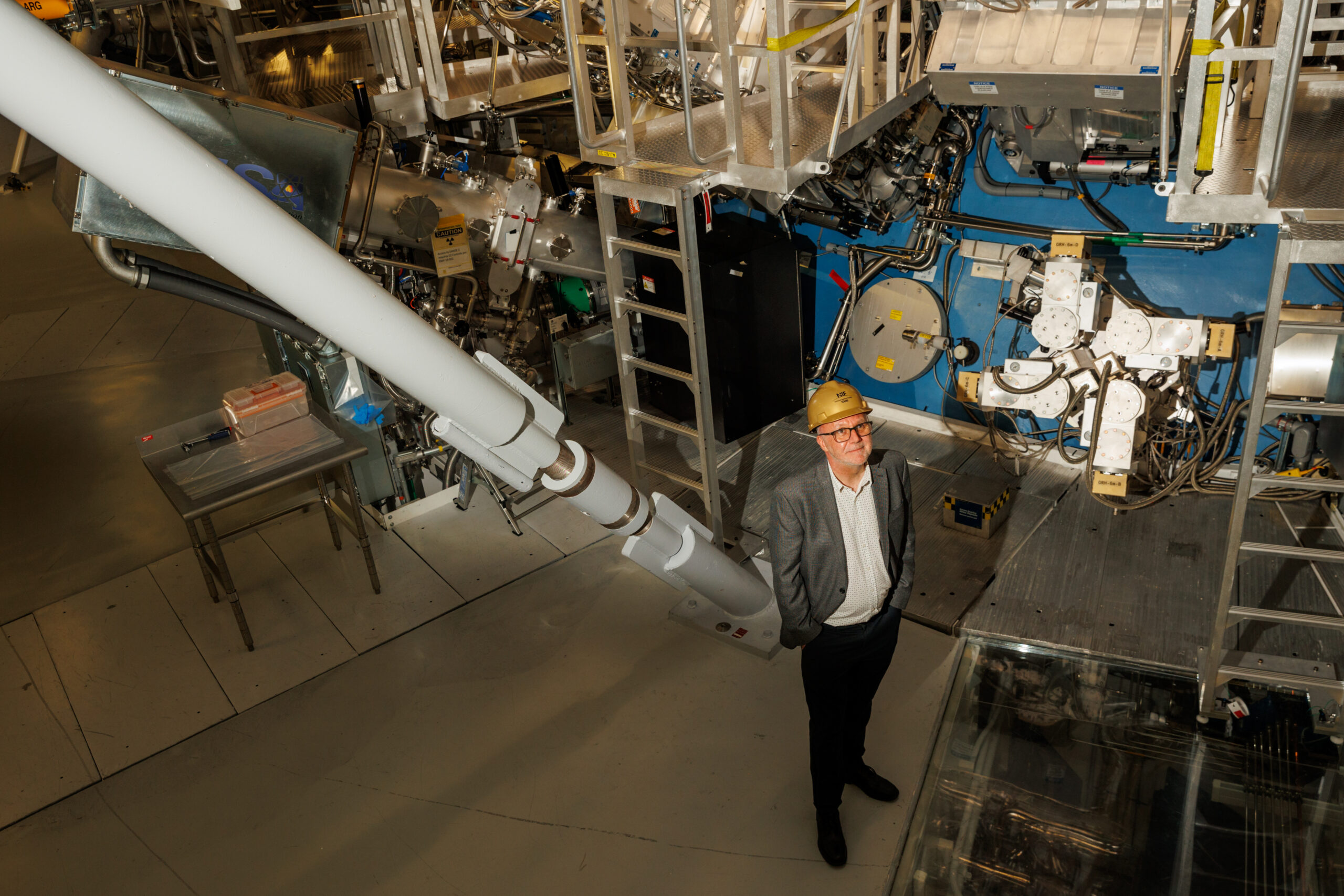
Livermore, California — Richard Town was sleeping when he and his team achieved a scientific breakthrough that could kick off a revolution in our energy systems and help combat climate change.
In the wee morning hours of December 5, 2022, science history was made and fusion “ignition” was achieved for the first time at a national lab here outside of San Francisco.
Later that morning, as Town and his team reviewed the data, they realized they had very likely reached ignition: The crucial, long-sought moment when the energy generated by a fusion reaction exceeded the energy that catalyzed the reaction. Their success indicated that fusion — the way the sun and stars make energy — could someday become an unlimited, clean energy source.
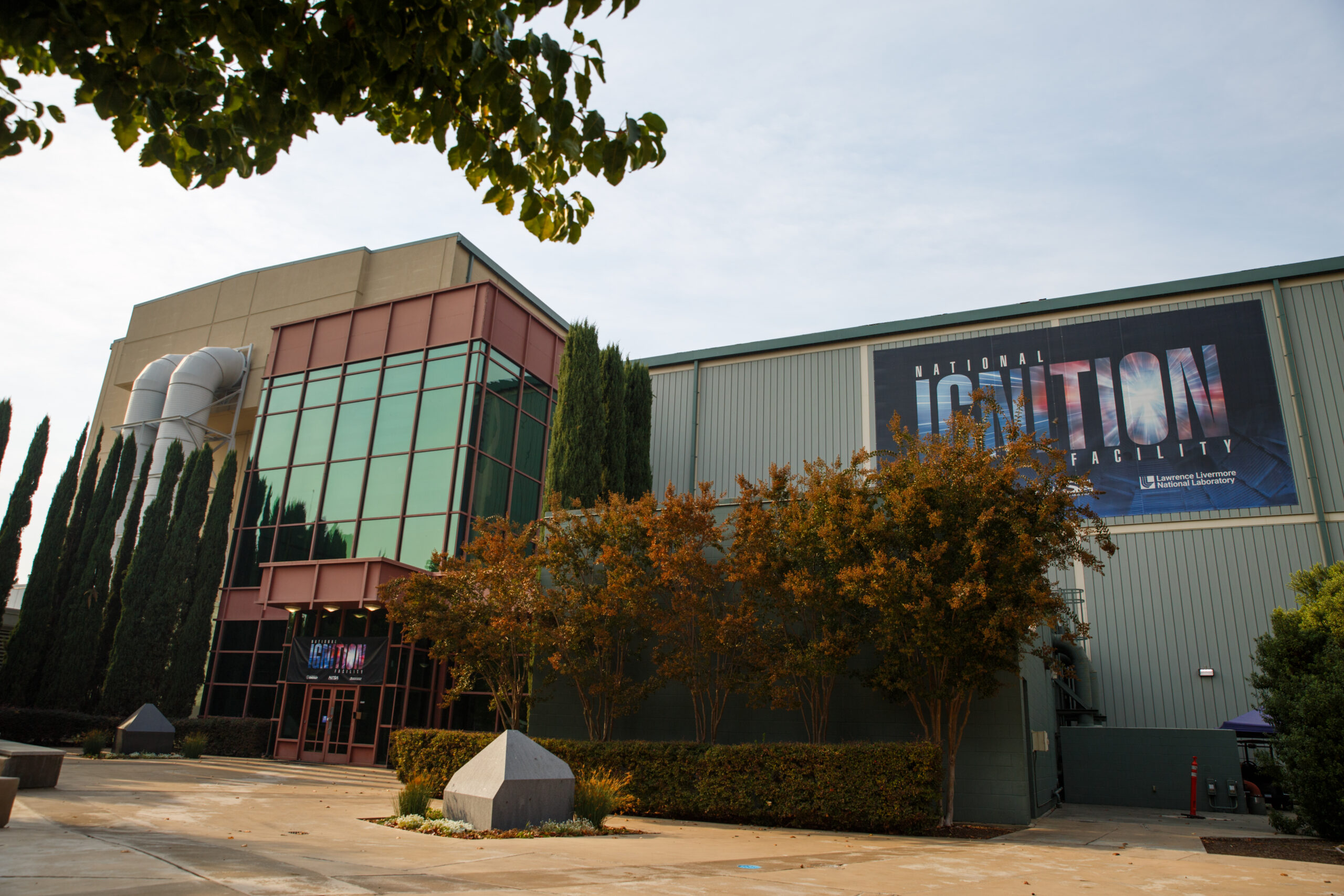
The outside of the National Ignition Facility (NIF) at Lawrence Livermore National Laboratory. Photo credit: Juliana Yamada.
While the preliminary analysis looked promising, Town was careful not to jump to conclusions. He guided his team on that day with a measured demeanor that colleagues say reflects his approach as both a leader and scientist.
Town remembered his thought process on that day: “Now, let’s be calm, be methodical. This is a big result. It will have a big impact,” Town told Cipher in one of a series of interviews, including a walk-through of the National Ignition Facility at Lawrence Livermore National Laboratory, where ignition was achieved.
This kind of even-keeled patient pragmatism might not make for an exciting Hollywood scene, but this is often how scientific progress happens: Slowly, methodically and around the clock (even in the middle of the night while we are sleeping).
Town, a 60-year-old, mild-mannered British gentleman, leads the team of physicists studying fusion at the lab, including those who wrote the computer software code to design and direct this history-making breakthrough.
Fusion could, if scaled up, promise a virtually unlimited, low-carbon and reliable source of power. But achieving such ambitions is still years away (exactly how many is hotly debated) and will require bushwhacking through a lot more scientific and engineering challenges. Getting there will require more leadership from people like Town.
Standing on the edge of history with a level head is exactly who Town has always been as a scientist and a leader, according to his colleagues and peers.
His experience is also a window into how big, hard science problems get solved.
A steady hand on the tiller
Town manages a team of more than 60 people and oversees the science strategy and development of the laser fusion program at Lawrence Livermore National Laboratory, one of 17 national laboratories in the United States primarily funded by the U.S. Energy Department. He’s been at the lab for more than 20 years and started as a physicist before moving into more leadership roles.
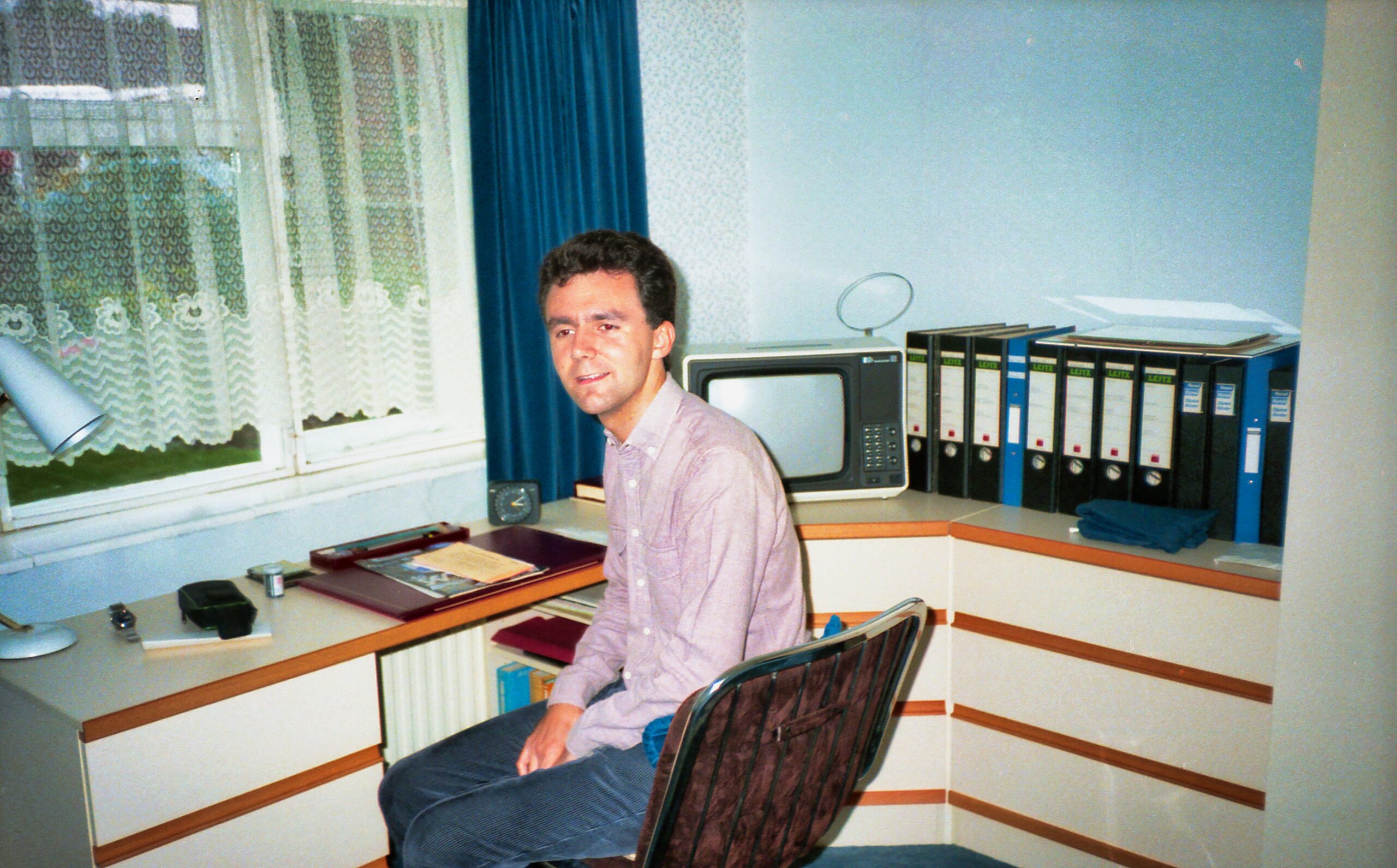
Richard Town around 1986, when he graduated with his undergraduate degree and started working on his doctorate, both at the Imperial College of London. Photo courtesy of Richard Town.
“Getting ignition has been a 50-year journey,” said Town.
Indeed, December 2024 marked the 50th anniversary of the first fusion experiment at Livermore using lasers. It’s been a long journey for the scientific community and for Town himself, who graduated from Imperial College of London with his undergraduate degree in 1986 and his doctorate in 1990.
If someone had told him in 1986 that he was going to spend the next 40 years working toward achieving ignition, it might have been paralyzing, Town said.
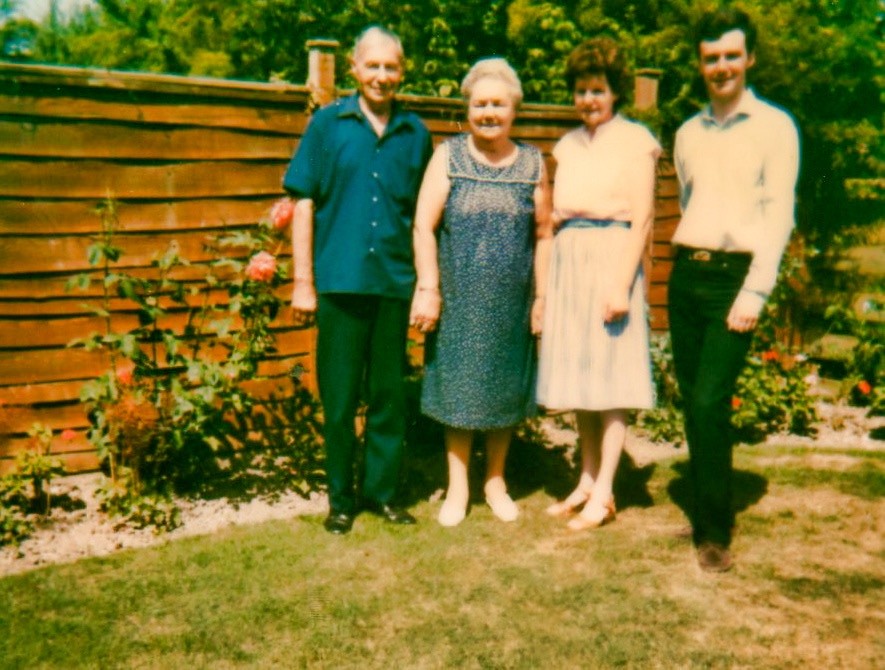
Richard Town (R) with his grandfather, grandmother and mother around 1980 in the backyard of the house where he grew up in in Oxfordshire, England. The idea of clean versus dirty energy was evident early in Town’s life: his grandparents would complain about soot from a nearby coal plant sullying their clean laundry. Photo courtesy of Richard Town.
But for his entire career, Town has found purpose in the short-term, while not losing sight of the longer-term goal. “There’s a lot of intellectual curiosity and understanding from fixing this problem or trying to understand this better,” Town said.
That is how progress toward the fusion breakthrough at Livermore happened. The history-making moment was nearly instantaneous, but the scientists working on ignition had been strategically, incrementally, making progress for years.
“Once we fixed one problem, we could see the next problem. And this is like peeling away layers of an onion where, okay, what’s the next layer we need to address? And it’s been that stepwise approach to problem solving over the past decade,” said Omar Hurricane, chief scientist at Livermore.
Town’s capacity to keep his team moving forward with an almost preternatural calmness is what has made him such a valuable force at Livermore.
“Richard’s strength is probably in his steadfastness,” Brian Spears, the director of the Artificial Intelligence Innovation Incubator at Livermore, told Cipher. “It’s super critical for what he has been able to do with our program.”
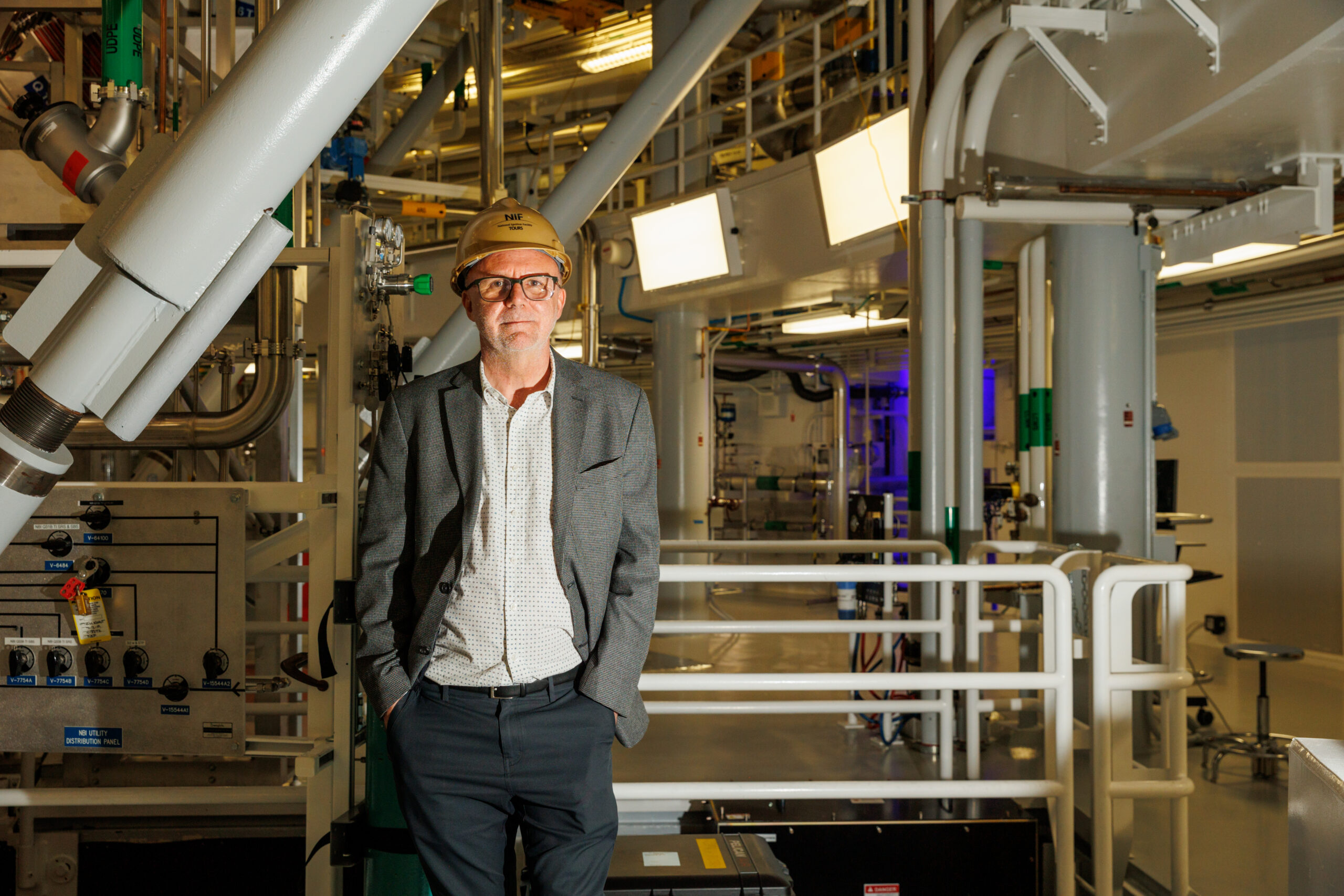
Richard Town, who leads a team covering initial confinement fusion (using lasers) at Lawrence Livermore National Laboratory inside the National Ignition Facility (NIF). Photo credit: Juliana Yamada.
In 2009, lab officials said they expected to achieve ignition in three years. When the lab failed to deliver on that timeline, criticism and pressure mounted.
“Throughout the time he has been at the helm, he has been able to steer a pretty clear path without being very reactive at all,” said Spears, who has also been at Livermore for more than two decades. “He keeps his scientist hat on,” Spears said, letting himself be guided by the data.
Guiding the gremlins
Bruno Van Wonterghem, operations manager at the National Ignition Facility, praises the effectiveness of Town’s “soft-spoken approach.”
“His whole physics team is like herding cats and dogs and all kinds of gremlins,” said Van Wonterghem. “You can tell them something — they just don’t even hear you if it’s not what they want. And so, it’s very hard to manage physicists to do something as a group, as a coherent team.”
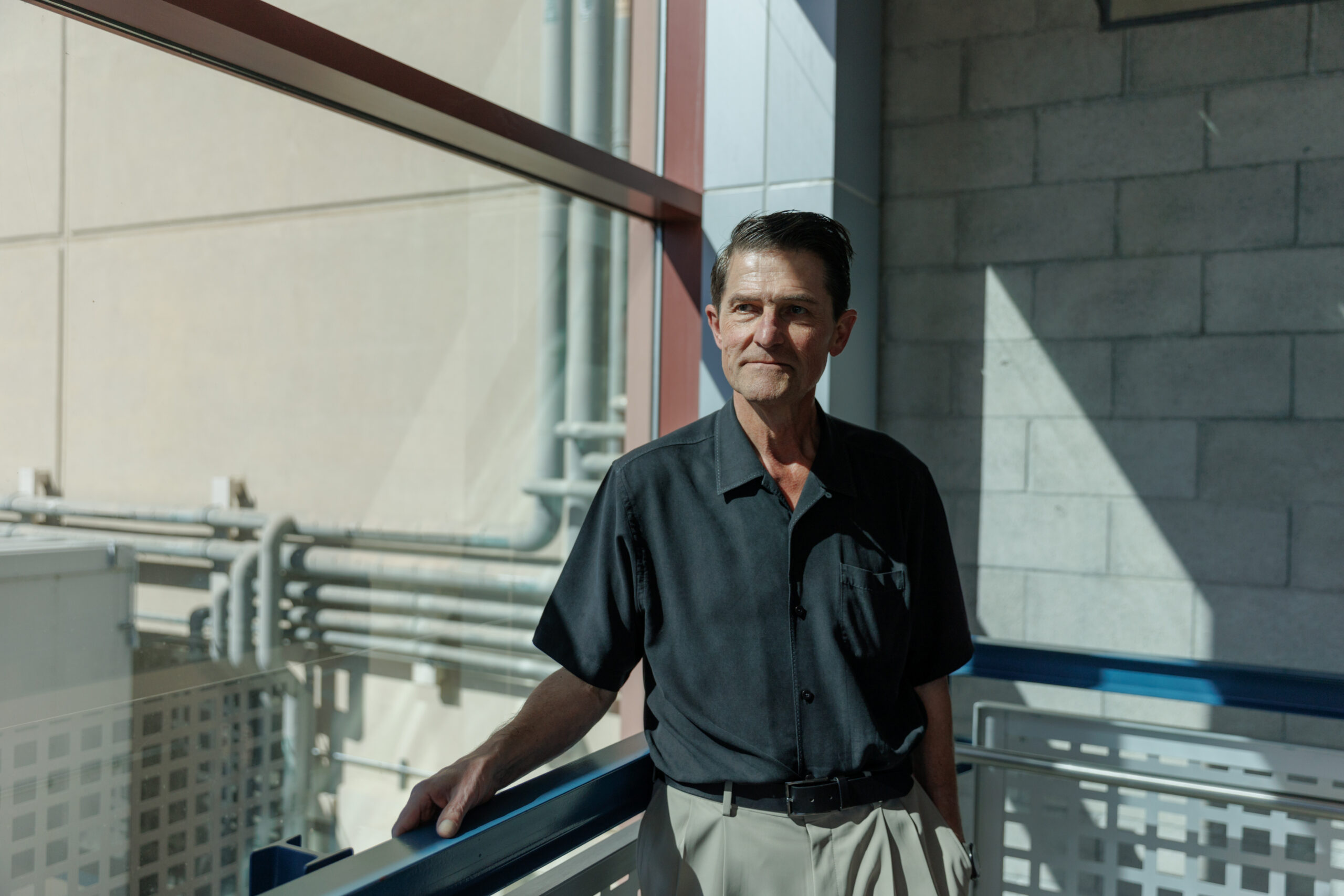
Bruno Van Wonterghem, operations manager at the National Ignition Facility. Photo credit: Juliana Yamada.
Town builds consensus and in that way, works like a conductor, Wonterghem said. “It’s basically understanding your players and having them play like an orchestra.”
Town is also willing to stand up for key players on his team, says Annie Kritcher, a designer who has worked for Town for 12 years.
When Kritcher was a new mom, she asked to work 80% time so she could be home with her kids for a day each week. She perceived pushback internally for that decision.
“Richard stood up and said, ‘Yeah, she’s 80% but she does the work of two people.’ In front of everybody,” Kritcher recalled.
“He’s very quiet, but then when he speaks and stands up for somebody, it’s pretty impactful,” she continued.
Kritcher ultimately would become the lead designer on the experiment when ignition was first achieved.