Land is hard to find for solar farms. Asia’s answer? Float them.
Explainers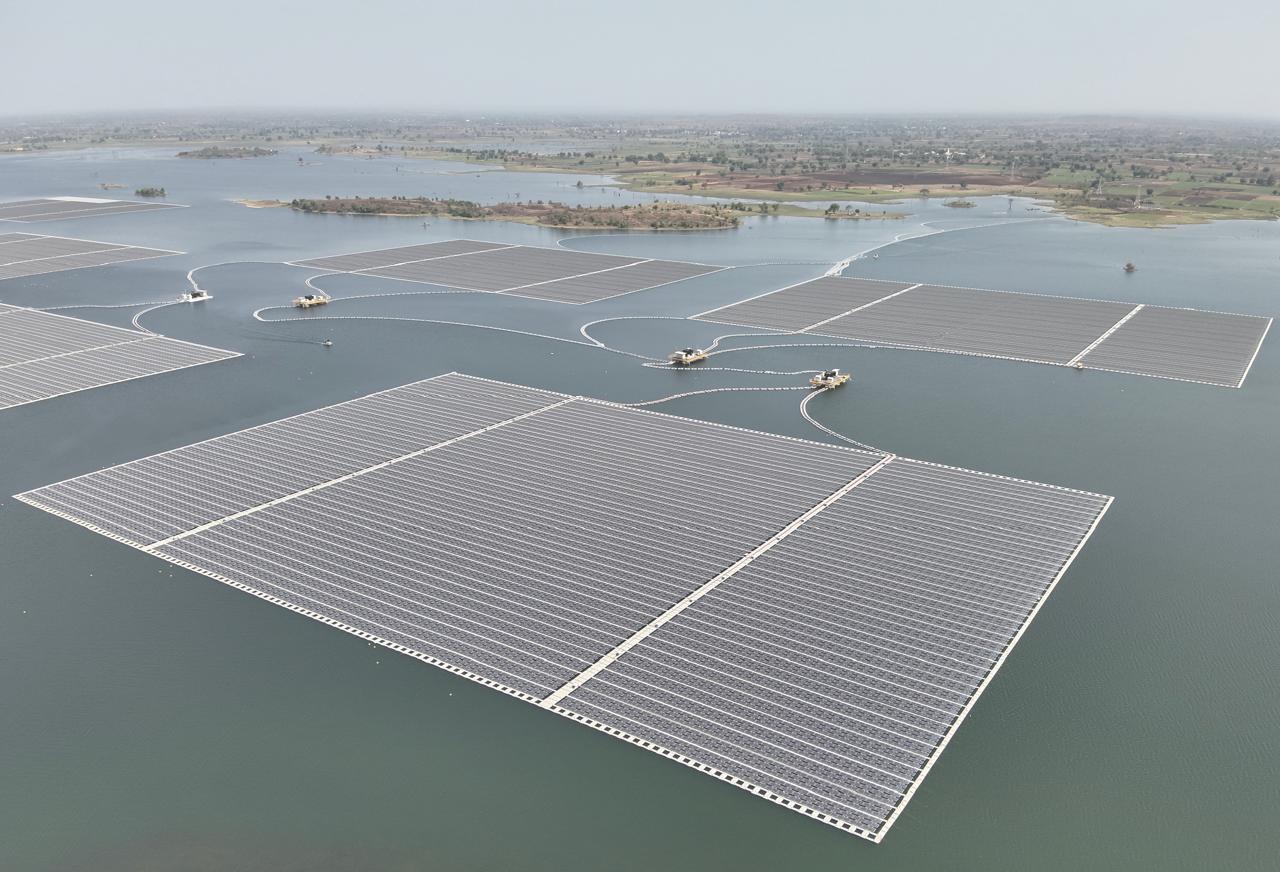
EKHAND, India — From above, an expansive lake in central India looks like it is partially blanketed by dozens of massive metallic rugs. The shimmering structures are rows and rows of solar panels floating on the placid water.
This solar farm on the Omkareshwar dam reservoir in the Indian state of Madhya Pradesh is part of a rapidly growing trend across Asia of building large-scale solar farms not on land, but over water.
Floating solar is still a relatively new source of clean energy. In 2007, French and Japanese engineers built the world’s first floating solar plant in Aichi, Japan. The country now boasts more than 73 large-scale floating solar plants. China and India have built some of the world’s largest floating solar projects on dam reservoirs. Taiwan has developed several projects and Singapore and Thailand have one floating project each.
Many more are coming. Indonesia is developing a large-scale plant and Thailand announced it will develop 16 floating solar parks by 2037. Next year, South Korea will complete construction of the world’s largest floating solar plant (with a capacity of 2.1 gigawatts (GW)) in the coastal waters of the Yellow Sea.
To be sure, coal still dominates in this region — the dirtiest fossil fuel accounts for 72% of India’s electricity, for example — but floating solar is poised to take off. Solar energy of all kinds (mostly on land, for now), makes up 5.8% of India’s electricity, according to 2022 data from the International Energy Agency.
As of early 2024, over 600 floating solar farms had been constructed across the globe, with the Asia-Pacific region boasting 81% of all floating solar developments, according to a Wood Mackenzie report. Going forward, China, India, South Korea, Taiwan and Southeast Asian countries are expected to account for around two-thirds of the global demand for the technology.
By comparison, floating solar is more cost-effective than floating wind, as floating turbines still aren’t being produced at scale in India and Southeast Asia, according to Cosimo Reis, a renewable energy analyst at Trivium China, a policy research organization. Europe looks set to lead on this front.
Several factors are driving leadership on floating solar in Asia. Fewer bureaucratic hurdles persist here to build large farms over water instead of over land, a precious and shrinking resource. Governments in Asia are also actively investing in floating solar developments and accelerating its permitting processes.
There are other possible motivators as well. Research suggests the panels can help reduce evaporation from water reservoirs, potentially boosting hydroelectric production. Solar panels are also currently very cheap, thanks in large part to China’s prolific production.
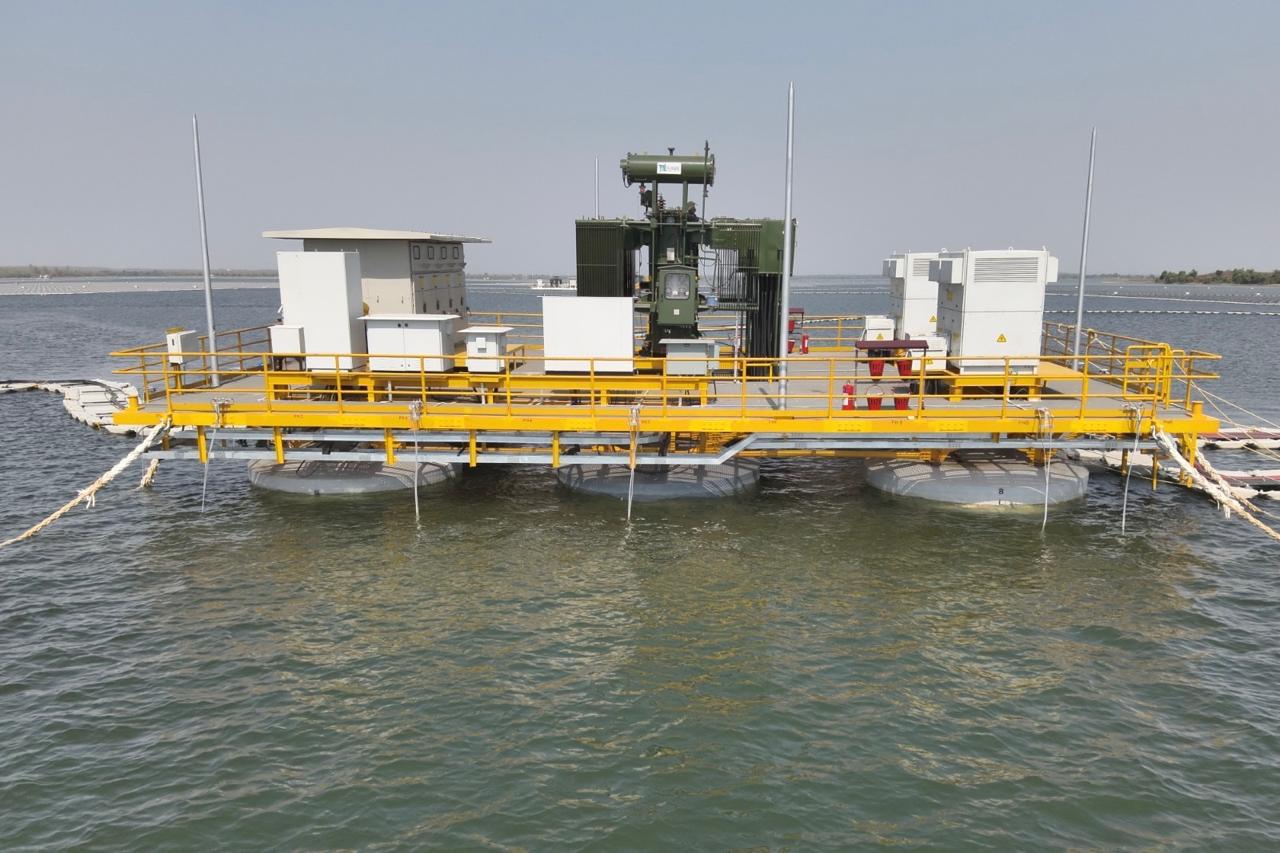
Transformers for a floating solar project on the Omkareshwar dam reservoir in central India. Photo by Rewa Ultra Mega Solar Power Ltd.
“It is logical to build floating solar farms on reservoirs and other artificial water bodies,” said Saptak Ghosh, senior policy specialist at the Center for Study of Science, Technology and Policy in Bangalore, India. “Because this technology is land neutral, its environmental and social impacts are substantially lower than land-based solar energy projects.”
In Europe, another region where available land is scarce, floating solar has yet to take off in a big way due to a lack of political willpower to establish legal and permitting requirements. Although countries in the European Union have been pioneers in launching cutting-edge floating solar technology, many of them still do not have a specific legal framework for the ownership rights of floating solar projects — which has slowed down the industry across the continent.
Side-stepping land issues
On the other hand, many Asian countries are aggressively scaling up their floating solar sectors to produce more clean energy without using up one of their most limited resources: land.
According to a 2022 Nature study, in India, 74% of large-scale solar projects were built on land with agricultural or ecological preservation value. China, the top solar energy producer in the world, is grappling with food security concerns as upcoming solar projects continue to encroach on more cropland.
Solar farms can also be sources of social tension. In both countries, locals have repeatedly refused to give away their farmland for upcoming solar projects. Several rural communities alleged local governments and renewable energy companies had forcefully displaced them without providing adequate compensation.
Ecologists have also raised concerns that huge land-based solar farms can threaten ancestral grazing lands, bird habitats and biodiversity.
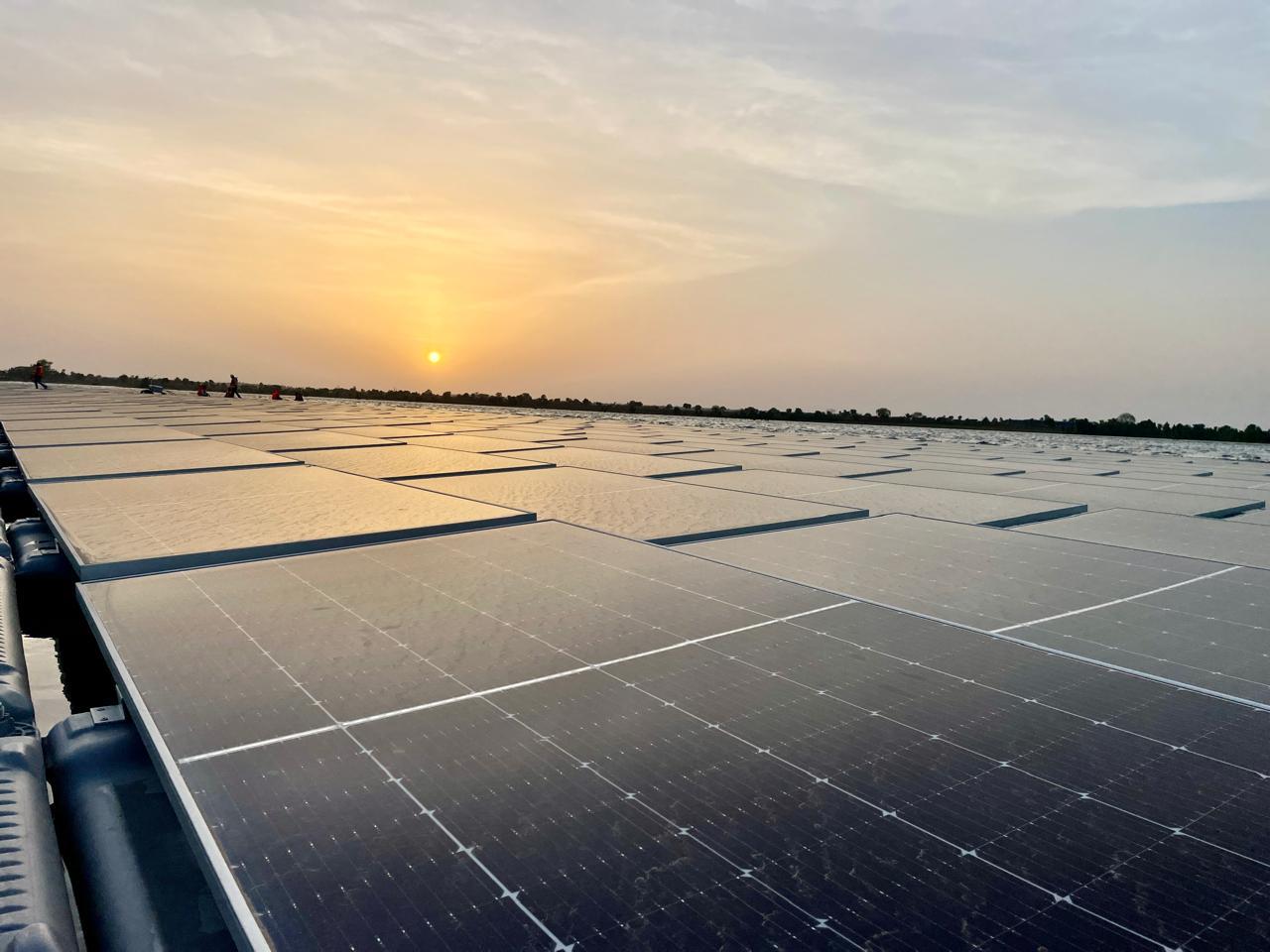
Floating solar panels on the Omkareshwar dam reservoir in central India. Photo by Rewa Ultra Mega Solar Power Ltd.
Putting solar panels over bodies of water instead could help protect those reservoirs from climate impacts. In recent years, frequent droughts have forced several countries to burn more fossil fuels to make up for periods of low hydropower generation.
Studies have found that covering just 1% to 4% of dam reservoirs with solar panels mounted on anchored rafts could reduce water evaporation and increase hydroelectricity generation by more than 50% in the Global South.
Floating solar farms are more expensive to install and operate than their land-based counterparts since they require mooring and anchoring systems. But policy makers in Asia say the social and environmental impacts of floating solar are lower than that of land-based solar projects, counteracting the higher expenses.
Smaller is better
The technology is not without its drawbacks.
For one thing, some countries are moving ahead with solar projects not just on lakes, but on coastal waters that face harsher conditions.
“Floating solar projects on freshwater bodies or reservoirs (also known as onshore floating solar) are viable and convenient,” explained Reis. “But I am skeptical about offshore floating solar plants.”
Solar panels are not resistant to saltwater corrosion and are not generally made to withstand strong ocean waves or extreme weather events like typhoons, Reis said. Even on freshwater bodies, floating solar projects could be vulnerable to fierce storms. They also have to somehow be kept clean from frequent bird droppings.
It is also unknown how floating solar panels could impact aquatic life. Although reduced sunlight could be beneficial by cooling water temperatures and preventing algae from taking hold, some studies have found that covering vast areas of a lake or reservoir could have other, more negative ecological impacts. One potential risk is deoxygenation occurring at the bottom of a water body and killing fish.
This risk is higher in smaller lakes and reservoirs. Ghosh argues most floating solar farms currently cover only 10% of the water surface, and negative impacts on aquatic life occur if floating solar panels cover more than 40% of a reservoir.
Ironically, though, floating solar could make the most impact if installed on a smaller scale.
Smaller projects could be beneficial and sustainable, especially if installed on farmlands with ponds, said Hamid Pouran, a senior lecturer in environmental technology at the University of Wolverhampton in the United Kingdom.
“Small-scale floating solar plants can play an important role in decentralizing energy supply in developing countries and could make farm automation a reality for communities,” said Pouran. “But companies do not invest in small-scale floating solar technology because there is no financial reward for them.”