Japan’s plan for net zero increasingly rests on a big hydrogen bet
Latest News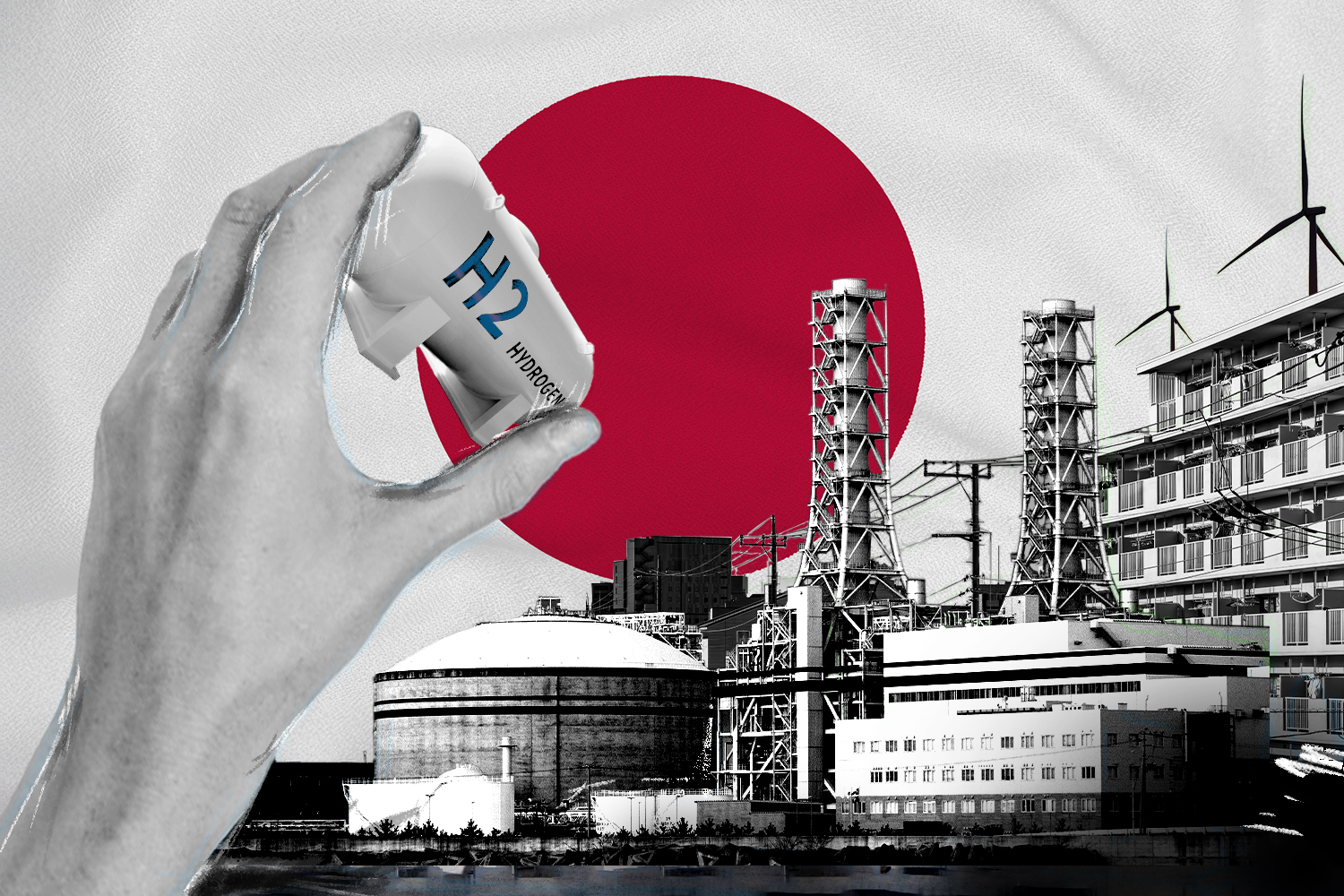
TOKYO — Earlier this year, Japan’s top opera singer sat down for a chat with the head of one of her country’s largest energy companies at a public event in Vienna, Austria, where the young singer is based.
The buttoned-down energy executive and Japanese soprano may have seemed odd partners to discuss an important question: “Is Japan a renewable-energy laggard?”
Hisahide Okuda, president and chief executive of JERA, one of Japan’s biggest operators of natural gas and coal power plants, did not mince words.
“That’s just not the case,” he told Ayako Tanaka, the singer.
Okuda cited Japan’s success in solar power. He then went on to explain a challenging, controversial emissions reduction route that the Japanese government believes is the best bet to further decarbonize, at least for many countries in Asia.
Rather than closing emissions-spewing coal- and, eventually, gas-fired electricity generators and replacing them with wind and solar, as many countries are attempting, top Japanese executives and officials are hoping to keep these generators going, but gradually replace the coal and gas with low-carbon ammonia, hydrogen and biomass.
This approach, expected to become a core part of Japan’s updated national energy strategy next year, could put much of Asia on a different decarbonization path than North America, Europe, Australia and elsewhere. In the United States and Europe, natural gas and renewable energy sources have pushed aging coal plants, the biggest emitters of planet-warming carbon dioxide, into early retirement. But many Japanese officials don’t see that as a workable plan in much of Asia.
“Asian countries have been growing rapidly and their dependence on fossil fuels is increasing,” Hideyuki Umeda, director for international policy on carbon neutrality at Japan’s Ministry of Economy, Trade and Industry (METI), told a gathering his agency organized in June at the Asian Development Bank in Manila, the Philippines. “Energy transition policies should be tailored to those circumstances.”
Making a big bet on the future of hydrogen as a clean power source is risky, however, as hydrogen markets have struggled to get off the ground worldwide and dealing with the gas is technologically and logistically tricky. Indeed, the idea has many critics.
The Renewable Energy Institute, an advocacy group in Japan, argues the country should abandon the hydrogen plan in favor of renewables. Japan has many large-scale solar facilities, but the Institute says the government is ignoring the potential of solar power on rooftops and underplaying the potential for wind, especially offshore. The group argues Japan could generate 80% of its electricity from renewable sources by 2035, up from about 10% today.
“It’s critical to increase the amount of renewable energy produced domestically,” said Teruyuki Ohno, executive director of the Institute. “But I don’t think this is even being discussed.”
Fossil fuel landscape
Currently, Japan’s power sector is 60% fueled by coal and natural gas, split roughly equally, and accounts for about half the country’s greenhouse gas emissions, according to the International Energy Agency. Nuclear power accounts for less than 6% after the country shut down most of its reactors in the wake of the 2011 Fukushima disaster (Japan is now trying to restart some of those reactors).
Many environmental groups believe shuttering the massive fleet of coal-fired plants in Asia as soon as possible is critical to the world reaching its climate goals. Groups ranging from the Asian Development Bank to the Rockefeller Foundation and the Monetary Authority of Singapore have struggled with ways to retire coal plants early.
It’s an especially daunting challenge because Asia’s coal-fired power plants are young; many have decades left in them and the electricity they’re contracted to provide often must be paid for whether used or not.
But the Japanese government, alongside some of the country’s biggest corporate and financial institutions, believe low-emissions hydrogen offers a path forward. They argue using existing power plants longer, while gradually switching to low-carbon hydrogen, is the best solution for heavily coal- and gas-dependent countries, including India, Indonesia, Malaysia, Vietnam, the Philippines and Singapore.
Countries would need to make extensive use of carbon capture to reduce emissions during the decades it could take to create a regional clean-hydrogen market, refit coal and gas generators to work with hydrogen or ammonia and then gradually substitute the lower-carbon fuels. While Japanese leaders say renewable energy and nuclear power should be expanded as much as possible, they argue those will not be able to meet the energy needs of Asian economies.
“In developed countries such as in Europe, attention is focused on the renewable energy,” Soichiro Niwa, general manager of JERA’s Energy Transition Division told the conference audience in Manila in June. “But in Japan, which is island country, and in Asian countries, JERA believes that promoting decarbonization while maximizing the use of existing thermal power generation facility is the realistic path.”
Japan’s overall decarbonization goal is to cut carbon emissions 60% by 2035 from 2013 levels.
Chorus of critics
Not long ago, hydrogen was touted as a “Swiss army knife” solution, able to handle the decarbonization of a wide range of industrial and energy processes. But the gas is proving too expensive and unwieldy to use in power generation, critics say.
“Making hydrogen to burn in a turbine makes absolutely no sense,” says Dennis Wamsted, an analyst with the Institute for Energy Economics and Finance, which promotes clean energy. “You’ve made it with renewables that should have just gone directly into the grid, or you made it with [natural] gas, maybe with carbon capture, which would be even more expensive.”
Even companies promoting the technology acknowledge the costs will be daunting initially and require government subsidies. But they say several pilot and demonstration projects show the technology works and at least one commercial scale operation is moving forward, according to JERA and other companies involved.
The companies aim to refit coal and gas plants to operate with a 50% mix of either hydrogen and gas or ammonia and coal by 2030; they are targeting 100% hydrogen or ammonia by 2050, they say.
To achieve that goal, the cost of clean hydrogen would have to fall dramatically, through a massive and rapid scaling of a global hydrogen market. Large fleets of specialized ships would be needed to transport either liquid hydrogen, or a product derived from hydrogen, such as ammonia. And port facilities would have to be built to off-load the toxic and highly flammable chemical and get it to the generation plants safely.
Efforts to build a global hydrogen market are struggling to get off the ground, even in the U.S. and Europe, despite massive government subsidies on offer to try to make it happen. South Korea, for example, which also is planning to deploy hydrogen to generate electricity, has recently struggled to find providers at a price it was willing to pay.
Despite Japan’s confidence in a hydrogen-based energy future, doubt remains widespread. Among the naysayers was an analysis of Japan’s plan by Bloomberg NEF in 2022, which concluded it was “unlikely to become an economically viable path for Japan to reduce power sector emissions.”