Inside a (nearly) ‘net-zero’ natural gas plant
Explainers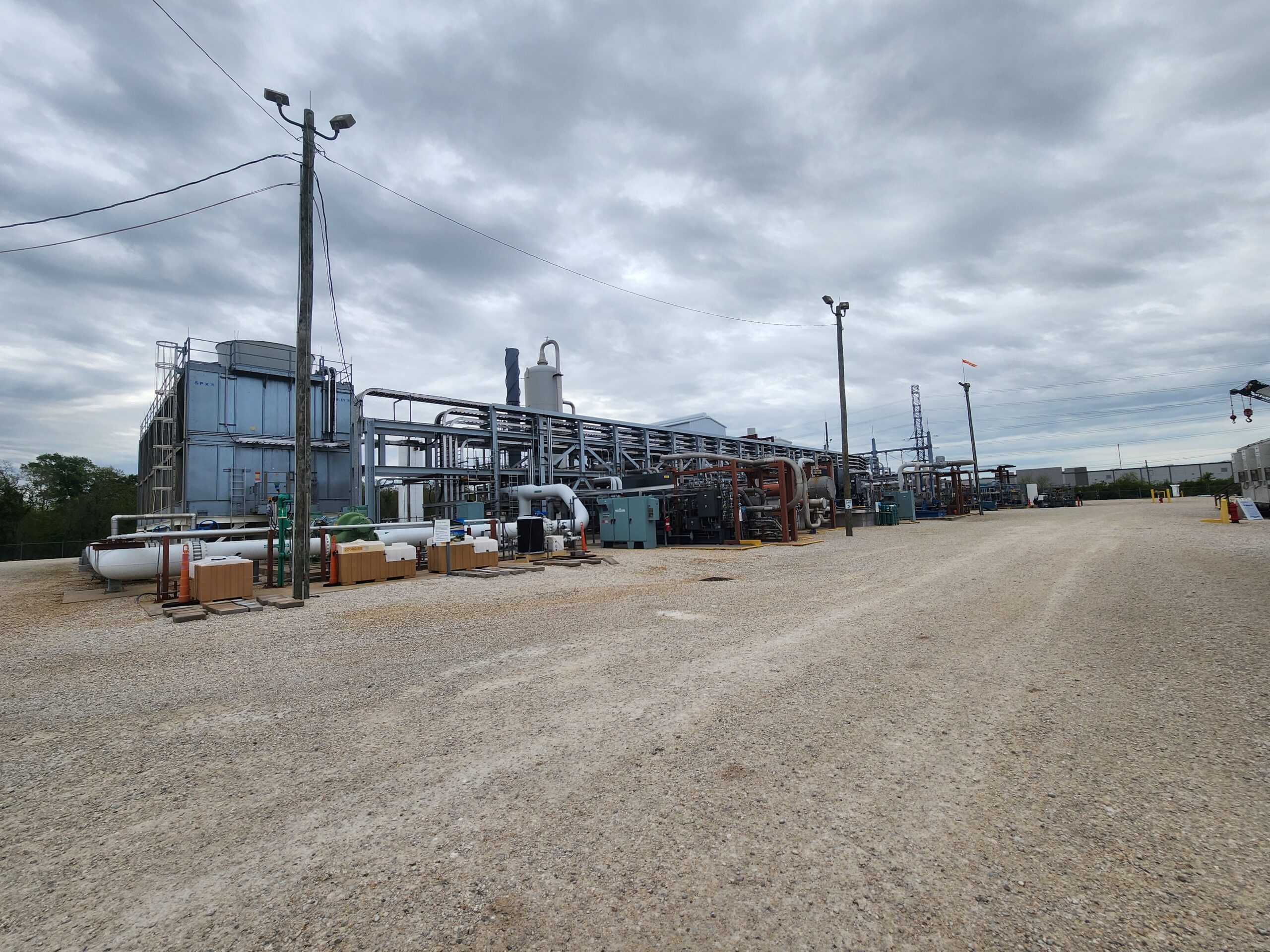
LA PORTE, TEXAS – Walking around the NET Power pilot facility in La Porte, Texas, 25 miles outside of Houston, I felt like I was walking through a tubular spaceship. The complex seemed like a plate of pipeline spaghetti to the uninitiated. But pipeline spaghetti it is not. To the contrary. The organization and order of what flows where is of the utmost importance.
“If you’re really trying to capture emissions, you really need to redesign the entire process for the way power is generated in the first place,” NET Power CEO Danny Rice told me in an interview after my tour.
The company Rice leads is working to commercialize its patented technology to produce power from natural gas in a completely redesigned power plant that captures 97% of carbon dioxide emissions and, critically, produces no nitrous oxide or sulfur oxide pollutants.
While this is a demonstration facility and relatively small compared to a full-sized, natural gas plant (25 megawatts compared to a range of 100 to 1,800 megawatts for a commercial plant), it’s an example of innovative efforts in a small but growing segment of the oil and gas industry to find ways to reduce emissions associated with using their products.
“As we move the globe forward in this energy transition to get to cleaner energy, it’s going to take time in order to bring in new technology and to change the culture and the infrastructure, both in the United States and globally,” says Tim Skone, a senior environmental engineer at the U.S. Energy Department. “We need to continue to reduce the overall environmental impacts from those fossil fuels that we use. We also need to reduce the amount of fossil fuels that we use — when it is economically prudent and feasible.”
Rice and his brother, Toby, have been in the natural gas world for a long time. They founded Rice Energy, a natural gas producer operating out of the Appalachian Basin, in 2008, and sold the business to another U.S. natural gas company, EQT, for $8.2 billion in 2017. Toby is now the CEO of EQT, one of the largest natural gas producers in the United States.
Danny Rice has a vested interest in developing NET Power and proving natural gas deserves a seat at the decarbonization table. But his thesis for NET Power is also probing around a timely, critical and exceptionally hard problem at the crux of the energy transition.
“We need clean, affordable, reliable power,” Rice told Cipher. “Right now, there’s no energy source in the world that can do all three at scale. Right now, there’s tradeoffs.” Wind and solar are clean and affordable, but not reliable at all hours of the day. Nuclear is reliable and clean, but expensive to build. Meanwhile, natural gas, oil and coal have historically been reliable and affordable but not clean. Rice says NET Power will achieve all three goals.
Whether NET Power can deliver this trifecta at scale is tantalizing, but unknown. “We need to pursue technologies like this, because they offer some unusual and attractive benefits — if they work,” John Thompson, technology and markets director at Clean Air Task Force, an environmental advocacy organization. It’s still unknown whether the technology will operate reliably and achieve the emissions targets at commercial scale, Thompson says.
In November 2021 , NET Power announced it had successfully tested its technology, though it also disclosed in filings with the Securities and Exchange Commission that its plant has not provided more electricity to the grid than it uses to power its various component parts, like pumps and compressors.
This is as expected, Rice said, because it is demonstrating the technology and not (yet) in a full-sized commercial plant. In conventional coal and gas plants, only 30 to 60% of the plants’ energy input becomes electricity. NET Power hopes to achieve a similar percentage with its commercial plant.
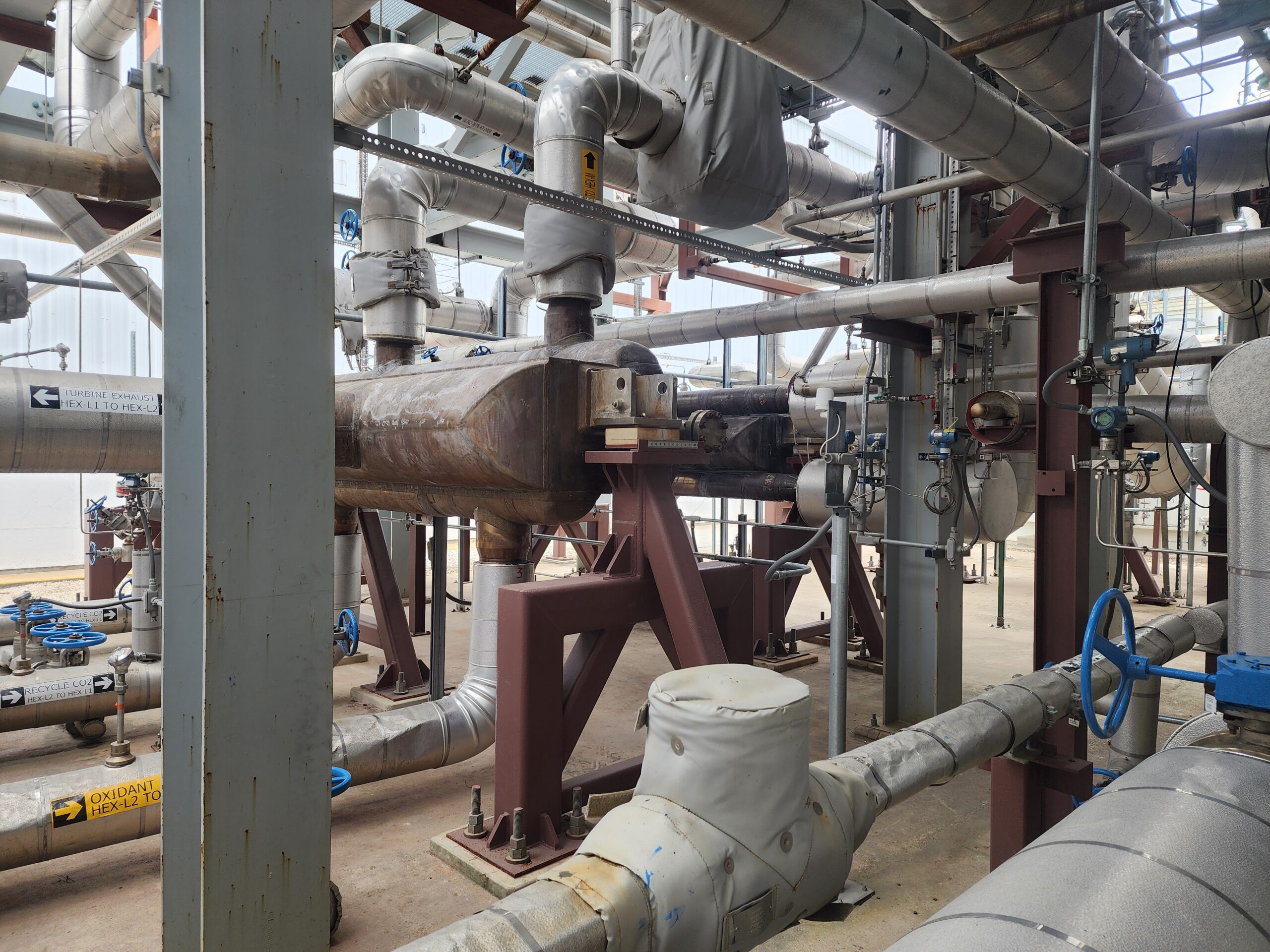
Inside the bowels of the NET Power demonstration plant in La Porte, Texas. The process the power plant uses is called the Allam-Fetvedt Cycle (lead inventors were Rodney Allam and Jeremy Fetvedt). Photo credit: Cat Clifford, Cipher News.
‘A better designed mousetrap’
When an existing power plant installs carbon capture technology, it’s essentially attaching a filter to the facility’s chimneys to pull all the CO2 out of the stream of emissions that result from burning coal or natural gas to generate energy.
Only one power plant in the United States is using carbon capture right now, the Petra Nova power plant, also in Texas, according to the Global CCS Institute, an industry trade group. The captured carbon emissions at Petra Nova are re-used for enhanced oil recovery (which raises questions about the overall benefit in reducing emissions, but that’s for another story).
Notably, this kind of carbon capture removes carbon emissions after the natural gas or coal has already been combusted.
“The challenge there is that CO2 is only a very small percentage of that exhaust,” said Rice. The small amount of carbon dioxide mixes with ambient air, mostly nitrogen, in the power plant’s combustion chamber before being sent out through the facility’s smokestacks, making it hard to separate from other gases.
NET Power’s solution is to limit the gases that go into the combustion chamber at the beginning of the process to just natural gas and pure oxygen. The reaction in its plant produces water, energy and a pure stream of CO2, Rice told Cipher.
While the emissions at the plant will be almost all captured, the technology doesn’t solve for upstream emissions, points out Thompson from CATF, including emissions released in the transportation of natural gas. Methane leakage and flaring is also an issue in the natural gas industry. To this, Rice says between 80 and 90% of the emissions associated with a natural gas plant come at the power plant. “The most impactful way to reduce natural gas related emissions happens at the power plant,” Rice told Cipher.
Other companies may be poised to dominate in retrofitting existing fossil-fuel plants with carbon capture tech, but when it comes to new plants, the complexity and inherent cost of post-combustion carbon capture is going to give NET Power an edge, Rice says: “We’re coming in with a better designed mousetrap.”
NET Power, which aims to have its first commercial plant operating by the end of 2027, is attracting investments from major players in the oil industry seeking to lead on new technologies, including engineering house Baker Hughes and producer Occidental Petroleum.
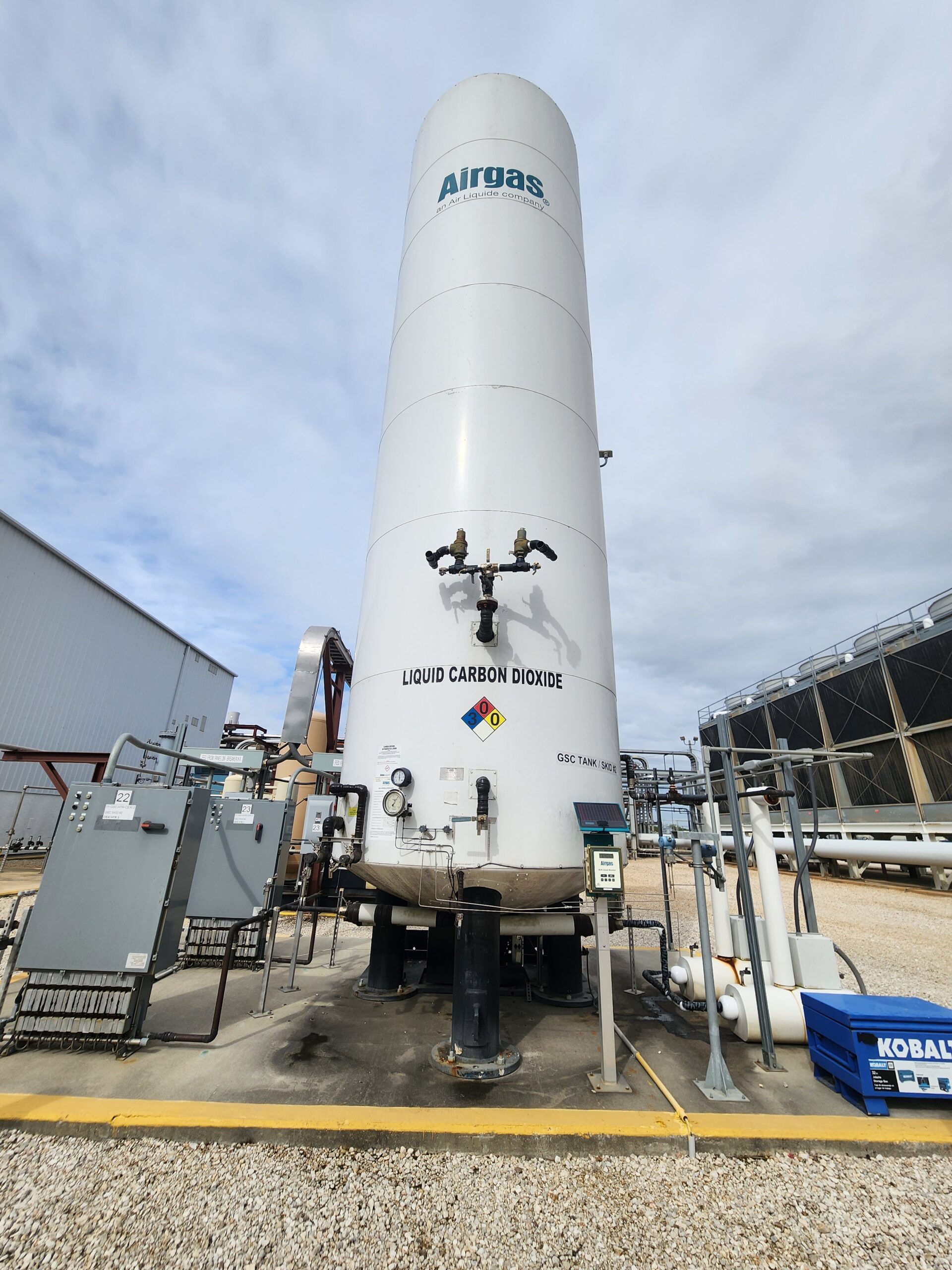
A large container of liquid carbon dioxide on the grounds of the NET Power demonstration plant in La Porte, Texas. Photo credit: Cat Clifford, Cipher News.
Regulations and cost
The first utility-scale NET Power plant will be in west Texas, near Occidental’s Permian basin operations and will cost about $1 billion. It “will be the most expensive one we ever build,” Rice says. To get costs more competitive with other power sources — Rice says a goal is to reduce the upfront capital costs by “30 to 50% over the course of the first couple dozen plants deployed” — they need to cut manufacturing costs of the equipment and ensure operators buying their power could reap tax credits in the 2022 Inflation Reduction Act (IRA) for capturing and storing CO2.
In a presentation at the CERAWeek by S&P Global energy summit in Houston in March, Rice suggested a NET Power plant could capture 900,000 tons of CO2 per year. At $85 a ton, the current tax credit under the IRA, a NET Power plant is going to make more money capturing carbon than selling electricity to the grid. “It is a total paradigm shift,” Rice told attendees. “When you put your economist hat on, you’d say, ‘Well, this is a CO2 factory.’”
David Hawkins, a longtime veteran of the Natural Resources Defense Council (NRDC), asked about NET Power technology, said the big-picture goal should be to reduce the use of fossil fuels: “The priority needs to be on building wind, solar and storage, not processes that burn fossil fuels,” Hawkins told Cipher. “That said, if fossil gas is used to provide a small part of generation, the NET Power technology appears superior to alternatives.”
A new rule from the U.S. Environmental Protection Agency will (if it survives legal challenges) require coal and new natural gas plants to phase in carbon capture technology. For his part, Rice says the rule would help NET Power’s business. The emissions standards are “a bar we’ll easily clear,” he says. By the mid-2030’s, Rice predicts his company won’t need federal tax credits.
Admittedly, that’s a plan with a lot of pieces of the puzzle yet to fall into place. But Thompson at CATF says it’s worth giving technologies like NET Power’s a chance to get to market at scale.
“What we want to do is have as many options as we can,” Thompson told Cipher. “We’ve never solved complex problems with one tool in the history of the world. So, I think that this is a good hedge – if it works.”
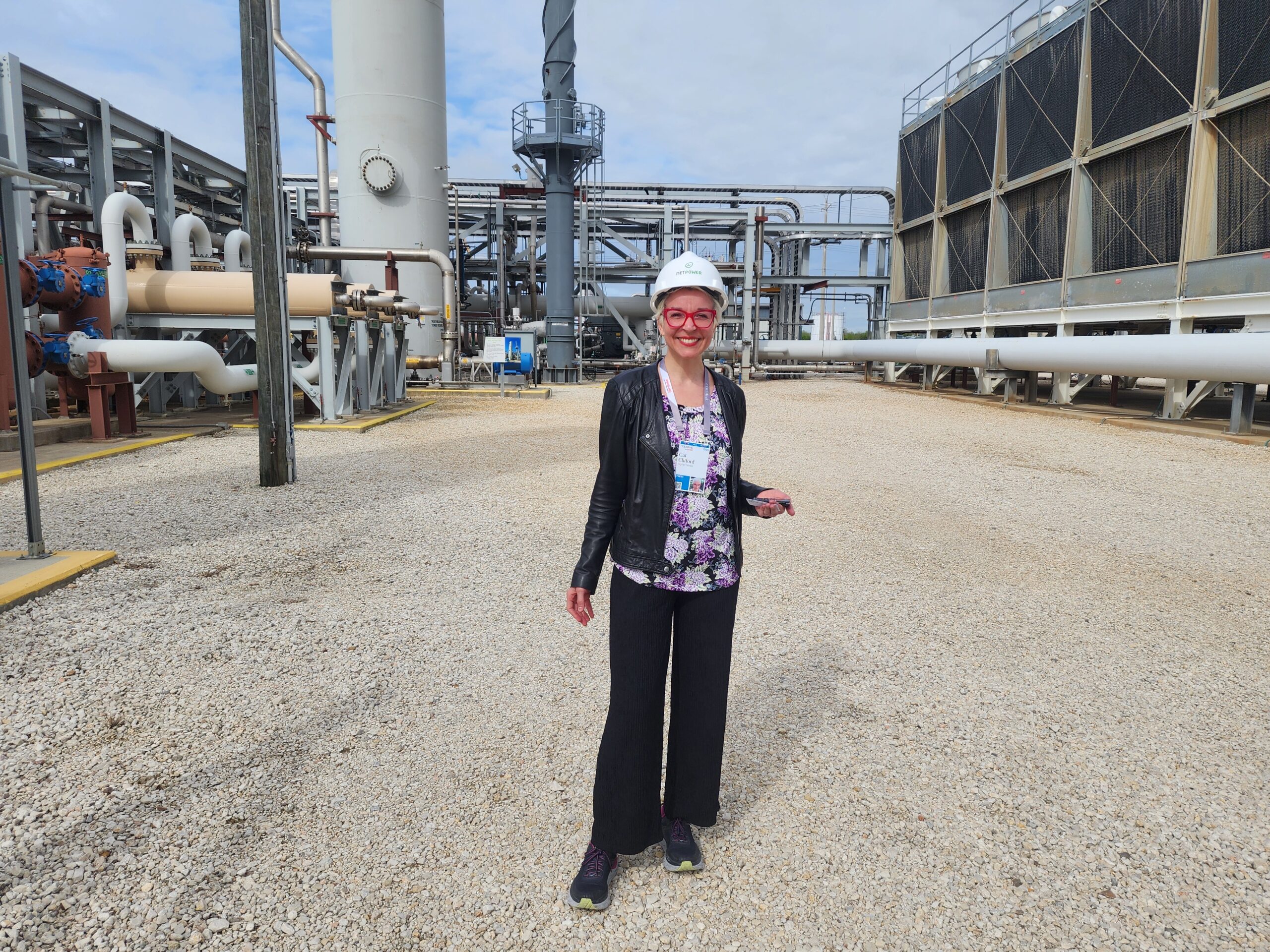
Reporter Cat Clifford in La Porte, Texas, touring NET Power’s demonstration plant. Photo credit: Cat Clifford, Cipher News.
Editor’s note: This story has been updated to clarify that a quote from David Hawkins, of the Natural Resources Defense Council, was not referring specifically to the EPA rule.