Extreme weather prompts growth of parametric insurance, offering faster, more flexible payments after disasters
Latest News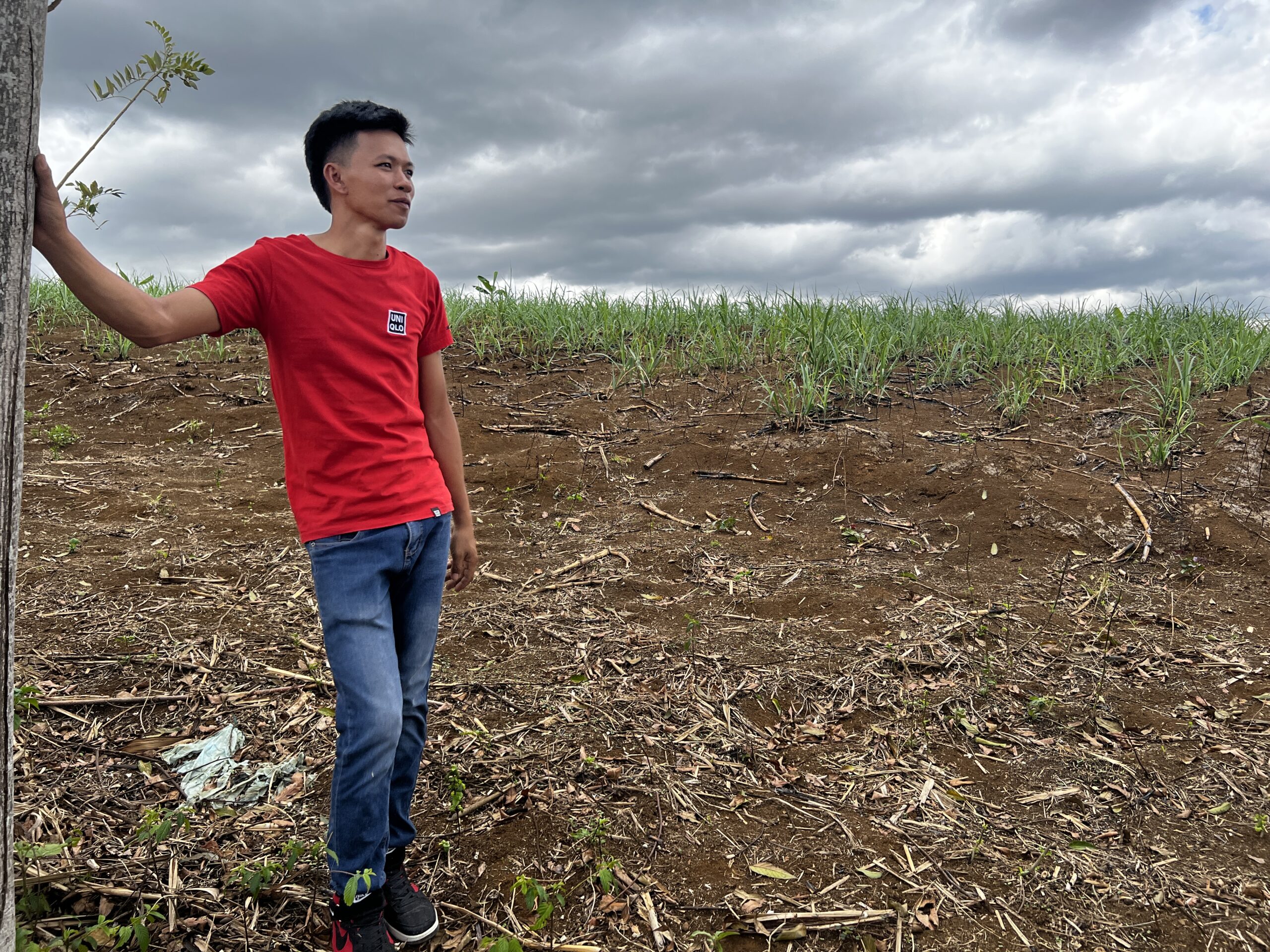
Joemar Flores looking across his farmland, in Mindanao, Philippines in May 2024. Photo by Bill Spindle.
MINDANAO, Philippines — Joemar Flores, a spindly 28-year-old, gestured across his family’s farmland, nestled between a steep hill and a river, and expressed gratitude for the rice paddies in the distance.
They’re still there, producing food and an income for him, thanks in part to a novel form of insurance that is increasingly being used to help vulnerable populations build resilience to climate change.
Back in 2022, the young father of a toddler and a newborn faced ruin when heavy rains and violent winds decimated his rice crop.
“We were very discouraged,” he recalled, as he pointed to a photo of the destroyed paddies.
Flores had borrowed 30,000 Philippine pesos (a little more than $500 at today’s exchange rates) to purchase the rice seedlings and fertilizer he needed for the crops that provide his family’s livelihood. Without the harvest he wouldn’t be able to pay back the loan or have any money to replant.
Luckily for Flores, the local cooperative where he had borrowed the money had an emergency fund bolstered by the experimental insurance. The co-op was able to forgive part of the loan and extend Flores another one, which allowed him to replant.
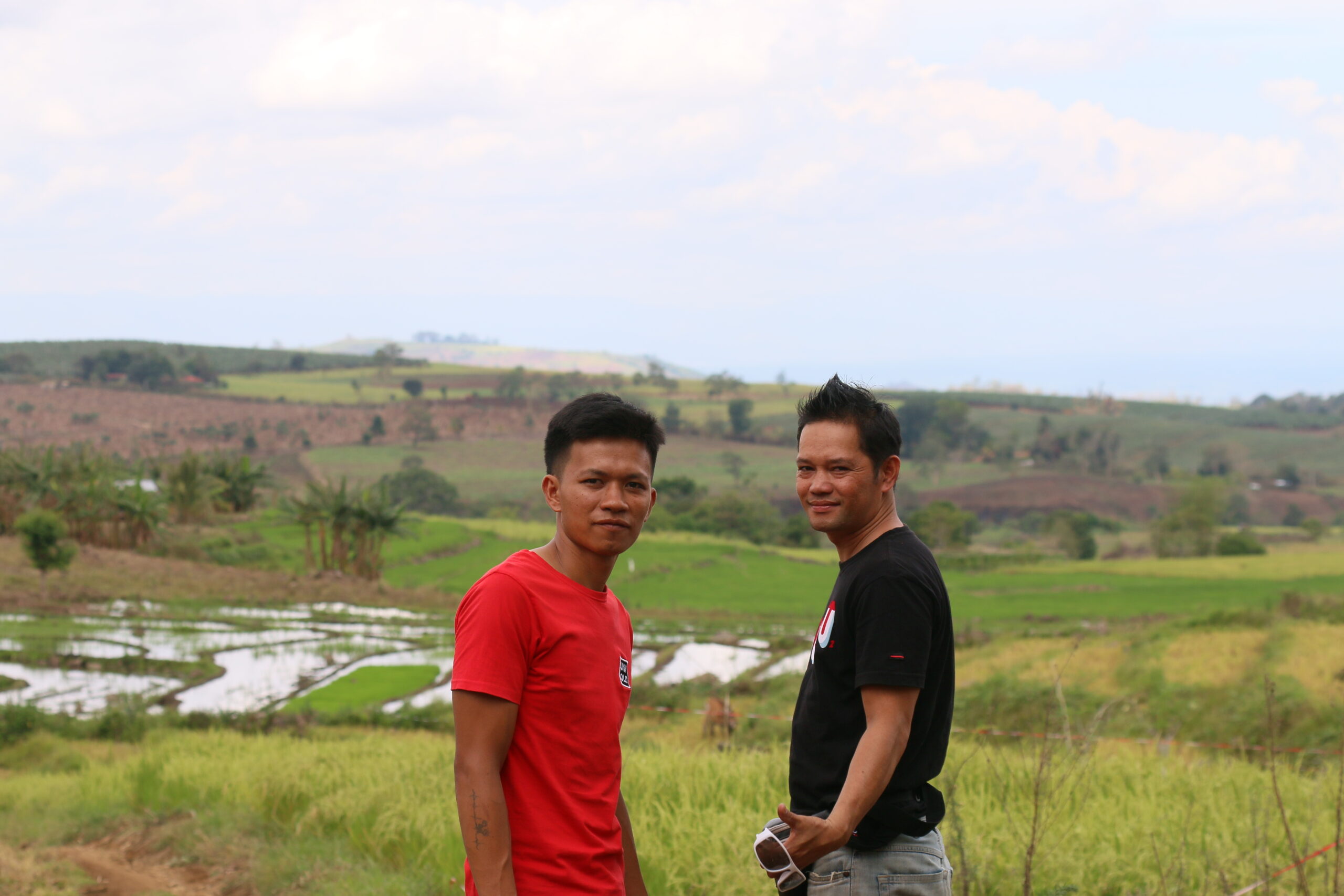
Joemar Flores, and his neighbor, Junthan Giumba, with Flores’ rice paddies in the distance in Mindanao, Philippines in May 2024. Photo by Bill Spindle.
Typically, insurance payouts after a disaster are based on the actual damages, as determined by an on-site inspection by an assessor. This usually involves a lot of paperwork, bureaucracy and waiting, sometimes for years.
But Flores’ co-op has a unique insurance policy: a Luxembourg-based company working with a local Philippines-based insurer pays policyholders based solely on the amount of rainfall and wind speed in a defined area, as measured by satellites. The policies are designed to protect against flooding, drought and typhoons, as well as heat waves.
No damage assessment or site visit is required. The payments are based purely on predetermined statistical thresholds. When a threshold is met, it triggers an automatic payment.
Recipients of the payouts, in this case the co-op, are notified in days and money is deposited directly into the co-op’s bank accounts within a week or two.
These mechanical triggers, or parameters, give the insurance product its moniker, “parametric insurance.”
The quick, straightforward payouts these policies allow could encourage the use of insurance in vulnerable areas that have long lacked coverage, especially emerging markets, says Arup Kumar Chatterjee of the Asian Development Bank, which has overseen several pilot projects in the region.
“It’s a good solution,” he said.
More than simply putting money in victims’ pockets, the rapid payments get rebuilding under way quickly after catastrophes. Workers and suppliers almost immediately know there will be money to pay them.
Parametric insurance isn’t perfect and can’t provide complete protection. Co-ops say covering a full range of contingencies is too expensive, and the satellite-based payouts sometimes don’t directly correlate with actual damage on the ground. That’s why Flores’ co-op has an emergency fund; if the co-op gets an insurance payout that its members don’t need, the money gets saved for the next time its members do need financial support and the co-op might not receive a payout.
Though not a new concept, parametric insurance has taken off with advances in satellite weather monitoring and computerized data processing. That has made it easier to deploy widely and inexpensively in hard-to-access communities. These policies spread risk, like traditional insurance, but sidestep many of the overhead cost and time needed to assess actual damage.
They have been used in developed countries, such as the U.S. and Europe. But advocates hope the novel approach to disaster coverage — part of a wider rethinking of the global insurance industry in the face of climate change — will especially improve insurance coverage in poorer, remote areas that are especially vulnerable to growing threats from climate change.

Noel Raboy, president of CLIMBS in Cagayan de Oro City, Mindanao, Philippines in May 2024. Photo by Bill Spindle.
“We really want to make sure that our farmers are not left behind,” said Noel Raboy, president of CLIMBS, a Philippines based insurer that underwrites and sells parametric policies, including to Flores’ co-op.
The policies are spreading in both the economically developed and developing world, and they’re often being used in novel ways. They can be used to help address new varieties of risks associated with climate change that are difficult to insure against — such as loss of income from heat stress.
In India, they’ve been paired with workplace guidelines that shut down assembly lines when temperatures rise above safe levels. The insurance partially covered payments to day laborers who otherwise would have lost all their income for that day. In Bangladesh, they’ve covered crop damage from sea water intruding into fields, based on automated soil humidity measurements taken remotely.
About $13 billion worth of parametric insurance policies were written last year worldwide, a figure that could surpass $29 billion by 2031, according to Allied Market research.
The Philippines, largely rural, poor and fragmented into more than 7,000 islands with more than 100 languages and dialects, has long lagged the world in the use of catastrophic insurance to cover natural disasters, according to research by the Swiss Re Institute released earlier this year.
Yet the country is among the world’s most vulnerable to the fallout from climate change, with hundreds of destructive typhoons each year bringing damage from floods and violent winds. Severe heat waves and droughts are also on the rise.
That vulnerability is expected to rise dramatically as climate change worsens. And yet Filipinos have less insurance coverage than any other country, said the Swiss Re Institute, a think tank associated with one of the world’s largest insurers.
The government of the Philippines is developing a plan with the Asian Development Bank to deploy parametric insurance for 10 cities across the country. If that program works, the hope is it can be expanded to cover more of the urban population.
The CLIMBS insurance cooperative, based in the city of Cagayan de Oro on the island of Mindanao, began working with Luxenbourg-based IBISA to design parametric insurance to its mostly rural member cooperatives about four years ago.
The product, launched in 2021 with 14 cooperatives representing about 3,600 farmers in 15 provinces, now is being deployed by 126 cooperatives covering the loans of more than 85,000 farmers in 61 of the Philippines 82 provinces.
The insurance was first offered to co-ops in some of the country’s most vulnerable provinces, which meant premiums and payouts have been high. But CLIMBS believes both will fall as more co-ops sign up in areas that are less vulnerable. CLIMBS’ policies have covered heavy rainfall and high winds, and are now beginning to cover droughts.
The policies were in place just before a severe typhoon in 2022. Payouts from that storm helped bolster the emergency fund at the Carmen Samahang Nayan cooperative on the island of Bohol.
“When the farmers said they needed money, then the co-op could provide right away,” said Eufemio Abaniel, head of the co-op.
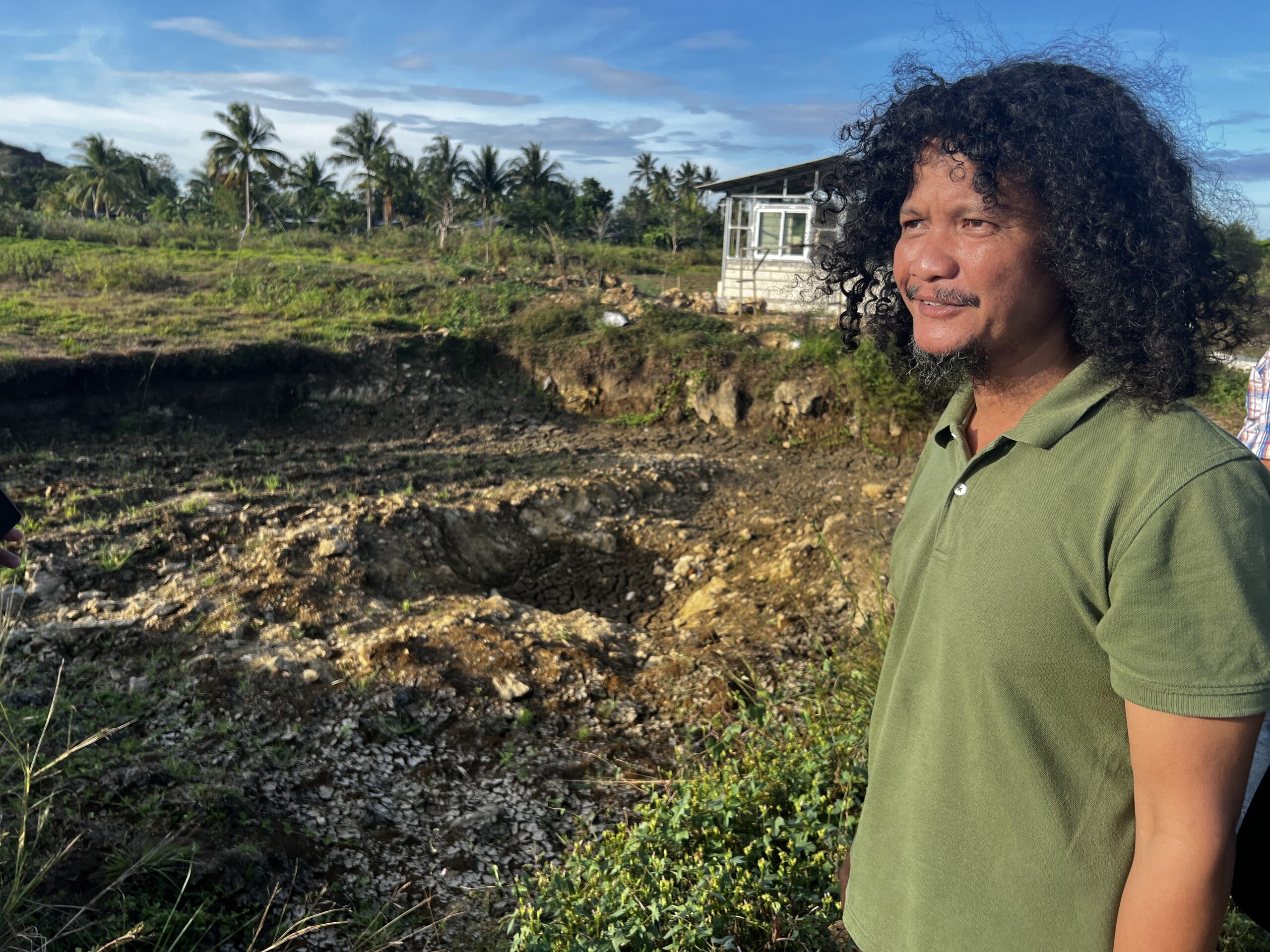
Joel Diccion, a farmer who lives in the city of Carmen on the island of Bohol, Philippines in May 2024. Photo by Bill Spindle.
Joel Diccion, a 47-year-old single father to two teenage daughters, wasn’t a member of the co-op then. His rice fields were damaged, along with a fish farming pond he’d just constructed and a building where he hoped to start a school to teach younger farmers new agricultural techniques. He wasn’t able to rebuild.
After that experience he joined the co-op, in part for the insurance for the next disaster, which he’s convinced will inevitably come.
“It’s very difficult,” he said of the increasing threats from climate change. “It’s good we have this insurance.”
Editor’s note: This story is a collaboration between Cipher News and The Associated Press, Global Climate Desk. Learn more about this partnership here.