In rural India, a clean energy project is displacing families — again
Latest NewsA floating solar project highlights the challenges of new energy development
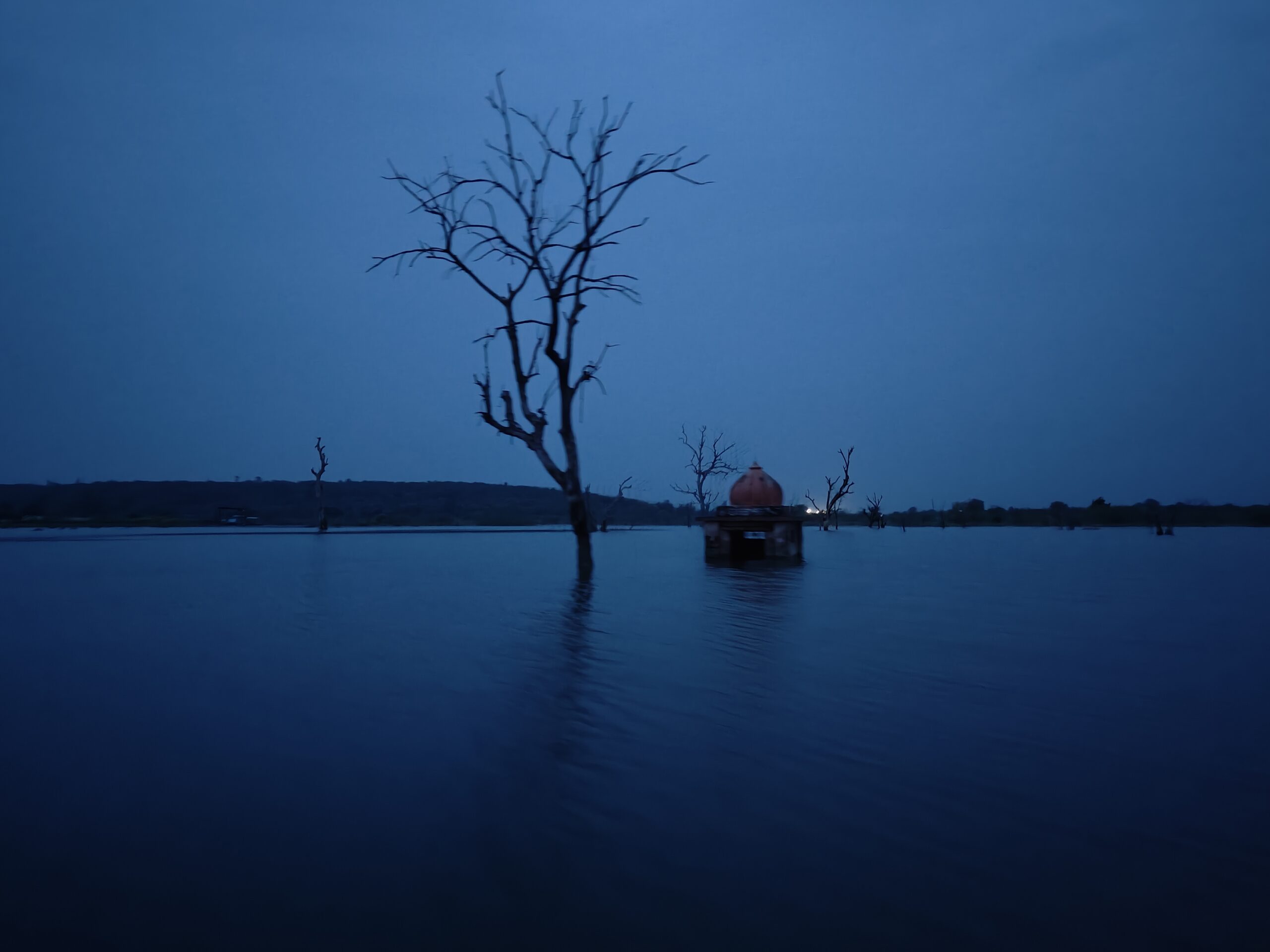
EKHAND, India — Semi-submerged dead trees and temples gave the artificial lake an eerie and haunted look, even on a sunny September afternoon. As a wooden boat drifted past the white dome of a partially submerged temple, all six people on board joined hands and briefly bowed in silent prayer.
As the boat moved on, the reservoir surface abruptly changed, appearing suddenly smooth and vast. The group cut the engine when a gigantic rectangular island-like structure came into view.
The fisher people, who reside in six villages surrounding the reservoir here in the hinterlands of central India’s longest river, glared at the rows of thousands of solar panels bobbing gently on white plastic floats in the turquoise waters.
“This part of the reservoir used to be our coveted fishing spot where we had access to 50 species of fish from Narmada River and its tributary,” Shobhan Singh, a fisherman from Ekhand, a nearby village, told Cipher. “Now, if we try to catch fish here, we will get electrocuted.”
The villagers were looking at part of the Omkareshwar Dam floating solar power park. The project aims to generate close to 600 megawatts (MW) of clean energy for the central Indian state of Madhya Pradesh. Once all six of the planned plants are up and running by late 2025, they will provide power to over 90,000 homes in the state — making the project, with investments of about $410 million, one of the world’s biggest floating solar farms.
But for six fishing communities, the project comes at the expense of their livelihoods, where they sell fish (predominantly Indian carp and catfish species) to the state’s Department of Fisheries. After one of the floating plants came online in early September, the state government issued a notice in a local Hindi newspaper advising locals against fishing nearby. Due to high voltage currents flowing through thick cables from the solar panels to transformers, the notice warned of “imminent danger” if people spread fishing nets anywhere around the installation.
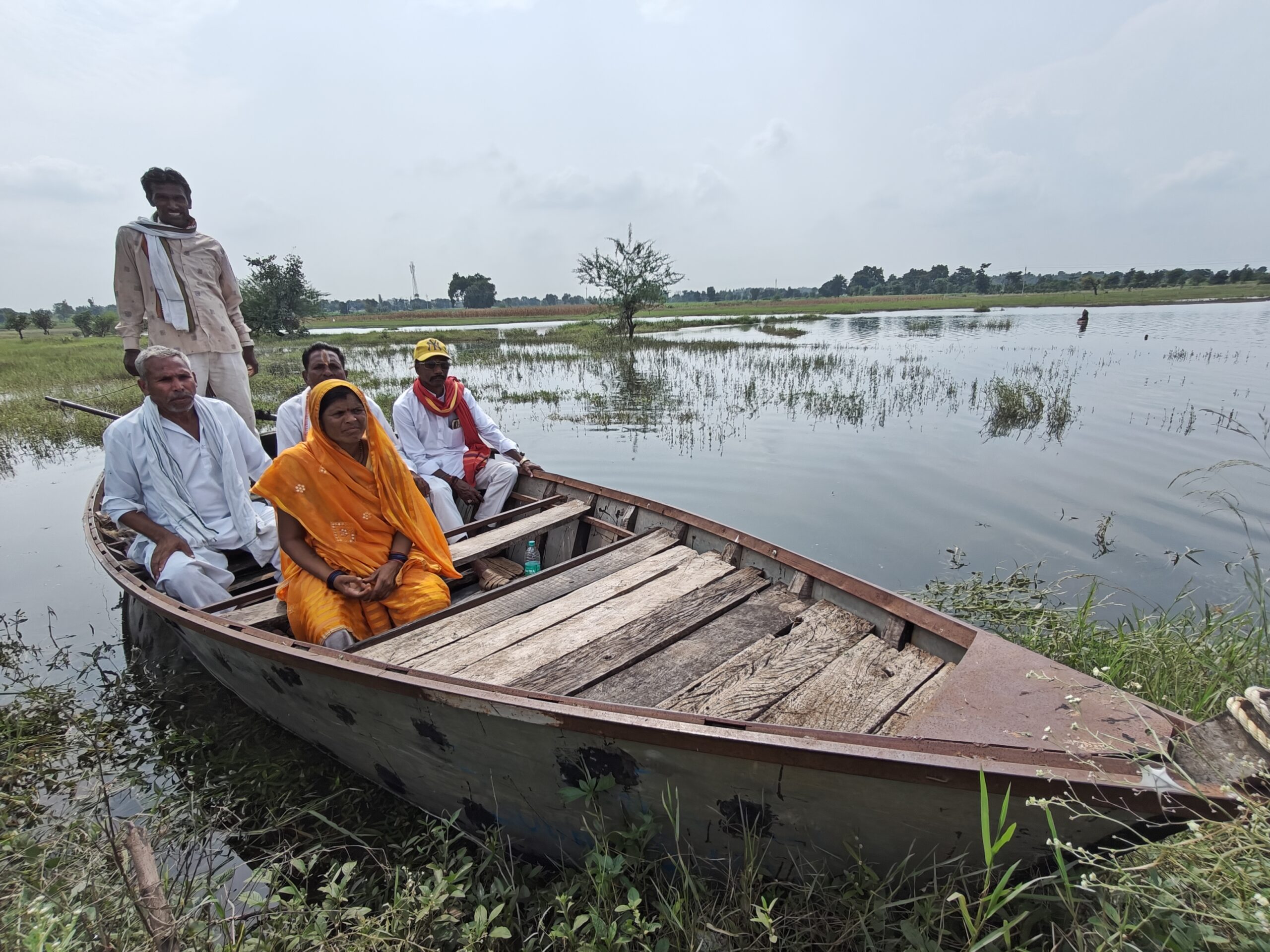
The group of fisher people heading toward a floating solar plant in September 2024 on the Omkareshwar dam reservoir in the Indian state of Madhya Pradesh. From left to right: Shobhan Singh from Ekhand Village (standing), Raghu Verma from Bilaya Village, Basu Dev from Richhfal Village (middle), Santosh Bhoi from Omkareshwar town and Phunda Bai from Ekhand Village (front). Photo by Anuradha Varanasi.
The announcement marked the second time a large-scale clean energy project had upended the villagers’ lives; the first was when the reservoir itself was built over 20 years ago.
“The locals have nothing against solar energy,” said Alok Agarwal, an engineer and social activist associated with the Save the Narmada River Movement, who has been assisting the fishing communities. “India needs more solar energy. But the green energy transition cannot take place at the expense of poor and vulnerable communities.”
The experience of these villagers in Central India illustrates two major challenges of clean energy development the world over: ensuring rural communities are not uprooted from their homeland — or compensating them if they are — and integrating local people into the green energy workforce as the world moves away from fossil fuels.
To be sure, fossil fuels have disrupted communities for centuries — while also creating local air pollution and heating up the planet — but today’s often unforgiving limelight is focused on clean energy development now with the energy transition underway.
Dredging up the past
In 2003, the Madhya Pradesh state government started building Omkareshwar dam in Narmada Valley despite widespread protests and grassroots movements against multiple upcoming hydropower projects in the region.
In less than a decade, 50,000 farmers lost their land after the dam’s reservoir flooded and submerged 30 villages and miles of thick deciduous teak forests formerly home to tigers, leopards, spotted deer and sloth bears.
Since then, the reservoir has stored freshwater for a 520 MW hydropower project and a few irrigation initiatives. Its proximity to six surviving villages incentivized more than 300 small-scale farmers to pivot to fishing.
When the engineers hired to build the state’s ambitious floating energy plants surveyed the reservoir during the summer of 2022, they were stunned to see the remains of dead forests and villages poking above the water, revealed by a drought that had lowered water levels.
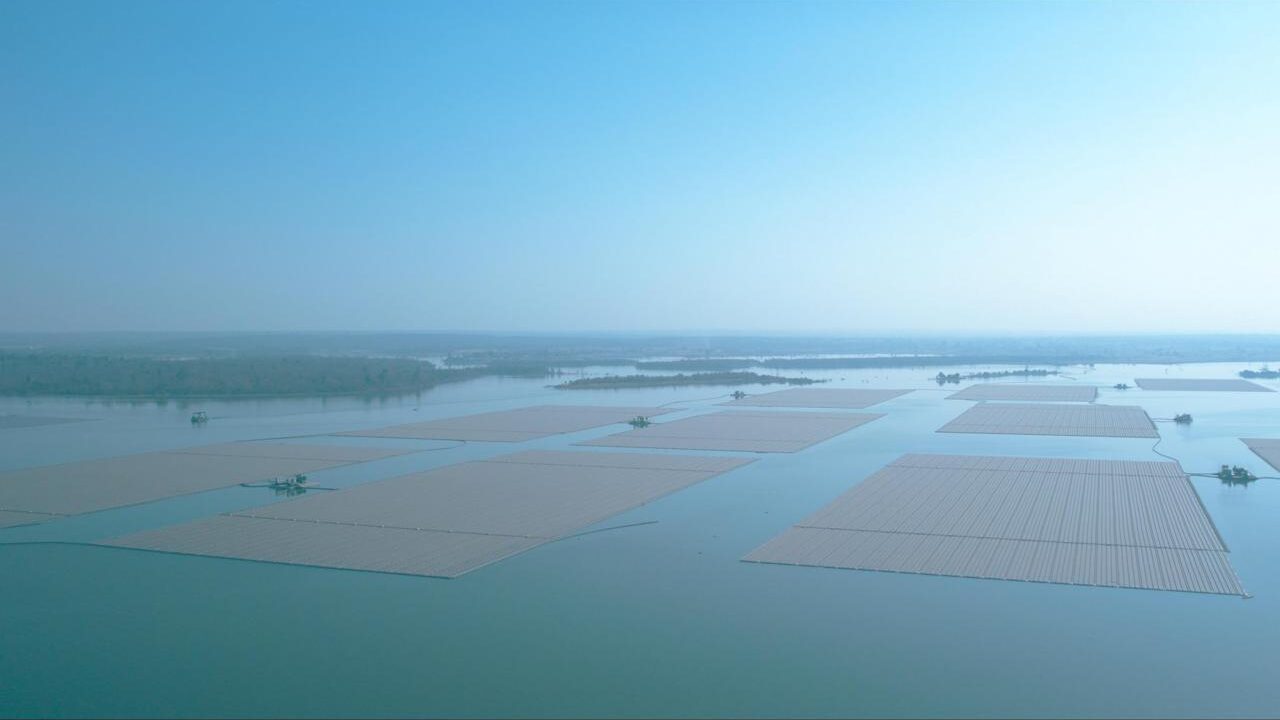
Floating solar project constructed by TATA Solar Systems Ltd on the Omkareshwar dam reservoir in the Indian state of Madhya Pradesh in September 2024. Photo by Rewa Ultra Mega Solar Power Ltd.
“Entire temples were intact along with the drainage and sewage systems built by the villagers,” explained Sri Sai Karthik Borra, a project site manager at Tata Power Solar Systems Limited, a private company that partnered with the Narmada Hydroelectric Development Corporation (NHDC) to construct one of the six floating power plants on the reservoir.
To build a solar farm, the company first had to deal with the ruins, uprooting dead trees, digging up submerged transmission poles and dredging up damaged mud houses.
Across the reservoir, two other floating solar projects faced similar challenges. All in, clearing out the remnants at the three sites took 900 workers more than a year to complete. Leveling the reservoir floor and building permanent concrete anchors for the solar panels proved to be an even lengthier process.
Fighting for work
Before construction on the solar parks began in 2022, the local government assured people living near the reservoir the plants would create jobs for most of them.
“But very few fishermen and other villagers got hired. The majority of workers are from other parts of India,” said Sheru Verma, a fisherman from Gunjari, another village by the reservoir, where construction on the fourth power plant began in late 2024.
Since mid-August, when engineers finished work on three of the six planned solar parks, more than 300 fisher people had lost access to prime fishing areas across the reservoir.
At the height of construction on the three plants, around 100 fishermen were temporarily hired as boat drivers, according to Gourav Bari, a solar power specialist at Rewa Ultra Mega Solar Power Ltd, the state agency overseeing the project. Once the first phase of the project was up and running, most people were nearing the end of their work contracts.
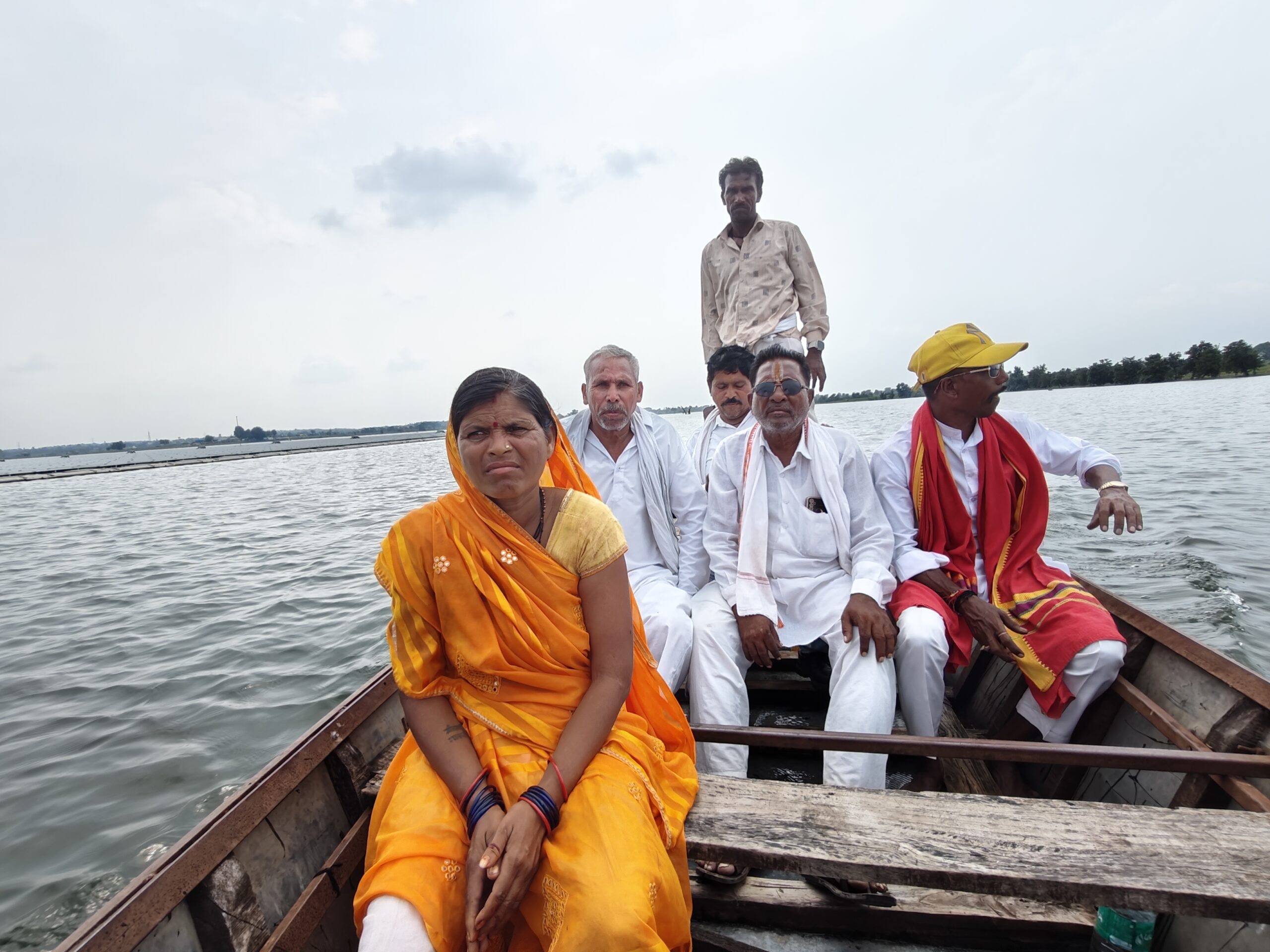
The group of fisher people heading toward a floating solar plant in September 2024 on the Omkareshwar dam reservoir in the Indian state of Madhya Pradesh. From left to right (1st pic): Shobhan Singh from Ekhand Village (standing), Raghu Verma from Bilaya Village (left), Sheru Verma from Gunjari Village (middle back), Basu Dev from Richhfal Village (middle), Santosh Bhoi from Omkareshwar town (right), and Phunda Bai from Ekhand Village (front). Photo by Anuradha Varanasi.
“The state’s fisheries department has been pressuring the fisher people to fish in other parts of the reservoir or relocate to a city,” said Agarwal. But villagers are only legally allowed to conduct commercial fishing activities within a five-mile radius of their respective villages. “Now, there are floating solar panels on their legal areas of operation,” Agarwal said.
All the fisher people, including the few who still had limited access to their legal area of operation, had stopped fishing in early September in protest.
Although most villagers have taken up odd jobs in soybean and cotton fields, they say their daily wages are significantly lower. “Most of us are now struggling to pay our electricity bills. It is a cruel irony that we will be forced to live in darkness despite our proximity to such innovative floating solar energy plants,” Verma said.
Although the state government offered some compensation to the villagers after they lost their homeland to the Omkareshwar dam reservoir, the amount they received did not match the actual market value of their land, according to a news report.
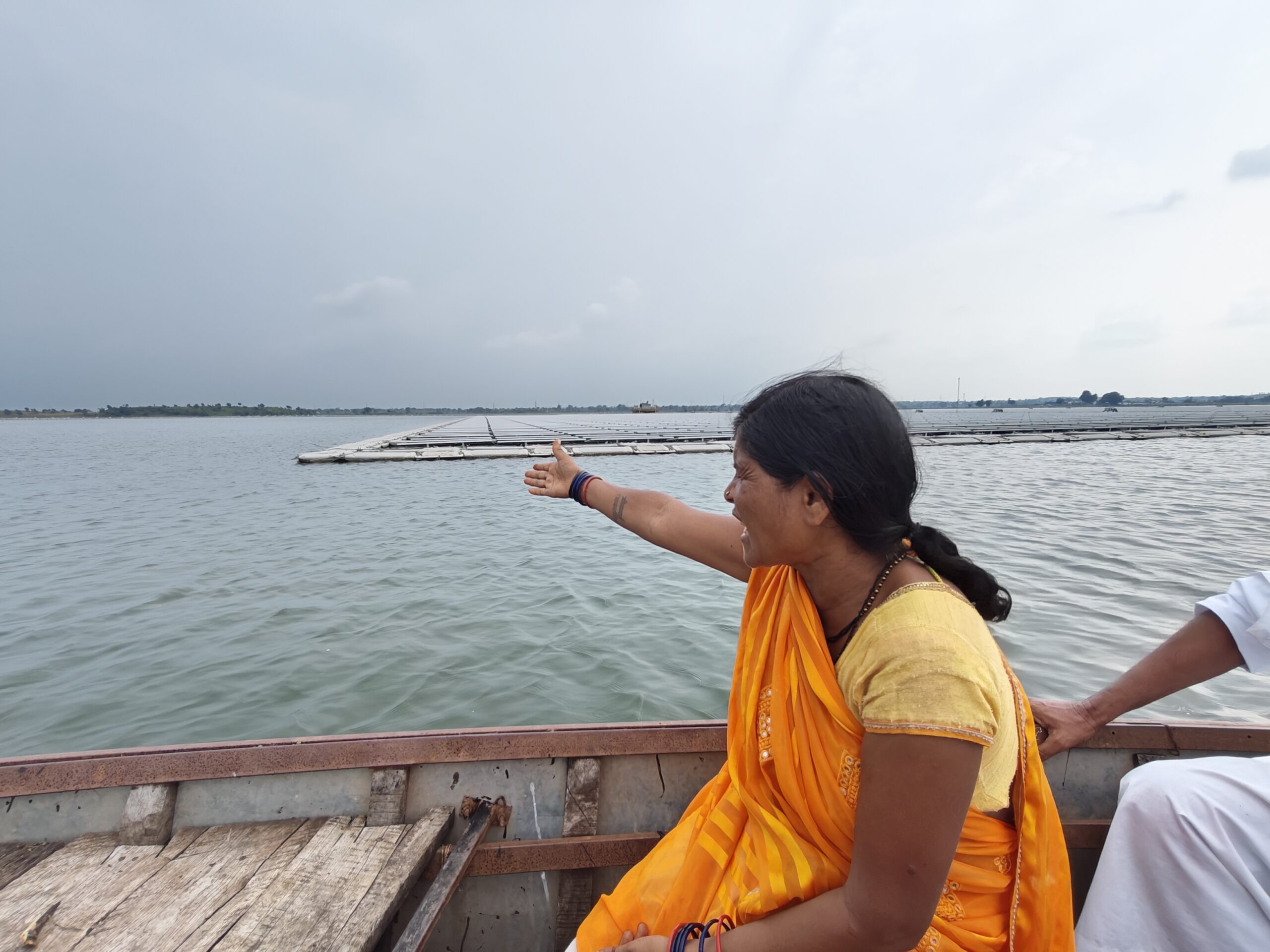
Phunda Bai points at the prime fishing spot that she and other fisher people from Ekhand village have lost access to since the floating solar project went online in September 2024 on the Omkareshwar dam reservoir in the Indian state of Madhya Pradesh. Photo by Anuradha Varanasi.
The fisher people are not staying quiet. They recently filed a petition against Madhya Pradesh in the state’s High Court to put forward demands for 150 permanent jobs at the floating solar plants, skill development training and adequate compensation for loss of livelihood.
Their argument rests on the environmental impact assessment of the project, which noted that because the villagers fall under the “poor and vulnerable” category, the state government needs to offer a livelihood restoration plan. They say the plan must provide compensation worth around $1,013 to each person with a permanent job at the floating plants and roughly $1,602 to everyone without a permanent job.
So far, the local government hasn’t shown any inclination toward funding skill development training sessions that could enable the villagers to work as electricians and technicians on the floating solar plants. Their only opportunity of permanent employment is to routinely clean the solar panels.
“This is a very sad case because the villagers already lost their birthplace to the dam reservoir,” added Agarwal. “And now, the fisher people are getting displaced again. They are traumatized.”