In Argentina’s vast and little populated middle, I saw the energy transition in action
Reporter's Notebook
NEUQUÉN, Argentina — Argentina is wrangling with the push and pull of the global energy transition, where opportunities and risks abound.
That much was obvious during my three weeks of reporting recently in a nation with a turbulent political history, running from populist legends Juan and Evita Perón to today’s controversial President Javier Milei.
I saw two faces of Argentina’s fast-expanding energy industry.
In the Vaca Muerta, a geological formation in the northernmost part of Patagonia, an oil and gas boom is reshaping the physical landscape and the local economy. To the east, through the blustery Pampas to the Atlantic Ocean, wind farms are doing the same, cropping up on the vast plains to produce some of the cheapest electricity on the planet.
Both forms of energy help meet domestic demand and have the potential to tap into global markets where the need for more energy seems insatiable. So far, only fossil fuels have succeeded in doing both.
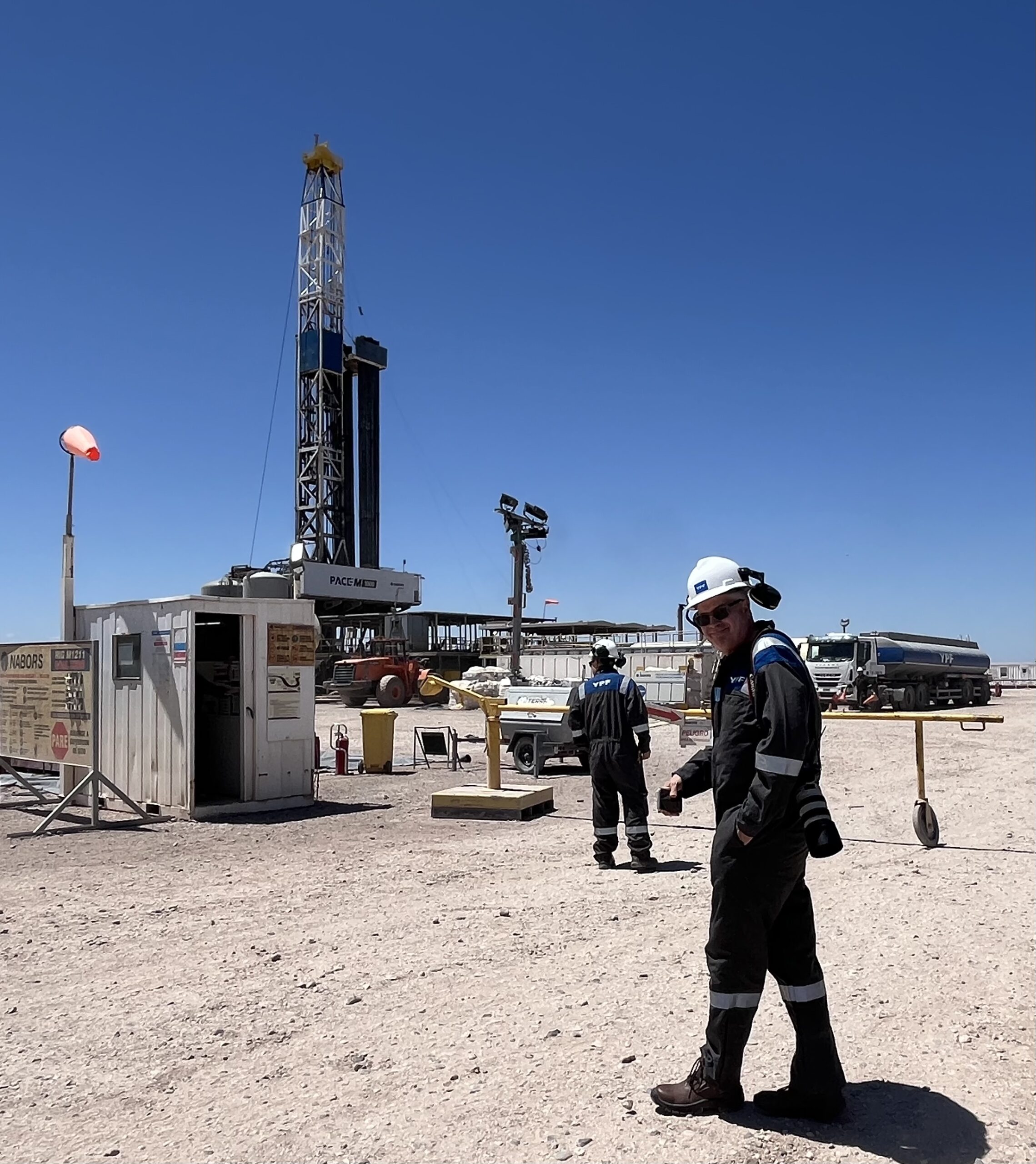
Here I am at an oil drilling site in the Vaca Muerta operated by the Argentine energy company YPF S.A. Photo credit: Bill Spindle, November 2024.
The Vaca Muerta, with oil and gas resources that rival the fabled Permian Basin in Texas, is currently experiencing the sort of production boom that has long defined more famous oil patches.
The city of Neuquén, capital of the state and located smack dab in the center of this oil and gas production, is bustling with construction and gleaming new office blocks with panoramic views over the lazily flowing tributaries to the Río Negro.
Once sleepy towns like Añelo are now surrounded by oil and gas wells, drilling rigs and fleets of trucks and flatbeds porting pipes and equipment. Dormitories and housing for service crews are going up along roadways in and out of town.
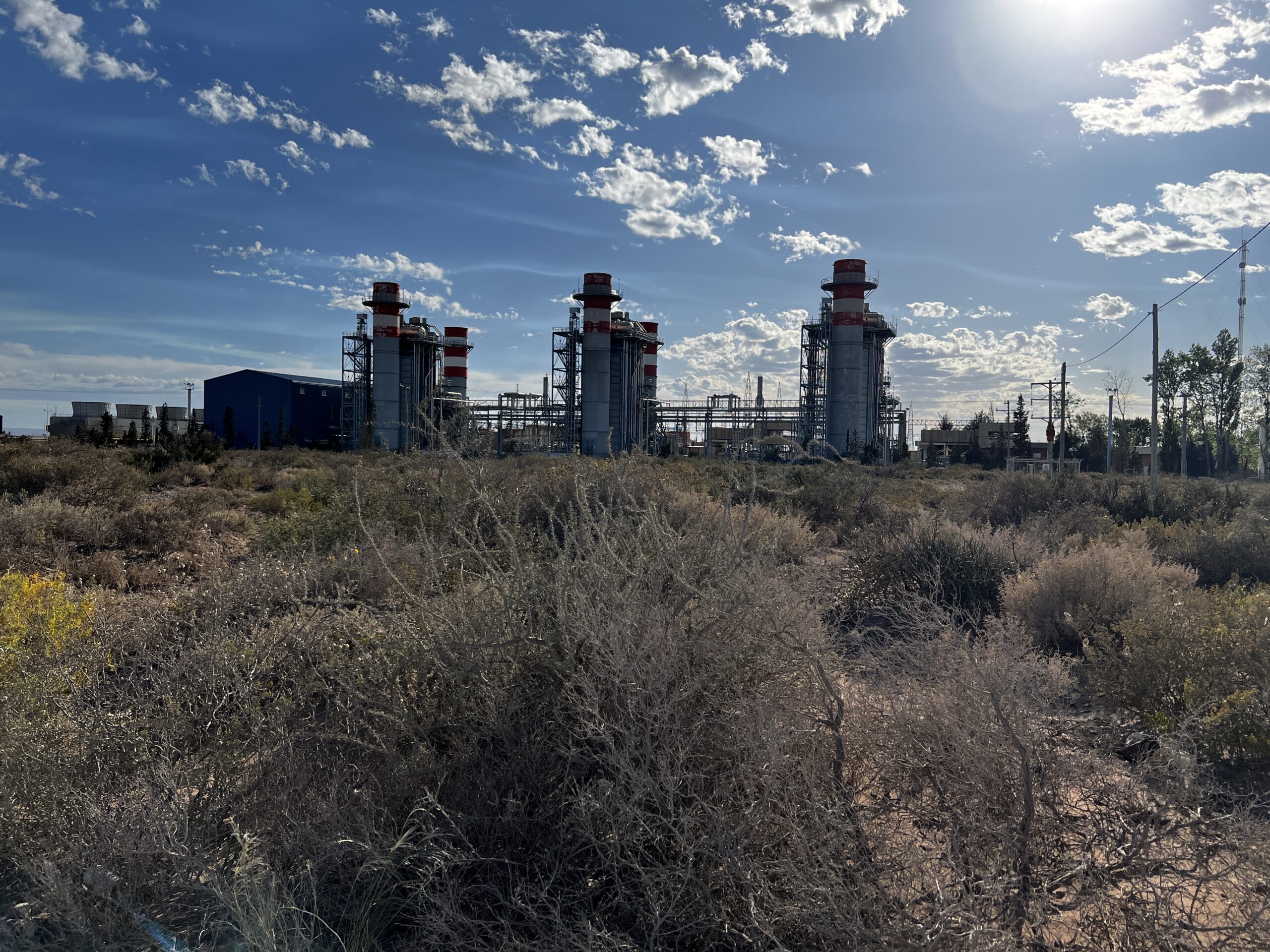
An industrial facility in the otherwise rural sprawl of Neuquén Province. Photo credit: Bill Spindle, November 2024.
From Neuquén, I drove seven hours to reach Argentina’s Atlantic coast, where another sort of energy boom is underway. Thousands of wind turbines have cropped up on the vast windswept plains between the Andes Mountains and the sea.
The winds of the Pampas are legendary, both strong and consistent. In my hotel overlooking the beach, I could hear them whistling all night, churning the surf of the chilly southern Atlantic. Now they are also fueling some of the most productive wind farms anywhere in the world. I visited several of these farms, standing below blades that would nearly span the length of a football field. The electricity these turbines produce goes into the local grid, where it adds to the energy long produced by coal- and gas-fired turbines in the area.
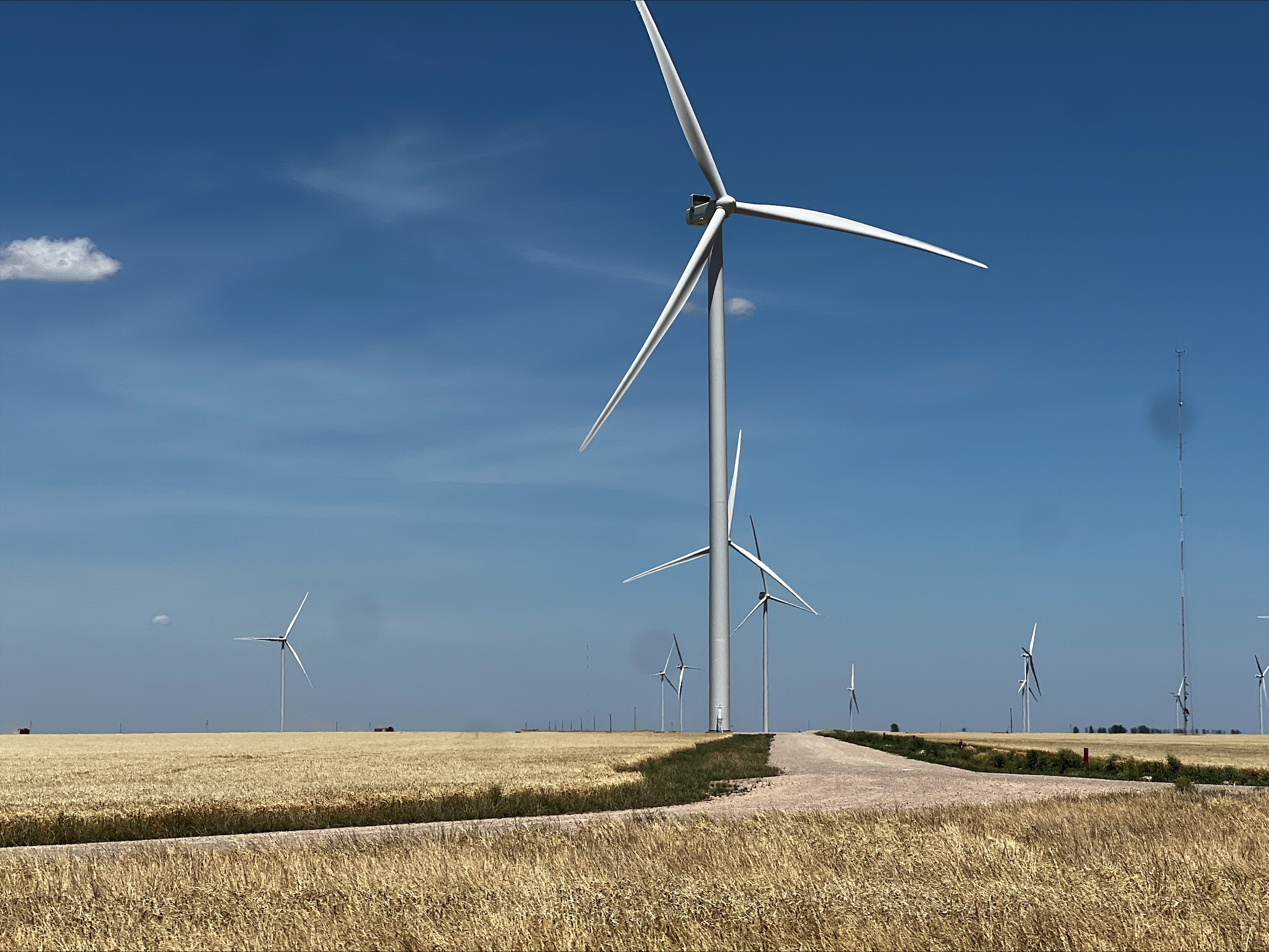
A wind turbine at a farm operated by Genneia near Puerto Madryn, Argentina. Photo credit: Bill Spindle, November 2024.
The wind farms here are helping limit coal generation and likely will prevent gas from gaining ground for electricity production in this region in the coming decades. But without some means to transport the cheap wind power elsewhere — via more transmission lines leading to big cities further north, for example, or by using the electricity to make ammonia or methanol that can then be transported — the potential of the winds here will largely remain just that, potential.
Meanwhile, oil tankers dock nearby to transport more and more of the oil from the interior to refineries around the world. Plans are under consideration for a gas pipeline and plant to convert the gas into a transportable liquid, assuming European and Asian buyers can be found.
Where the mix will end up is far from clear. Argentina, like nearly every country, is in the messy middle of the energy transition.
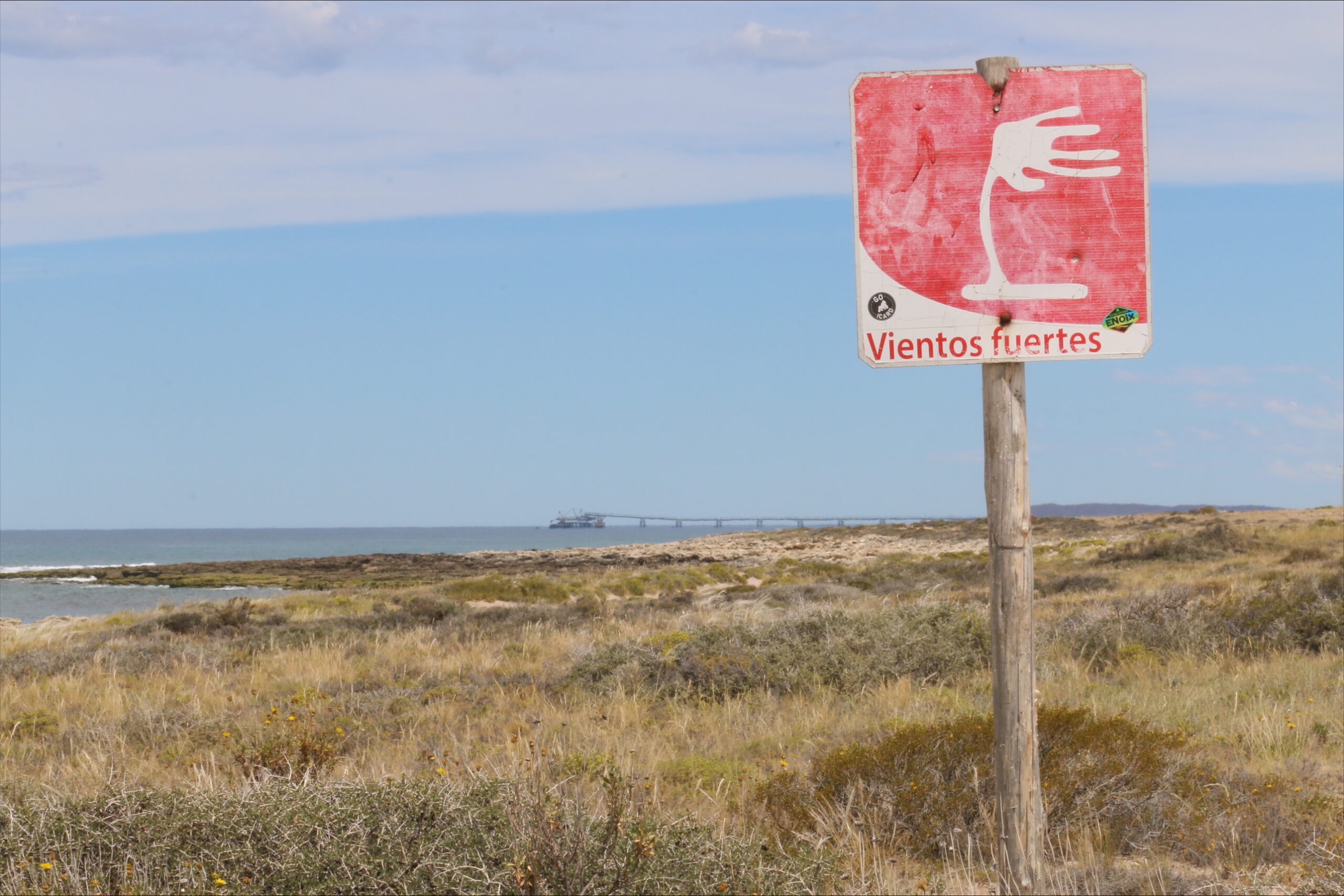
A sign warning of strong winds at Punta Colorada, Argentina. Photo credit: Bill Spindle, November 2024.