In a faraway region, winds and nature are powerful forces to balance
Reporter's Notebook
PUNTA ARENAS, Chile — The lone wind turbine that towered over us when journalist Patricia Garip and I recently visited the Haru Oni sustainable fuels project in southern Chile does a lot of work.
It powers the production of hydrogen (from water) and drives a process that pulls carbon dioxide from the air (via a direct air capture facility). The plant puts those two ingredients together to produce methanol. That methanol can also be made into gasoline and aviation fuel.
Wind turbines here have a big advantage: the presence of some of the strongest winds on the planet. They were blowing forcefully as we toured the site on a typically cool, overcast summer morning near the Strait of Magellan, just about as far south as one can get in the Americas.
It had snowed just a few days before in the regional capital of Punta Arenas, the largest city in the region and a logistical hub for tourists flying to Antarctica and back during the short season when the south pole is most accessible.
The facility is owned by HIF, a Chilean energy provider pushing hard to develop sustainable replacements for fossil fuels used in airplanes and ships.
Here in Patagonia, the challenge is finding a way to harness all that clean, free wind energy so its benefits can be taken advantage of where needed. Facilities like Haru Oni, named in a local indigenous language, represent a potential solution: using wind power to make a liquid fuel, methanol in this case, that can be used directly in ships or further refined here or elsewhere into gasoline for cars or fuel for airplanes.
The region’s population is so small — about 150,000 people — they could all fit into a single large sports stadium. Apart from some electricity-intensive aluminum manufacturing, there’s not a lot of local energy demand, cold as it may get in the winter (and even in the summer!).
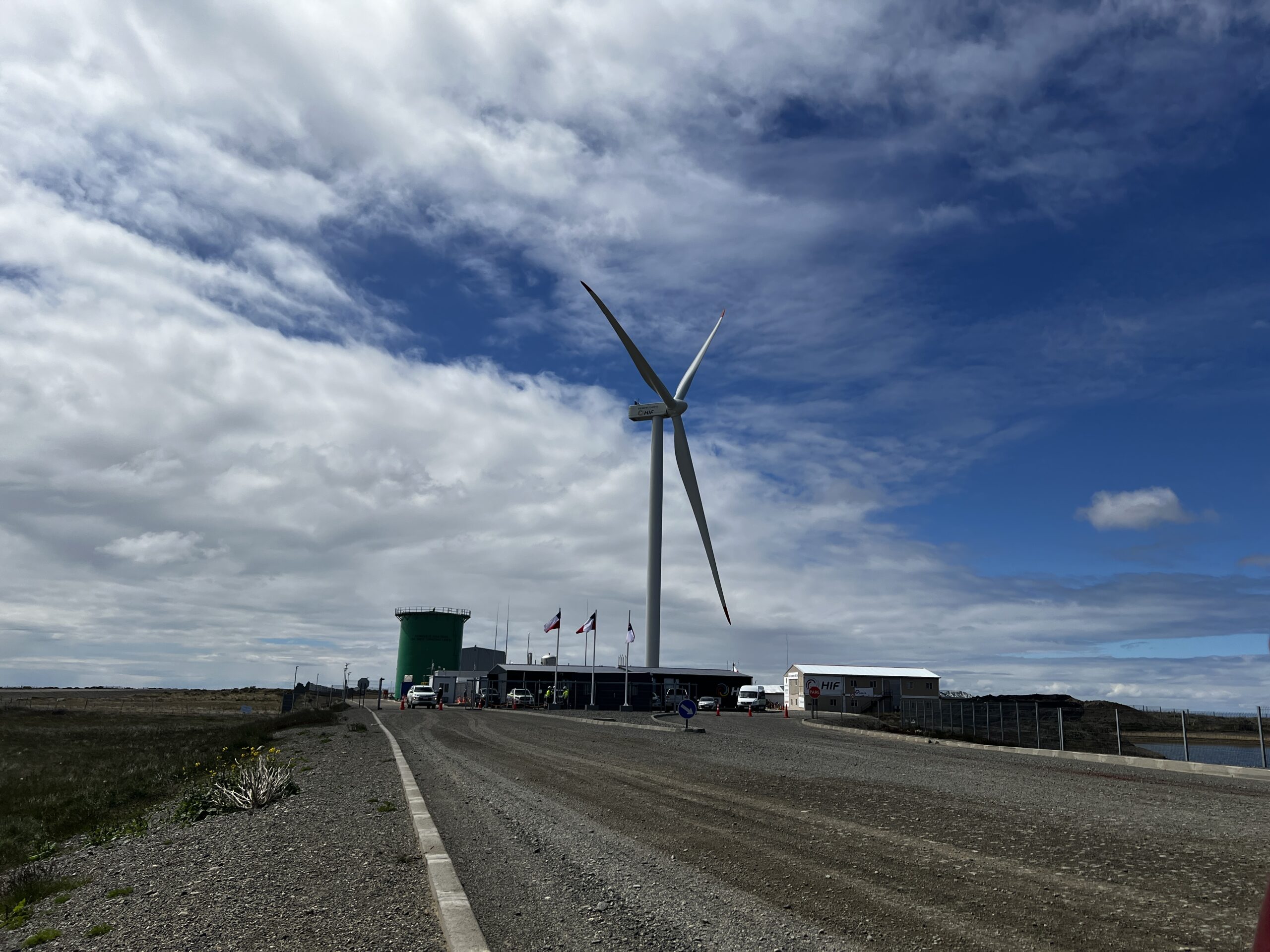
HIF’s Haru Oni facility in Chile’s Magallanes region. Photo by Bill Spindle.
For the moment, the output of the plant is being used in the engines of Zodiac power boats for tourists in Antarctica. If the project finds overseas buyers and reaches commercial scale, that one turbine would become 70 or so, HIF officials said.
The Haru Oni facility is further along in the quest to realize those ambitions than the other handful of projects slated for the area. It’s been running some of its machinery, including the wind turbine and hydrogen production equipment, for more than a year.
The company, with partners ExxonMobil, Porsche and Siemens, have been gathering operations data on everything from how much electricity the wind turbine generates a day to how local bird populations are impacted by the giant blades spinning almost constantly.
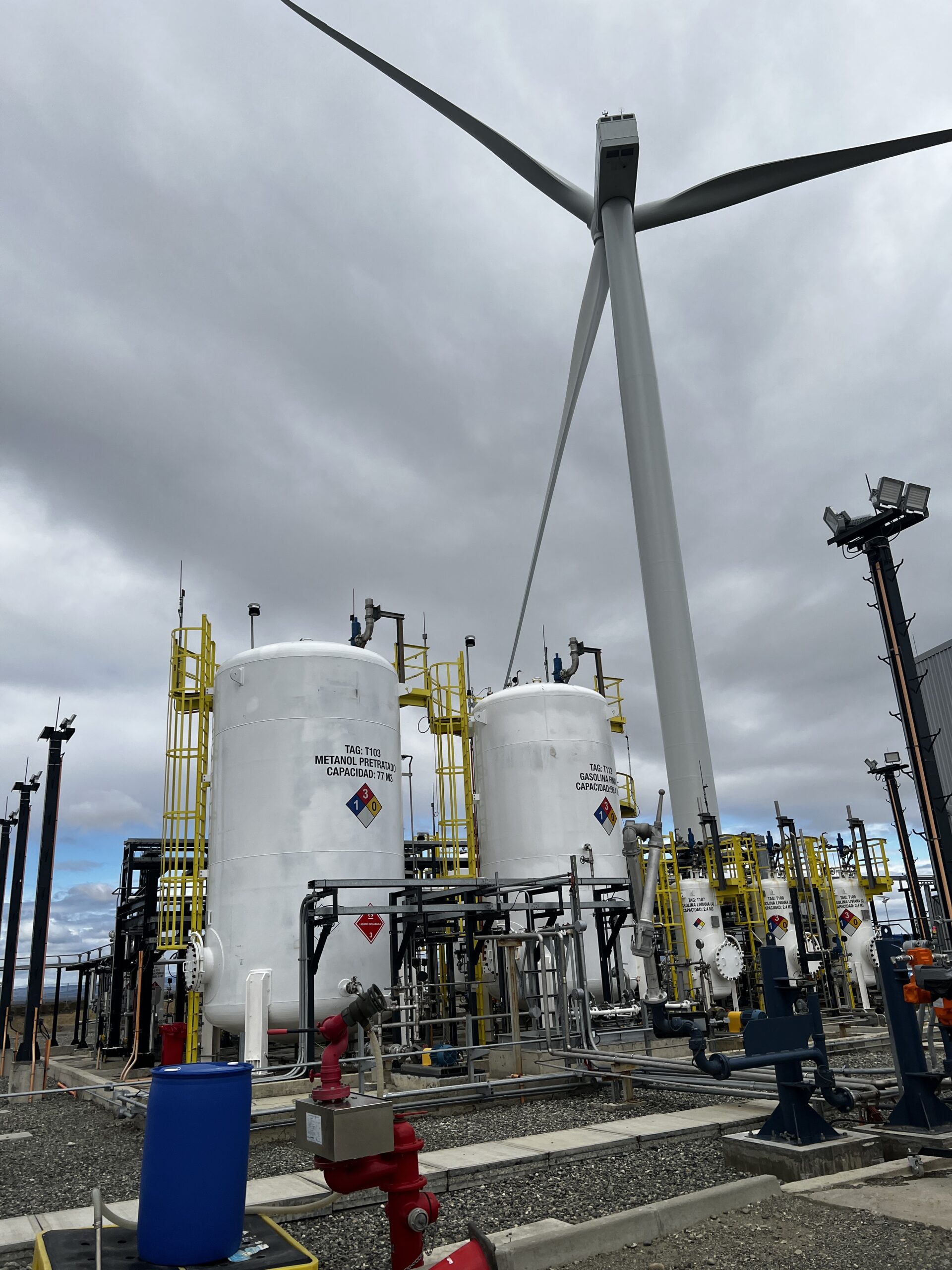
Sustainable methanol tanks on the Haru Oni site in Chile. Photo by Bill Spindle.
We arrived at the site after a 20-minute drive from Punta Arenas. On the way, we could see that the region is a natural wonder — a way station for migratory birds with majestic views of the Andes Mountains to the north and the frigid waters to the south, where hundreds of islands are populated by penguins, sea lions and gulls.
Preserving these views and the region’s delicate ecosystem requires a careful environmental balance by the government as dozens of projects similar to HIF’s are proposed for the region.
Despite its remoteness, this is hardly the first industry to reach Patagonia. On a hike the previous day to the tip of the Brunswick Peninsula — the furthest south one can get before the land breaks up into islands — we could see remnants of a whale-slaughtering facility that had operated there more than a century earlier.