How to understand new nuclear energy
Explainers
The nuclear industry is attempting to reinvent itself.
Historically, nuclear power plants have been massive, one-of-a-kind complexes that take years to build and supply power to thousands of people. But this model may not work to meet the planet’s future energy needs.
“If I can only buy your product in the Big Gulp size, and I only want a teacup, I’m kind of stuck,” Matthew Crozat, the executive director of strategy and policy development at the industry group Nuclear Energy Institute (NEI), told Cipher recently at NEI’s headquarters in Washington, D.C.
That message has become a prime mover in the race to decarbonize the world’s power supply. To meet growing demand for clean, always-on energy, companies and governments are developing innovative nuclear plants that come in smaller sizes and use more advanced, and potentially safer, technologies.
New uses mean new sizes
The current nuclear fleet in the United States is comprised of 94 reactors that can generate anywhere from 500 megawatts to one gigawatt of electricity. A gigawatt reactor can power one million homes at a time, according to the Nuclear Innovation Alliance.
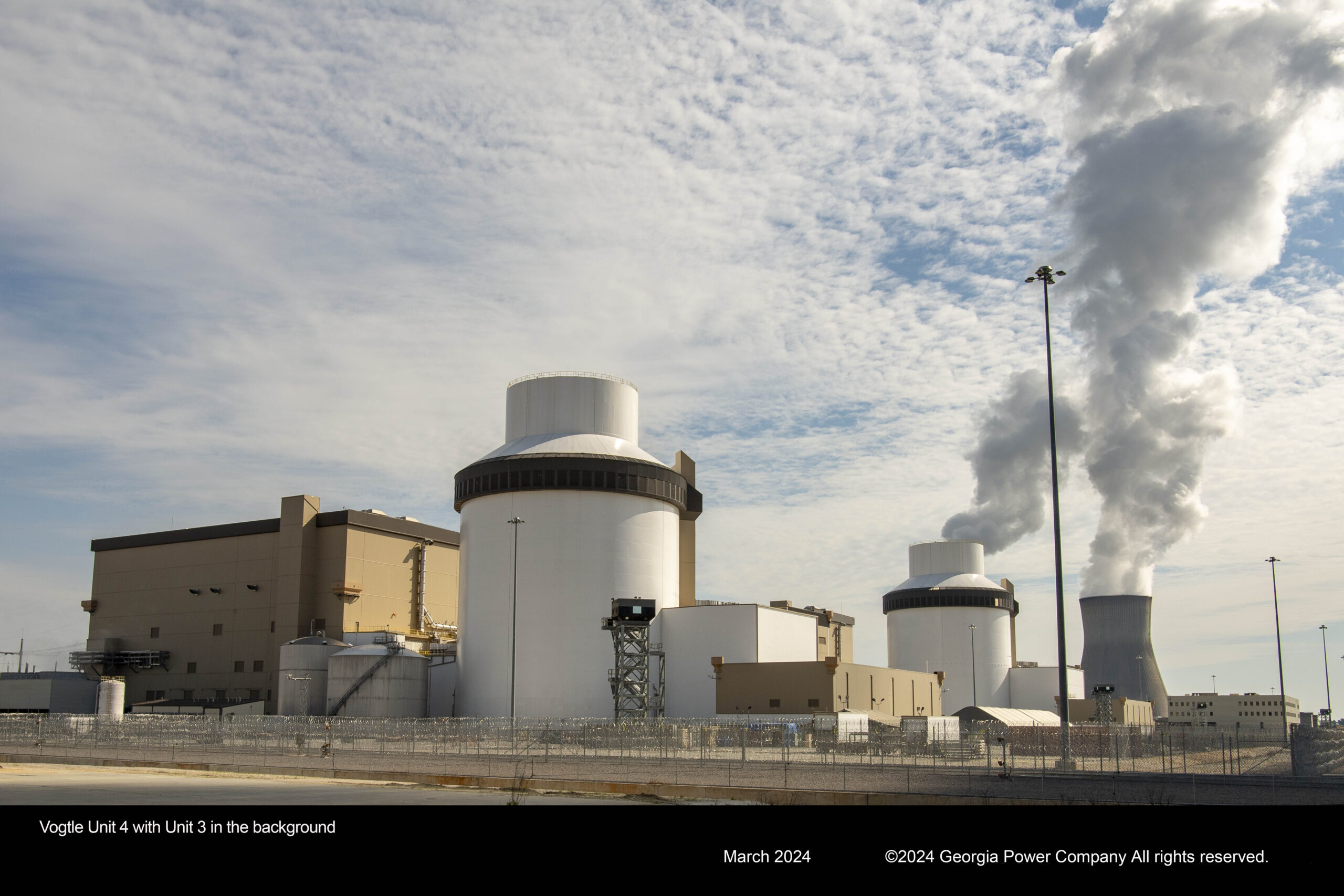
Nuclear reactor unit 3 at the Vogtle power plant went into operation in July 2023, and reactor unit 4 started up in April 2024. Each reactor will provide electricity to approximately 500,000 homes and businesses, according to Georgia Power. Photo credit: Georgia Power Company.
Companies and governments all over the world are working to scale that down, developing reactors in three smaller sizes known as medium, small and micro reactors that generate approximately 300 to 600 megawatts of electricity, 50 to 300 megawatts and less than 50 megawatts, respectively, according to the Idaho National Laboratory. That said, the size definitions for each category vary depending on who you ask.
Medium-sized reactors are well suited to replace aging fossil fuel plants because they aren’t as expensive and don’t take as much time to build as conventional, full-size reactors. They can fit into the existing footprint of a fossil fuel plant and can utilize existing transmission infrastructure, which is in desperately short supply in the U.S.
TerraPower, for example, is developing a 345-megawatt nuclear reactor that could scale up its output to 500 megawatts for up to five hours, said president and CEO Chris Levesque. At its ramped-up level, that’s enough electricity to power approximately 400,000 homes. (TerraPower was founded by Bill Gates, who also founded Breakthrough Energy, which supports Cipher).
“We think there’s a lot of opportunity in that 300-to-500-megawatt region because of retiring coal plants,” Levesque told Cipher. In June, TerraPower broke ground on its Natrium demonstration plant in Kemmerer, Wyoming, which is being built next to a former coal plant.
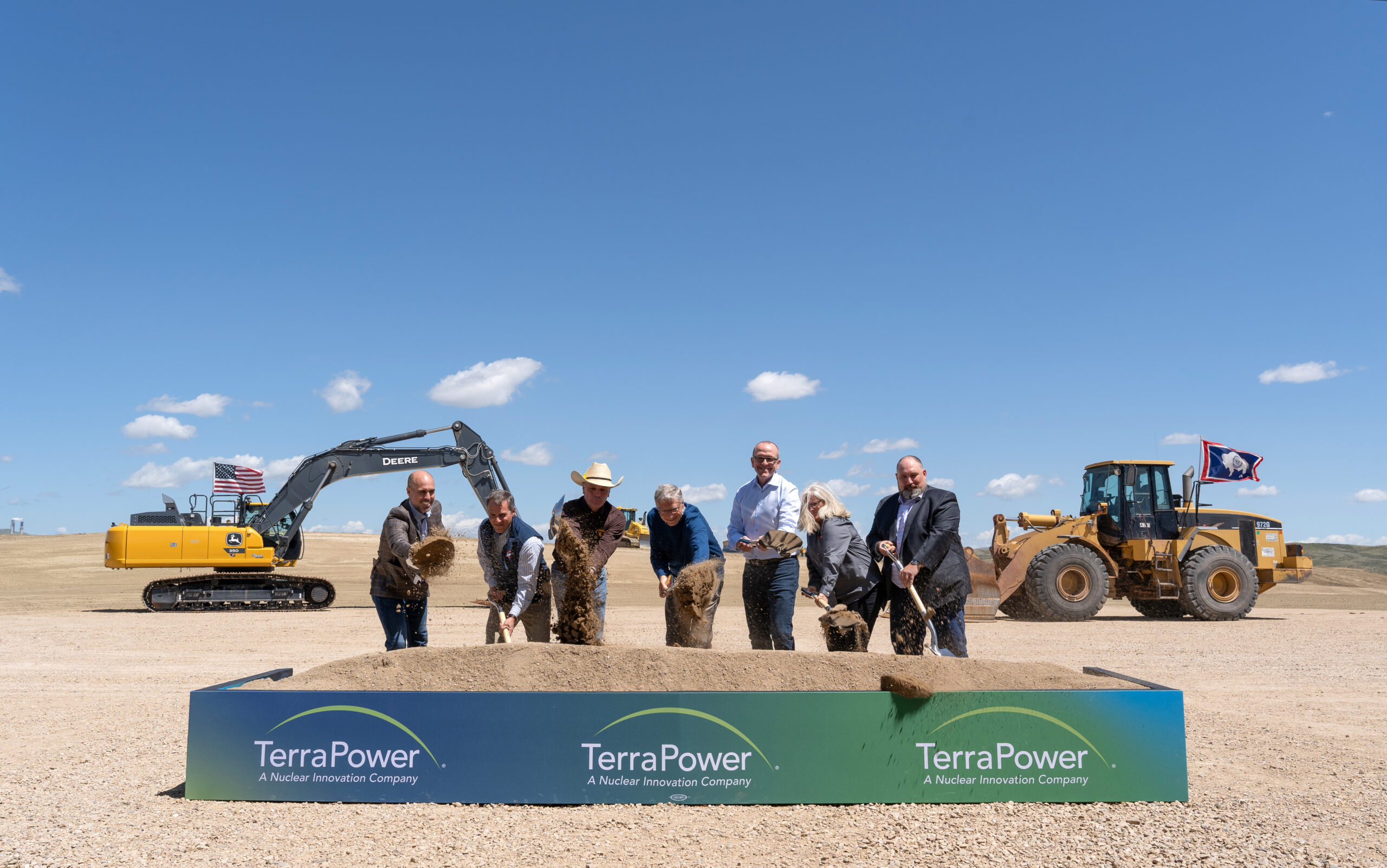
Government and company representatives break ground on TerraPower’s Natrium advanced reactor in Wyoming in June 2024. From L to R: Brian Smith, deputy assistant secretary for nuclear reactors at the U.S. Energy Department; Craig Albert, president and chief operating officer of Bechtel Group; Mark Gordon, governor of Wyoming; Bill Gates, founder of TerraPower and Breakthrough Energy; Chris Levesque, CEO of TerraPower; Cindy Crane, CEO of Pacificorp; Dick Garlish, president of Rocky Mountain Power. Photo credit: TerraPower.
The existing fleet of nuclear reactors “have not seen true innovation in decades, really,” said Levesque, who said he “grew up in the nuclear industry,” previously working in the U.S. Navy as well as at electric company Westinghouse and nuclear company Orano. “Our culture … was always about repeating past performance and maybe making small improvements, but not changing anything.”
That culture is evolving, though, even at legacy companies like Westinghouse, which has been in the electricity game for 130 years and in commercial nuclear for 60 years.
Last year, Westinghouse announced plans to develop a 300-megawatt reactor capable of powering approximately 300,000 homes. It will be a scaled-down replica of Westinghouse’s large AP1000 reactor, two of which were recently installed in Georgia at the newly opened Vogtle power plant (which had massive cost over-runs and delays). The goal is to start building the first of these smaller reactors around 2030.
To meet other needs, some companies are developing even smaller reactors.
Oklo, a nuclear fission company chaired by Sam Altman, CEO of the artificial intelligence company OpenAI, is developing reactors that will produce between 15 and 50 megawatts of electric power, a size well-suited to meeting the needs of individual factories or data centers. Oklo’s reactors will also be poised to provide high-temperature heat for industrial processes, another critical area where nuclear reactors could replace burning fossil fuels.
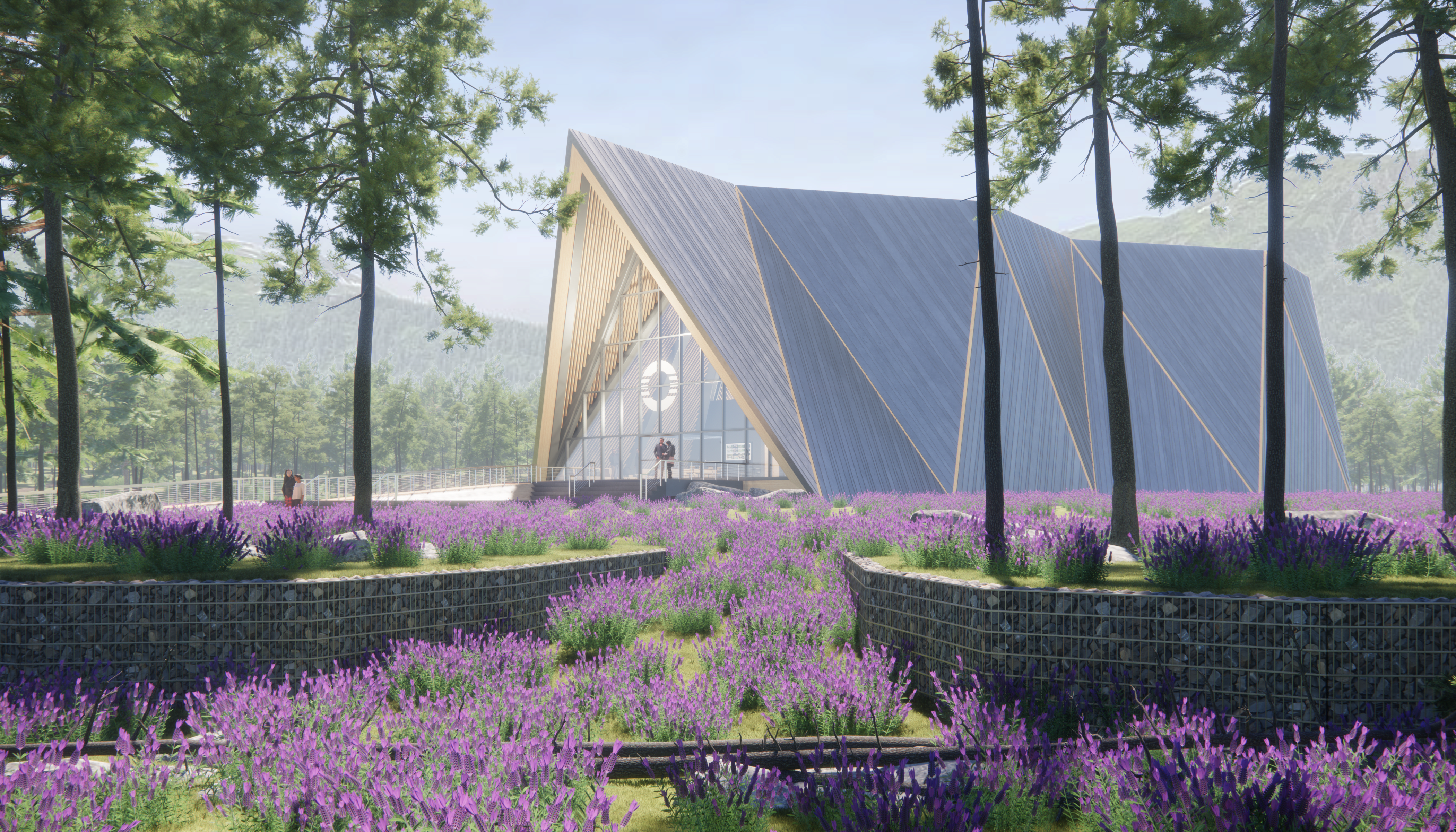
Artist rendering of the Aurora powerhouse by advanced nuclear reactor company Oklo. Once built, the company’s fast reactors could be able to operate for as long as a decade before needing to be refueled. Image credit: Gensler.
Oklo aims to have its first commercial reactor operating in 2027, according to a company spokesperson.
Another reactor company, Washington, D.C.-based Last Energy, is researching possible military applications for its micro-reactors, in addition to targeting data centers and industrial manufacturers.
New construction, new description
Downsizing is not the only innovation in the nuclear world.
The latest nuclear reactors are often described as “modular,” a reference to how — and how fast — they are built, using parts that can be replicated in a factory, as opposed to bespoke pieces that must be crafted individually.
On its website, Last Energy describes its whole micro-reactor plant as being constructed “much like a LEGO kit,” which includes standardized parts that can be transported and assembled in four months, Matt Fossen, director of public relations for Last Energy, tells Cipher.
Last Energy aims to have its first reactor-plant combination delivered to a customer in 2026.
“We can do more factory construction, less construction on site, and hopefully shorten the overall construction time,” Michael Goff, acting assistant secretary for the U.S. Energy Department’s Office of Nuclear Energy, told Cipher.
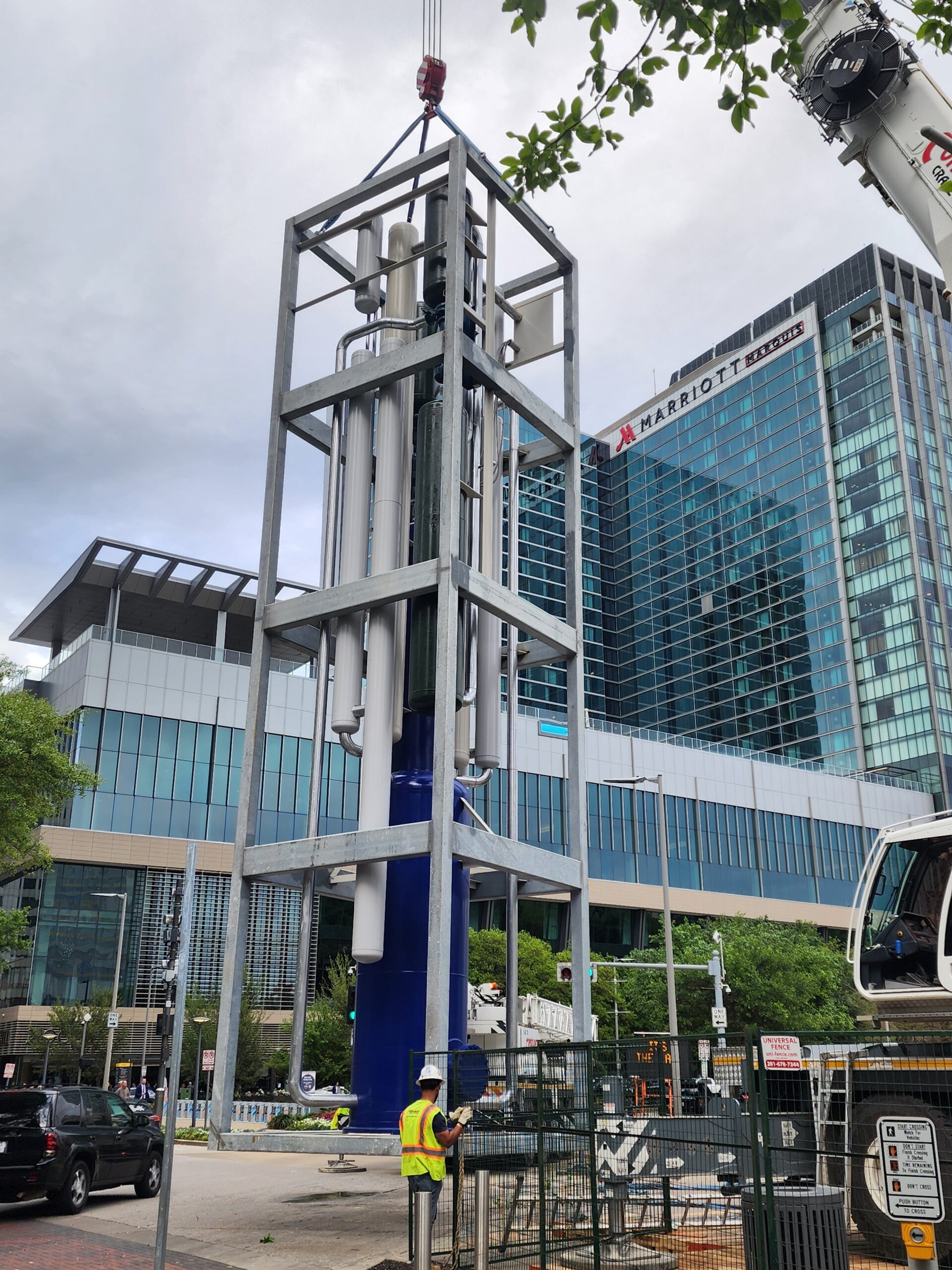
Last Energy brought a prototype of its microreactor to Houston for CERAWeek in March 2024. “The idea of putting everything in modules — reactor and all other components that comprise the broader plant — is to create one efficient assembly process,” says Fossen, director of public relations for Last Energy. Photo credit: Cat Clifford, Cipher News.
In addition to “modular,” another nuclear innovation term frequently applied to newer reactors is “advanced,” although what’s included in that umbrella term varies. To Crozat of NEI, the term applies whenever a reactor is “changing out something” from the reactors prevalent today to “pick up some capabilities.”
Those capabilities could include modular construction, passive safety systems (which use natural forces like gravity to prevent meltdowns) or “more exotic fuels and coolants,” said Katy Huff, a nuclear engineering professor at the University of Illinois Urbana-Champaign. Huff just completed a stint in the U.S. Energy Department’s Office of Nuclear Energy.
Faster reactions, new fuels, new coolants
Many of the advanced reactors being developed now are what are known as “fast reactors.”
In the most common type of nuclear reactor today, the fission reaction, or the splitting of an atom to create energy, takes place in water. The water acts as a moderator, slowing down the reaction, and as a coolant, preventing the system from overheating.
Fast reactors, in contrast, do not slow down the fission reaction. Faster reactions mean more reactions, squeezing more energy out of the same volume of fuel.
Fast reactors can even get energy out of fuel already spent by conventional reactors. To wit: the nation’s existing nuclear waste contains enough energy to power the entire country for 100 years with fast reactors.
Because of their efficiency, fast reactors can operate for longer periods before needing to be refueled.
Fast reactor designs also tend to use coolants other than water, influencing reactor construction.
TerraPower’s Natrium reactor uses sodium as a coolant. “Sodium is very heavy,” TerraPower’s Levesque said. “When the neutron hits the sodium atom, it’s like hitting a wall — it bounces off and doesn’t slow down.”
Conventional reactors have thick, expensive walls to boost the pressure inside and prevent the water from boiling off. Sodium, on the other hand, has a boiling point eight times higher than that of water. A sodium-cooled reactor doesn’t need to be pressurized in the same way, increasing safety and bringing construction costs down, Levesque told Cipher.
Even liquid metals are being tried as coolants. Westinghouse is developing a lead-cooled reactor because lead has such a high boiling point: 3,100 degrees Fahrenheit.
Editor’s note: TerraPower was founded by Bill Gates, who founded Breakthrough Energy, which supports Cipher.