How to protect clean energy projects against extreme weather
ExplainersIndia’s storm-ravaged floating solar projects offer lessons
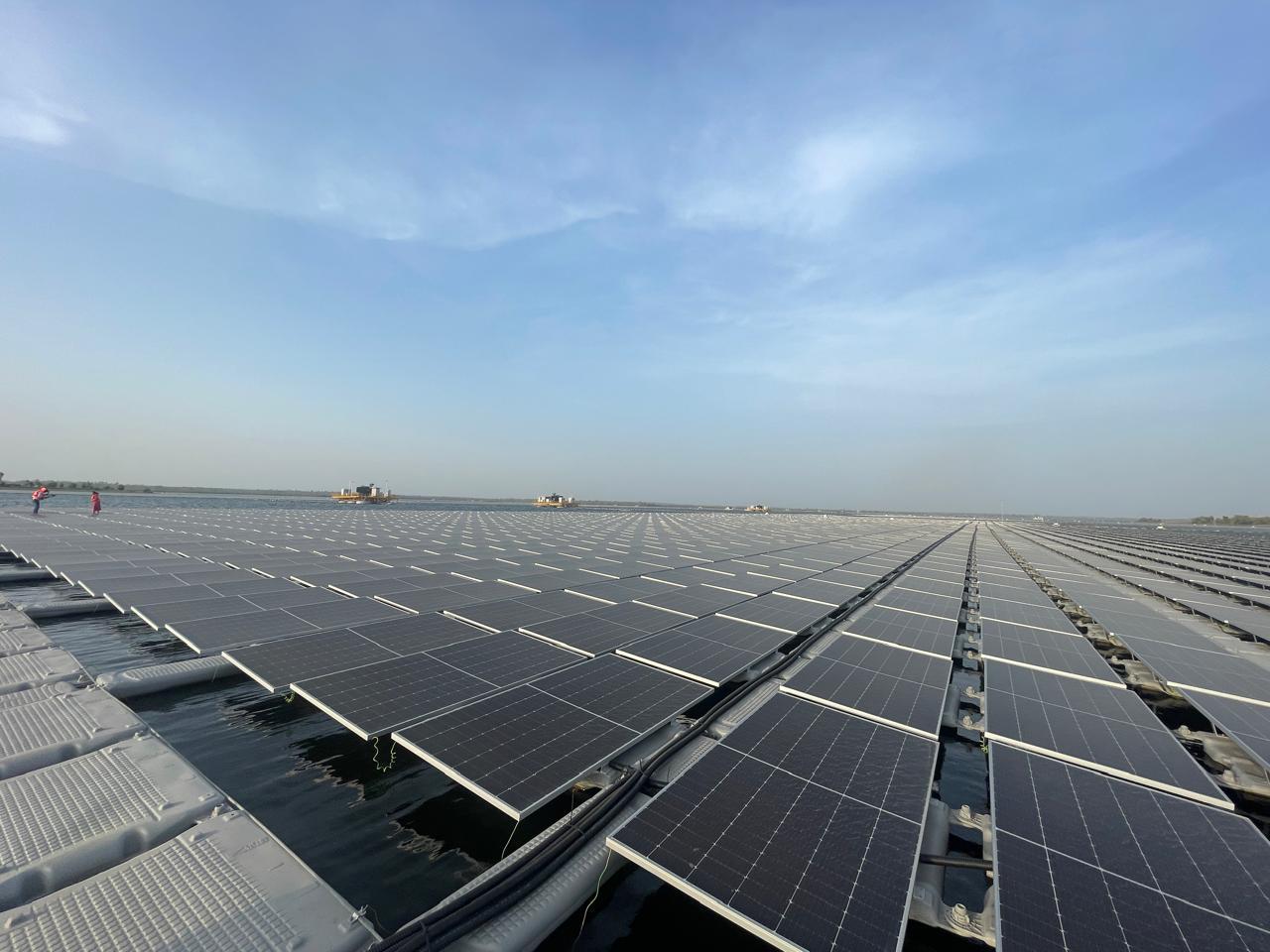
INDHAWADI, India — On a warm September morning, hundreds of rows of solar panels gently moved in sync with the water currents of the Omkareshwar dam reservoir.
As a group of engineers in a motorboat approached the floating solar panels that they had painstakingly installed into 14 rectangular islands ringed with white plastic floats, they beamed with pride at their accomplishment.
A year earlier, the scene was not this tranquil.
Right after this engineering team and two others started assembling three floating solar plants on the massive artificial lake in September 2023, a storm hit.
Strong gusts of wind unraveled the mooring ropes that held the island together and sent solar panels crashing into each other.
The choppy water almost uprooted the temporary anchors and hundreds of solar panels were damaged, said Lawrence Dhanaraj, a construction project manager at Larsen & Toubro, the engineering company that built the plant Cipher visited. “We had just started executing the job when the storm arrived, breaking and puncturing some parts of our first island.”
An unseasonal storm struck again in April 2024. At the largest of the three plants, the rebuilt solar panel island remained unscathed, thanks to new anchoring systems drilled into the lake bed. But the engineers at the other two floating plants had not yet constructed permanent anchors. For the second time, an unforeseen storm left behind a graveyard of broken solar panels.
“Our project collapsed like a biscuit on hot tea,” said Sri Sai Karthik Borra, a project site manager at Tata Power Solar Systems Limited, the company constructing the third floating solar power plant. “We had to focus on first getting our workers to a safe location. Thankfully, no one got hurt.”
Barely three weeks later, a flash flood wreaked havoc on yet another under-construction floating solar farm on a reservoir in North India.
The trials of these floating solar projects in India point to a broader trend tinged with irony: extreme weather exacerbated by climate change is increasingly impacting the clean energy projects intended to help combat climate change worldwide.
In 2019, a typhoon struck Japan’s largest floating solar plant, which caught fire when strong winds pushed solar panels on top of each other. Two years later, bad weather partially submerged Albania’s first floating solar plant in a hydropower reservoir.
Land-based solar energy projects are also vulnerable. A tornado during Hurricane Milton damaged sections of a land-based solar farm in Florida in October 2024. A few months before, a hailstorm crushed portions of a 3,000-acre solar field in Texas. Most recently, a storm uprooted solar panels from their mountings in Wales, United Kingdom.
Fortunately, there are ways to make clean energy projects — especially floating solar power plants — more resilient to climate change-driven extreme weather events.
Coping with uncertainties
When engineers started working on the Omkareshwar floating solar power plants, they knew unpredictable weather would be an issue. During peak monsoon season (from June to August), the engineers saw strong winds and thunderstorms create huge waves in the reservoir.
They had planned to design the anchoring and mooring systems of the floating solar farms based on 20 years of data that delved into the region’s weather patterns. The data included the maximum wind velocity ever recorded in the area and the frequency of floods, cyclones and droughts.
But accurately forecasting India’s long-range monsoon weather patterns beyond three to five days is still a challenging task, largely due to the substandard quality of weather stations across India, according to a news report published in The Wire.
“It’s impossible to predict daily weather, which is more volatile than the stock market,” said Umaa Shankar, a project site manager at AmpIn Energy Transition, the private company commissioned by the Madhya Pradesh state government to build and operate the largest of the three plants.
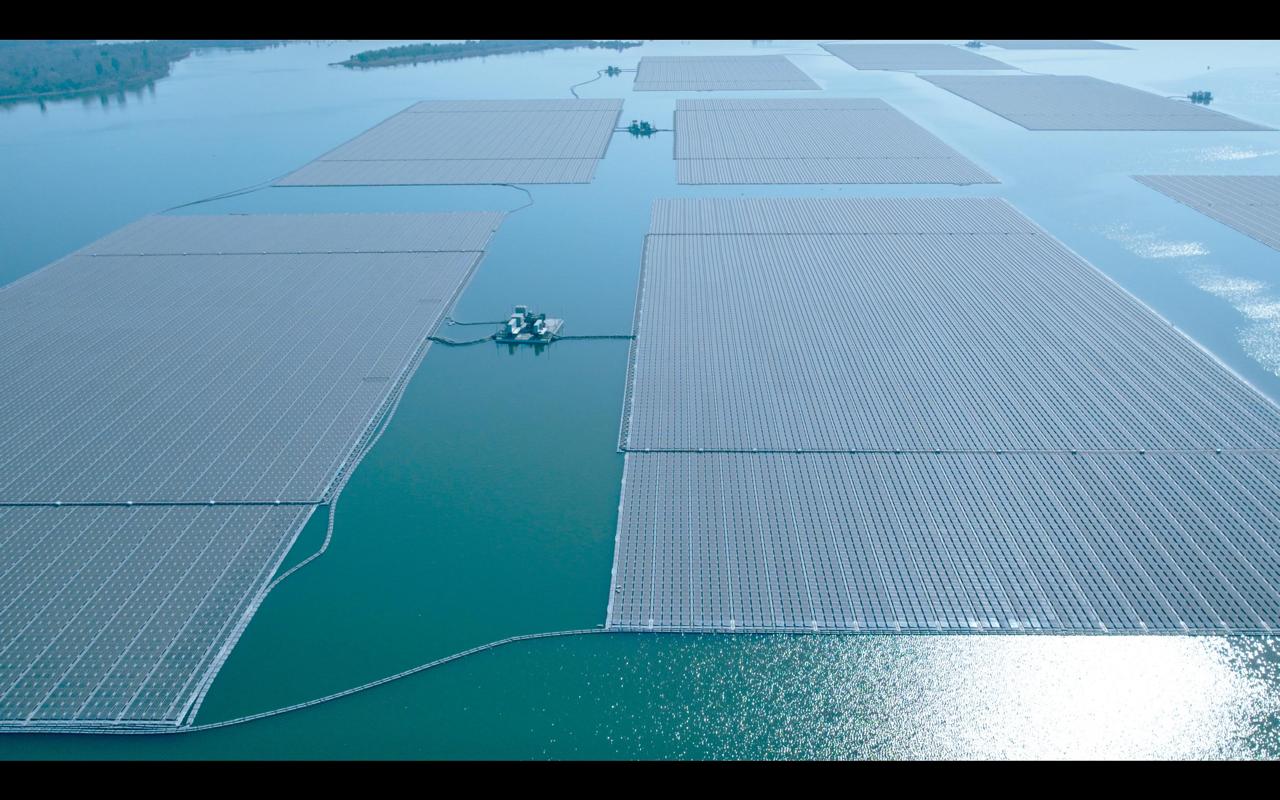
Floating solar project constructed by TATA Solar Systems Ltd on the Omkareshwar dam reservoir in the Indian state of Madhya Pradesh in September 2024. Photo by Rewa Ultra Mega Solar Power Ltd.
Over the years, substandard equipment and poorly maintained instruments have resulted in glaring data gaps for various factors influencing the country’s rainfall and wind patterns like dust, aerosols and maritime conditions.
Human-caused climate change is also making weather forecasting harder. In India, extreme heat in the lower atmosphere can stall rainfall and result in dry spells as warmer air holds far more water vapor from the Indian Ocean. That could result in abrupt heavy rainfall and flooding events, instead of consistent rain throughout the four months of the monsoon season.
Investing in thickness
Through a series of trial and error, the engineers in India figured out how to develop sturdier permanent mooring and anchoring systems that could withstand bursts of stronger winds than temporary ones.
Some of the engineers drew inspiration from Japan. Following the 2019 typhoon that destroyed a floating solar plant there, the project’s engineers discovered the anchors failed due to the size and shape of the floating solar islands. The Japan-based team split the plant into smaller islands and, since the work was completed in 2021, the plant has withstood repeated typhoons.
“Installing a floating solar plant requires perfection,” said Borra. “One errant panel is enough to affect the entire plant.”
Installation issues like loose bolts and clamp failures can result in the failure of solar panels during hurricanes or tropical cyclones — whether on land or a body of water. A crucial step in making climate-resilient solar infrastructure involves focusing on the designs of mounting structures that support panels.
“This includes using high-quality raw materials with adequate thickness which can protect solar panels even during harsh weather conditions,” Borra said.
After experiencing severe hail storms in Texas, engineers and designers found that thicker and fully-tempered glass could make solar panels more hail-resistant, especially when the panels are protected with high-quality frames and support bars. And using thicker steel or aluminum to build solar panels and mounting structures is essential for making land-based plants hurricane-proof.
“In India and elsewhere, governments and the private sector need to be willing to invest more money on high-quality raw materials to strengthen solar infrastructure during this climate crisis,” Borra said. “The issue is that many players in this field are cutting corners.”