How China dominates critical minerals in three charts
Explainers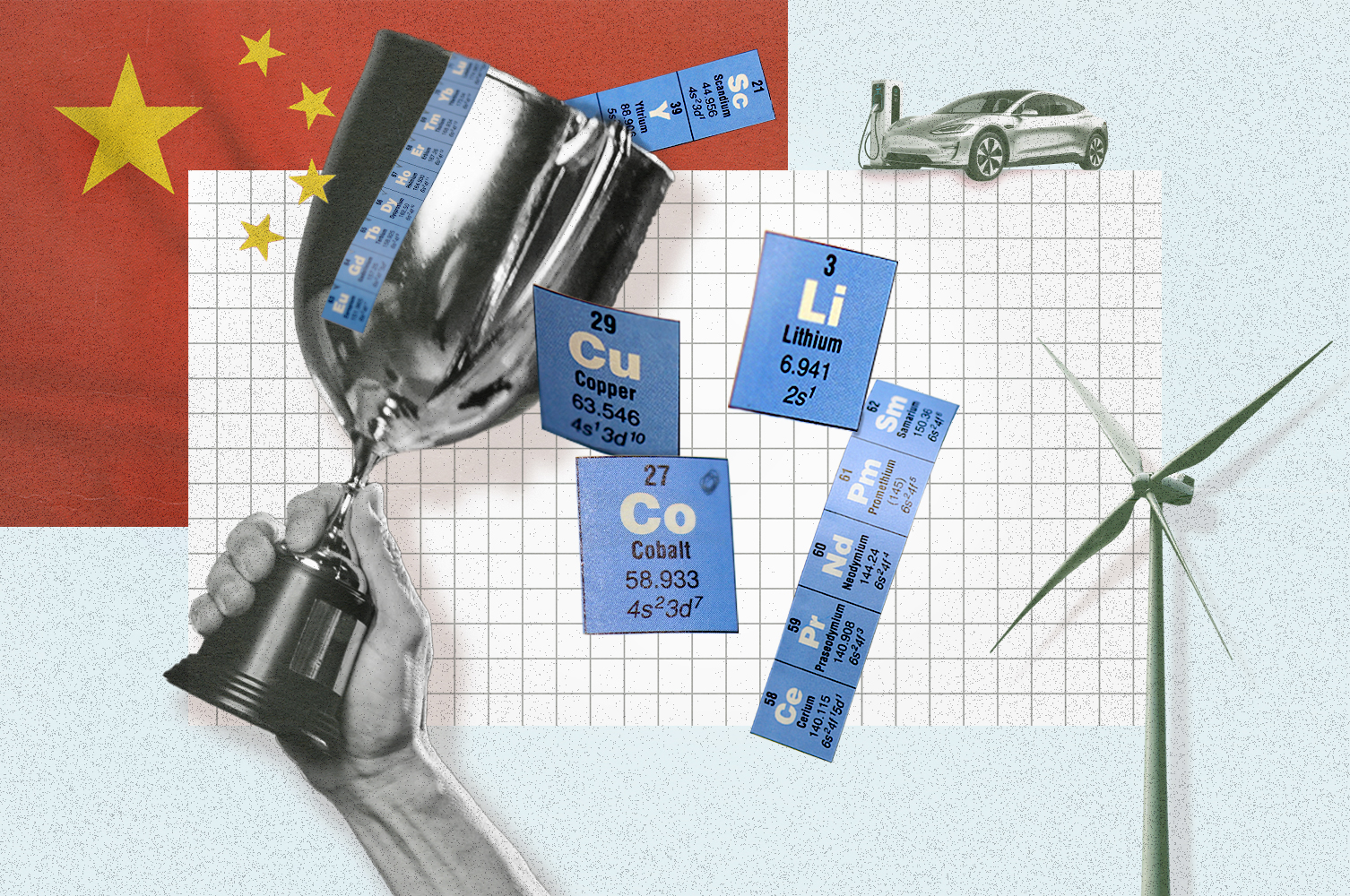
Nothing lays bare the risk the Trump administration’s trade war poses to the United States and the rest of the Western economy quite like critical minerals.
Rare earth elements, as well as lithium, graphite, silicon, nickel and other minerals, are all crucial to clean energy technologies, such as electric vehicles and wind turbines. Many are also key components in defense technologies, like drones and stealth war planes.
China dominates the refining, and in some cases even the mining, of nearly all these key materials. The three charts below tell that story.
In early April, the U.S. government imposed sweeping tariffs of 145% on Chinese goods. While President Donald Trump backed down, at least temporarily, on tariffs he imposed on other countries, he ratcheted up tariffs on China, escalating trade tensions between the world’s two largest economies.
The tariffs do not cover critical minerals and materials, at least for the time being. But China is already using its dominance of the sector to hit back.
Responding to the tariffs, China placed export restrictions on rare earth elements, squeezing supply to the West of minerals and magnets used to make offshore wind turbines, electric vehicle motors, electronics, robots and weapons. The U.S. is almost fully reliant on China for the processing of rare earth metals.
“There are no wind turbines without concession to or coercion from China,” Tommy Joyce, acting assistant secretary of international affairs at the U.S. Energy Department, said at an energy security conference organized by the International Energy Agency in London in late April. One offshore wind turbine requires about four tons of magnets made from rare earths, he said, using the example to criticize the reliability of renewable energy, a position in line with the current U.S. administration’s policies.
The restrictions mean companies need to have a special export license to send rare earths and magnets out of China. There will likely be a pause in exports as the Chinese government establishes this new licensing system. While the export controls stop short of an outright ban, it means the government can throttle shipments by restricting the number of export licenses it issues, Reuters reported.
The restrictions could cause challenges for the U.S. electric vehicle industry in the future, but currently it’s primarily a concern for the defense sector, said Milo McBride, a fellow at the Carnegie Endowment for International Peace focused on climate and geopolitics. European wind manufacturers have not reported any immediate impacts from the Chinese export restrictions, according to industry sources.
China’s dominance of the critical minerals supply chain is the result of strategic early investments, typical of its first-mover approach and investment in innovation, according to a BloombergNEF report. Spurred by an ambition to become a global manufacturing powerhouse, Chinese companies built critical mineral supply chains aided by supportive government policies.
“China’s mineral processing empire — alongside its unparalleled cleantech manufacturing — exemplifies how deeply entrenched Beijing’s lead has become,” McBride said. “It will be difficult for other countries to catch up to China and structurally alter these dynamics.” Instead, they could try to develop technologies that are less reliant on these elements and minerals, he added.
China’s leader, Xi Jinping, said in a speech in 2020 that it was important for China’s national security that the West’s supply chains remain dependent on his country, the New York Times reported.
Indeed, China’s control over the refining of most critical minerals has created a supply chain concentration that has become a concern for most economies, according to BNEF.
Mining is more widely distributed, as it depends in part on where the resources are located and accessible. But China dominates both the mining and refining of silicon, used to make solar panels, as well as rare earths.
Rare earths are a group of chemically similar elements, like praseodymium, neodymium or terbium, that are crucial to the manufacture of many high-tech products. They are highly energy efficient, offering energy savings of about 20 to 40% over ordinary motors, according to the IEA.
Most of these elements are abundant in nature but are known as “rare” because they are not often found in pure form and are hazardous to extract. Several are often found alongside radioactive elements, like uranium.
“Outside of China, very few countries have the infrastructure and the willingness to build solutions for the storage of these radioactive by-products,” the IEA wrote in its 2024 Global Critical Minerals Outlook.
China’s export restrictions cover seven rare earth elements and high-performance magnets that can withstand higher temperatures. If the trade war intensifies, Beijing could expand its restrictions to other rare earths, which could further threaten global production of key goods, the Financial Times reported.
It’s not the first time China used its critical mineral clout to advance its geopolitical interests. It briefly stopped exports of rare earths to Japan in 2010 over a territorial dispute and it also denied the U.S. a handful of rare earths in the final weeks of Joe Biden’s presidency after his administration curbed China’s access to advanced American technologies.
“China’s rare earth restrictions were entirely expected,” said McBride, who has been following the topic. “By enacting them, Beijing is making clear that if countries antagonize their economic interests — either by tariffs or restricted access to strategic high-tech goods — the Chinese will respond methodologically, tactfully and with clear warning signposts of these looming actions.”
The standoff between the U.S. and China is far from over. A week after the tariffs on other goods from China went into effect, Trump ordered his administration to study possible tariffs on critical minerals like lithium, cobalt and nickel. And a week after that, Trump said the tariffs he imposed on Chinese imports into the U.S. would “come down substantially, but it won’t be zero,” suggesting a softening in his stance.
On April 24, Trump signed an executive order aimed at jumpstarting the deep-sea mining industry in an attempt to boost access to critical minerals and reduce dependence on China.
The saga goes on.