Haiti’s crisis fuels a solar energy revolution
Voices
In the midst of Haiti’s worst political and economic crisis in decades, an unexpected revolution is quietly taking place — one that could transform its energy landscape.
Haiti’s struggle with severe fuel shortages and an unstable grid has sparked a wave of innovative approaches aimed at expanding energy access through decentralized renewable energy (DRE), particularly through off-grid solar networks. These solutions are providing a vital lifeline to communities long underserved by an energy system that is insufficient, unreliable and dependent on fossil fuels. We know that because our organizations are working with partners on the ground and helping make it happen.
A combination of political unrest, rising crime rates and inflation has exacerbated Haiti’s struggle to access stable power. Meanwhile, recurring fuel shortages and attacks on energy infrastructure continue to affect the fragile state of the country’s security and economy. Today, the national power grid reaches only about 49% of the population, leaving the majority of Haiti’s citizens without reliable electricity access.
While some individuals and businesses supplement this unreliable supply with private diesel generators, most Haitians cannot afford such solutions. Lack of consistent energy access impacts not only daily life but also economic activity and development, making energy poverty a critical obstacle to Haiti’s progress. Expanding access to energy could help drive development across sectors and spur broader economic growth — a potential step toward easing political instability and related challenges.
These conditions are a sobering legacy of colonialism. Haiti formed the first Black republic in the world, following a slave rebellion in 1791. However, an “independence debt” assessed by the French — and estimated to amount to $23 billion in today’s economy — hobbled the nation’s ability to develop the infrastructure and conditions necessary to support a prosperous, democratic society.
Despite these historic and ongoing challenges, Haiti is finding new ways to move forward. With the entrenched, fossil fuel-based energy system disrupted by ongoing conflict, off-grid solar is rapidly filling the gaps.
Indeed, Haiti is emerging as a hub for innovative off-grid electrification.
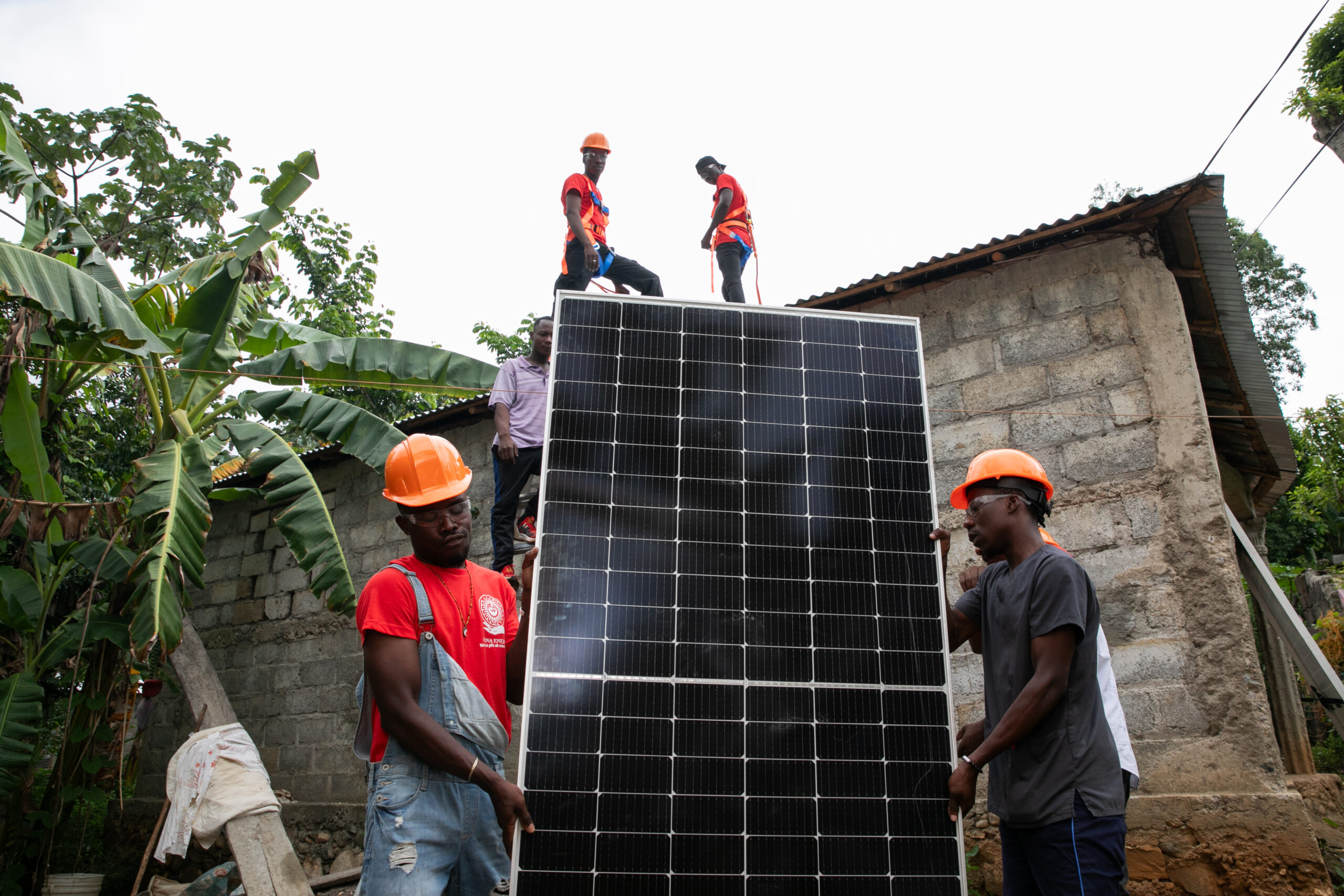
Technicians from Haitian project developer company Alina Enèji install solar panels on the roof of a home in Plaisance, Haiti in July 2024. Photo by Nadia Todres.
Since 2021, the Haitian project developer company Alina Enèji has been installing what are known as solar meshgrid solutions across northern Haiti. Meshgrids are decentralized networks of solar panels and battery storage that connect multiple households or businesses, allowing them to share excess energy. Unlike traditional mini grids, meshgrids are modular, meaning they can expand as more users join, reducing infrastructure costs and improving resilience.
The meshgrid technology, designed by Nigerian company Okra Solar, delivers high-capacity electricity at one-third to one-half the cost per connection of traditional AC mini-grid systems.
Alina Enèji started with a 30-connection pilot project in 2021. As of late 2024, the company had expanded to 3,000 customers in Haiti’s Nord and Artibonite regions and plans to scale up to 10,000 customers.
The impact of these solar installations goes beyond just providing electricity. With more reliable power, businesses in electrified areas have been able to extend their operating hours, leading to increased productivity and income generation. Households have also benefited from significant cost savings and health improvements, as families no longer rely on expensive and polluting kerosene lamps or private diesel generators.
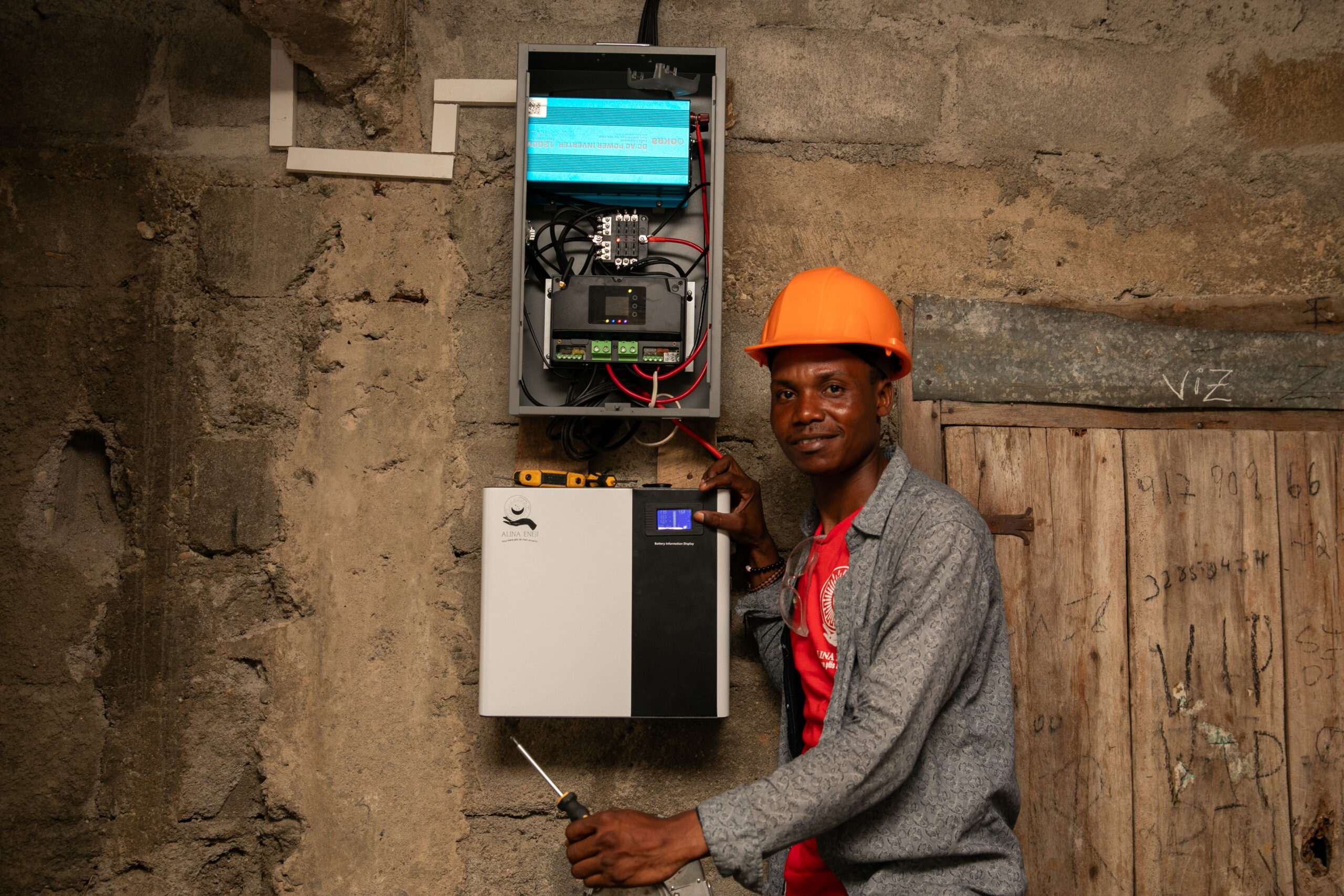
Jean Wislet Pierre from Haitian project developer company Alina Enèji inside a home that just had a battery system installed in Plaisance, Haiti in July 2024. Photo by Nadia Todres.
Off-grid solar projects still face challenges like security concerns, political instability and financial barriers, as many Haitian households lack upfront capital. Limited road infrastructure has also hindered the transport of solar equipment to remote areas. And to be clear, solar energy still makes up a small part of Haiti’s energy mix.
The growth of these systems so far has been made possible through a scaffold of support from the Haitian government and international philanthropic groups.
Haiti’s National Energy Regulatory Authority (ANARSE) has been streamlining processes for new energy projects, creating a more conducive environment for private sector involvement in the renewable energy space. Despite Haiti’s ongoing political instability and security concerns, ANARSE has been able to advance its mission by prioritizing rural electrification projects in regions where political unrest and gang violence are less prevalent.
Meanwhile, international groups like The Global Energy Alliance for People and Planet (GEAPP), the Inter-American Development Bank and the World Bank have supported Haitian companies and entrepreneurs in their effort to build up a vibrant private solar sector in the country to attract additional impact investors. This support is crucial as foreign governments have pulled back development assistance, reducing critical funds for food, health and electrification efforts — putting additional strain on Haiti’s economy and jeopardizing households’ ability to pay for electricity.
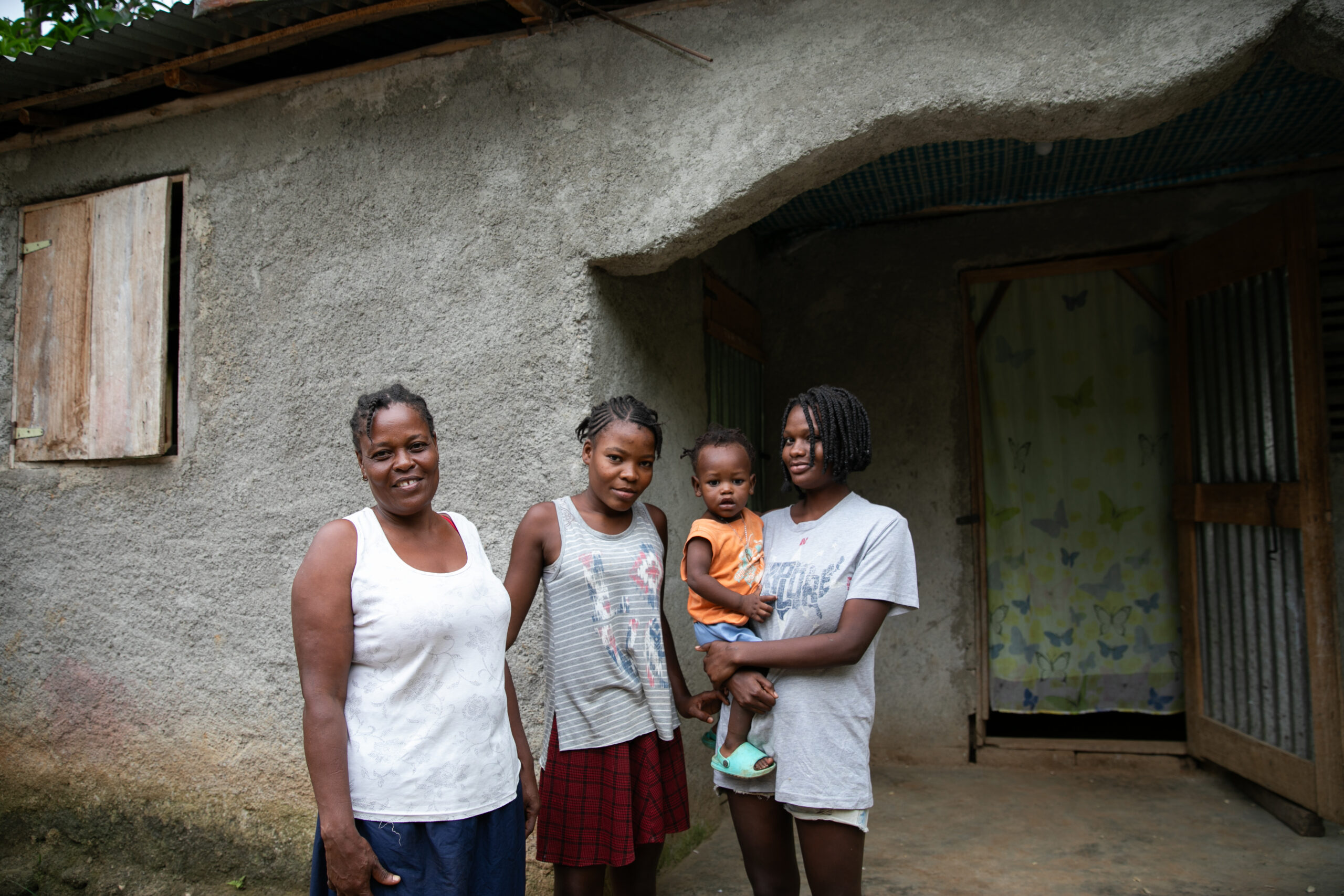
Dalia Remy with her two daughters and grandson in front of their home in Plaisance, Haiti in July 2024. The family said they are so happy to see power coming to their area and that the electricity will allow them to have fans and lights. Photo by Nadia Todres.
This support from international organizations has already started to result in the deployment of innovative solutions. Pay-as-you-go models have expanded the number of people who can access these systems by allowing them to make small payments to get electricity when they need it.
The success of solar initiatives in Haiti also has implications beyond its borders. The innovative approaches taken there can serve as a blueprint for other countries in the region where energy access is limited. Haiti’s experience can inspire and inform efforts in other low- and middle-income nations, showcasing how renewable energy can drive economic growth and improve quality of life — even in the toughest conditions.