Get caught up fast: Comparing Harris and Trump on energy and climate
Explainers
As Americans head to the polls, they face a clear choice between two contrasting visions for climate and clean energy policies.
The stakes are high. The next president will influence the speed of the nascent clean energy transition. They’ll also shape how the country responds to the mounting impacts of climate change. Even now, many communities along the Eastern seaboard are still recovering from the climate-fueled impacts of hurricanes Helene and Milton.
On one side is the GOP nominee, former President Donald Trump, who seeks to bolster fossil-fuel production and dismisses the seriousness of climate change. He has referred to spending on clean energy and climate initiatives under President Joe Biden as a “Green New Scam.”
On the other is the Democratic nominee, Vice President Kamala Harris, who regards climate change as an existential threat. She cast the tie-breaking vote on the 2022 Inflation Reduction Act (IRA) — a landmark climate law directing billions of dollars into clean energy across the nation.
Cipher looked at each candidate’s campaign rhetoric and policy positions as well as what analysts are saying to break down what each prospective administration would mean for U.S. energy and climate action.
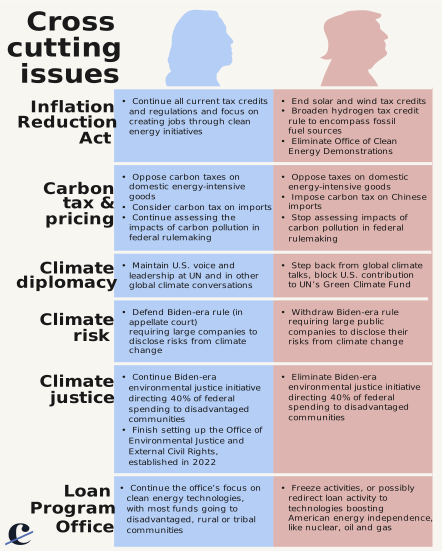
At the heart of the candidates’ diverging approaches sits the IRA, with its nearly $400 billion in tax credits and grants for clean energy and technologies.
A Harris administration would likely retain all the tax credits and regulations associated with the IRA and maintain Biden’s focus on creating jobs through clean technologies.
Trump would be far less likely to embrace the law in its current form and could try to undo it, as he unsuccessfully attempted with the Affordable Care Act when he was president. But the likelihood Trump would fully repeal the IRA is overstated, according to TD Cowen Washington Research Group. Trump would need large Republican majorities in both chambers of the U.S. Congress. Plus, several Republican lawmakers have warned against repealing the law as the IRA is benefiting many Republican states and districts.
Trump would, however, be able to shape how the law is implemented, revising tax credit rules to benefit fossil fuel-related industries and possibly redirecting tax credits for electric vehicles. Bloomberg Intelligence analysts warned, though, that such an undertaking would be time consuming as any rule changes require public feedback.
On the international stage, a Harris administration would be under pressure to increase U.S. funding to the Green Climate Fund, which supports efforts by low-to-middle income countries to mitigate climate impacts. Trump in contrast, would likely drastically reduce the country’s role in climate diplomacy, as he did during his previous term in office.
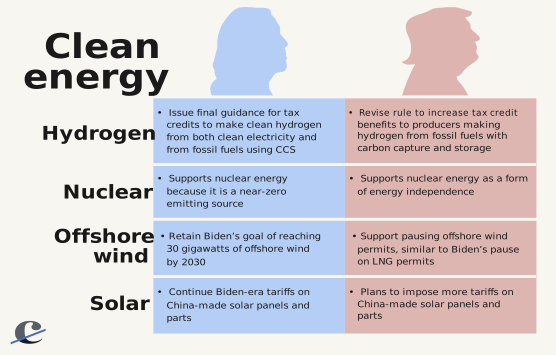
When it comes to clean energy, we see a couple spots of agreement. Both Harris and Trump support nuclear power. Both candidates also support mining and processing critical minerals domestically to reduce U.S. reliance on China.
The two differ sharply on others though, including electric vehicle tax credits and offshore wind. While Harris would continue working toward a Biden-era goal of reaching 30 gigawatts by 2030, Trump has railed against the struggling offshore technology — hit hard by inflation and supply chain woes — saying the projects end on “day one.”
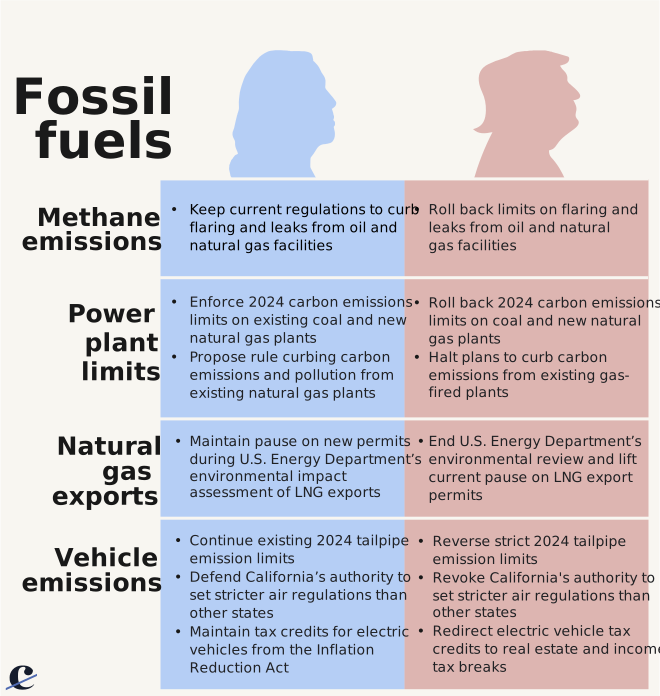
Trump has vowed to push for more oil and gas drilling on public lands and waters. Notably, the U.S. is already the world’s leading producer of oil and natural gas.
Trump would likely scale back Biden-era rules limiting emissions from power plants and vehicle tailpipes, as well as those aimed at plugging methane leaks from oil and gas facilities. He has also said he would end the U.S. Energy Department’s environmental review of liquefied natural gas (LNG) exports and lift the current pause on LNG export permits.
A Harris win, in contrast, could mean a status quo for climate and environmental regulations finalized or planned during the Biden administration. The power plant, tailpipe and methane rules would likely remain.
The Justice Department under a Harris administration could be busy at the U.S. Supreme Court defending those rules against challenges brought by Republican attorneys general.
Ultimately, voters could be deciding whether the U.S. will seek to accelerate the move to clean energy technologies, or if the country would take a step back from those efforts and slow the transition.