Geothermal is the rare renewable energy winning favor in Trump’s America
Latest News
With roots from the oil industry and a clean profile, geothermal is emerging as the one renewable energy the Trump administration actually likes.
Generated by tapping into the extreme heat at the center of the Earth, geothermal power is an energy unicorn: It’s renewable, produces virtually no greenhouse gas emissions and is always on.
“This is just an awesome resource that’s under our feet,” Chris Wright, head of the United States Energy Department, said in March at an event hosted by Project InnerSpace, a non-profit geothermal advocacy organization.
With adequate government support, experts say, the burgeoning industry could take off in the U.S., helped by expertise and potential investment interest from the country’s fossil fuel sector. Importantly, accessing geothermal energy involves techniques similar to drilling for oil and gas.
Currently, traditional geothermal technologies meet less than 1% of global energy demand. By 2050, however, geothermal could meet 15% of global demand if the technology continues to advance and costs continue falling, according to the International Energy Agency.
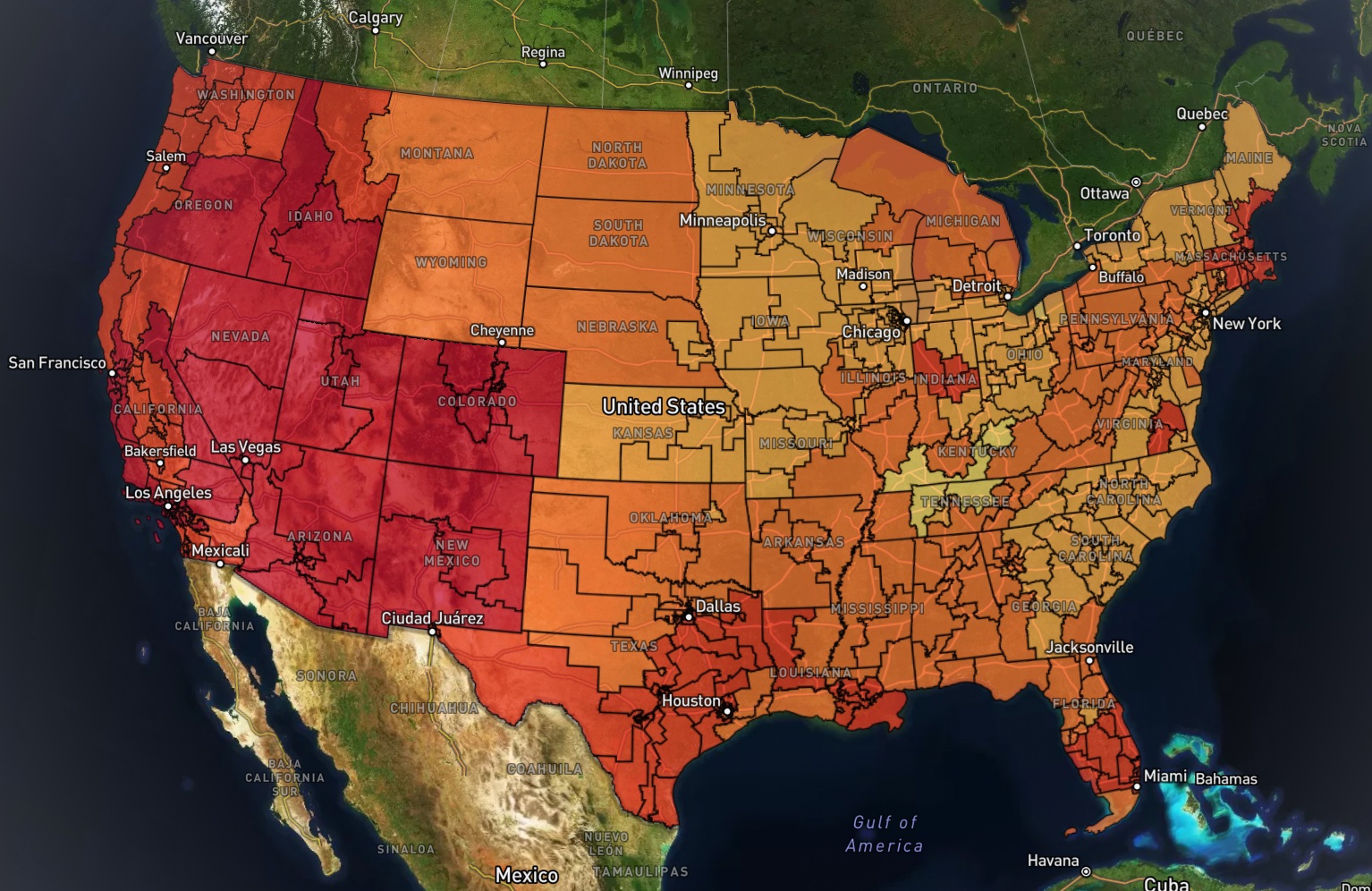
In partnership with Google, Project InnerSpace created a free and interactive map showing geothermal capacity. This screenshot shows geothermal capacity by Congressional district. Red indicates areas with higher geothermal capacity. Image credit: Project InnerSpace’s GeoMap, developed in partnership with Google.
Getting to that point will be a challenge, though, and the pace of progress depends on federal backing that is by no means guaranteed, despite the positive vibes coming from the Trump administration. That’s where political approval comes into play.
Before his appointment to lead the Energy Department, Wright was CEO of Liberty Energy, an oil drilling services company that invested in Fervo Energy, a leading geothermal startup, in 2022.
Geothermal energy has also been getting bipartisan support on Capitol Hill and in state legislatures, giving the industry hope that federal dollars will follow. Much of the permitting process for these projects happens at the state level.
Carlos Araque, CEO of Quaise, a geothermal startup developing drilling technology to enable extraordinarily deep drilling to reach into hotter rock, believes this kind of enthusiasm will make a huge difference.
“I see nothing but tailwinds for us,” he said.
The Energy Department did not return a request for comment.
Oil and gas expertise
Geothermal could offer an alternative way for oil and gas companies to help meet surging energy demand — and diversify their offerings — by building on what they already know.
“The U.S. has a number of different superpowers and putting holes in the ground and taking things out of those holes is one of them — and doing so more economically and more efficiently than basically any other place on Earth,” said Drew Nelson, vice president of Project InnerSpace.
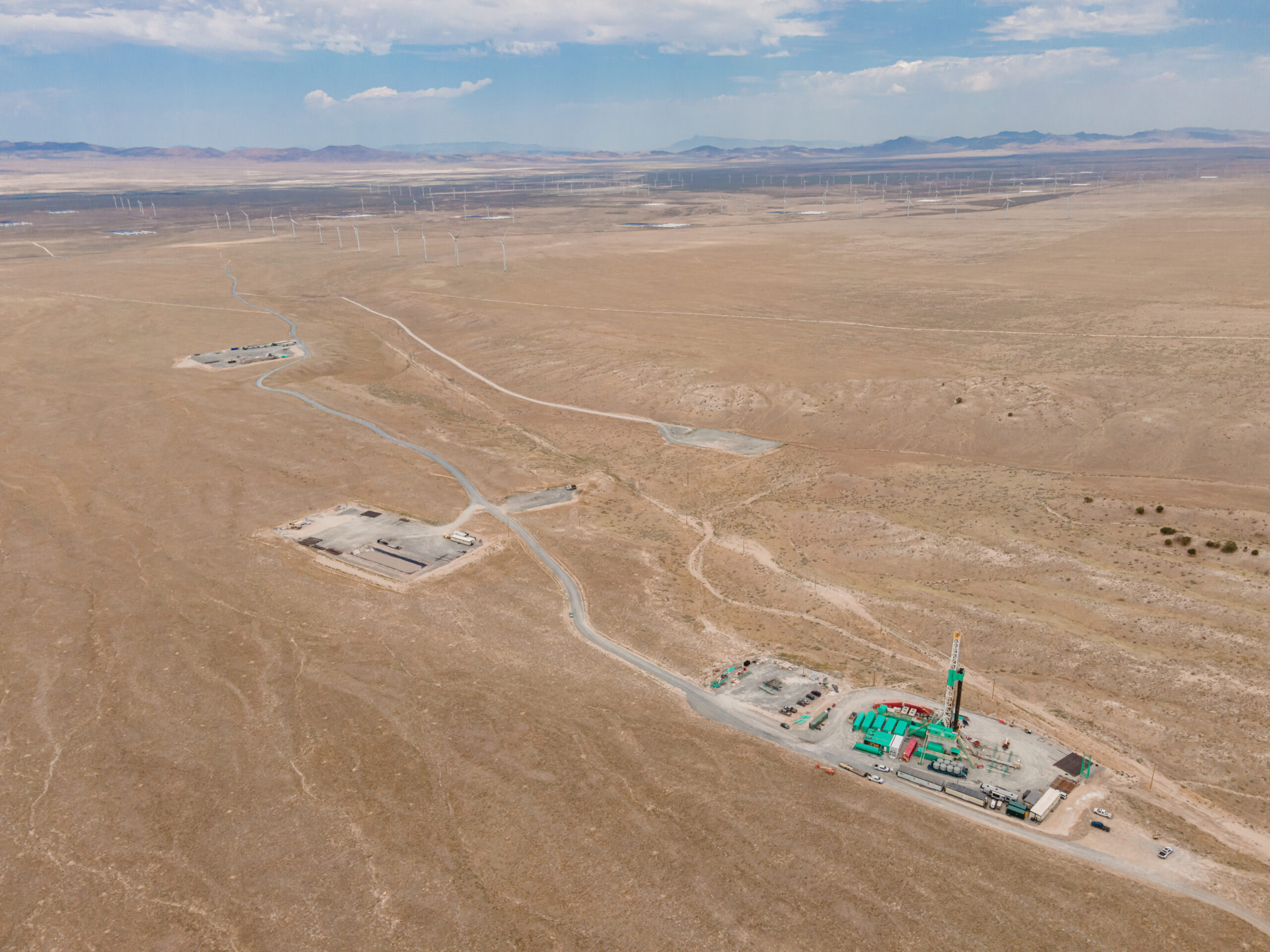
An aerial view of the FORGE geothermal field research site in Utah, managed by the Energy & Geoscience Institute at the University of Utah, and sponsored by the U.S. Energy Department, in July 2021. Photo credit: Eric Larson, Flash Point SLC.
Interest in geothermal energy has waxed and waned for decades, rising when oil supplies were tight and dropping when oil prices fell, said Joseph Moore, who has worked in the industry since 1976 and runs a geothermal research facility at the University of Utah sponsored by the Energy Department.
New technologies are changing that calculus. The same drilling technology used in fracking, enabling the shale boom, is being applied to geothermal, for example, and making it possible to tap into more underground sources of heat. Quaise, meanwhile, is developing another technique to drill deeper than ever before to reach the hottest rocks. Both are examples of next-generation geothermal technologies.
“It’s energy independence, it’s energy availability,” Moore said.
Trump has championed “energy dominance” and geothermal power fits that narrative, said Araque, who started his career in oil and gas. With the help of these new technologies, if commercialized at scale, geothermal energy would be “as powerful as oil and gas,” and “available in many, many more places,” he said.
“That, to me, sounds like energy dominance.”
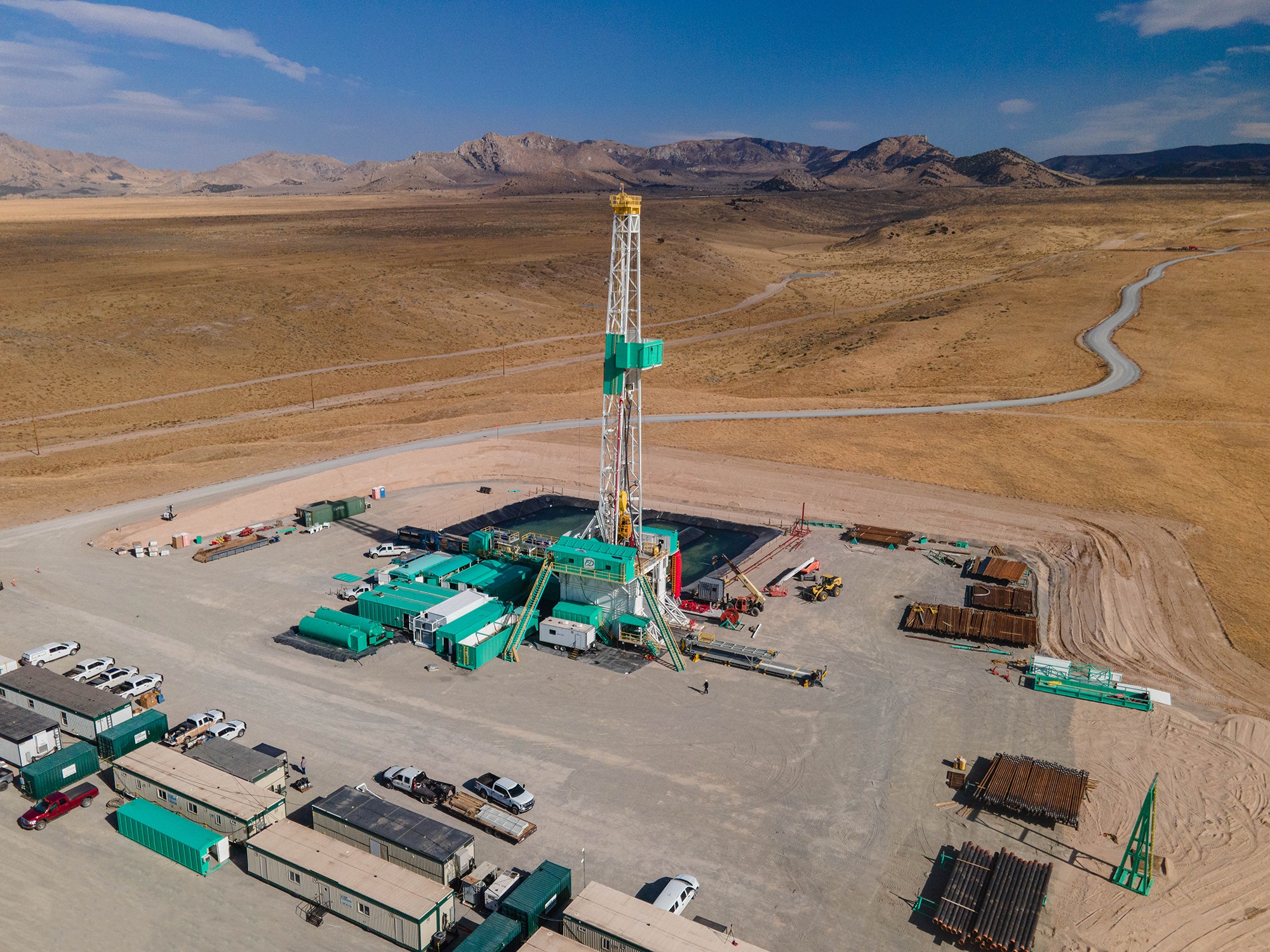
One of Utah FORGE’s two deep, deviated (65 degrees to the vertical) geothermal wells being drilled in Utah in October 2020. Photo credit: Eric Larson, Flash Point SLC.
AI race adds urgency
The race to develop artificial intelligence is a de facto energy race: AI data centers need power urgently.
“One of the challenges with data centers in particular is they want this power now. They actually wanted it yesterday,” said Ben King, energy analyst at Rhodium Group.
Trump has made winning the global AI race a key goal of his administration.
King co-authored a report, published in March, finding enhanced geothermal systems, the next-generation technique Fervo is using, could economically meet approximately two-thirds of expected power demand from data centers by the early 2030s if data centers continue to be developed in regional clusters, as they are now. Silicon Valley has shown early interest in geothermal technology: Google partnered with Fervo in 2021.
“Data centers are just the tip of the spear for geothermal,” King said. “To get a foothold there and then grow and grow is really, really valuable here.”
Government support is key
The cost of geothermal energy is currently higher than that of onshore wind, utility solar and natural gas plants, according to Lazard’s levelized cost of energy research, considered the gold-standard in the industry. But it is roughly half the cost of nuclear, another low-carbon, always-on power source.
With investment and support, however, the cost of geothermal could plummet by 80% by 2035, according to the IEA. That would make geothermal “highly competitive” with wind and solar paired with batteries.
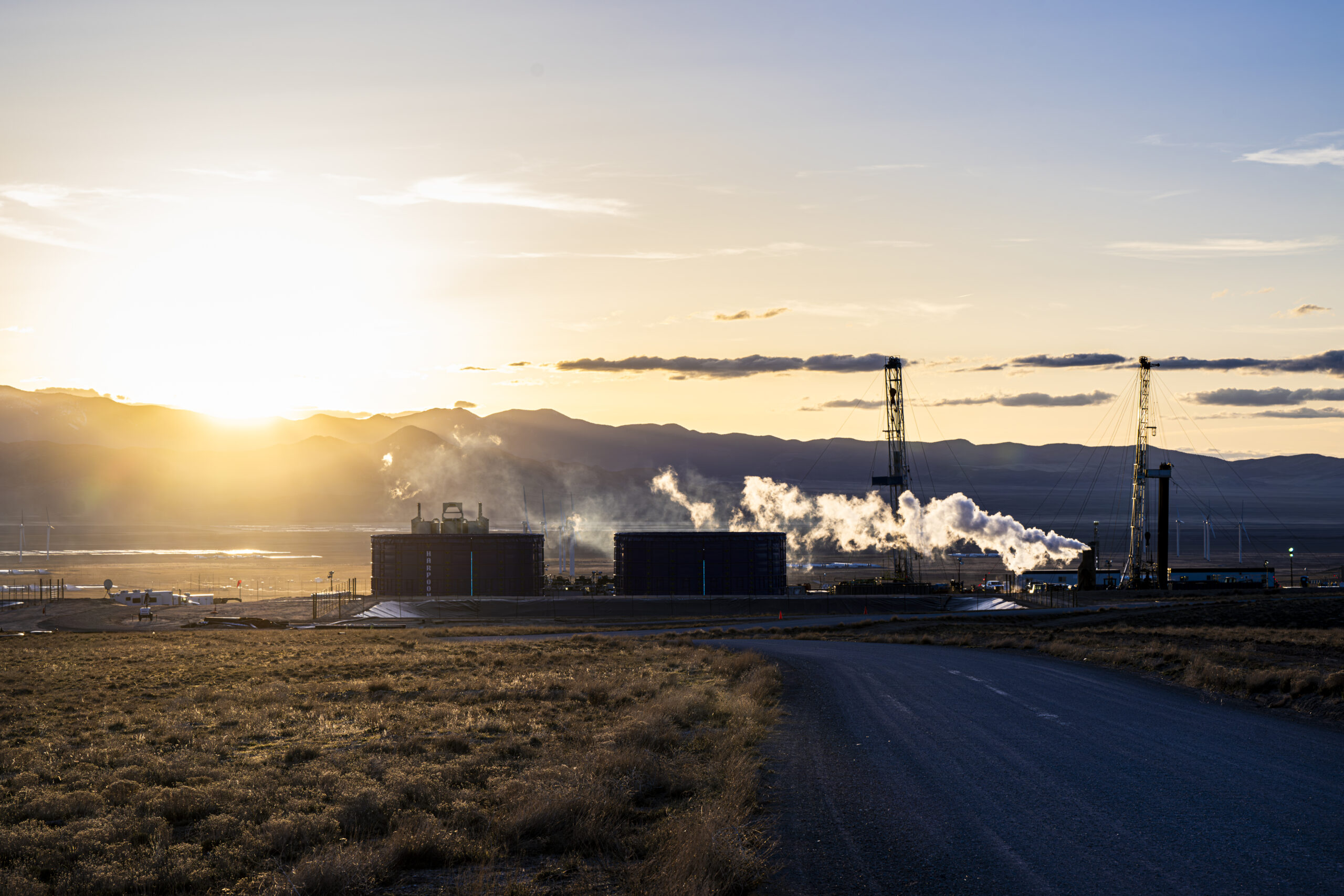
Geothermal tests being conducted at FORGE in Utah in April 2024. Cold water is injected into the ground and the Earth’s heat warms the water before it is brought back to the surface. Steam is visible coming off the equipment. Photo credit: Eric Larson, Flash Point SLC.
Technological innovations will almost certainly be accelerated by government research, said Terra Rogers, program director of superhot rock geothermal at Clean Air Task Force, a climate advocacy non-profit. The current administration has been pulling back in many areas of scientific research, but the impacts on energy research are still unclear.
Getting to that point also requires money, mostly for the up-front investment required to build the drilling rig. Operating costs for geothermal are “almost a rounding error” by comparison, said Rogers.
That makes the investment tax credits for renewable energy projects in the 2022 Inflation Reduction Act, former President Joe Biden’s signature climate law, especially important for geothermal projects. Indeed, a group of 21 Republican lawmakers signed a letter last month advocating to protect the IRA’s energy tax provisions from being cut. But their future under Trump is unknown.
“I cannot over emphasize the value of the investment tax credit,” Rogers said.
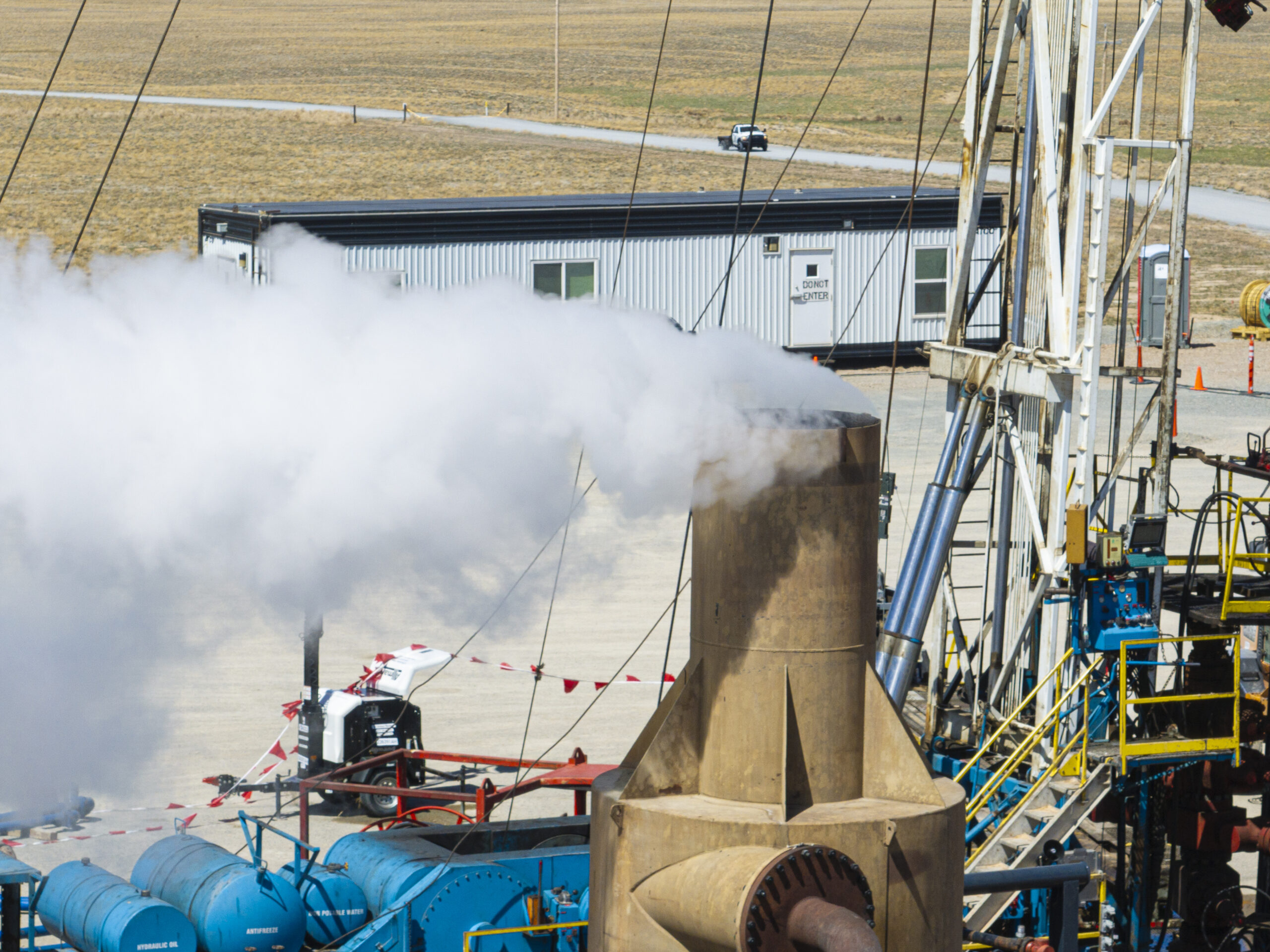
Steam coming out of a geothermal demonstration project at FORGE in Utah in April 2024. In a geothermal power plant, this steam would go into a turbine and then a generator to produce electricity. Photo credit: Eric Larson, Flash Point SLC.
Besides financial support, permitting reforms that would give geothermal the same advantages as oil and gas would also benefit the industry significantly, said Matt Mailloux, who leads geothermal policy for the conservative clean energy group, Clear Path Action.
Geothermal energy is likely to move forward even without government support, said Rhodium’s King. But the ability of the U.S. to continue leading the industry would be less certain.
“We’ve got a little bit of a head start right now,” he said. “So the question is: can we keep our foot on the gas hard enough and long enough to ensure that we retain that dominance?”
Editor’s note: Fervo Energy’s investors include Breakthrough Energy Ventures, a program of Breakthrough Energy, which also supports Cipher.