Exclusive: Bill Gates on Trump’s big bill, AI and more
Latest News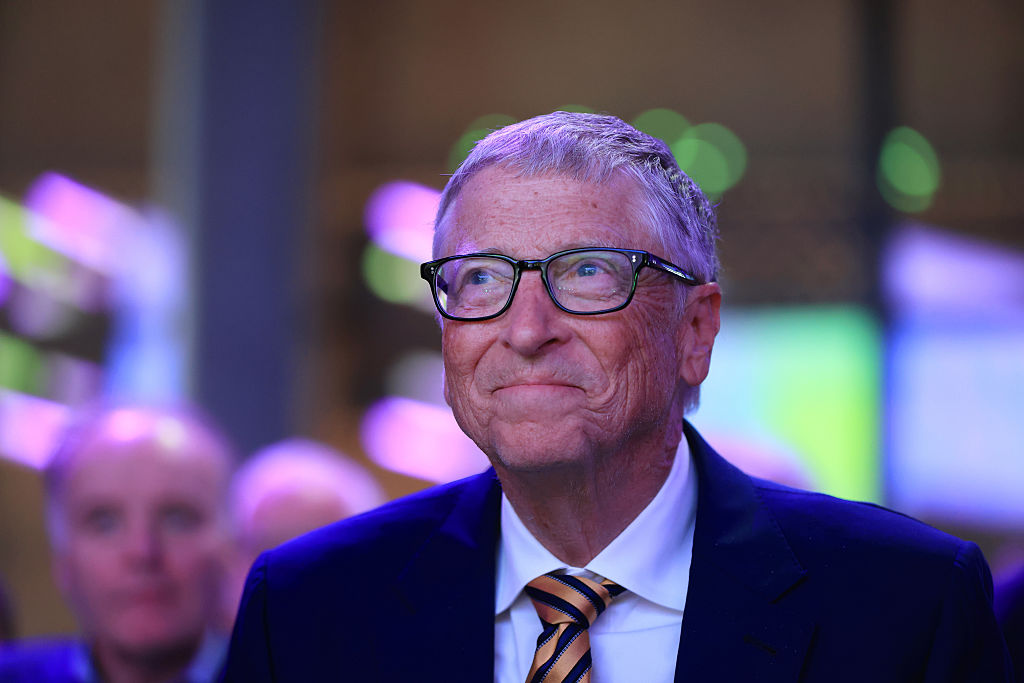
Bill Gates, chairman of the Gates Foundation, during the Federation of German Industries (BDI) conference in Berlin, Germany, on Tuesday, June 24, 2025. Photographer: Krisztian Bocsi/Bloomberg via Getty Images.
Bill Gates, a major funder of climate technologies, told Cipher in an exclusive interview that the Trump administration’s recently enacted law largely rolling back the biggest set of climate incentives in American history was not as bad as could have been expected.
“It wasn’t quite the evisceration that a complete lack of believing in climate change might have led to,” Gates said in a video interview on Tuesday.
Gates, founder of Breakthrough Energy and chairman of the Gates Foundation, was subtly referring to the fact that President Donald Trump, and virtually all his Cabinet members, have largely dismissed climate change as a problem.
Known for being a persistent optimist, Gates readily acknowledged that the law — referred to as the “One Big Beautiful Bill Act” — effectively removed most federal incentives for the mature wind, solar and electric-vehicle technologies that would likely benefit the most Americans in the next 10 years.
But he added that, on a global scale, the U.S. demand for these technologies is a small part of the global market. So, while the cuts may mean their development will not accelerate, they’re still “going to happen,” Gates said.
As evidence the bill could have been far worse, Gates pointed to the fact that it retained tax credits for newer technologies, in particular geothermal and nuclear fission and fusion.
On political pendulums and the unpredictable nature of U.S. federal politics right now:
“I think this swing is pretty big,” said Gates, referring to the practice of Republicans repealing policies and Democrats eventually coming back into power and reinstating them. “It’s a very difficult environment for someone, say, building a steel or a cement plant.” Gates said that could hold back investments.
On scaling back the policy efforts of his organization, Breakthrough Energy, earlier this year:
In what are his first public comments on the matter, Gates said he is spending less money on clean energy policy for a few reasons, including his increased focus on global health and the fact that other leaders have stepped up recently to support climate action, though he said more are needed.
“I view global health as, in a certain sense, having a lot of urgency because of the dramatic reductions that have been made there,” said Gates.
He mentioned other areas of Breakthrough, including its fellows program and venture-investing arm, that he continues to support. “I view Breakthrough overall, including the policy work we do, as a huge success,” Gates said. “If we need policy, philanthropy [organizations and] others are going to have to step up on that.”
He said he helped financially support a targeted advocacy effort to preserve cleantech tax credits in Trump’s big bill and indicated he may do the same on other issues like permitting reform. “If I see that that story is not being told well, I’ll jump in.”
On artificial intelligence, data centers and innovation:
“The AI people are chasing some mind-blowing profit streams,” Gates said, increasing electricity demand by as much as 10% globally, which will create supply chain and permitting bottlenecks.
“Unfortunately, natural gas is a clear solution, but even there you have supply chain problems,” Gates said. “It certainly is an opportunity for fission, fusion, geothermal, storage to come in and show that, at least in the early 2030s, we can be part of that picture.”
He also said AI itself can help accelerate the development of innovative climate technologies, such as nuclear fusion (how the sun and other stars make energy), to where the eventual potential clean energy output would likely dwarf any additional energy demand.
“The upside of accelerated innovation, say in a fusion design or just the head count you need to write a permit application, is mind-blowing,” Gates said. “It’s hard to overstate how important it is. It’s more important than the induced electricity demand.”
On TerraPower, the advanced nuclear power company he founded:
AI-fueled data centers are bolstering TerraPower in a big way, Gates shared.
“The AI data center [industry] may help us fill up our order book for the first, you know, 10 to 20 units,” Gates said. “And that’s a very big deal, because if you’re only building three or four units, then you’re just building these parts one at a time, as opposed to a more continuous manufacturing [process].”
Virtually all TerraPower’s demand in the U.S. is related somehow to data centers, Gates said. This revelation comes a few weeks after TerraPower announced a new investment round that was led by the venture arm of chipmaker Nvidia.
Bigger picture, though, policy uncertainty around tariffs and other parts of the economy is hitting TerraPower as much as many other companies.
“We live in a very uncertain environment,” Gates said, pointing out that TerraPower will have some components built in South Korea. “Is that 0% tariff or, I don’t know, a 40% tariff?”
Editor’s note: Bill Gates is founder of Breakthrough Energy, which supports Cipher.