Clean energy manufacturing is the path to mineral security
Voices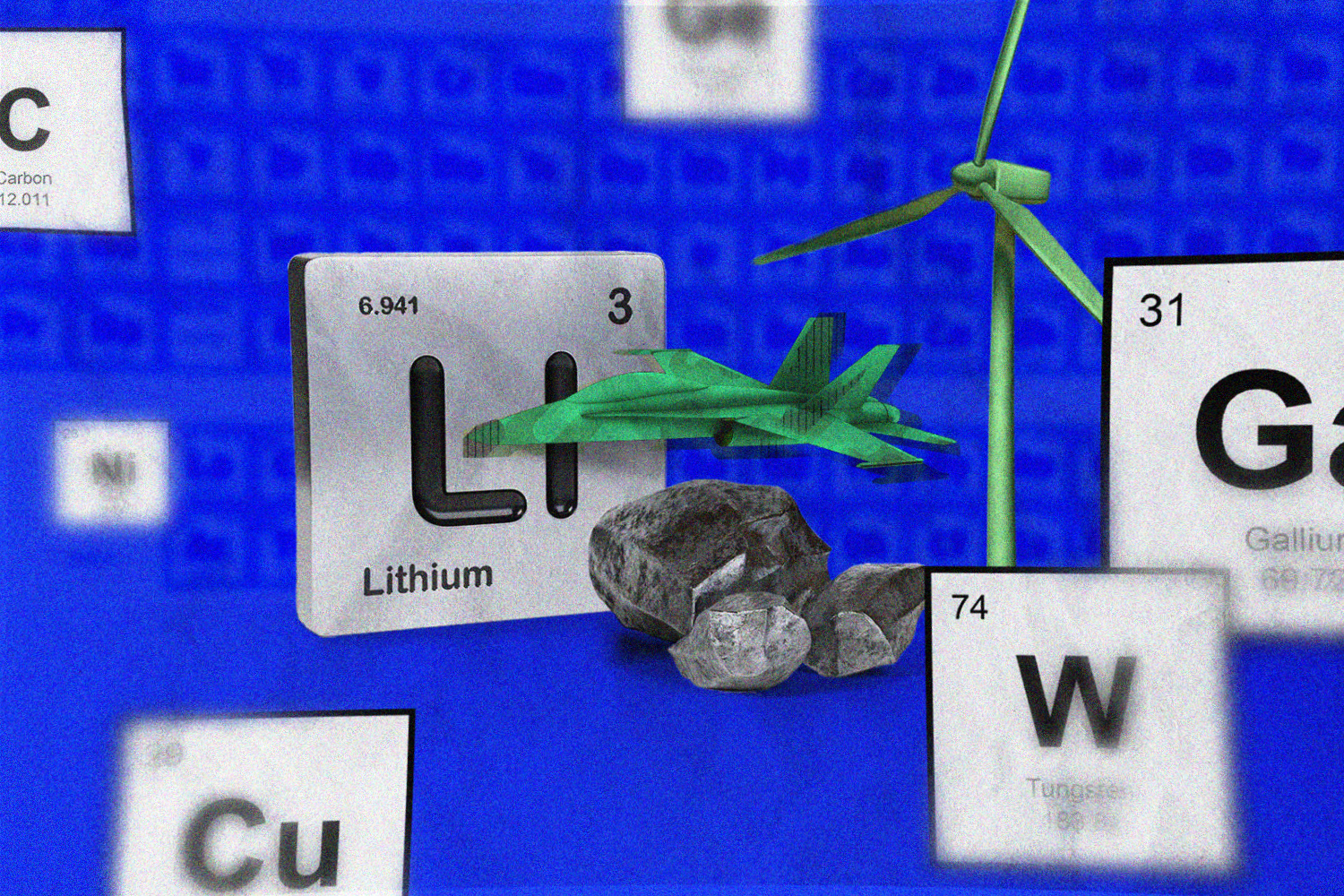
Critical minerals are vital commodities of the 21st century. These economically and strategically important rocks are key components of everything from consumer electronics to military hardware. They are also the backbone of clean energy technologies essential to reducing carbon emissions.
But many critical minerals — including metals like nickel and niche rare earth elements like neodymium — are overwhelmingly refined by Chinese firms, posing a strategic challenge to policymakers in Brussels, Washington and other capitals across the world. (The ongoing saga of the U.S.-Ukraine minerals deal is one of the most pronounced examples of how such minerals are being viewed from a national security perspective).
To build their own supply chains for these minerals and reduce reliance on China, jurisdictions like the European Union and United States will need to first ensure there is large and ongoing mineral demand from the clean technology industry. China’s dominance in both minerals and cleantech production is no coincidence: these sectors have inherent synergies.
Today, as policymakers debate incentives to boost domestic mineral extraction and refining — from subsidies to stockpiling and permitting to procurement — they should consider that such interventions are futile without a thriving cleantech manufacturing base capable of actually using these materials. If the political and economic climate supports a thriving market for clean energy products, then the manufacturing base for that clean technology will have the reason and resources to develop a robust domestic mining and refining industry.
In recent years, the U.S. and Europe have lost their metallurgical muscles. Across America, nearly half of the mining workforce is slated to retire by the end of the decade. Advanced degrees in the sector have plummeted in recent years.
The occasional purchase of niche metals like gallium for semiconductors or antinomy for defense technologies will not be enough to revitalize the depleted mining and metal refining industries. Doing so will require commercial-scale developments that bring back the know-how and advance innovations that can drive cost competitiveness.
Clean energy manufacturing is well positioned to do the job, especially for metals with both national security and industrial applications, like rare earths, copper, nickel and graphite. By 2040, clean energy technologies could drive at least 40% of rare earths production, about half of copper and nickel demand and almost all demand for battery metals like lithium.
A mineral strategy focused solely on niche security minerals like germanium or tungsten will not alone revitalize the broader mineral sector. On their own, production of these minerals will achieve limited scale and are unlikely to be cost competitive. But large commercial production of energy transition metals can drive process innovation and help procure niche but essential minerals as byproducts. For example, technology minerals like gallium and germanium — both targets of China’s export ban — are produced from aluminum and zinc, which are essential to solar panels and wind turbines.
Electric vehicles (EVs) are perhaps the most essential consumer product for mineral security. EVs use lithium-ion batteries — which require myriad metals including graphite and lithium — and magnetic motors — which require rare earths like praseodymium and dysprosium. These rare earths are also used in high-tech and security applications. China’s world-leading EV market solidified its dominance in batteries, magnetic motors and the processing of the minerals for those two technologies. Other nations should take note.
Wind power, an increasingly political target in the U.S., is also — and perhaps surprisingly — beneficial to developing mineral and metallurgical industries. Wind turbines require large quantities of zinc and high-grade steel alloys that blend minerals like molybdenum, niobium and titanium. Offshore wind turbines — which have garnered even stronger political pushback — require enormous rare earth motors also found in a range of military applications like drones and fighter jets.
Reaching climate goals also entails doubling the length of today’s power lines, which will require enormous quantities of copper and aluminum. These metals are required across nearly all clean energy systems and are essential inputs to the modern economy and across national security-related goods. By some estimates, global copper demand could double by 2050, thanks in no small part to energy transition developments.
In short, achieving economies of scale, process innovation and economic competitiveness in domestic mining and refining will depend on robust demand from the manufacturing base of the cleantech industry.
Taking control of the mineral supply chain will come with cost challenges. These challenges are the result of higher labor costs in countries like the U.S., lower environmental standards in places like Southeast Asia and, perhaps underappreciated, the perks of legacy industries that produce goods at scale. By some estimates, Chinese graphite costs are about half of the costs in the U.S.
Governments can address those challenges by creatively wielding incentives for clean energy manufacturing, like the U.S. EV subsidy, which supports domestic and free-trade aligned minerals in EV batteries.
While politically tempting, neither tariffs nor expedited permitting alone will trigger the scale of investment required in these new supply chains. Mining companies and investors will need to see that the market for their products, including low-carbon industries, have long-term political support and the policies to match.