Cipher analysis: Emerging clean technologies see sharp drop in investments this year
Latest News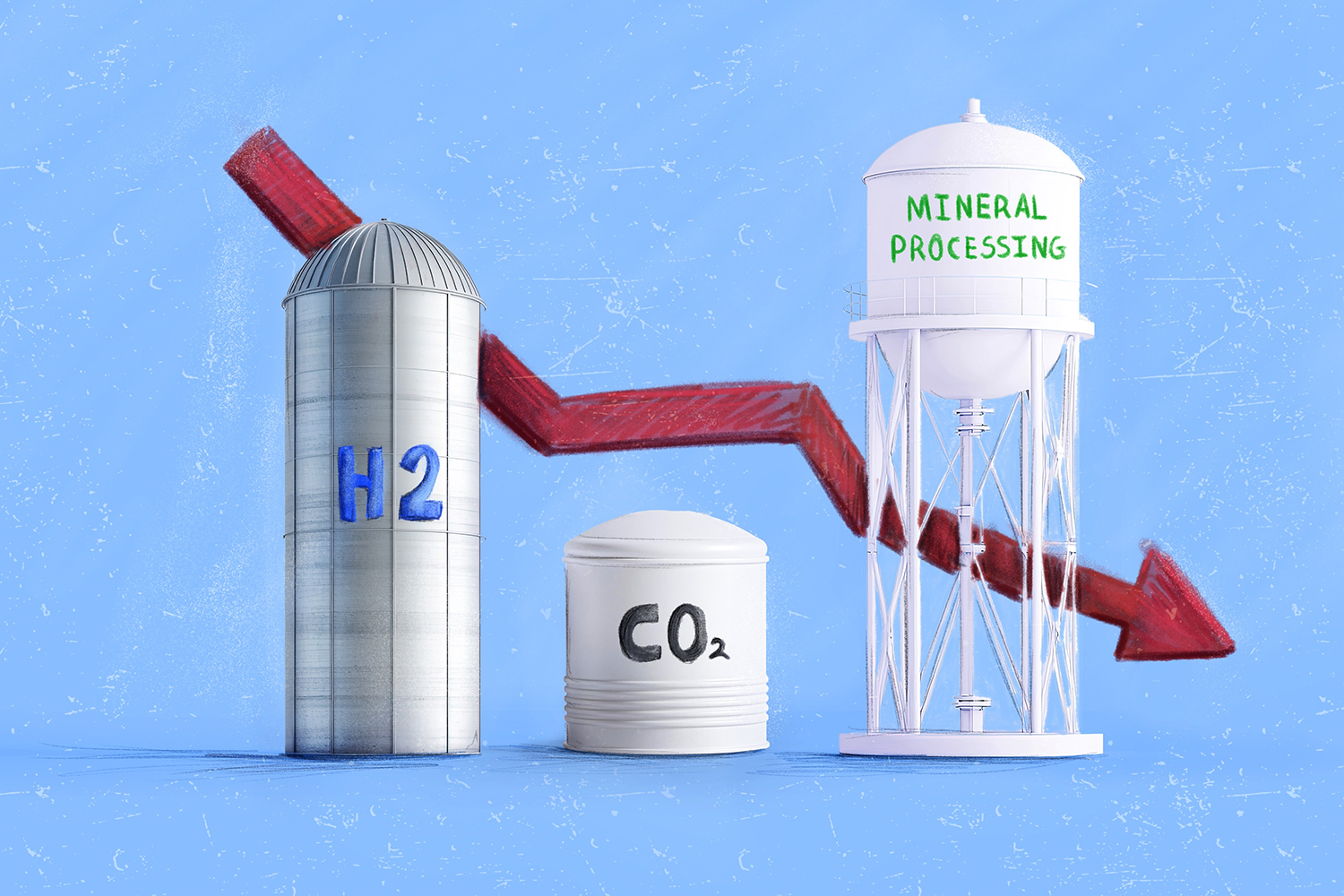
Spending announced for several key emerging clean technologies in the United States fell sharply this year, as market forces, lack of infrastructure and political and regulatory uncertainty disrupted the momentum built up in recent years, a Cipher analysis of investment data shows.
After two years of announced cleantech investments topping $40 billion annually, spending announcements dropped sharply starting in late summer and continued as the U.S. presidential election drew nearer, according to a Cipher analysis of data from the Clean Investment Monitor.
The monitor is a joint project analyzing cleantech investments from research firm Rhodium Group and the Massachusetts Institute of Technology’s Center for Energy and Environmental Policy Research.
President Biden’s signature climate laws, the 2022 Inflation Reduction Act (IRA) and the 2021 Infrastructure and Investment Jobs Act, included billions in grants, tax credits, loans and loan guarantees, stimulating investment in clean technologies in recent years.
Announced investments in low-carbon hydrogen, carbon capture and storage, critical mineral processing and sustainable-aviation fuel production drew nearly $48 billion in 2022 and nearly $42 billion in 2023.
Yet these investments dwindled to $16.2 billion in the first three quarters of this year, less than half the amount announced during the same period last year. This analysis does not encompass the fourth quarter, which includes the election of Donald Trump as president, which could likely slow investments further. That data will be released likely in February.
Cipher asked a variety of analysts why such investments began to slow after stronger beginnings. Their answers point to a disparate array of factors affecting cleantech investment, from high interest rates and uncertainty ahead of the election to regulatory delays and limited infrastructure.
Each of the impacted technologies faced slightly different headwinds, but overall, high interest rates boosted the costs of many already economically challenged projects, Ian Nieboer, head of energy transition research at Enverus Intelligence Research, told Cipher.
Although the Federal Reserve Bank began cutting interest rates in September, investors and developers were still hesitant to commit millions of dollars to projects as they waited for the outcome of the election to gauge the direction of U.S. climate policy.
Global market forces have also played a role, with plummeting lithium prices causing layoffs and project delays at companies like Piedmont Lithium and Albemarle Corporation in North Carolina, according to news reports.
Regulatory delays also haven’t helped matters.
The current administration still hasn’t finalized guidance — first proposed almost a year ago — that will clarify the scope of clean hydrogen tax credits in the IRA, leaving developers wary of moving forward with such projects.
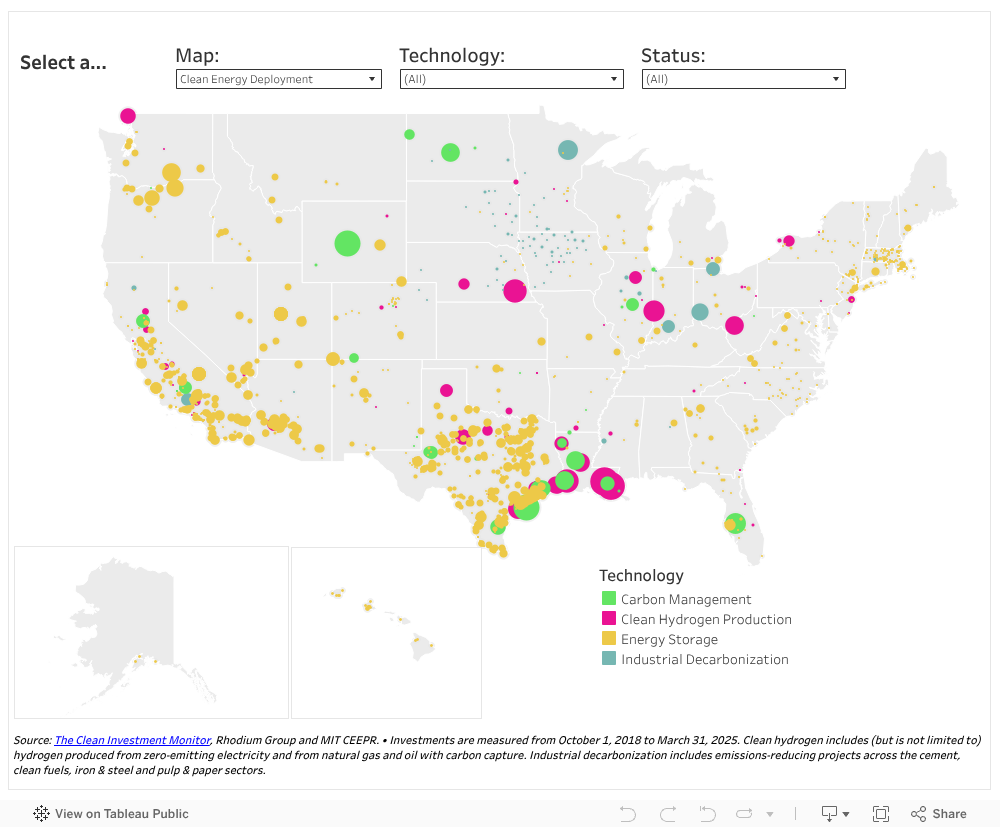
Announced investments for making clean hydrogen and electrolyzers, the machines that use electricity to make hydrogen, have virtually dried up, according to Charlotte McClintock, senior analyst with the Rhodium Group, who works on the Clean Investment Monitor, told Cipher. Actual investments — the spending that occurs when construction begins on a project — increased year-on-year in clean hydrogen and electrolyzer production as projects announced in previous quarters started to break ground.
The lengthy permitting process for new projects, which has been a growing concern, also is contributing to the slowdown.
A bill to reform the process introduced in the U.S. Senate earlier this year didn’t go anywhere, although it may now be getting a second look. Permitting processes delay a whole host of different types of climate projects, including facilities that process critical minerals as communities raise groundwater contamination concerns, as Cipher reported earlier this year.
Securing permits to build pipelines has also turned into a lengthy and contentious process, as Summit Carbon has learned in seeking to move carbon dioxide captured from projects in the nation’s corn belt to a storage site it has constructed in North Dakota.
Lack of infrastructure — such as sufficient existing pipelines and storage sites — to transport CO2 and hydrogen, combined with a lack of agreements to buy those products, is exacerbating these challenges, Nieboer said. To date, the U.S. Gulf Coast and parts of California have networks of pipelines to carry hydrogen and a handful of states, including Texas, Louisiana, Wyoming and Montana, have pipelines to transport CO2.
Notably, there is one countervailing bright spot to the downward investment trends, according to Cipher’s analysis: investors continued to support sustainable aviation fuels derived mainly from biofuels.
These can be directly dropped into engines as replacements for jet fuel without requiring any change in airplane design or related infrastructure, accounting for their appeal with investors as opposed to their hydrogen-derived counterparts, according to Shailesh Sahay, a partner in law firm Baker Botts’ environmental practice.
Investments in sustainable aviation fuels during the first three quarters of 2024 were higher than any other emerging technology Cipher tracks. Although the spending tracks lower than the same period last year, investors are continuing to back biofuel-focused projects like Gevo’s South Dakota ethanol-to-jet facility, supported by a $1.46 billion conditional loan from the U.S. Energy Department.
With Trump’s re-election and Republicans in control of Congress, the overall outlook for these clean technologies is uncertain. Analysts expect many rules favoring clean technologies to be rewritten and a new tax package to be introduced that could favor mining and hydrogen made from fossil fuels with carbon capture. Despite regulatory uncertainty and market obstacles, they note the level of commitment to decarbonization remains high.
Many carbon capture and storage projects are still moving into the construction phase, like energy firm Occidental’s joint direct-air capture facility in Texas with 1PointFive and ExxonMobil and CF Industries’ shared project in Louisiana. Topsoe, too, is still moving forward with its plans to build an electrolyzer factory in central Virginia.
“These are frontier technologies that often lack infrastructure and require significant government incentives to compete,” said Peter Gardett, head of research at Karbone, a New York-based firm specializing in decarbonization finance. “What’s striking isn’t the slowdown, but that investment remains as high as it is.”