Chinese companies’ European hydrogen gambit
Latest News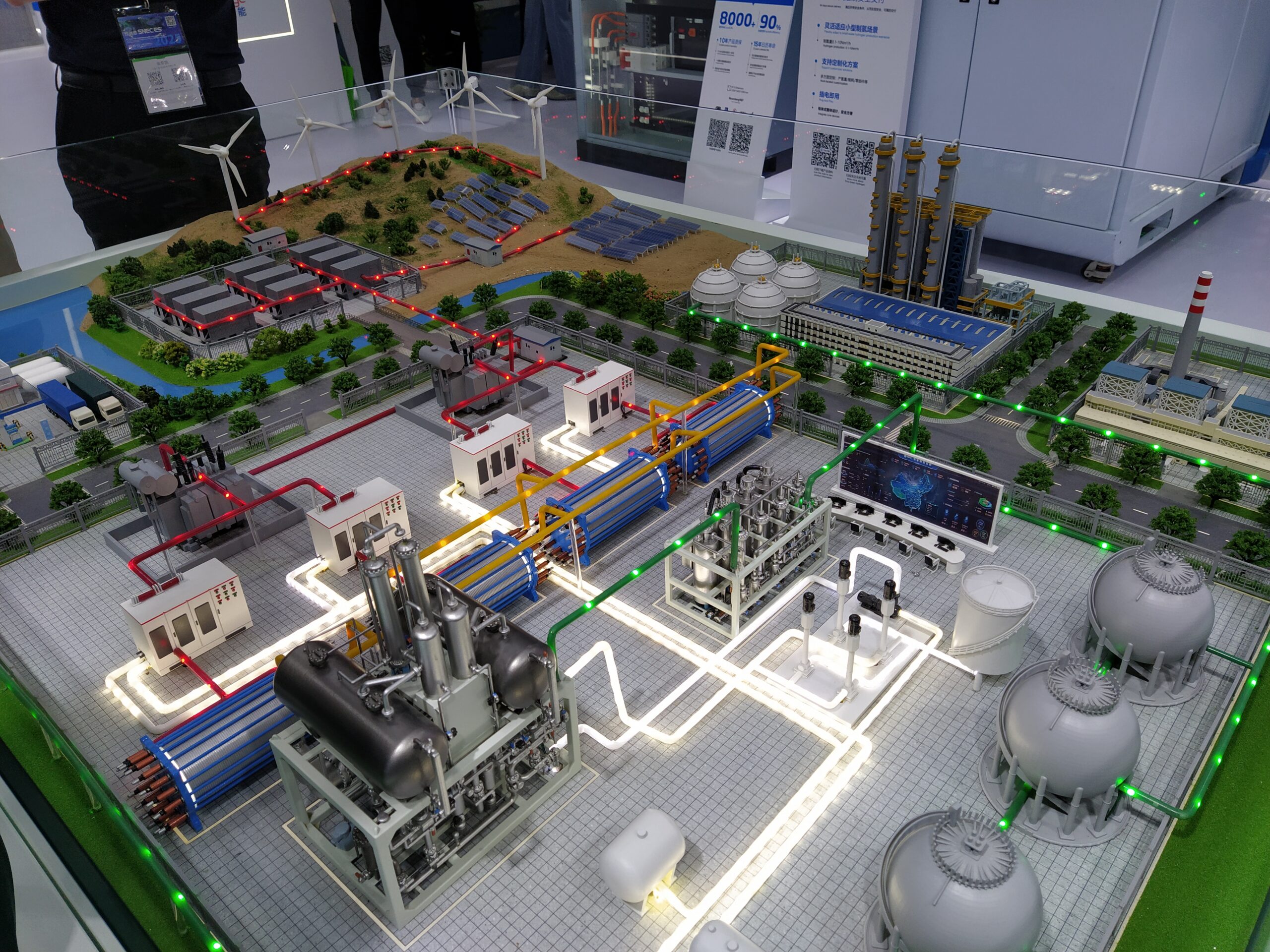
SHANGHAI — In a display case the size of a ping pong table, a model miniature solar and wind farm, equipped with toy batteries to store excess electricity output, powers four tiny cylinder-shaped machines that produce hydrogen by extracting it from water, a process called electrolysis.
The resulting hypothetical gas could then be stored in spherical containers or sent to two replica factories for making methanol and ammonia, chemicals important for decarbonizing the shipping, agricultural and transportation sectors.
Trina Green Hydrogen, sister company of the Chinese solar-panel giant Trina Solar, presented the model all-in-one hydrogen industrial park at a trade conference in Shanghai in September. The impressive demo represents the company’s vision for renewable hydrogen both at home and abroad in Europe. It is not alone.
Trina Group is among several top Chinese manufacturers that have announced plans to build renewable hydrogen factories in Spain over the past year.
The trend is partly driven by the ambitious target the European Union (EU) has set for this emerging clean energy source, which will require the bloc to rapidly build out a renewable hydrogen industry this decade. It is also a strategic move on the part of Chinese manufacturers to bypass restrictions and tariffs imposed by the EU on hydrogen-making machines — called electrolyzers — produced in China.
Globally speaking, Chinese companies don’t dominate the renewable hydrogen supply chains the same way they do with solar panels or batteries. And they will compete head on with international and local rivals while chasing their European dreams.
“The battle for green hydrogen is still wide open,” Alicia García Herrero, a senior fellow at the Brussels-based think tank Bruegel, told Cipher, using a nickname for renewable hydrogen.
Why Spain?
In June, Trina Group inked a deal with a local partner to build a 160 megawatt (MW) renewable hydrogen plant in southern Spain. Three months later, two other Chinese firms, Hygreen Hydrogen and wind turbine giant Envision Energy, pushed into Spain with plans to produce both electrolyzers and renewable hydrogen in the country. Major solar maker LONGi also formed a hydrogen partnership in Spain in 2023.
The only major Chinese player that has chosen to go elsewhere in the EU is Guofu Hydrogen, which is building an electrolyzer plant in Germany.
These companies have swarmed into the EU because that’s where industry demand for renewable hydrogen will be greatest, Mikaa Blugeon-Mered, an independent researcher of hydrogen geopolitics, told Cipher at the Shanghai conference. Companies from the United States, South Korea, Australia and other countries are making the same move, he noted.
The EU aims to produce 10 million metric tons of renewable hydrogen domestically every year by 2030. Meeting that non-binding goal would require the bloc to install up to 140 gigawatts (GW) of electrolyzers this decade, up from an estimated 0.7 GW installed by the end of 2024. The goal creates a huge market for global electrolyzer manufacturers. This comes on top of the EU’s separate goal to import 10 million metric tons annually by the same year.
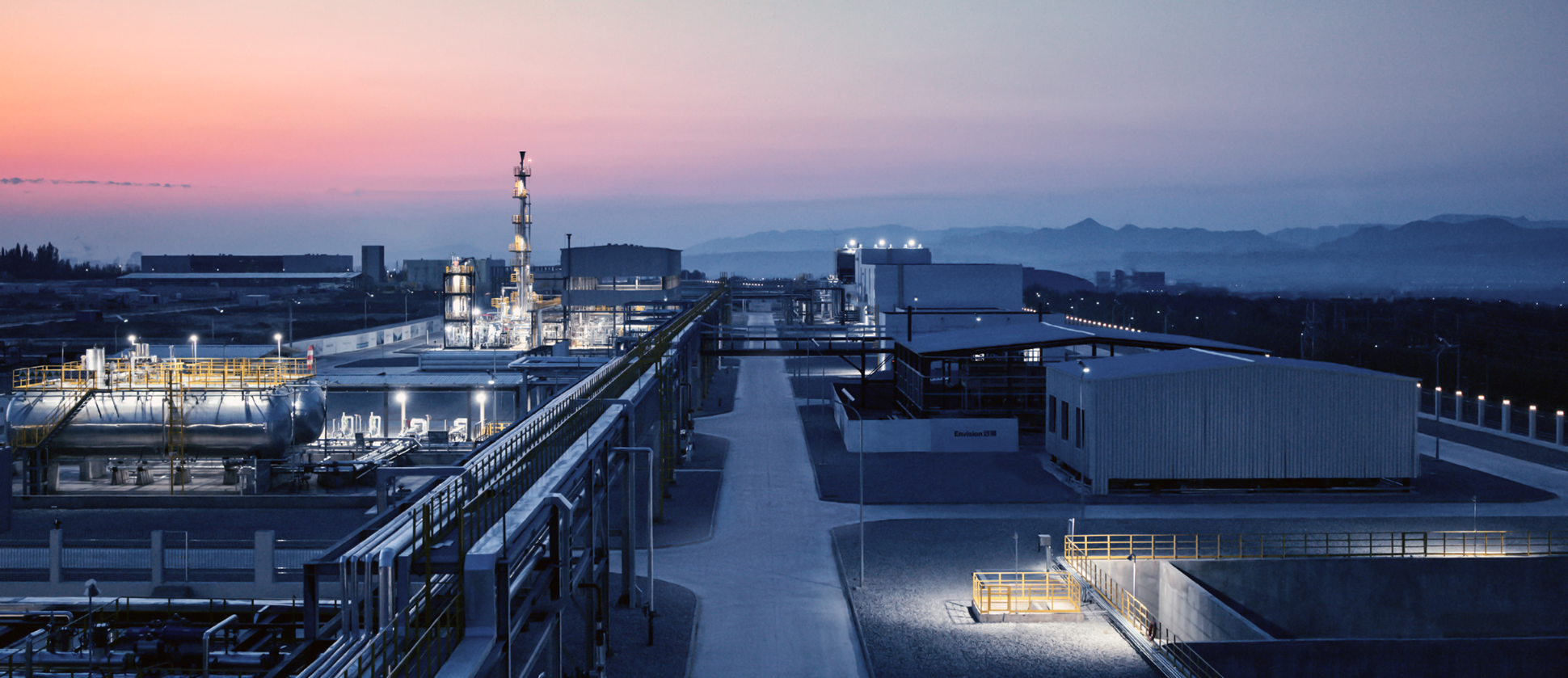
Envision Energy’s renewable hydrogen and ammonia plant in Chifeng, China’s Inner Mongolia Autonomous Region. The company has inked a deal with the Spanish government to build a renewable hydrogen industrial park in Spain. Photo by: Envision Energy.
Plus, the EU has clear policies pushing for renewable hydrogen’s adoption in its manufacturing industries. The EU intends to have 42% of all hydrogen used by the local industry be made with renewable energy by 2030. On the supply side, it also gives grants to spur local production.
“If I’m Envision, if I’m Trina, the first thing I’m gonna do now is to find a partner in Europe to get some land and build a gigafactory so I don’t lose this market,” Blugeon-Mered said.
For Chinese companies looking to move into the EU, Spain, with its abundant sunshine, is an obvious choice. The southern European nation also has its own targets and a subsidy scheme to boost renewable hydrogen. Companies can produce the equipment as well as the energy needed to make renewable hydrogen in one place, minimizing the need for outside suppliers, Blugeon-Mered explained.
“Spain will become the center of gravity in this new industry,” Zhang Lei, the founder and chief executive of Envision Energy, said in Shanghai after his firm signed a partnership with the Spanish government to build a $1 billion renewable hydrogen industrial park.
What’s more, Madrid has a stable diplomatic relationship with Beijing and a “strong desire to work with China,” Wei Long, a professor of international trade at the Wuhan University of Technology, told Cipher.
Challenges ahead
Today, less than 1% of the hydrogen produced globally is made with renewable energy sources. Building the supply chains required to scale production won’t be easy.
Increasing hydrogen production means boosting production of both renewable energy and electrolyzers and investing in ways to store and transport the ultralight gas. It currently costs much more to produce renewable hydrogen than traditional hydrogen.
Still, manufacturers from across the world are jumping into the industry in Europe.
China currently boasts around 60% of the world’s manufacturing capacity for electrolyzers, but its share is projected to drop to 47% by 2030 as other regions catch up, according to S&P Global Commodity Insights, a global market information provider.
It may be harder for Chinese companies to gain as big of an advantage in hydrogen as they have in solar. The EU has set strict criteria for renewable hydrogen, such as how, when and where it should be produced. Those standards “raise the bar for non-EU companies or products to enter the EU,” according to Ran Ze, director of technological innovation at the Beijing office of the Environmental Defense Fund, an international nonprofit organization.
And in a move to safeguard Europe’s budding industry, Brussels mandated renewable hydrogen producers must not source more than 25% of their electrolyzers from China if they want to participate in the next round of auctions for subsidies designed to bridge the difference between their manufacturing costs and the market prices. Such subsidies could be key to helping companies stay competitive in the industry’s early days.
Changing landscape
In September, Spain’s Prime Minister Pedro Sánchez flew to Shanghai to ink the deal with Envision Energy. At the signing ceremony, Sánchez said Envision’s partnership contributed to Spain’s economy and reinforced its effort to develop a renewable hydrogen industry.
But others see some risk in the approach. Olena Borodyna, who advises on geopolitical and transitional risks at ODI, a London-based think tank, warns Chinese investments make the EU dependent on them in this critical industry and “may stifle innovation and commercial opportunities for European manufacturers.”
The key for Europe will be finding a balance between reward and risk. China’s hydrogen investment can “significantly accelerate” the pace at which Spain adopts renewable hydrogen, García Herrero said. But she warned that the boost comes “at an important cost”: their control of the process.
With the recent memories of Europe’s domestic solar power industry “largely succumbing to” cheaper Chinese competition, the Spanish hydrogen industry “should be wary of” the new collaborations, she stressed.