CERAWeek revisited: What a difference a decade makes
Latest News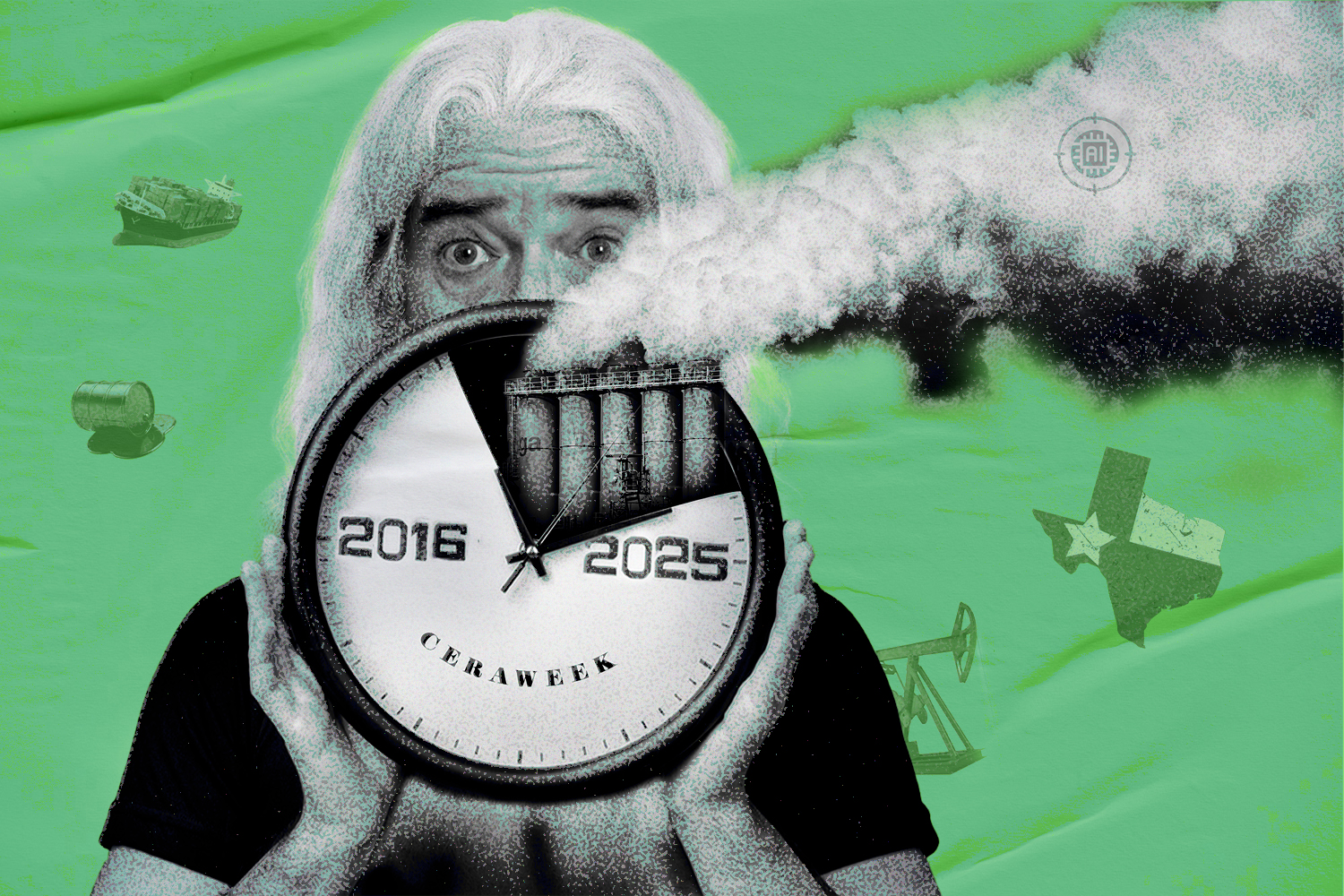
HOUSTON — Attending the CERAWeek by S&P Global energy conference last week for the first time in nearly a decade felt like “Back to the Future” meets “Rip Van Winkle” for me. It turns out the more things stay the same, the more they change.
Back when I attended the event in 2016, the oil market was center stage. America’s hyperactive new drillers — “frackers” in the lingo of an oil patch that had been transformed by the innovative new technique for extracting oil and gas — had just emerged as a major disruptive force, unleashing a flood of supply on global markets.
Fossil fuels dominated the agenda and nascent renewable energy technologies like solar, wind and batteries were far from the spotlight. Geothermal and nuclear fission and fusion were barely mentioned.
Last week, fossil fuels were again the belles of the ball. The opening keynote speech by Energy Secretary Chris Wright — the former oil drilling services company head Donald Trump chose to lead his energy strategy — trumpeted oil, gas and even coal. Liquified natural gas discussions were everywhere, filling the largest of the conference rooms.
And yet, none of this resembled my last CERAWeek. The more the week progressed, the less I felt like Marty McFly and the more I felt like Rip, the character from a Washington Irving story who dozed off under a tree and woke up two decades later. He’d slept through the American Revolution.
So much had changed since 2016. Back then, the problem was energy supply far outstripping demand. Last week, CERAWeek attendees obsessed about the opposite: the seemingly insatiable amount of energy the country needs to build data centers for artificial intelligence and power new factories.
Many of the factories will produce energy-related technologies such as electric vehicles and natural gas turbines. The EVs will increase electricity demand further and the turbines could help meet that demand, likely along with carbon capture technology that was also a major focus of this year’s CERAWeek.
“The states that have unleashed low-cost energy are the ones that are thriving,” Doug Burgum, the Trump administration’s Secretary of the Interior Department told a large CERAWeek audience.
Burgum was previously the governor of North Dakota, where he approved a bevy of wind energy operations and projects to capture carbon from fossil fuel emissions.
That was the biggest difference of all: Beneath all the fossil-fuels-are-back triumphalism, the global energy system is experiencing rapid and dramatic change. And the direction is toward cleaner, more efficient energy sources.
Even Wright went out of his way to note he was no climate change denier. He allowed the phenomenon is real, but asserted global warming is not an urgent problem.
The focus should be providing as much energy as possible for economic development as cheaply and soon as possible, he said.
“I look forward to working with all of you to better energize the world,” he said.
It was an energy conference; nobody disagreed with providing more energy faster. But many of this year’s panelists and speakers were significantly different than those who took to the podiums in 2016.
They included executives from technology companies like Alphabet Inc. (the parent company of Google), liquified natural gas exporters (who had only just launched their first shipments back in 2016) and the heads of utilities suddenly in a spotlight once reserved for oil tycoons and petrostate petroleum ministers.
Those speakers described a global energy system undergoing a profound structural shift toward a new energy mainstay: electricity, delivered flexibly and affordably, and as cleanly as possible.
“Artificial intelligence has changed the game, and in the center of it all is the power sector,” said Atul Arya, the chief energy strategist at S&P Global, the energy consultancy that organizes CERAWeek.
John Ketchum, chief executive officer of NextEra Energy, the country’s biggest utility and top developer of wind and solar generation, told Bloomberg that natural gas can supply only a tiny slice, about 16%, of the 460 gigawatts of electricity needed by 2030.
Climate change came up rarely, often indirectly. Instead, participants held up an array of energy sources and new tools to address greenhouse gas emissions. These included projects to capture and store carbon, nuclear power and geothermal energy.
An evening dinner discussion — CERAWeek prime time — featured the governor of Virginia, the head of utility Dominion Energy and the head of a fusion energy company describing plans for a full-scale commercial fusion reactor in the state.
The company, Commonwealth Fusion Systems, is already building a small version of the device in Massachusetts to prove it will work.
Introducing the trio, S&P Global vice chairman and CERAWeek founder Daniel Yergin recalled a talk at CERAWeek last year by Bill Gates, who is an investor in Commonwealth Fusion (and a backer of Cipher, via his initiative Breakthrough Energy).
Yergin said Gates told the crowd that in the long run, fusion might provide all the electricity on Earth.
“Maybe the long run is only the medium run now,” Yergin said.
Editor’s note: Commonwealth Fusion Systems’ investors include Breakthrough Energy Ventures, a program of Breakthrough Energy, which also supports Cipher.