Brazil’s COP30 chief makes the case for why climate summits matter
Latest News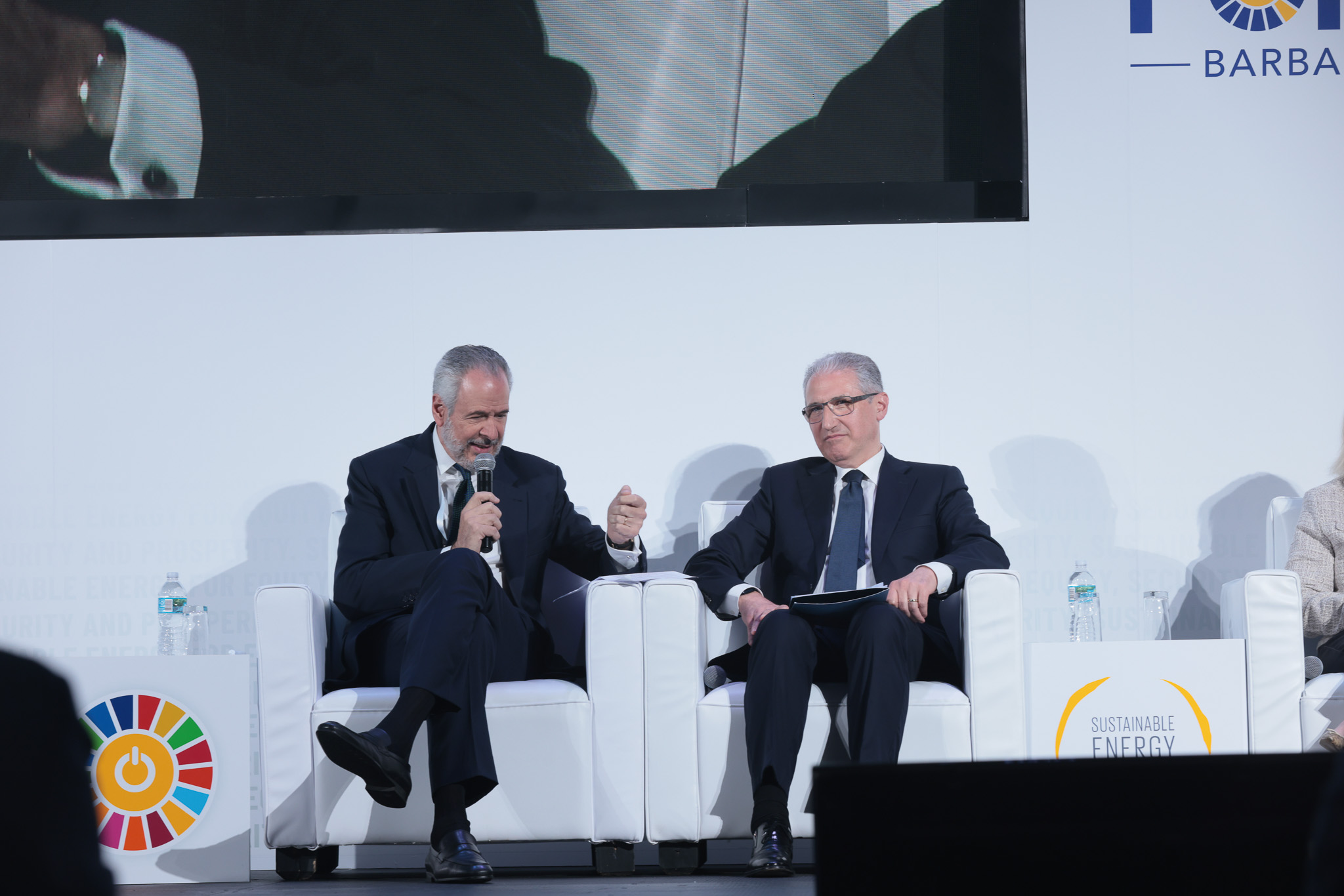
Brazil's André Corrêa do Lago, the president-designate for COP30 (left), on a panel in March 2025 with Azerbaijan's Mukhtar Babayev, COP29 president, at the Sustainable Energy for All Forum (SEforALL) in Barbados. Photo Credit: SEforALL.
BRIDGETOWN, Barbados — It would be an understatement to say the pressure is on for Brazil at a pivotal moment in climate diplomacy.
The host of this year’s United Nations climate summit, known as COP30, is facing a rapidly changing world order as it prepares to host thousands of delegates in the Amazonian city of Belém in November.
“My main concern is urgency,” André Corrêa do Lago, the president-designate for COP30, told me as he sipped coffee on the terrace of the Bridgetown Hilton hotel overlooking the sea on this picturesque Caribbean island. We were both there attending the biennial forum of a United Nations-linked organization focused on bringing energy to developing countries in March.
Dressed in a suit in the tropical heat, Corrêa do Lago was not embracing the island vibes but instead preparing to fly to another part of the world to continue his climate diplomacy.
“I’m a Brazilian, so I’m always an optimist,” the friendly, reflective diplomat said. “But the fact is that we need to do more to make sure that [everyone] understands this sense of urgency.”
In fact, many countries are acting with less urgency on climate now than they were just a few years ago. That’s despite the planet’s continued warming; last year global temperatures surpassed the threshold of 1.5 degrees Celsius above pre-industrial levels for the first time. Countries agreed they would try to stay below that level of warming when they signed the 2015 Paris Climate Agreement.
The COP30 host is facing a number of countercurrents that will make regaining urgency even more challenging.
Bold climate action and financing are taking a backseat both in the United States and Europe amid trade wars and defense concerns. What’s more, this shift is also trickling into other parts of the world less equipped to handle climate change.
Plus, Latin America’s biggest country is hosting the summit — the foremost multilateral forum for climate negotiations — at a time when the value of COPs is increasingly scrutinized for its lengthy and opaque procedures.
And the U.S., one of the key architects of the 2015 Paris climate deal, could potentially derail the whole process, emerging as a wild card under President Donald Trump. The U.S. plans to officially withdraw from the Paris treaty just two months after the Brazil summit.
“Most people think of the COP as a meeting where people negotiate texts, and that many times these texts are not implemented, and they don’t reach the everyday life of people, and they don’t reach the life of companies,” Corrêa do Lago said. “What I think we have to show in a more convincing manner is how much these negotiations are translated into action.”
Corrêa do Lago talked about how cities must play a role in making COP commitments work, for example, as municipalities are often in charge of building infrastructure, transportation or efficient housing.
Showing how COP commitments are ultimately enacted was something the Brazilian diplomat returned to often during his two days in Barbados, whether on panel discussions or at high-level dinners. It’s also a reflection of the growing criticism of the COP process.
Although countries agreed to a new climate finance target at last year’s COP in Azerbaijan, it was considered inadequate and many participants left disappointed. Even just agreeing on the agenda for last year’s conference was contentious and slow, causing some observers to wonder whether the UN process is sufficient to address the fast-moving threat of climate change.
The growing number of attendees, including fossil fuel lobbyists, and the fact that the climate event has been repeatedly hosted in petrostates in recent years, has also drawn criticism. Brazil, an emerging economy, is Latin America’s biggest oil producer but is also committed to decarbonization, according to government officials.
“I think it’s very constructive to criticize how the COP works,” Corrêa do Lago said. “We will obviously do what is possible to make the COP more inspiring to all those who go.”
The Brazilian COP president plans to showcase the role of the private sector at this year’s climate summit in an effort to connect the dots between words and action.
“Most of the decisions that are taken by governments, they impact policies, they impact legislation, but at the end of the day, most of the action will come from the private sector,” the Brazilian diplomat said. “That is why it’s very important to have the private sector on the side of the fight against climate change, because they have a huge impact, not only on the economy, but they also can have a very strong impact on the governments.”
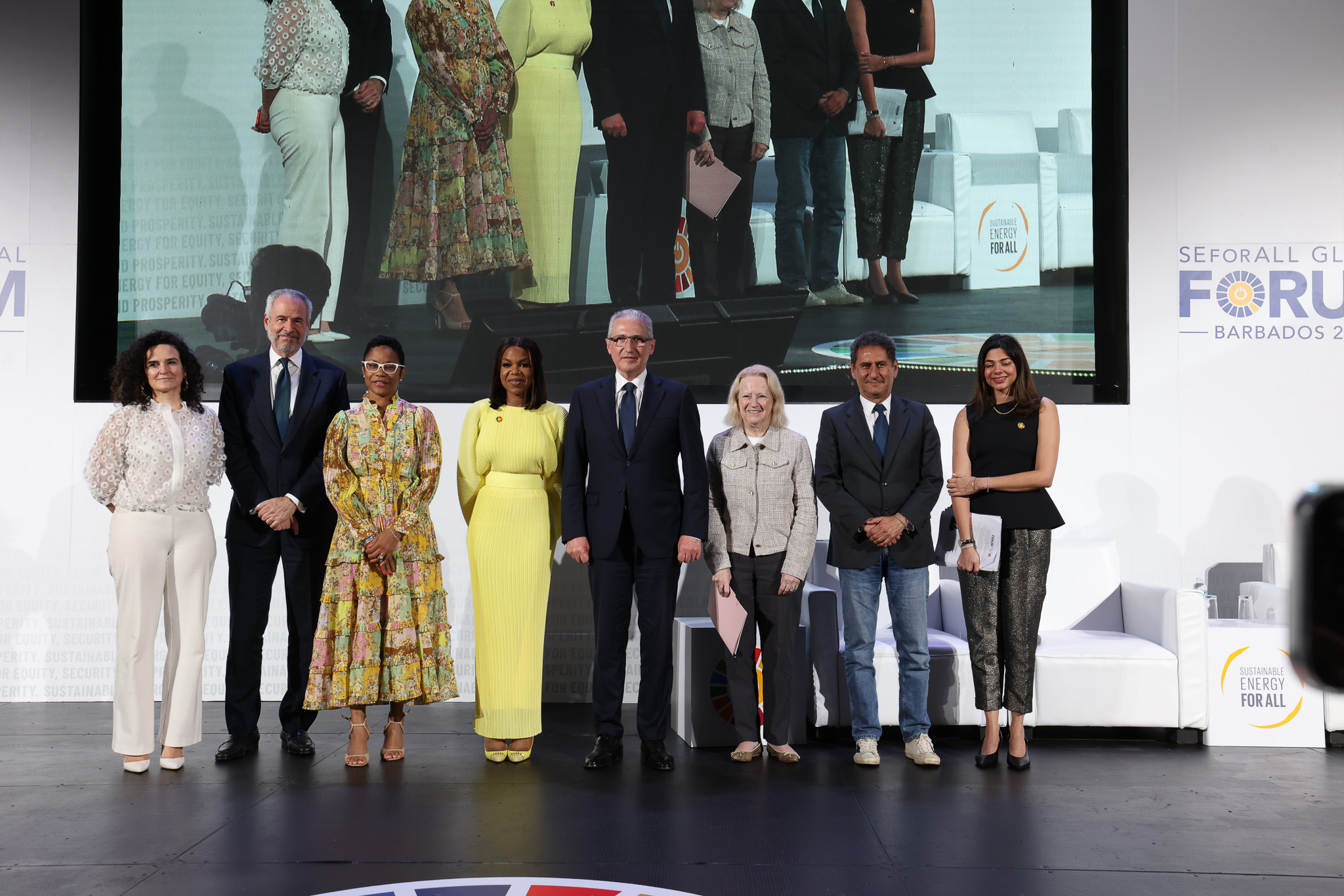
From L to R: Mafalda Duarte, executive director of the Green Climate Fund; Brazil’s Corrêa do Lago; Senator Lisa Cummins, Barbados’ energy minister; Damilola Ogunbiyi, CEO of SEforALL; Babayev; Mary Schapiro, vice chair and head of the secretariat for the Glasgow Financial Alliance for Net Zero; Francesco La Camera, director general of the International Renewable Energy Agency; and Kanika Chawla, chief of staff and director of external programs at SEforALL. The Sustainable Energy for All Forum, Bridgetown, Barbados, March 2025. Photo credit: SEforALL.
This bottom-up approach is also one Corrêa do Lago took when looking at the U.S. retreat from climate action under Trump.
“The United States has not only institutions, entities, subnational governments that can progress independently of the central government, but they also have very important businesses, very important technology companies,” he said. “There are other movements that have not been interrupted and that are driven towards combating climate change.”
Despite the glass-half-full perspective, Corrêa do Lago’s team acknowledges the challenges of changing geopolitics. Ana Toni, Brazil’s climate secretary and COP30 chief executive, said in an interview with the Financial Times that this year’s climate summit will take place under “very difficult circumstances,” warning that a possible global trade war prompted by the Trump administration’s tariff policies (officially announced last week) could curb access to key clean technologies the world needs to decarbonize.
Asked what his main worries were for ensuring COP30 is successful, Corrêa do Lago said with a smile, “let’s just say that every day there’s a new one.”
Despite this, he said he is committed to the COP process, adding, “we have to do something that is meaningful.”