Behind the scenes: moving massive wind turbines
Reporter's Notebook
ESBJERG, Denmark — We all know wind turbines are big, but you can’t get a real sense of their size until you see them, and their various components, up close and in person. And when you do, it’s hard not to be amazed and humbled by what it takes to build and install them.
That was my experience earlier this month during a trip to Western Denmark and Port Esbjerg, the country’s largest port and where four-fifths of Europe’s offshore wind capacity is shipped from.
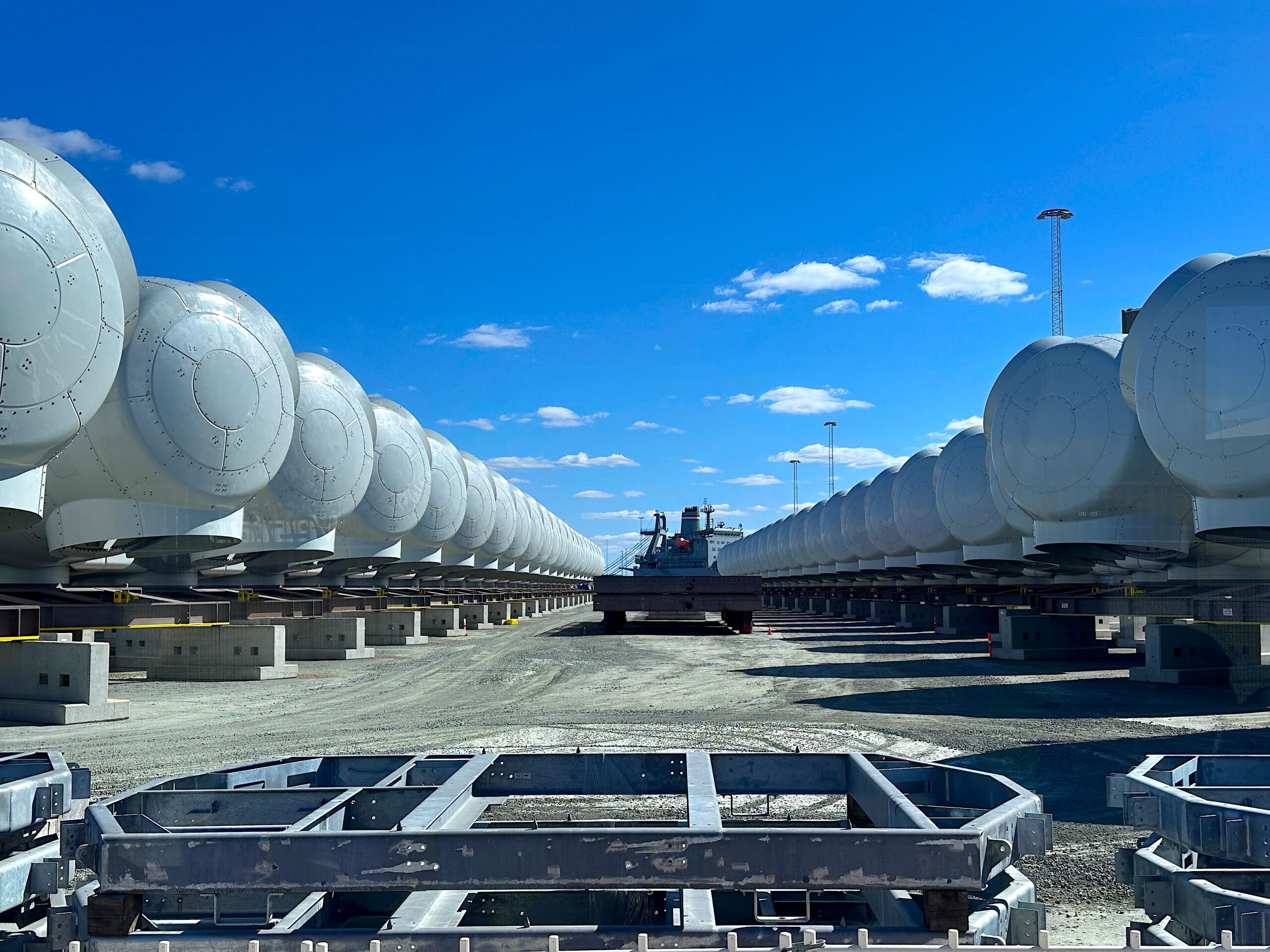
Rows of nacelles are stacked in Port Esbjerg, Denmark, on April 6, 2025. Photo credit: Anca Gurzu.
Various wind turbine parts, including blades, tower sections and nacelles (the top segment of the turbine containing the generator and gearbox), were stacked row upon row across the port, like giant Lego pieces waiting to be put together. (Fun unrelated fact: Lego is a Danish company with headquarters about an hour’s drive from this port). Housing such large components, the port itself is also huge — 4.5 million square meters, or larger than New York’s Central Park.
Some of the components are destined for the United States but have been on standby in the port due to project delays on the other side of the Atlantic. Their status may now be even more uncertain in the wake of the sweeping import tariffs recently imposed (then partly paused) by President Donald Trump, who also has negative views on wind energy.
The waiting is expensive for everyone involved. Wind turbine manufacturers like Vestas or Siemens Gamesa rent space from the port authority to store their giant components, making delays pricey. Meanwhile, as I wrote last year, ports require a makeover to accommodate the increasingly big wind turbine parts, which also costs money.
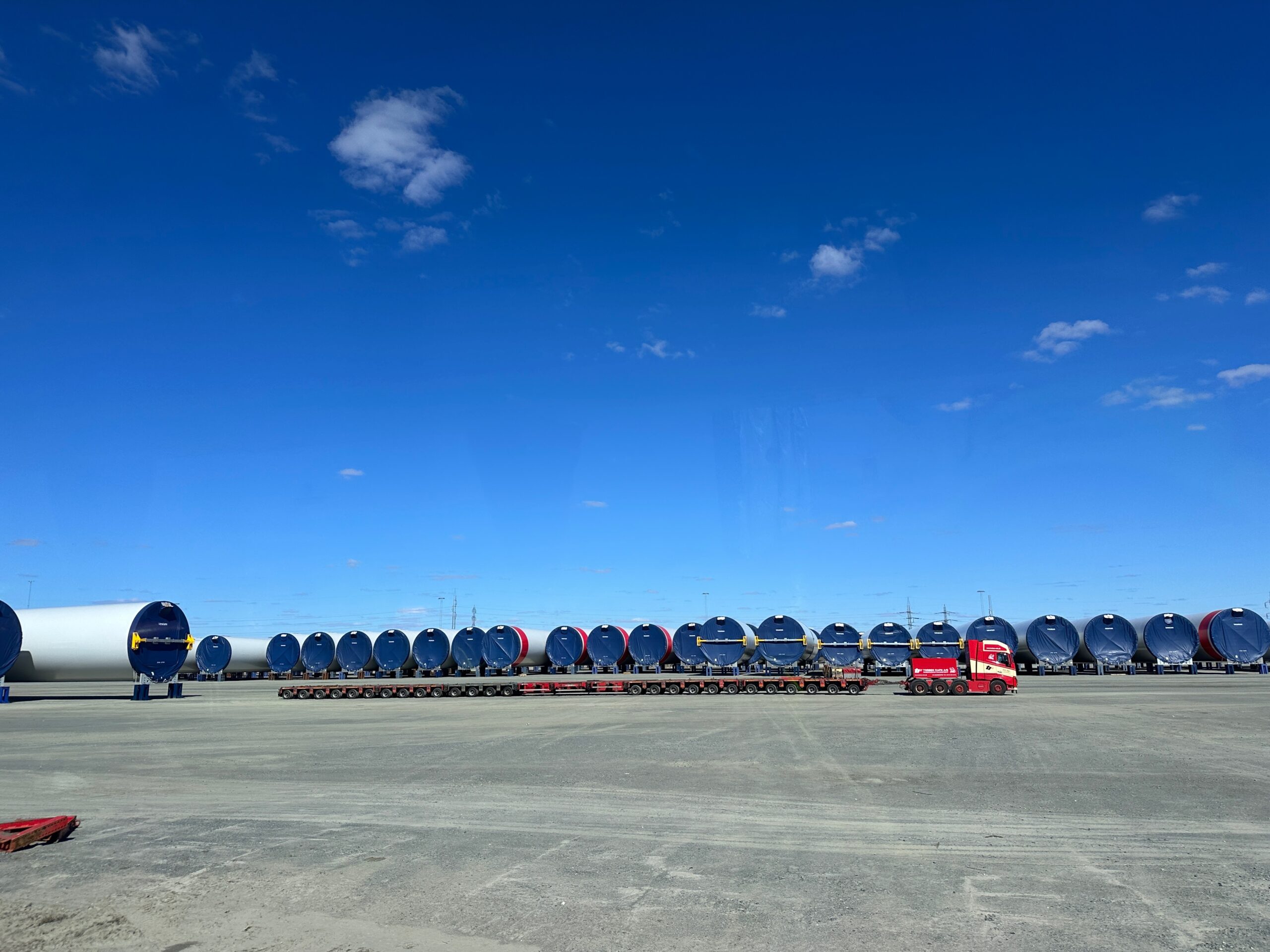
Wind turbine tower parts in Port Esbjerg with a specialized multi-axle truck in the foreground. April 6, 2025. Photo credit: Anca Gurzu.
I listened to port officials talk about geopolitical uncertainties and the volatility of the market while riding past wind blades so massive they made people look tiny by comparison. It was another reminder why such trips are important: not only do I always learn something new, but it also helps me understand how what I write about from my desk actually exists in the day-to-day realities of people and companies.
The press trip was organized by the European wind lobby group Wind Europe on the sidelines of its annual summit in Copenhagen.
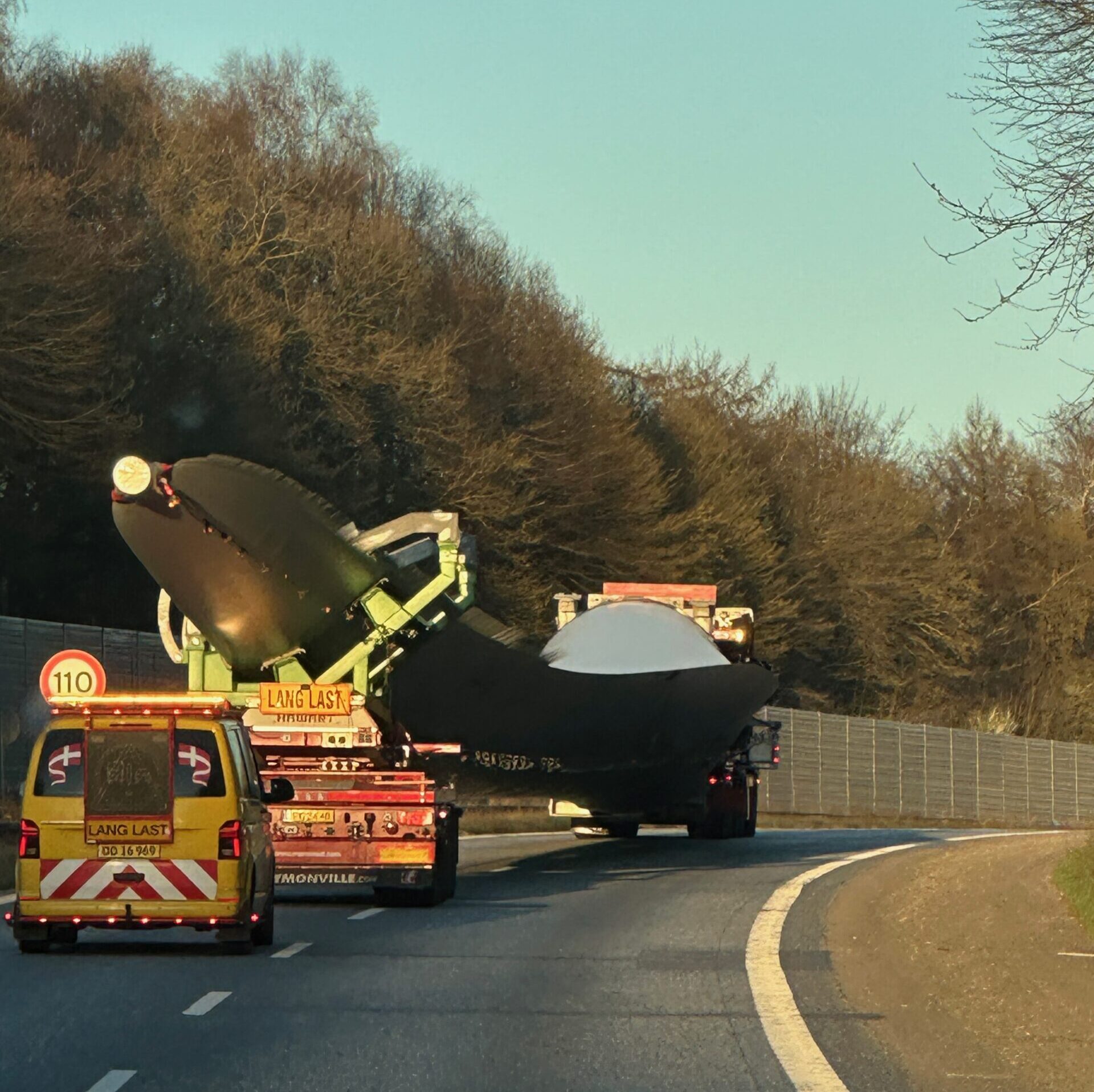
A wind blade is transported across a national road in Denmark on April 7, 2025. Photo credit: Anca Gurzu.
From the several “wow” moments I had while in Denmark, seeing a wind blade the length of about 12 passenger cars transported on national roads was definitely a highlight. For me, it was quite an unusual sight, but I quickly discovered it’s a regular occurrence for local drivers. Case in point: most roundabouts in the region were modified so that trucks could pass straight through them since the blades are too big to make the circular turn.
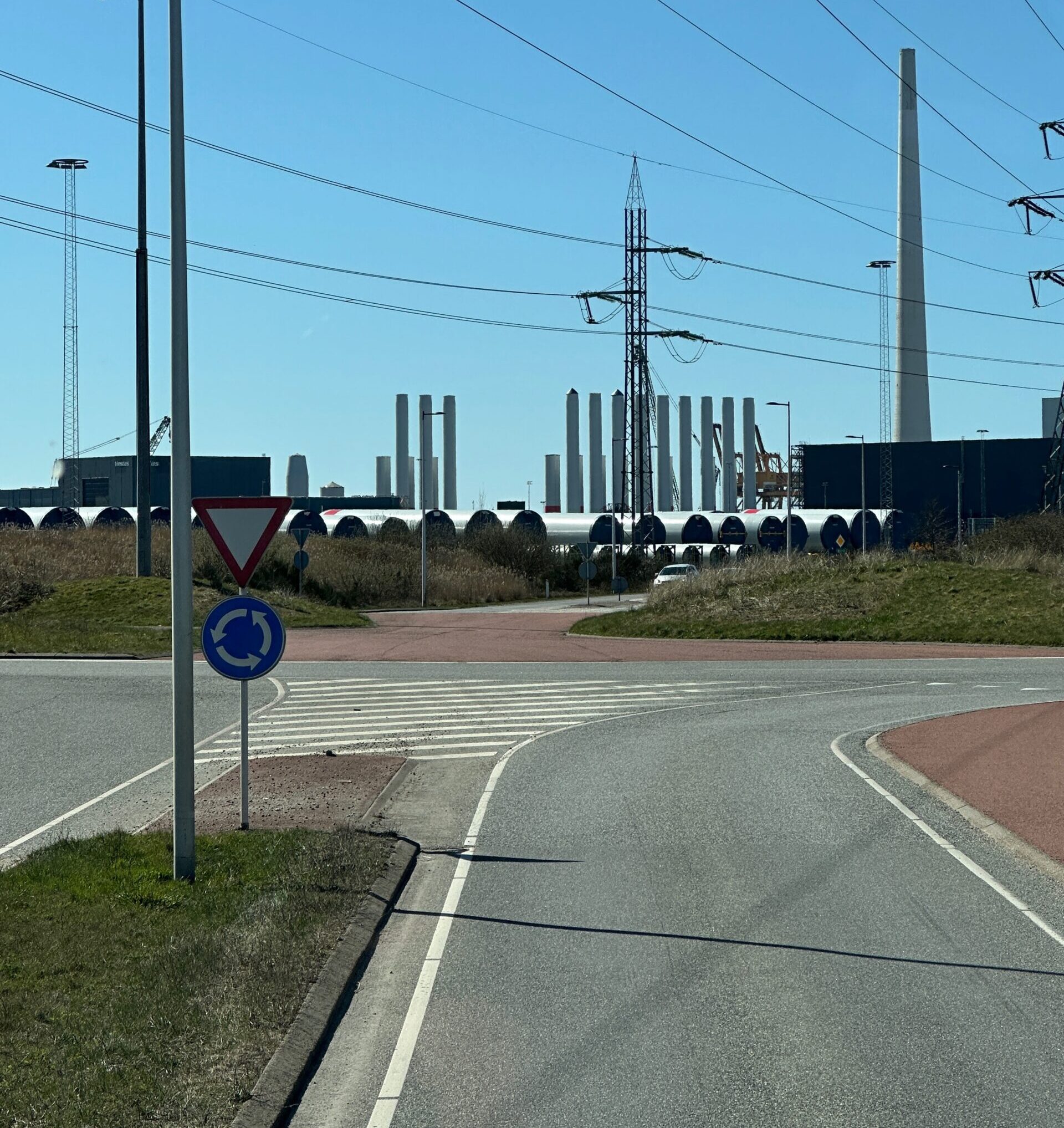
A roundabout near Port Esbjerg in Denmark modified so that trucks can drive straight through with giant wind blades. April 6, 2025. Photo credit: Anca Gurzu.
Another highlight was stepping onto the Wind Osprey, a 520-foot (160-meter) vessel that installs wind turbines offshore. The bridge of the ship looked almost like a scene from a science-fiction movie with so much navigation and control equipment. The international crew of about 80 people lives on the ship for four weeks at a time, so they try to make it feel like home. It even has two cinema rooms!
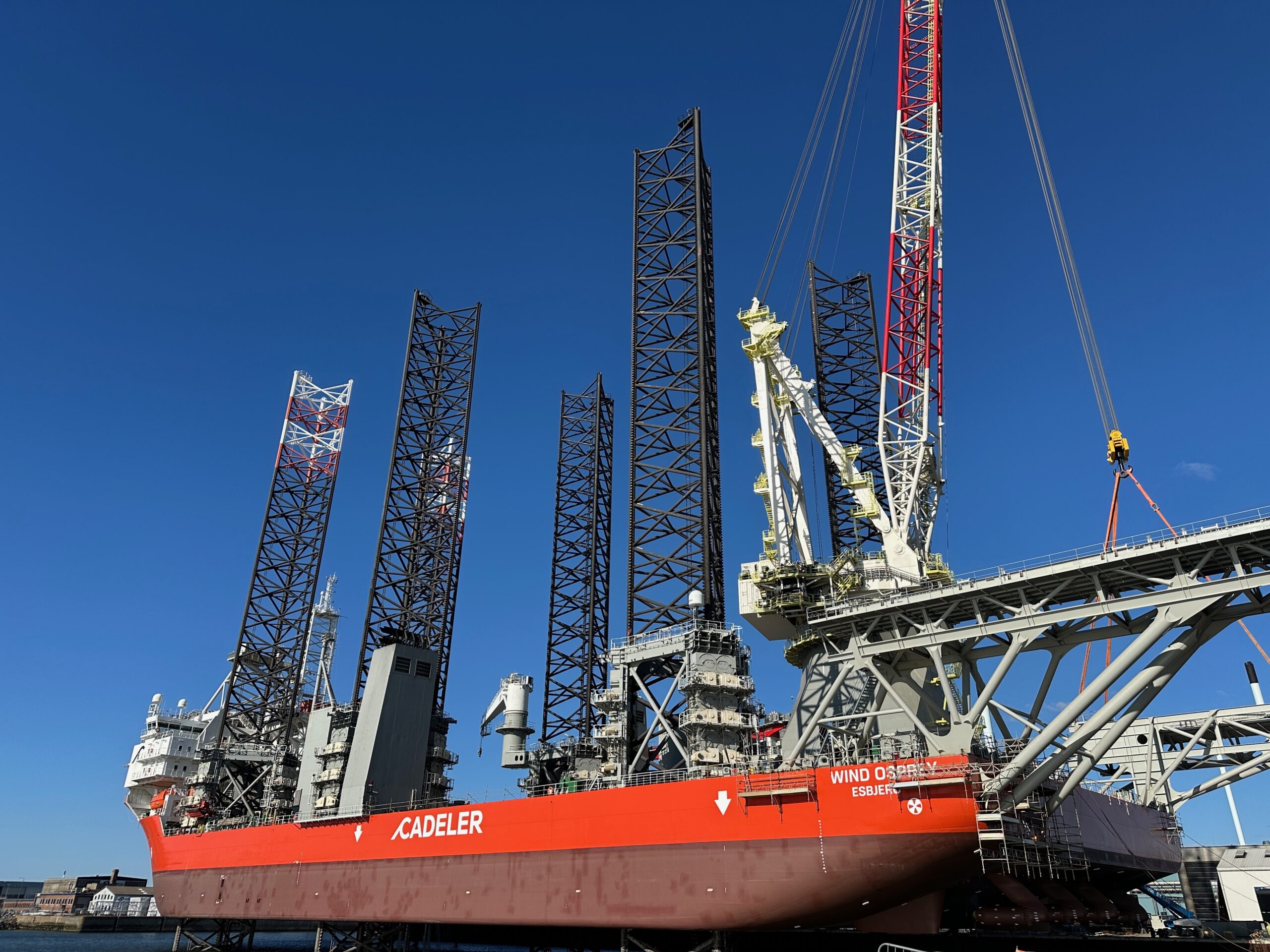
The Wind Osprey, an offshore wind installation vessel in Denmark owned by Danish company Cadeler. April 6, 2025. Photo credit: Anca Gurzu.
Despite its mission to install green energy at sea, the Wind Osprey ironically uses a lot of dirty fuel: about 10 tons of diesel fuel per day when docked and only using its giant crane, and about 40 tons per day when at sea. Crew members said they hope to be able to use cleaner fuel in the future.
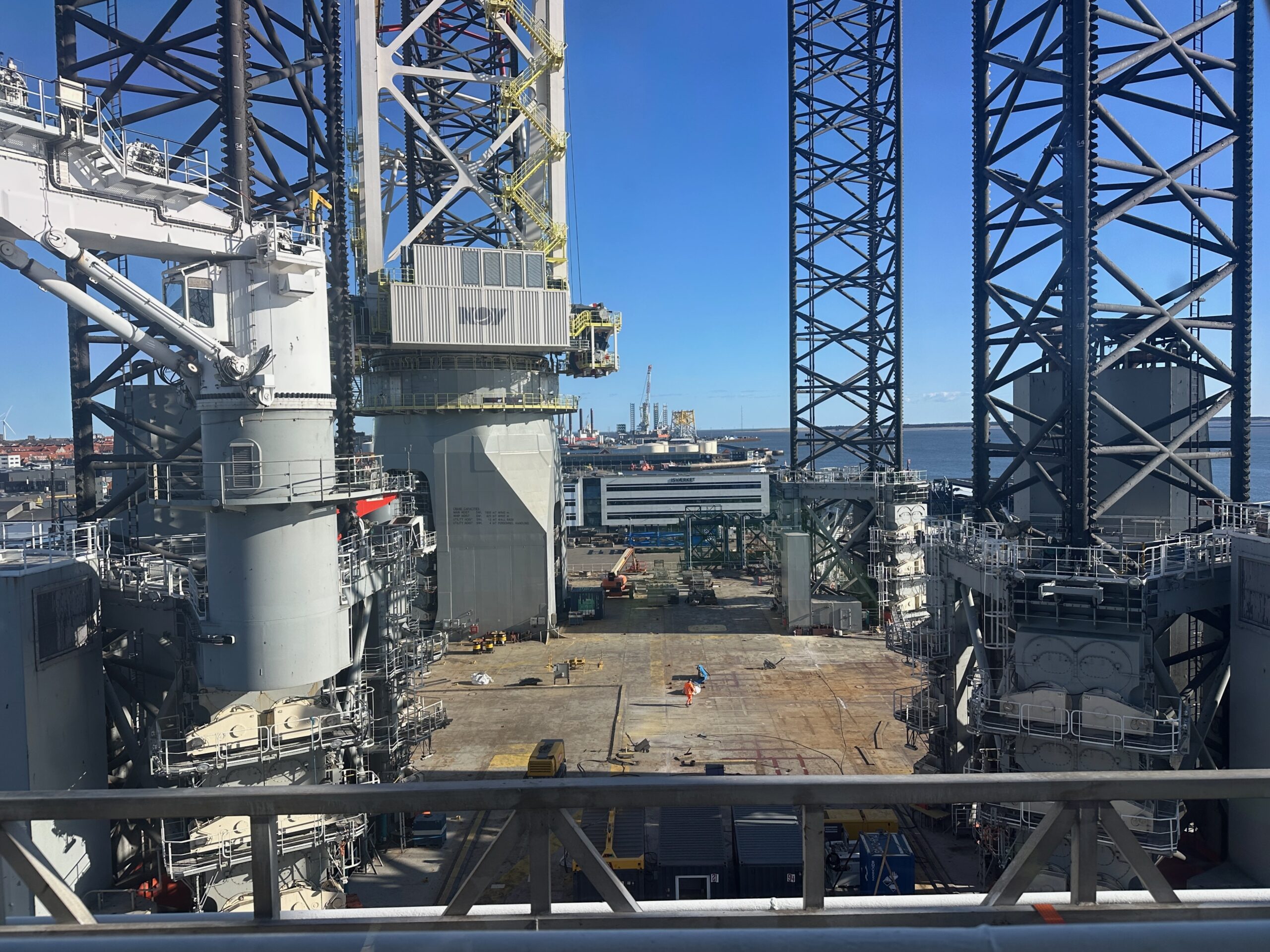
On the deck of the Wind Osprey in Denmark, an offshore wind installation vessel owned by Danish company Cadeler. Notice the orange dot in the middle (a worker) to appreciate the vessel’s size. April 6, 2025. Photo credit: Anca Gurzu.
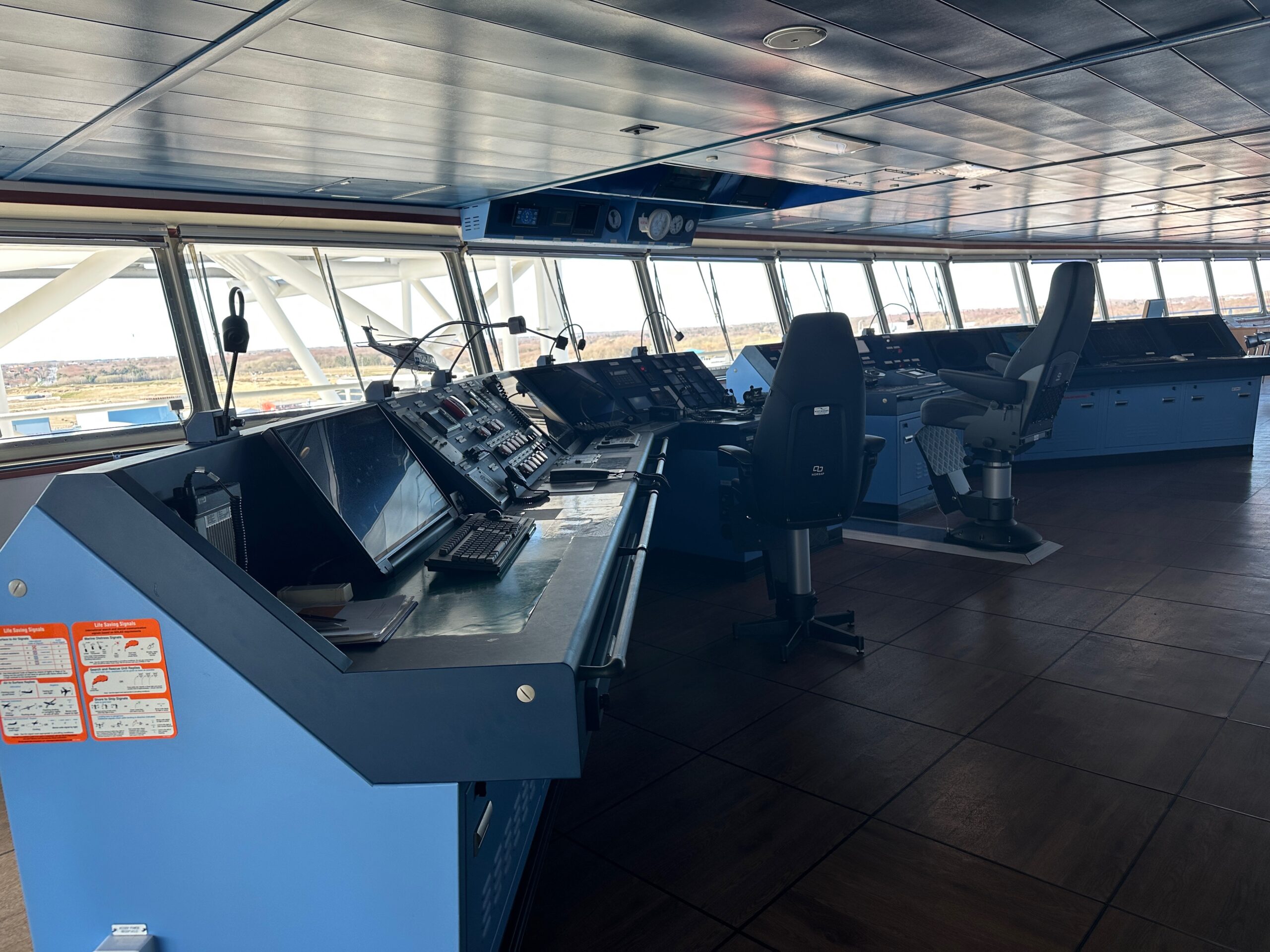
The bridge of the Wind Osprey in Denmark, an offshore wind installation vessel owned by Danish company Cadeler. April 6, 2025. Photo credit: Anca Gurzu.