At COP29, dancing delegates, purring cats and long days
Reporter's NotebookOne reporter’s adventures at the latest climate confab in Azerbaijan
BAKU, Azerbaijan — I confess I was a bit wary about traveling here.
Straddling the Caspian Sea and bordering Iran, Russia and Armenia, the former Soviet country stands as a bridge between Eastern Europe and West Asia. Run by an autocratic ruler, it’s the third petrostate in a row to host the yearly United Nations climate summit, known this year as COP29, after the United Arab Emirates and Egypt.
I arrived on November 10, a day before the big event started. I found myself at 4 a.m. dragging my luggage through cobblestoned streets trying to find my hotel. But I felt quite safe from the start, with police patrolling the dark streets.
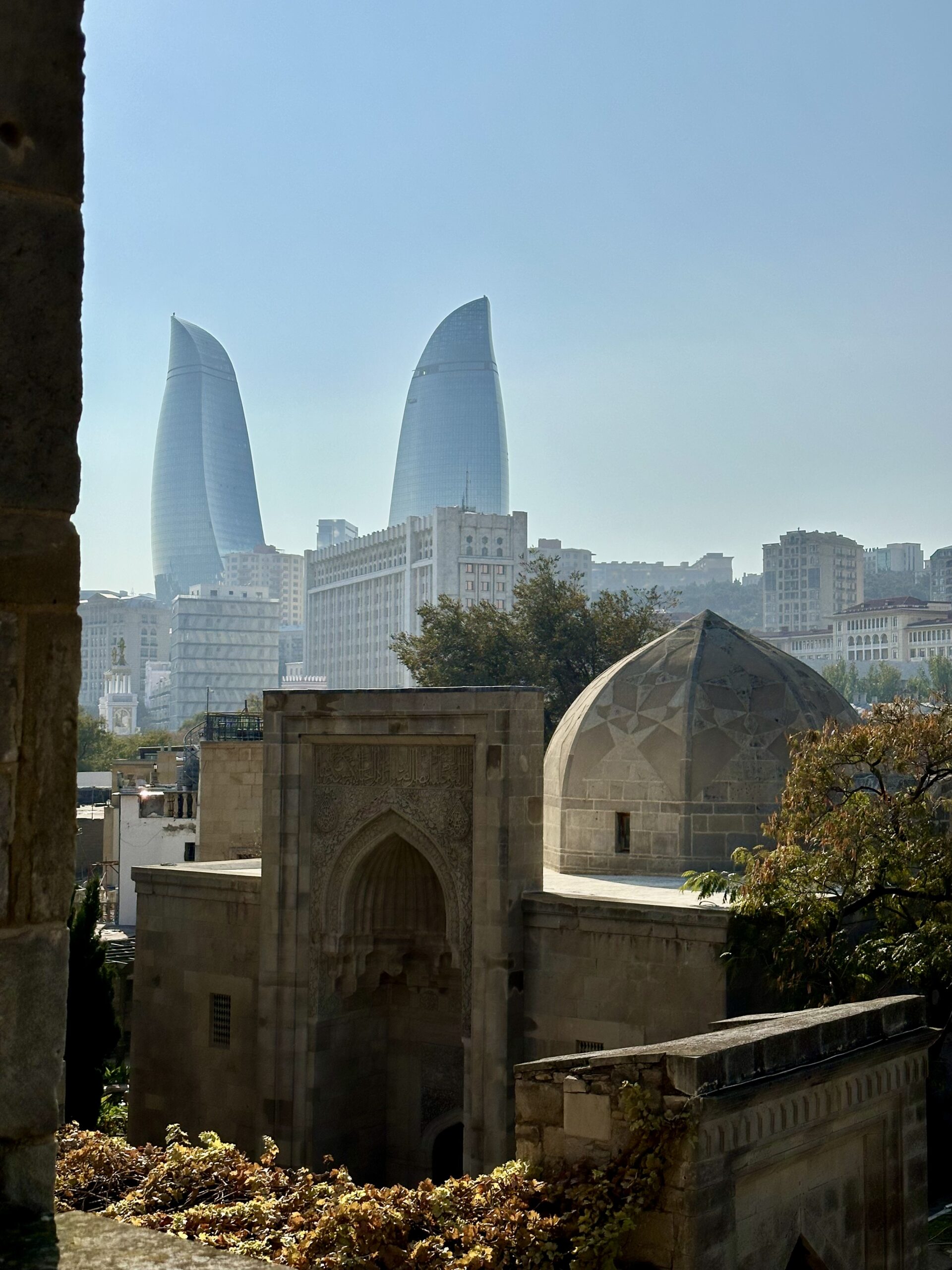
The Palace of the Shrivenshahs in Baku, Azerbaijan’s Old City in juxtaposition with the Flame Towers in the background, some of the city’s most iconic modern architecture. Photo by Anca Gurzu in November 2024.
The high-level security became the norm during my time in Baku. It provided both a soothing sense of order and organization during a chaotic week and, at the same time, an uncomfortable feeling of always being watched.
I stayed in The Old City, a UNESCO World Heritage Site that dates from the 12th century. The area is picturesque and bustling with traditional tea houses and vendors selling carpets. Cats purring at your feet or napping on displayed carpets are also a local attraction.
On the daily 30-minute commute between my hotel and the Baku stadium, where the summit took place, I saw the modern part of Baku. Some buildings boast futuristic architecture while others are ornate and gigantic. The whole city has a grandiosity perhaps best reflected by the ginormous Azerbaijan flag, the biggest in the world per the Guinness Book of World Records, waving by the city’s waterfront.
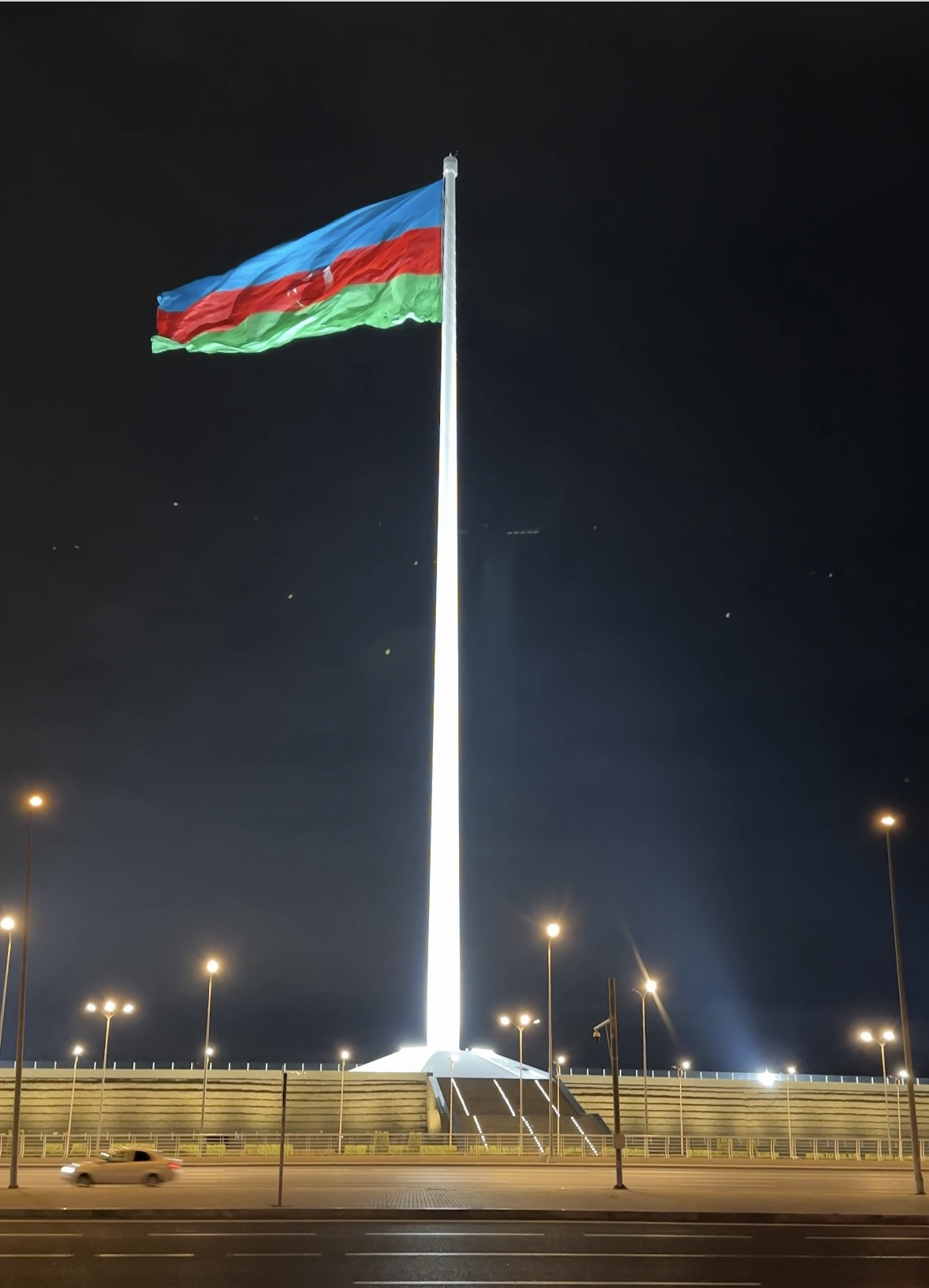
This Azerbaijani flag placed in the State Flag Square in Baku is the biggest in the world, according to the Guinness World Records. It may not appear as big in this photo but look at the size of the passing car. The flag is 72 meters long and 36 meters wide. Photo by Anca Gurzu in November 2024.
The city of two million residents was eerily quiet on these drives, the streets semi-deserted. I later learned the government had prolonged school holidays, universities switched to distance teaching and a good majority of employees in the public sector received orders to work from home.
All this made transportation smooth for delegates, with pick-up points well-indicated throughout the city. But I wondered what disruption COP29 caused for Baku residents. Only on Friday night did I see the streets filled with cars, which felt strange after a full week of only police vehicles at almost every intersection. Make what you want of this, but the bathroom code at a multilingual downtown bookstore I visited over the weekend was “1984.”
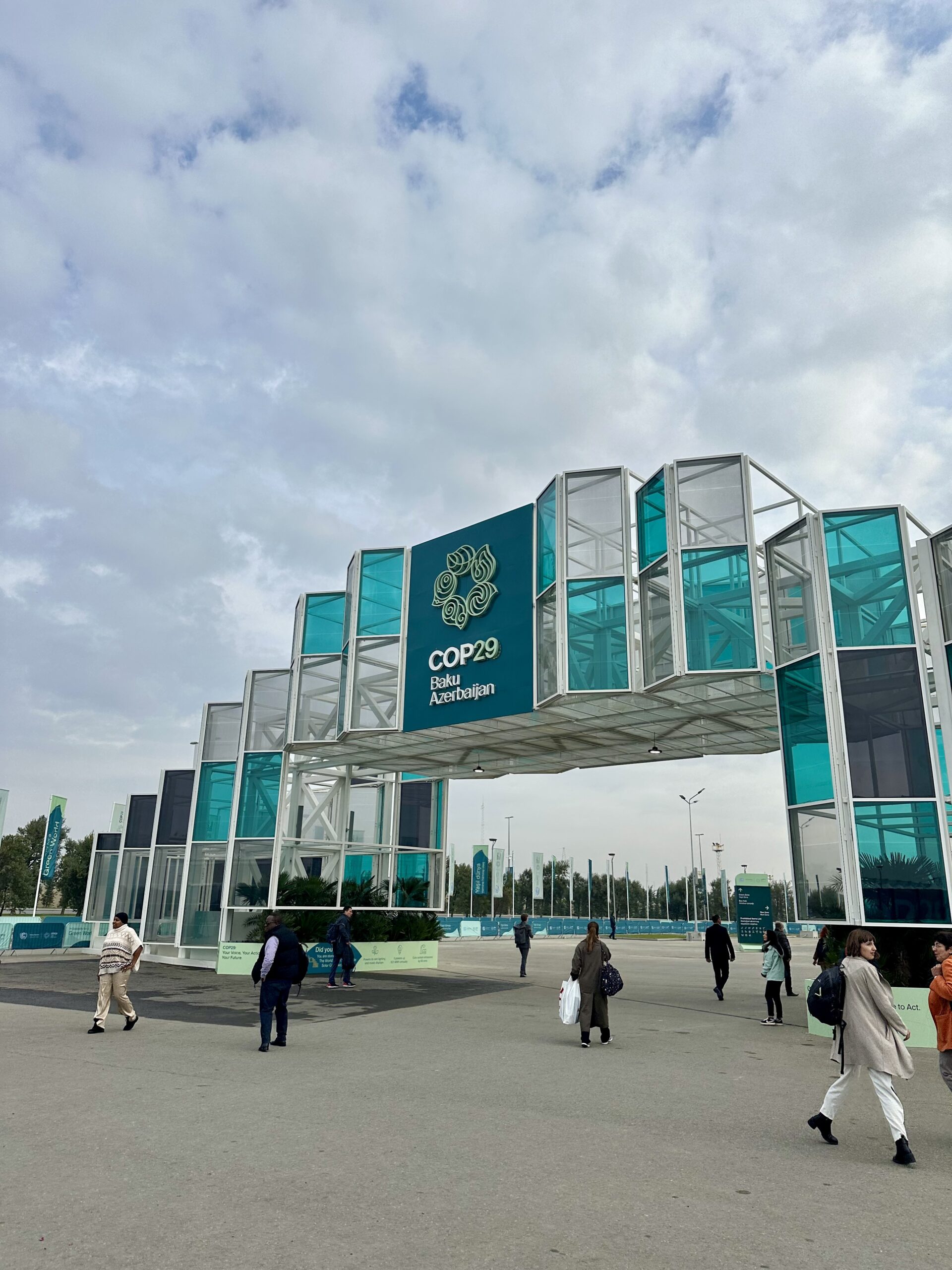
The official entrance of the COP29 summit. The different-colored glass panes are actually solar panels. A sign tells delegates that this is the world’s first sustainable solar glass arch, which powers its own lighting and music displays. Photo by Anca Gurzu in November 2024.
Despite the security and the army of smiling, helpful volunteers in turquoise jackets everywhere, COP29 was still unavoidably overwhelming. The whole summit took place inside the Baku stadium. Even though this COP was smaller than last year’s in Dubai, it still meant navigating around 50,000 other delegates. By day three, I started to feel tired, especially since I was missing natural light in the windowless venue.
The heart of the COP was the pavilion area, sort of a hybrid between a trade show and a theme park, with each country putting their best face forward.
At the Azerbaijani pavilion, women dressed in traditional wear treated visitors every day to freshly brewed tea and coffee, while at the Malaysian pavilion, a local artist did live watercolor paintings showcasing the country’s vibrant colors and symbols. Kyrgyzstan had set up a traditional tent to welcome guests. You also had to know who had the best coffee — the British and Australian pavilions won, though I had to wait 15 minutes on some days for my flat white.
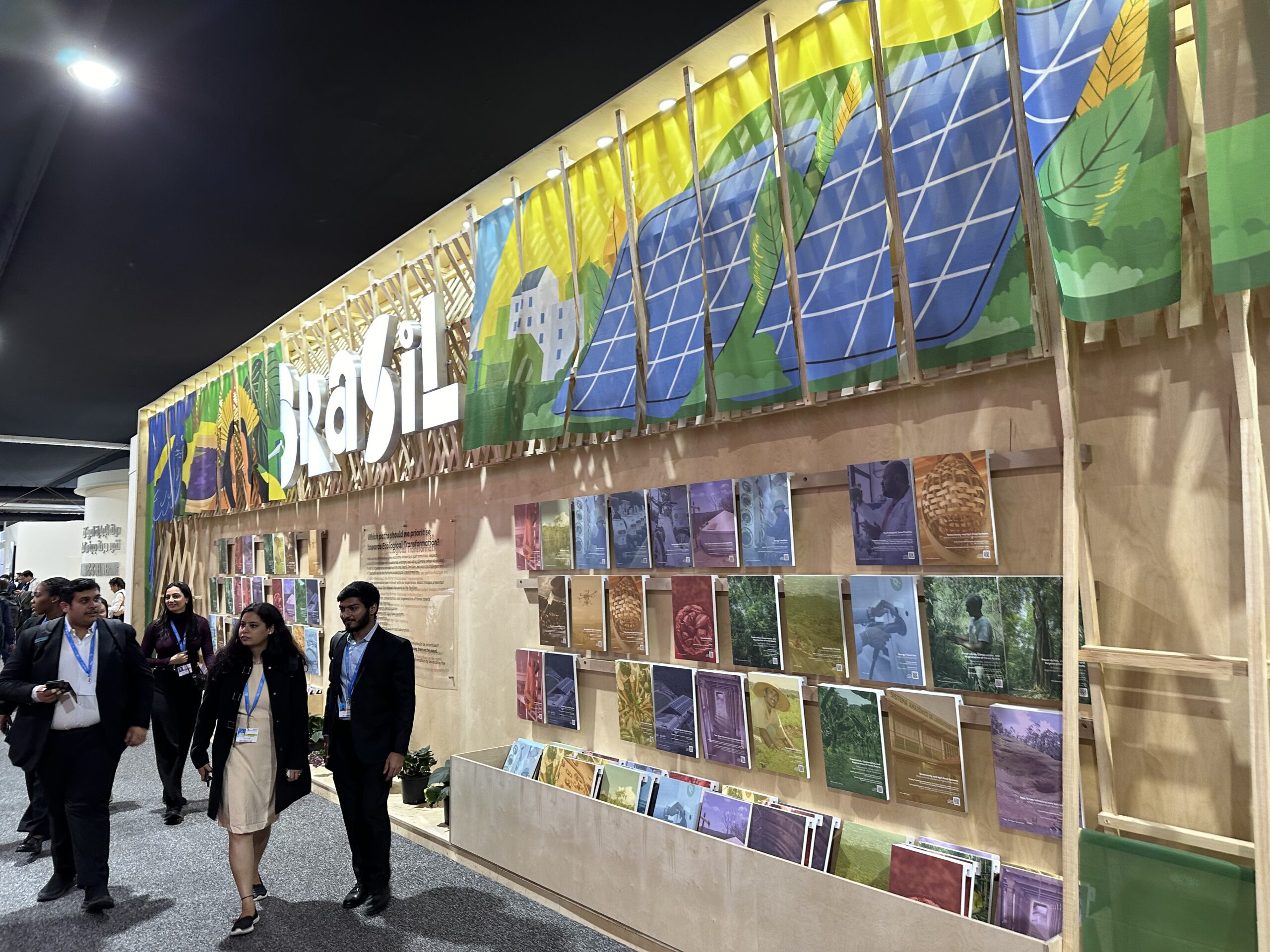
Brazil’s pavilion at the COP29 climate summit in Baku, Azerbaijan. Photo by Anca Gurzu in November 2024.
A flurry of officials trotted through the narrow hallways between pavilions, running to meetings or to panel discussions on the pavilion’s makeshift stages. It wasn’t unusual to walk around and see high-profile individuals, like World Bank president Ajay Banga, speak at these events.
Meanwhile, press conferences took place almost continuously near the media center, VIPs spoke one-after-the-other in the plenary halls and, at times, climate protesters chanted in well-delineated and secured areas. It was hard not to have some FOMO all the time!
Toward the end of the week, I saw people napping on the couches near the plenary halls or sitting on the floor working. You could “escape” for a bit of fresh air through the narrow emergency doors that led to the stadium’s empty bleachers, where the only sound you could hear was (perhaps ironically) that of the big diesel generators helping to power the venue.
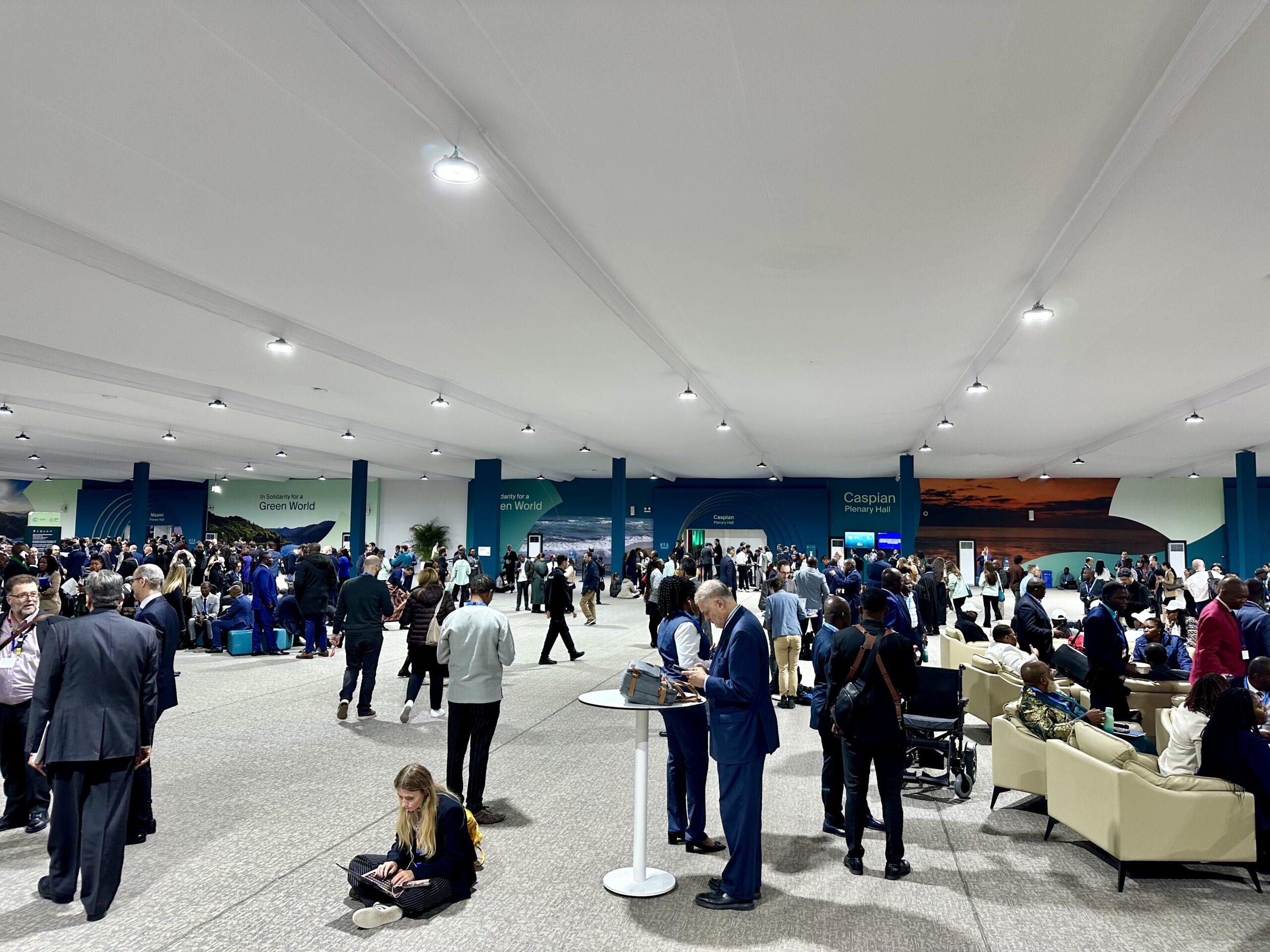
Delegates network, work or rest on the hallways of the climate summit. Photo by Anca Gurzu at the United Nations climate summit in Baku, Azerbaijan in November 2024.
One of the things I love most about attending COPs is the richness of the reporting. These events bring together people I would otherwise have a more difficult time connecting with (I talked to the environment minister of the Democratic Republic of Congo at the airport in Frankfurt before I even reached Baku!).
I also love how unexpected and random these summits can get — and this one didn’t disappoint.
I saw the Swedes put up an impromptu karaoke show at their pavilion at the end of a long workday. They were joined by some Brazilian delegates, who brought the dance moves. It was a refreshing plot twist on my way out of the stadium and I loved it! For the record, I also joined that party.
I also met Jack Curtis, the CEO of Carbon Jacked, who traveled with his colleagues to Azerbaijan by train from London, an impressive two-week trip that involved crossing the border of Georgia and Turkey by foot.
On Saturday night, hundreds of delegates let loose on the dance floor at a club in downtown Baku while a video compilation of COP meetings with delegates in suits played on a huge screen above the DJ booth. It was so out-of-place and absurd that it was hilarious.
COPs are never easy and by the end you are really keen to go home. But I am grateful to have been part of it.
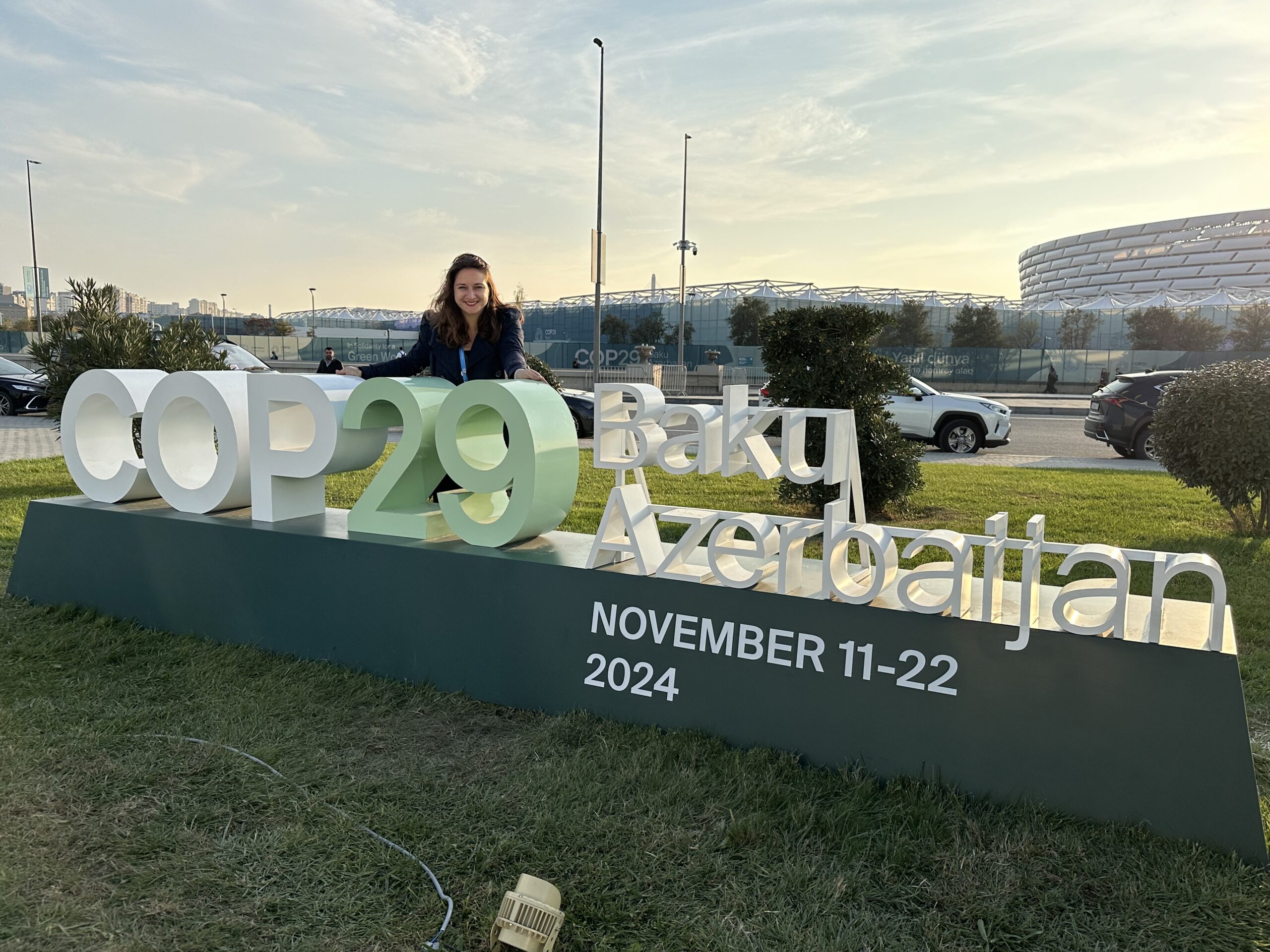
Anca Gurzu at the COP29 climate summit in Baku, Azerbaijan. Photo courtesy of Anca Gurzu in November 2024.