A reporter returns home to Romania to talk to coal miners
Reporter's Notebook
My latest story on how the energy transition is affecting coal miners in Romania really hit home.
I was born in Romania and lived there until I was 17, when I moved to Canada.
Returning to my native country to report this story felt both deeply personal and globally important. Mining has played a huge role in this Eastern European country’s history and economy and navigating away from that is no small feat for anyone.
My plan was to write about miners taking courses to learn new skills for renewables jobs — an interesting, progressive effort. But, as is so often the case, the reality turned out to be much more complex.
Most of the miners I met lived and worked near the small town of Rovinari, home to one of Romania’s main coal plants, a mammoth structure stretching across the length of about eight soccer fields from the late 1970s. I slowed down while driving past to absorb its magnitude.
The road behind the plant was quiet, with a few chickens roaming around. I stopped to ask an old woman, wearing a traditional headscarf common in Romania’s countryside and walking slowly with a stick for support, if I could take a photo of her with the coal plant in the background. She glanced quickly at the looming complex before saying, “I don’t want to see that thing again; I worked there all my life.”
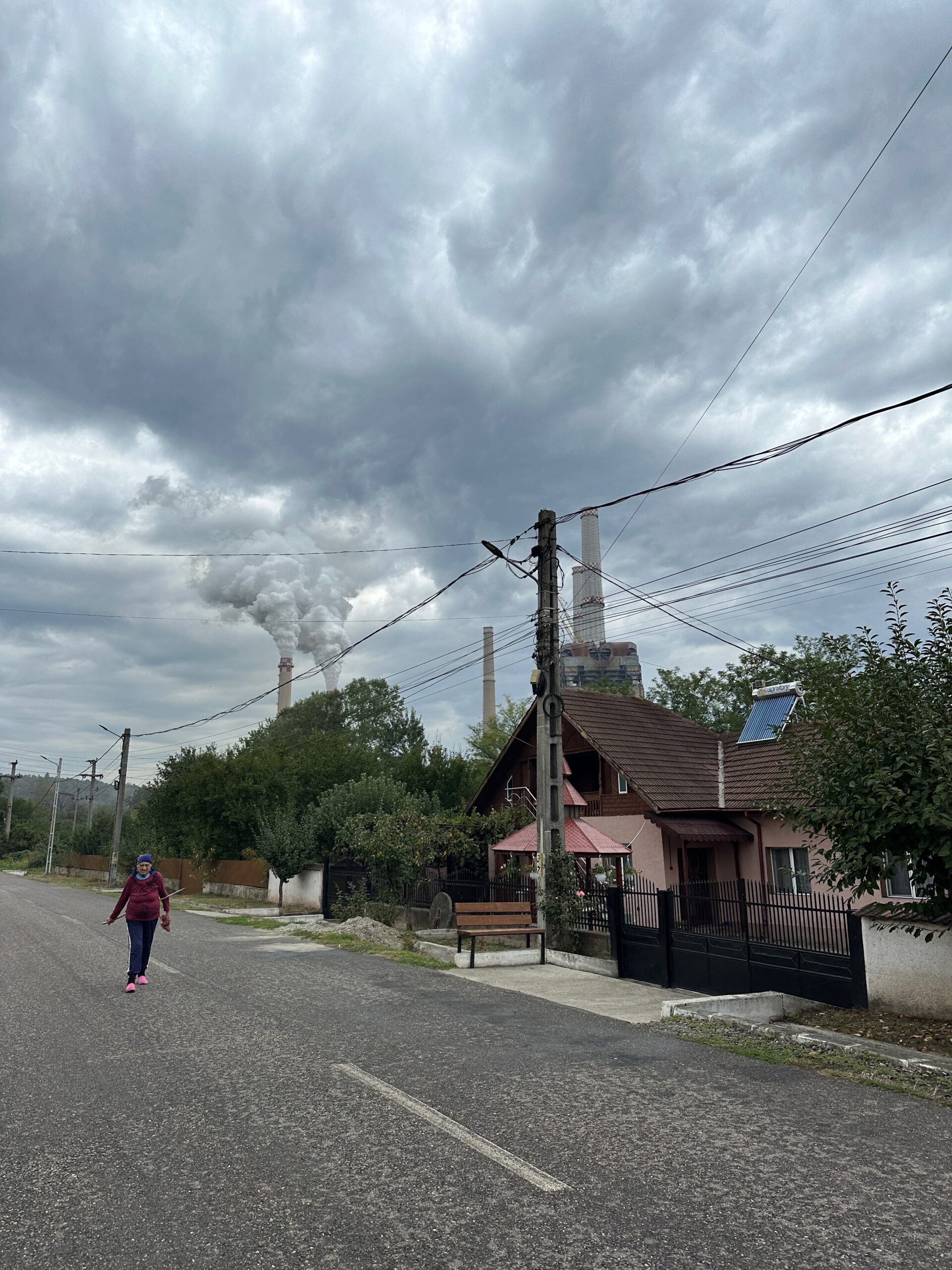
A woman walks on a road in Rovinari with the coal power plant in the background. Photo by Anca Gurzu, taken in September 2024.
A short drive from the power plant was a giant open-pit coal mine, so big that the excavators along its walls looked small. I realized I had written about coal many times in my journalism career, but never before had I seen how it is obtained firsthand.
A semi-deserted village overlooked the mine. As I drove through it with two local miners, they pointed out significant spots: “This is where we would come to dance when we were young,” one said, pointing to an empty building. In another village nearby, the apartment blocks looked abandoned — except for laundry hanging on some of the balconies, bringing a bit of color to the otherwise bleak surroundings.
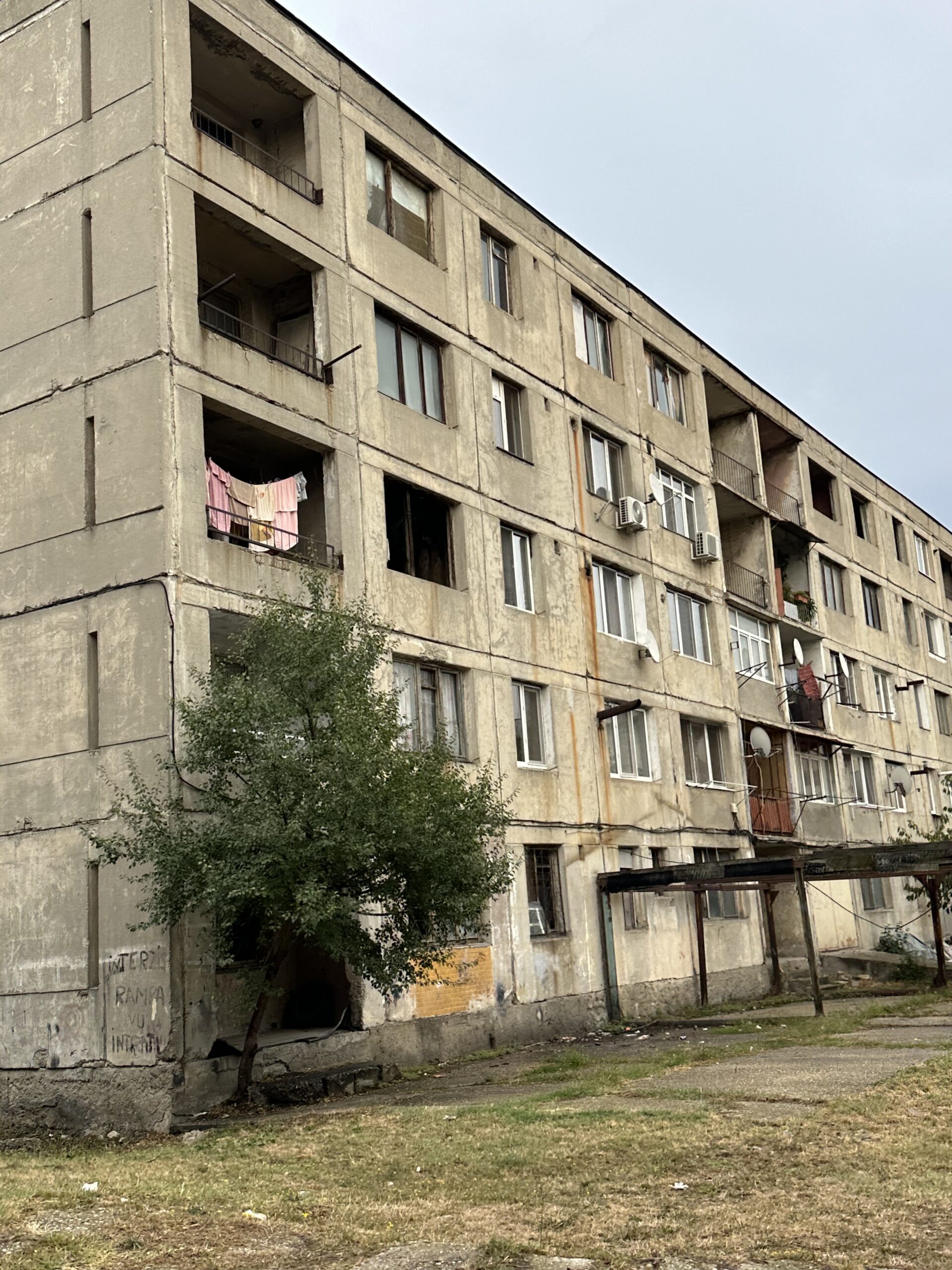
Laundry hangs from an almost-deserted apartment building in a poor area of Matǎsari village in Romania. Photo by Anca Gurzu, taken in September 2024.
I felt immersed into these people’s stories and compassion for their struggles. Even though I had never been to those parts of Romania or met those miners before, there was an underlying sense of familiarity, perhaps because we all spoke the same language or perhaps because the standard communist architecture reminded me of my own hometown north in Transylvania.
The next day, I drove north to another key coal region. The winding roads through the mountains revealed breathtaking fall views, making me feel reconnected with my home country. I told myself I should visit more often.
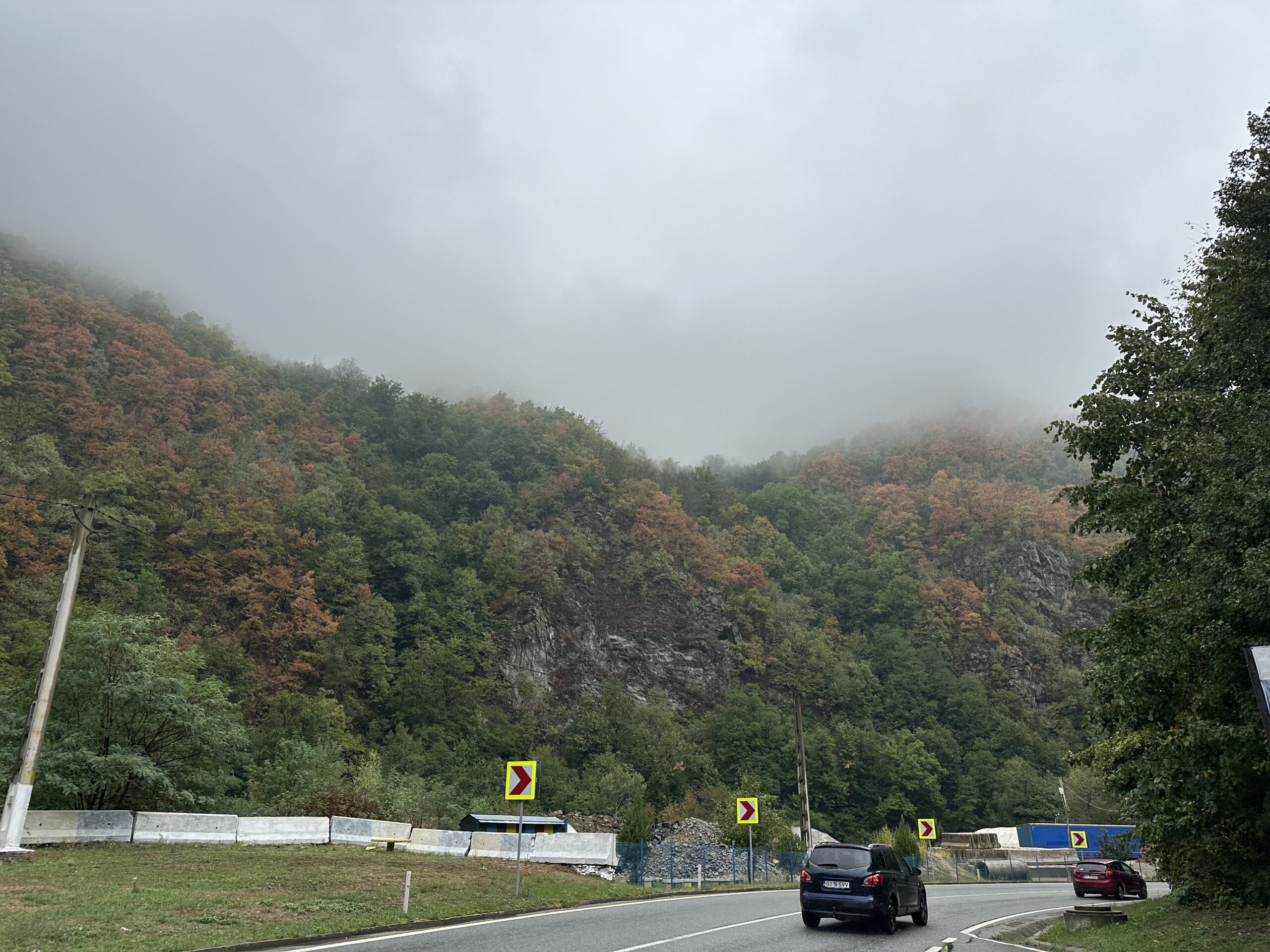
Scenic view of a forest in a mountainous region in south-western Romania. Photo by Anca Gurzu, taken in September 2024.
On the other side of the mountains, I met with Sebastian Tirinticǎ, the original inspiration for my story, a former miner who now trains people to install solar panels and fix wind turbines. It was a reunion of sorts, since I’d first talked to Tirinticǎ in 2019 when I wrote a story about the fate of coal miners across Europe. At the time, he had chosen not to train for a job in clean energy and stick with mining, so I was interested to learn about his change of heart.
Tirinticǎ and I visited a carefully reconstructed underground-mine museum in his hometown of Petrila, set up on land that had housed one of Romania’s oldest and most important coal mines before it closed in 2015.
As we walked through the gallery, Tirinticǎ explained how mining works 1,000 feet under the Earth’s surface. I tried to soak in all the information. When else would I have the chance to learn from an expert in a replica of a mine?
Tirinticǎ finally decided to leave mining when he felt “the constant decline of the industry,” describing it as a personal choice. Later, over coffee, I sensed his pride and new-found purpose training others for greener jobs. I found this inspiring.
I don’t think all miners’ futures will look like Tirinticǎ’s. But most people I met on my travels in Romania seemed to understand, deep down, that coal mining won’t be here much longer, and they need to prepare.