A reporter finds hope at a solar-powered school in Pennsylvania
Reporter's Notebook
When I agreed to visit the Steelton-Highspire School District campus, I expected to find a field of solar panels connected to the school. I thought I’d take a few photographs, chat with some folks and wrap up the article.
How wrong I was.
This reporting trip turned into a real learning experience for me.
Until now, I had been writing about clean energy adoption in broad terms, relying on national statistics about supply and demand. Hearing about solar adoption in Pennsylvania’s schools is one thing, but seeing it firsthand left a lasting impression.
I was amazed that this small, cash-strapped district in south-central Pennsylvania wasn’t just using solar energy to reduce its electricity bills — it also was harnessing this clean resource to educate and train young minds for a clean energy future. School officials talked enthusiastically about how they use the solar panels as teaching tools for students.
I quickly realized this wasn’t going to be a typical story, where I write about a particular organization — in this case a school district — transitioning from fossil fuels in-line with climate goals set by the presiding government officials, in this case Pennsylvania Governor Josh Shapiro and President Joe Biden.
A large sign outside the nine-acre solar field explains these panels are mounted on a closed landfill, which houses debris from a hurricane that devastated the area in 1972. Real-time monitors in the school corridors show the students when and where solar power is generated and used. A greenhouse, powered by the solar panels and set up in partnership with nearby Harrisburg University, allows students to take free college-level courses on advanced techniques for raising fish and growing fresh produce.
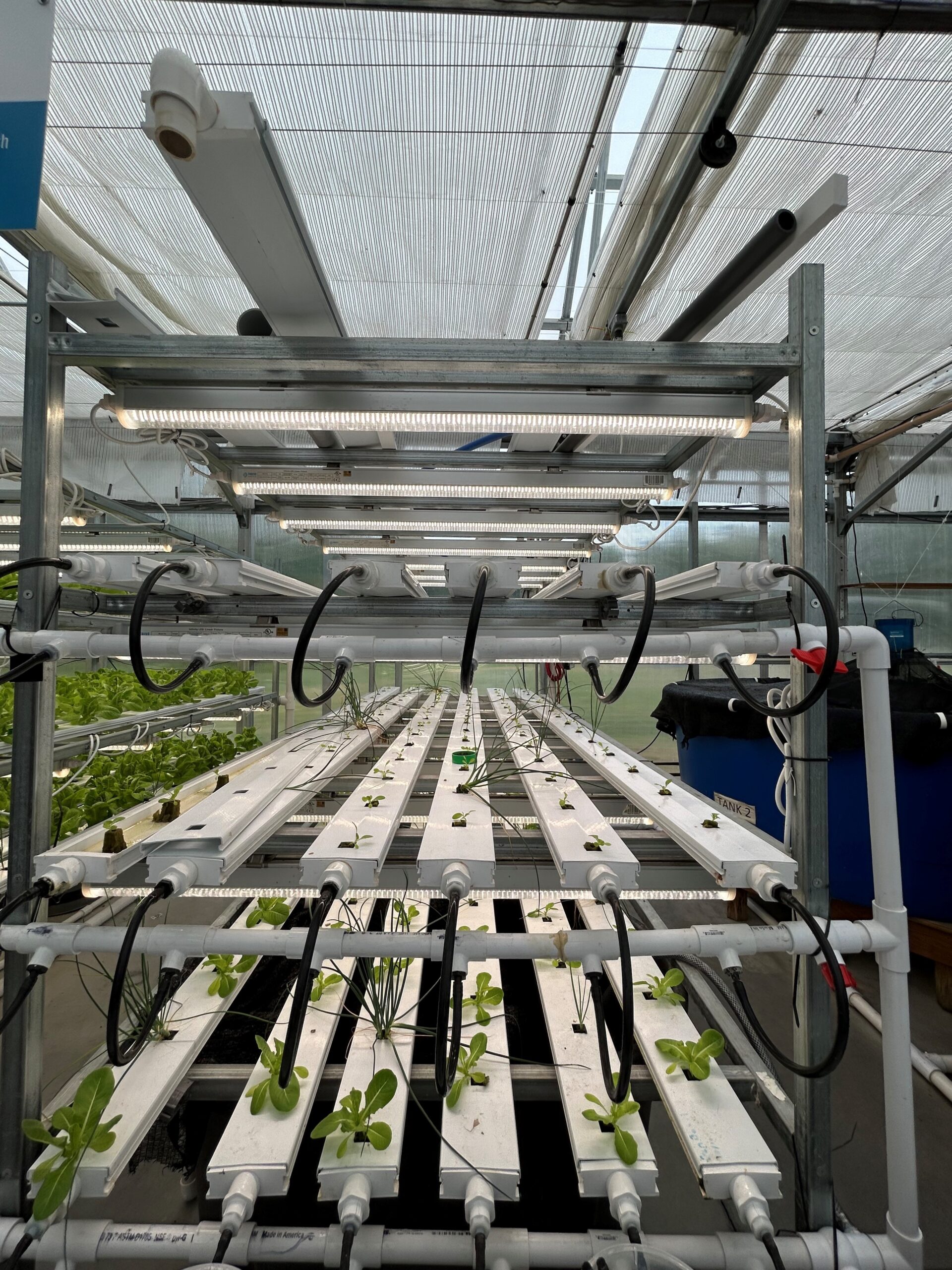
Plants grown in the Steelton-Highspire School District greenhouse. Photo by Amena H. Saiyid in August 2024.
I didn’t hear any political rhetoric typical of Washington debates or polarized communities. Instead, I visited the greenhouse, where I watched dozens of tilapia splash in deep blue tubs filled with water recycled by the produce growing on shelves, the plants themselves nourished by fish waste.
I saw kindergartners playing on swings next to the field of humming solar panels.
The borough of Steelton is a typical Rust Belt community reliant on a steel mill hit hard by the industry’s decline in the United States. The school district is mostly made up of students from disadvantaged backgrounds. What this small district has achieved is nothing short of remarkable — they’ve done more with less, and with great success, as the school’s superintendent Mick Iskric notes proudly.
I did hear disenchanted comments from some community members elsewhere in the area about the loss of manufacturing jobs to China and other countries and their doubts about the promises of clean technologies, which are real concerns. But I left the borough feeling hopeful. Especially when I saw children riding in diesel exhaust-free electric school buses, quietly navigating past revving car engines and the gritty steel mill.
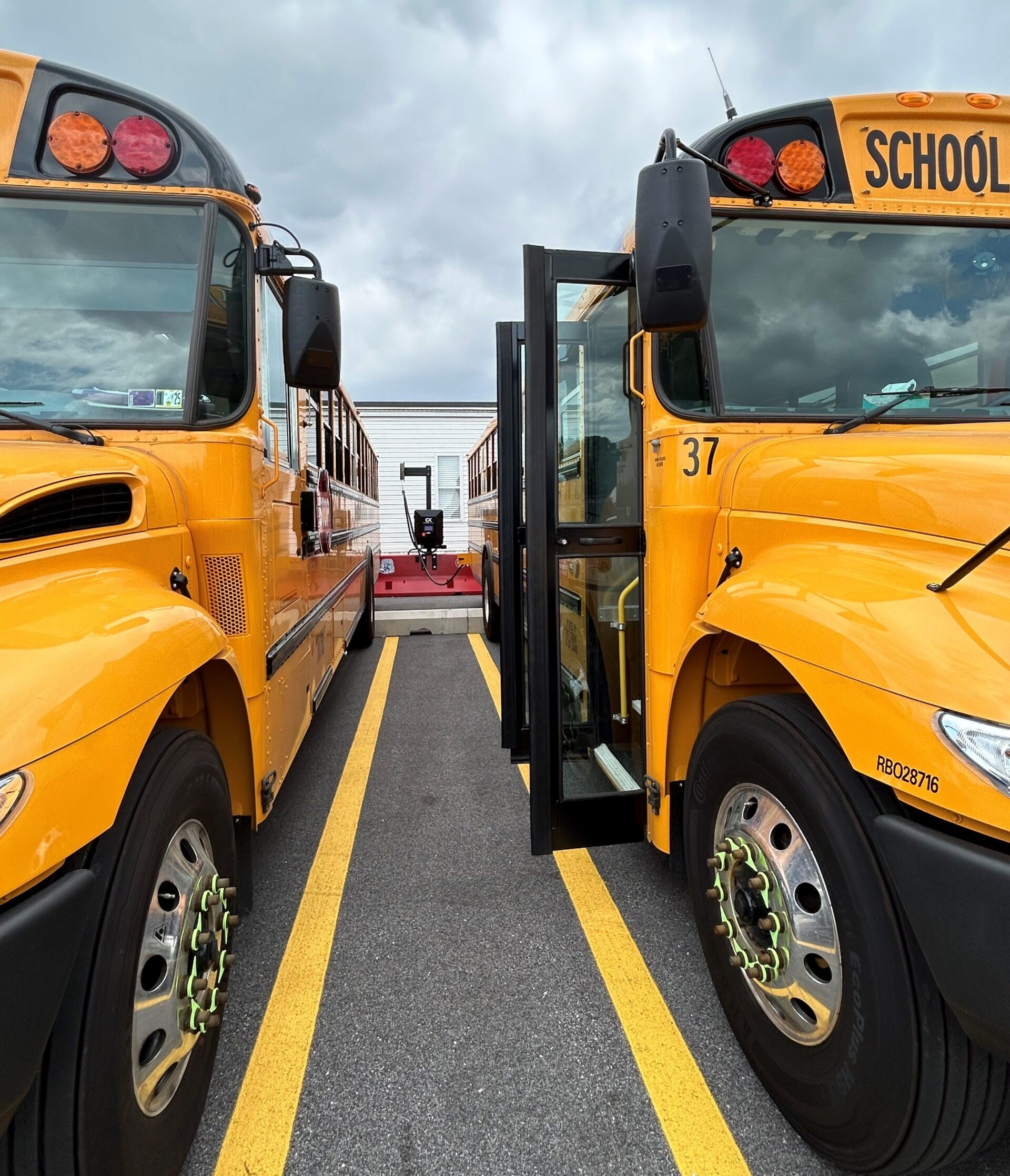
They look like typical school buses, but these Steelton-Highspire ones run on electricity. Photo by Amena H. Saiyid in August 2024.