A re-energized Trump seeks to boost fossil fuel production, dismantle climate programs
Latest News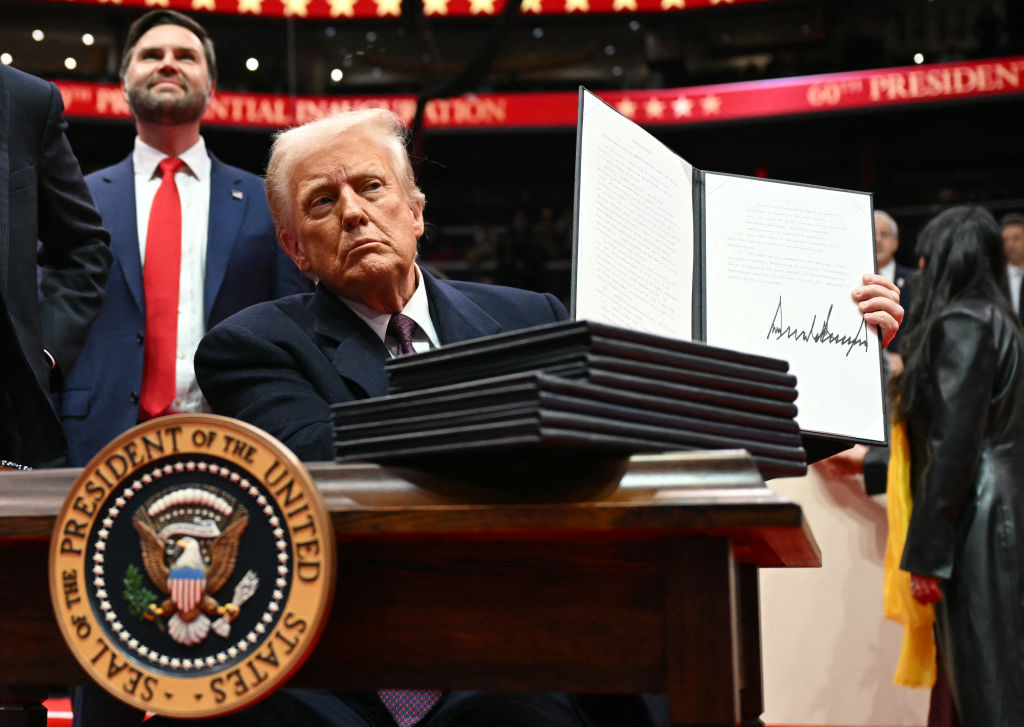
WASHINGTON — In the first 24 hours of his second presidency, Donald Trump laid the foundation for his “America First” energy agenda over the next four years.
Through a series of speeches and a flurry of executive orders, Trump signaled his intent to dismantle former President Joe Biden’s climate policies and double down on fossil fuel production.
The actions, which were met with enthusiasm by his base, underscore the top billing this topic is receiving from the new administration. Taken together, they will test the world’s resolve to adopt cleaner sources of energy and reduce greenhouse gas emissions, which are heating up the world and exacerbating extreme weather ranging from wildfires in Los Angeles to flooding in Pakistan.
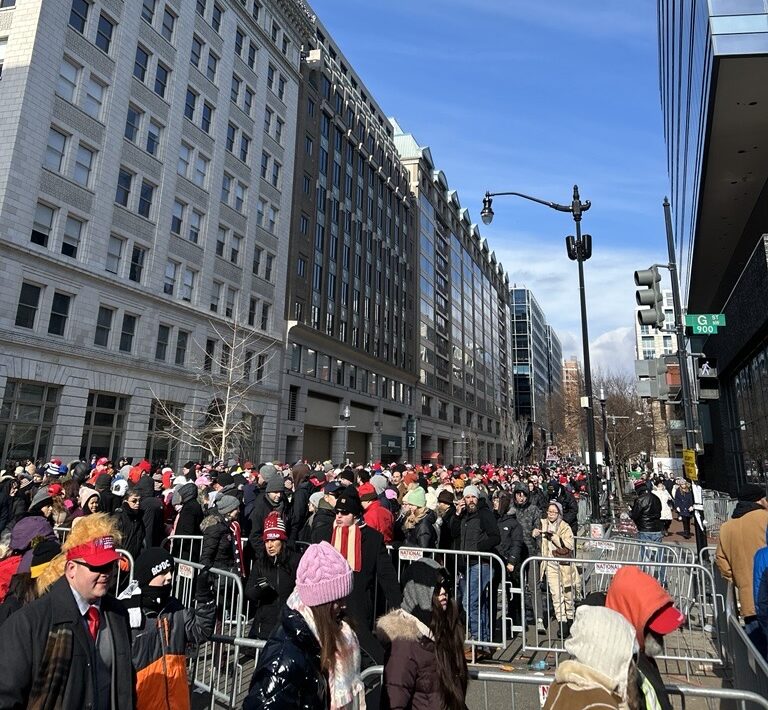
Crowds are crammed several blocks away from Capital One Arena in downtown Washington on Monday, January 20, 2025. Photo by Amena H. Saiyid.
Braving frigid temperatures, thousands of supporters crammed the streets of downtown Washington, D.C. to see Trump sworn in as the 47th president of the United States on Monday afternoon.
Trump’s inaugural address — which occurred inside the U.S. Capitol Building — was displayed a mile away on a big screen beside the Capital One Arena, where supporters were lining up to enter. Cheers erupted when Trump said he would end “Green New Deal” spending and “drill, baby, drill” for oil and natural gas.
Despite bone-chilling winds, the mood outside the arena, where an indoor inaugural parade was held that evening, was jubilant. People huddled together on the streets, dancing, singing, buying Trump memorabilia, and bursting sporadically into chants of “USA, USA, USA.”

Florida native Linda Kebler rocking a red, white and blue jumpsuit near the Capital One Arena where President Trump’s inaugural parade was held on Monday, January 20, 2025. Photo by Amena H. Saiyid.
Linda Kebler, of Panama City, Florida was clad in a fuzzy red, white and blue jumpsuit. And 39-year-old Joe Smith from New Jersey enthusiastically waved a large American flag.
“You’ll see a lot of things going to happen today. It’s going to be great,” Smith told Cipher.
Topping the list of Trump’s day one energy and climate actions was withdrawing the U.S. from the Paris Climate Agreement (for a second time). This treaty committed nearly 200 countries to set emissions targets to maintain global warming below 1.5 degrees Celsius. Trump signed the order indicating the intent to withdraw as one of his first nine executive actions as president in the packed arena to raucous cheers.
“I don’t believe we should be governed by globalist concepts … Getting out of it allows us the freedom to be America First,” Ed Bassett, 67, who flew in from Nevada with his wife Hilda, told Cipher when asked about the Paris agreement.
On Monday night, Trump signed a stack of more than 30 executive orders when he returned to the Oval Office. Here’s a quick rundown of other key climate and energy-related executive orders:
- Paused spending under the nation’s two largest climate spending bills — the 2022 Inflation Reduction Act and the bipartisan Infrastructure Investment and Jobs Act of 2021 — pending a 90-day review. These two laws have been responsible for spurring clean energy and cleantech solutions in the U.S.
- Declared a National Energy Emergency to expedite permitting, leasing, siting, production, transportation, refining and generation of domestic energy resources — including oil and gas, nuclear and critical minerals — on federal and private lands.
- The emergency order directs federal agencies to prioritize geothermal, hydropower, biofuels, critical minerals and nuclear energy along with fossil fuels.
- Directed agencies to review Biden-issued regulations affecting domestic energy like power plant carbon limits and clean hydrogen guidance.
- Temporarily halted new and renewed federal permits, rights of way, leases or loans for onshore and offshore wind projects, pending agency review. The move does not appear to affect existing projects.
- Temporarily withdrew all federally-owned waters from leasing for new and renewed offshore wind projects. The move does not appear to affect existing leases.
- Imposed a regulatory freeze on all Biden-era rules that have not taken effect, such as the methane fee.
- Lifted all restrictions to drill oil and gas in Alaska, including in the Arctic National Wildlife Refuge.
- Directed the U.S. Energy Department to restart approvals for liquefied natural gas export projects.
- Ordered agencies to review and ultimately revise rules and tax credits that promoted electric vehicle adoption.
- Directed the Environmental Protection Agency to reevaluate the inclusion of the “social cost of carbon” in regulatory decision making. This regulatory tool was introduced by the Biden administration to account for the economic cost of greenhouse gas emissions.
- Directed the EPA to submit a report to the White House within 30 days on the legality of the “endangerment finding,” a landmark 2009 scientific finding that enabled the agency to conclude that greenhouse gas emissions endanger public health and welfare and should be regulated. Revoking it would undermine essentially all climate-related rules.
These actions reflected the views of several Trump supporters with whom Cipher spoke on Monday.
“We need to be getting our own oil and keeping it for ourselves and not buying from other countries,” flag-waving Smith told Cipher.

A block away from the Capital One Arena in downtown Washington, D.C., Joe Smith of New Jersey said he can’t wait for “great things to happen” under President Donald Trump on Monday, January 20, 2025. Photo by Amena H. Saiyid.
Neither Smith nor the Bassetts were aware that the U.S. is already the leading global producer of oil and natural gas.
Tony Smith of Richmond, Virginia was with Trump in opposing the Inflation Reduction Act. “I’m definitely not a ‘Green New Deal’ guy, so definitely against everything ‘Green Deal,’” including wind and solar energy, he told Cipher.
Analyses have shown more Republican states than Democratic ones have benefitted from the IRA’s policies, with Bloomberg Intelligence analysts saying in a call with reporters on Tuesday it would be very hard for Trump to persuade GOP lawmakers in Congress to disinvest in their communities.
While the actions were swift and decisive, their real-world impact could be limited.
“I don’t think we ever stopped drill baby drilling in the first place,” Rob Barnett, Bloomberg Intelligence senior analyst specializing in global solar, wind and carbon research, said during the call on Tuesday discussing energy sector impacts from Trump’s actions.
“While these initial moves reflect a sharp policy reversal, the energy market has proven resilient,” said Matteo Mazzoni, director of energy analytics at the United Kingdom-based commodities intelligence firm ICIS, in a statement.
Eliminating red tape around liquified natural gas exports could help accelerate the industry long-term but is unlikely to make much difference in the short term, Mazzoni wrote. And the global oil market is already oversupplied, he said.
“Long-term trends, including the rise of renewables and global decarbonization efforts, will likely continue to shape the industry regardless of federal policies,” said Mazzoni.
Editor’s note: This article has been edited to clarify that existing onshore and offshore wind projects do not appear to be impacted by the executive orders signed on January 20, 2025.